FabulousFusionFood's Starters/Entrée Recipes 8th Page
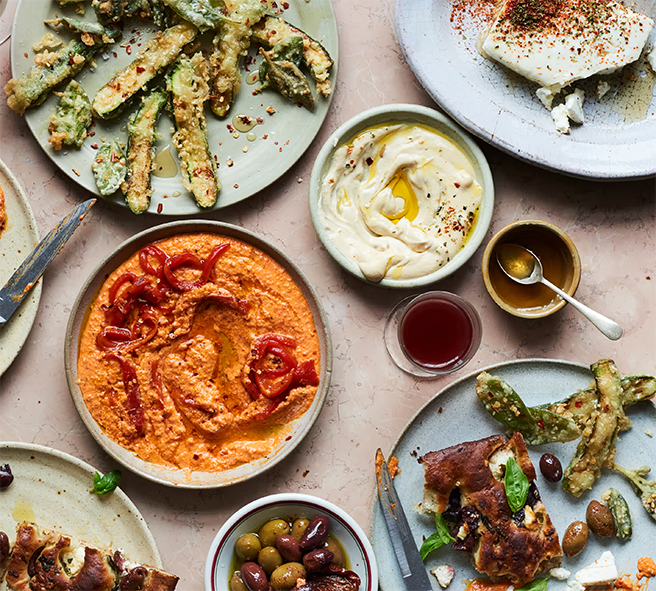 A range of cold starters/entrées.
Welcome to FabulousFusionFood's Starters/Entrée Recipes Page — A starter, also synonymous with entrée, in modern French table service and that of much of the English-speaking world, is a dish served before the main course of a meal. Outside North America and parts of English-speaking Canada, it is generally synonymous with the terms hors d'oeuvre or appetizer. It may be the first dish served, or it may follow a soup or other small dish or dishes.
The word entrée as a culinary term first appears in print around 1536 in the Petit traicté auquel verrez la maniere de faire cuisine, more widely known from a later edition titled Livre fort excellent de cuisine[b], in a collection of menus[c] at the end of the book. There, the first stage of each meal is called the entree de table (entrance to the table); the second stage consists of potaiges (foods boiled or simmered "in pots"); the third consists of one or more services de rost (meat or fowl "roasted" in dry heat); and the last is the issue de table (departure from the table). These four stages of the meal appear consistently in this order in all the books that derive from the Petit traicté.
The stages of the meal underwent several significant changes between the mid-16th and mid-17th century. Notably, the potage became the first stage of the service and the entrée became the second stage; and by 1650, the term "entrée" had lost its literal meaning and had come to refer to the stage of the meal after the potage and before the roast, entremets, and dessert.
The term "entrée" also came to refer to the dishes served at the entrée stage. While cookbooks and dictionaries of the 17th and 18th centuries rarely discuss the type of dishes appropriate to each stage of the meal with any specificity, entrées and the dishes of the other stages of the meal can be distinguished from each other by certain characteristics, such as their ingredients, cooking methods, and serving temperatures.[7] The distinct characteristics of the entrée were at first loosely observed, or perhaps more accurately, the "rules" were in a formative stage for several decades. By the early 18th century, though, certain ingredients and cooking methods were increasingly confined to the entrée stage of the meal.
Distinctions between the various types of entrées (grosses, grandes, de broche, relevé) had largely fallen out of use by the end of the 19th century, and menus of the first half of the 20th century routinely include entrées but not relevés. In France, the entrée slowly came to be associated primarily with its position in the meal rather than the composition of its dishes. Despite the objections of various food authorities who insisted on retaining the classical meaning of the word,[29] the term entrée came to refer to the first course of the meal, a small dish that precedes the main course (plat principal) in a three-course meal. The "new" use of the term, now common almost worldwide, is a return to the literal meaning of the word and a partial return to the medieval arrangement of the meal.
The alphabetical list of all the starters/entrée recipes on this site follows, (limited to 100 recipes per page). There are 1558 recipes in total:
Page 8 of 16
| Kulish Origin: Ukraine | Leek and Tripe Soup Origin: England | Mala Long Xia (Chinese Spicy Crayfish) Origin: China |
| Kuljon (Oysters Fried in Egg Batter) Origin: Korea | Leivasupp (Estonian Sweet Rye Bread Soup) Origin: Estonia | Malai Tikka Origin: Britain |
| Kunun gyada Origin: Nigeria | Lemon Soup Origin: Britain | Malaysian Laksa Origin: Malaysia |
| Kupus Salata (Croatian Cabbage Salad) Origin: Croatia | Lentil Soup Origin: Britain | Mallow Soup Origin: Britain |
| Kuru Börülce (Black-eyed Bean Salad) Origin: Northern Cyprus | Lentil, Pasta and Vegetable Soup Origin: Britain | Mallow Stew Origin: Britain |
| Kutia Origin: Ukraine | Les Bouchons (Pork Dumplings) Origin: Reunion | Manitaria Krasata (Mushrooms in Wine) Origin: Cyprus |
| Kuzu Çorbası (Lamb Soup) Origin: Turkey | Lesser Celandine Potato Salad Origin: British | Mantar Çorbası (Mushroom Soup) Origin: Turkey |
| Kvasivska Selianska (Village Soup) Origin: Russia | Lettuce and Onion Soup Origin: Britain | Manx Queenies with Cucumber and Wild Fennel Origin: Manx |
| Kwerstkhi Nigozee Satsabelly (Egg Salad In Walnut Sauce) Origin: Georgia | Liberian Prawn Bisque Origin: Liberia | Manx Smoked Salmon with Kipper Pate Filling Origin: Manx |
| Kypriaka Loucanika (Cypriot Smoked Sausages) Origin: Cyprus | Ligge Estren Porth Navas (Port Navas Oyster Soup) Origin: England | Maraq Fahfah (Somali Soup) Origin: Somalia |
| La Mouclade Bretonne (Breton Mouclade) Origin: France | Lipton Onion Soup Mix Copycat Origin: Britain | Maraq Fahfah (Somali Soup) Origin: Somaliland |
| La Salade à la Nigerienne (Niger-style Salad) Origin: Niger | Lobio Supi (Red Bean Soup) Origin: Georgia | Marigold Cheese Soup Origin: Britain |
| Laap (Beef Salad) Origin: Laos | Lobster Croquets Origin: Britain | Marinated Mackerel Origin: Britain |
| Lactucas (Lettuce) Origin: Roman | Lobster Soup Origin: British | Markit Ommalah (Chickpea and Lentil Stew) Origin: Tunisia |
| Laj Ntses (Fish Larb) Origin: Laos | Lohikeitto (Finnish Salmon Soup) Origin: Finland | Marrow Croustades Origin: Britain |
| Lakka Keitto (Cloudberry Soup) Origin: Finland | London Particular Origin: England | Marrow Patties Origin: Britain |
| Lamb & Water Mint Meatballs Origin: Britain | Lountza (Smoked Pork Loin) Origin: Cyprus | Maryland Oyster Stew Origin: America |
| Lamb Cutlets and Spinach Origin: Britain | Love-apple Soup Origin: British | Masked Eggs with Asparagus Origin: England |
| Lamb Sheek Kebabs Origin: Britain | M'raad (Egyptian Aubergine Salad) Origin: Egypt | Matzo Ball Soup Origin: Jewish |
| Langoustes grillées sauce antillaise (Grilled Spiny Lobster with Antillean Sauce) Origin: Sint Maarten | Mâche Sabayon with Parmesan Shavings Origin: France | Mayiritsa (Easter Soup) Origin: Greece |
| Langoustes grillées sauce antillaise (Grilled Spiny Lobster with Antillean Sauce) Origin: Saint Barthelemy | Maacouda bil Batata (Potato Omelette) Origin: Tunisia | Mediterranean Mint Salad Origin: Mediterranean |
| Langoustes grillées sauce antillaise (Grilled Spiny Lobster with Antillean Sauce) Origin: Saint-Martin | Macaroni Salad Origin: American | Mediterranean-style Farro Salad with Rocket and Walnuts Origin: America |
| Langoustines au Breton Kari (Langoustines with Breton Kari Spices) Origin: France | Macaroni Soup Origin: British | Meghli (Rice Flour Pudding) Origin: Lebanon |
| Langoustines bretonnes sautées au beurre salé (Breton langoustines sautéed in salted butter) Origin: France | Macedonian Tarator (Cucumber and Sour Cream Salad) Origin: North Macedonia | Meichowski Krupnik na Serwatce (Polish Whey-millet Soup) Origin: Poland |
| Lantern Soup Origin: British | Mackerel and Seaweed Pâté Origin: Britain | Mejillones con Salsa Picante (Mussels with Spicy Sauce) Origin: Spain |
| Lapas (Griddled Limpets) Origin: Portugal | Mackerel and Tamarind Noodle Soup Origin: Fusion | Melba Toast Origin: Britain |
| Lasary Voatabia (Tomato and Spring Onion Salad) Origin: Madagascar | Mackerel Tartare with Pickled Dulse Origin: Britain | Melitzanaki Toursi (Pickled Baby Aubergines) Origin: Greece |
| Lashun ka Achar (Indian Garlic Pickle) Origin: India | Macrows Origin: England | Melokhia Origin: Egypt |
| Lasopy (Madagascar Vegetable Soup) Origin: Madagascar | Magiritsa (Greek Easter Lamb Soup) Origin: Greece | Mendip Wallfish Origin: England |
| Latvian Sauerkraut Soup Origin: Latvia | Mahjouba (Algerian Crêpes) Origin: Algeria | Mexican Fiesta Dip Origin: America |
| Latvian Sorrel Soup Origin: Latvia | Mahluta Çorbası (Red Lentil Soup) Origin: Turkey | Mexican Spirals Origin: American |
| Le Salade Côte Cap Vert (Cape Vert Coast Salad) Origin: Senegal | Maitohorsmia Hytelö (Fireweed Jelly) Origin: Finland | Microwave Bacon Dip Origin: Britain |
| Leber Knödelsuppe (Liver Dumpling Soup) Origin: Liechtenstein | Makhlouta (All-bean Soup) Origin: Lebanon | |
| Leek and Potato Soup Origin: Britain | Makvlis Supi (Blackberry Soup) Origin: Russia |
Page 8 of 16