FabulousFusionFood's Starters/Entrée Recipes 5th Page
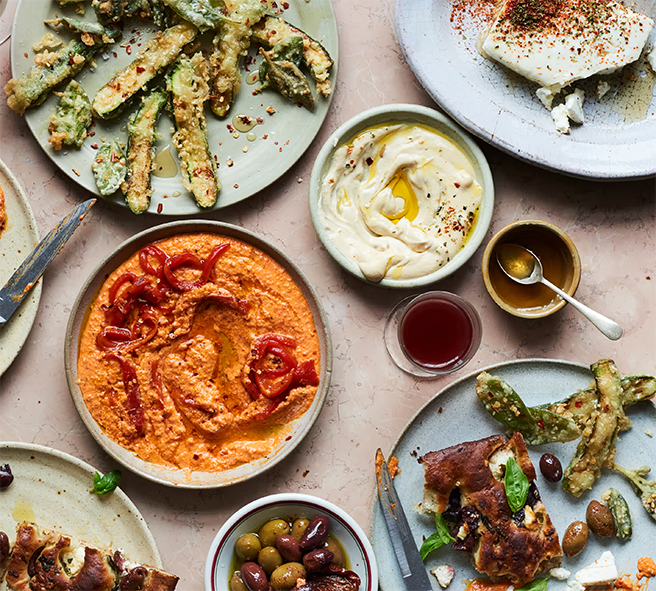 A range of cold starters/entrées.
Welcome to FabulousFusionFood's Starters/Entrée Recipes Page — A starter, also synonymous with entrée, in modern French table service and that of much of the English-speaking world, is a dish served before the main course of a meal. Outside North America and parts of English-speaking Canada, it is generally synonymous with the terms hors d'oeuvre or appetizer. It may be the first dish served, or it may follow a soup or other small dish or dishes.
The word entrée as a culinary term first appears in print around 1536 in the Petit traicté auquel verrez la maniere de faire cuisine, more widely known from a later edition titled Livre fort excellent de cuisine[b], in a collection of menus[c] at the end of the book. There, the first stage of each meal is called the entree de table (entrance to the table); the second stage consists of potaiges (foods boiled or simmered "in pots"); the third consists of one or more services de rost (meat or fowl "roasted" in dry heat); and the last is the issue de table (departure from the table). These four stages of the meal appear consistently in this order in all the books that derive from the Petit traicté.
The stages of the meal underwent several significant changes between the mid-16th and mid-17th century. Notably, the potage became the first stage of the service and the entrée became the second stage; and by 1650, the term "entrée" had lost its literal meaning and had come to refer to the stage of the meal after the potage and before the roast, entremets, and dessert.
The term "entrée" also came to refer to the dishes served at the entrée stage. While cookbooks and dictionaries of the 17th and 18th centuries rarely discuss the type of dishes appropriate to each stage of the meal with any specificity, entrées and the dishes of the other stages of the meal can be distinguished from each other by certain characteristics, such as their ingredients, cooking methods, and serving temperatures.[7] The distinct characteristics of the entrée were at first loosely observed, or perhaps more accurately, the "rules" were in a formative stage for several decades. By the early 18th century, though, certain ingredients and cooking methods were increasingly confined to the entrée stage of the meal.
Distinctions between the various types of entrées (grosses, grandes, de broche, relevé) had largely fallen out of use by the end of the 19th century, and menus of the first half of the 20th century routinely include entrées but not relevés. In France, the entrée slowly came to be associated primarily with its position in the meal rather than the composition of its dishes. Despite the objections of various food authorities who insisted on retaining the classical meaning of the word,[29] the term entrée came to refer to the first course of the meal, a small dish that precedes the main course (plat principal) in a three-course meal. The "new" use of the term, now common almost worldwide, is a return to the literal meaning of the word and a partial return to the medieval arrangement of the meal.
The alphabetical list of all the starters/entrée recipes on this site follows, (limited to 100 recipes per page). There are 1558 recipes in total:
Page 5 of 16
| Crispy Crab Wontons Origin: Fusion | Devilled Eggs II Origin: Britain | Encebollado Origin: Ecuador |
| Croatian Ajvar (Aubergine and Bell Pepper Dip) Origin: Croatia | Devils on Horseback Origin: Britain | Ensalada de Endibias al Cabrales (Salad of Chicory Leaves and Blue Cheese) Origin: Spain |
| Croatian Bolete Soup with Buckwheat Origin: Croatia | Domácí Paštiku (Home-made Liver Pâté) Origin: Czech | Ensalada Palmito (Heart of Palm Salad) Origin: Costa Rica |
| Crockpot Black Bean Soup Origin: American | Domatossoupa (Tomato Soup) Origin: Greece | Ensalada Verde (Dominican Green Salad) Origin: Dominican Republic |
| Crockpot Costa Rican Beef and Vegetable Soup with Yellow Rice Origin: Costa Rica | Dominica Saltfish Accra Origin: Dominica | Enselada de Palmitos de Primavera (Heart of Palm Spring Salad) Origin: Argentina |
| Crofter Broth Origin: Scotland | Dominica Titiwi Accra Origin: Dominica | Eowtes of Flessh (Herbs Like Flesh) Origin: England |
| Croquets of Meat or Fish Origin: Britain | Dovga (Pea and Sorrel Soup with Meatballs) Origin: Azerbaijan | Erbolat Origin: England |
| Cucumber and Mint Soup Origin: British | Drawen Benes (Mixed Beans) Origin: England | Escargot and Mushrooms in Garlic Sauce Origin: American |
| Cucumber and Yoghurt Salad Origin: Armenia | Dried Cornelian Cherry Soup Origin: British | Escargots à la Bourguignonne Origin: France |
| Cullen Broth Origin: Scotland | Dried Morel Bisque Origin: Britain | Escudella i Carn D'olla Origin: Andorra |
| Cullen Skink Origin: Scotland | Dried Rose Hip Soup Origin: British | Esquites (Mexican Street Corn) Origin: Mexico |
| Curaçao Pastechi di Karni (Meat Pastechi) Origin: Curacao | Dried Vegetable Soup Origin: Britain | Esquites II (Mexican Street Corn) Origin: Mexico |
| Curried Beef Origin: Britain | Duck and Cabbage Soup Origin: China | Fänkålssoppa med strimlad lax (Fennel Soup with Smoked Salmon Shreds) Origin: Sweden |
| Curried Chestnut Soup Origin: Britain | Duck Borscht Origin: Poland | Faggi Ksidhati (Lentil Soup with Vinegar) Origin: Cyprus |
| Curried Chicken and Peach Salad Origin: America | Dulse Chowder with Mallow Cheeses Origin: British | Faggioli con le Cotiche (Barlotti Beans with Pork Rinds) Origin: Italy |
| Curried Chicken Soup Origin: Scotland | Dulse Muffins Origin: Britain | Faggioli con le Cotiche (Barlotti Beans with Pork Rinds) Origin: San Marino |
| Curried Parsnip and Apple Soup Origin: Britain | Dulse Quiche Origin: Britain | Fairy Ring Champignon Soup Origin: France |
| Curried Parsnip Soup Origin: Britain | Dulse-dressed Prawns Origin: Ireland | Fakes Soupa (Greek Lentil Soup) Origin: Greece |
| Curried Prawn Noodle Soup with Stevia Origin: Fusion | Dumplings in Cold Spicy Sauce Origin: Fusion | Fanesca ecuatoriana (Ecuadorian Easter soup) Origin: Ecuador |
| Curried Squash Soup Origin: Britain | Dutch Onion Soup Origin: Netherlands | Faseoli virides et cicer (Green Beans and Chickpeas) Origin: Roman |
| Curried Squash, Coconut and Lime Soup Origin: Solomon Islands | Early Spring Salad Origin: Britain | Fasolada (Greek Bean Soup) Origin: Greece |
| Curried Sweet Potato Soup Origin: New Zealand | East African Vegetable Soup Origin: East Africa | Fasooleyah Khodra bi Zeit (Saudi Green Bean Salad) Origin: Saudi Arabia |
| Cuspajz (Croatian Cabbage and Potato Soup) Origin: Croatia | Easter Tansy Origin: Britain | Fassolada (Greek White Bean Soup) Origin: Greece |
| Cybolfa Bryn Teg (Bryn Teg Hash) Origin: Welsh | Easy Lentil Soup Origin: Britain | Fennel and Almond Soup Origin: North Africa |
| Düğün Çorbası (Wedding Soup) Origin: Turkey | Eel Soup Origin: British | Fennel and Walnut Soup Origin: Britain |
| Dal Makhani Origin: Britain | Egg Soup Origin: British | Féroce d'Avocat Origin: Martinique |
| Dandelion, Ham and Rice Soup Origin: Britain | Eggy Bread Origin: Britain | Féroce d'Avocat Origin: Guadeloupe |
| Dark Beer Soup with Pork Origin: Estonia | Ekşili Çorba (Sour Soup) Origin: Turkey | Fettuna con Rucola (Grilled Ciabatta with Tomatoes and Rocket) Origin: Italy |
| Daylily Fritters Origin: Britain | Elderberry Soup Origin: Britain | Fettuna Toscana (Grilled Ciabatta with Tomatoes) Origin: Italy |
| Deadnettle and Chilli Soup Origin: African Fusion | Elies Tsakistes (Crushed Green Olives) Origin: Cyprus | Fierkelsjhelli (Suckling Pig in Aspic) Origin: Luxembourg |
| Deadnettle Purée Origin: Britain | Elizabethan Pickled Mushrooms Origin: Britain | Finnan Haddock with Cheese Origin: Scotland |
| Delicious Curry Soup Origin: Anglo-Indian | Emirati Chicken Soup Origin: UAE | Fish Soup Origin: Scotland |
| Devilled Duck Liver and Wilding Apple Origin: Britain | Empanadas de carne (Argentinan Beef Empanadas) Origin: Argentina | |
| Devilled Eggs Origin: Britain | Empanadas Mexicanas de Masa (Mexican Masa Empanadas) Origin: Mexico |
Page 5 of 16