FabulousFusionFood's Starters/Entrée Recipes 11th Page
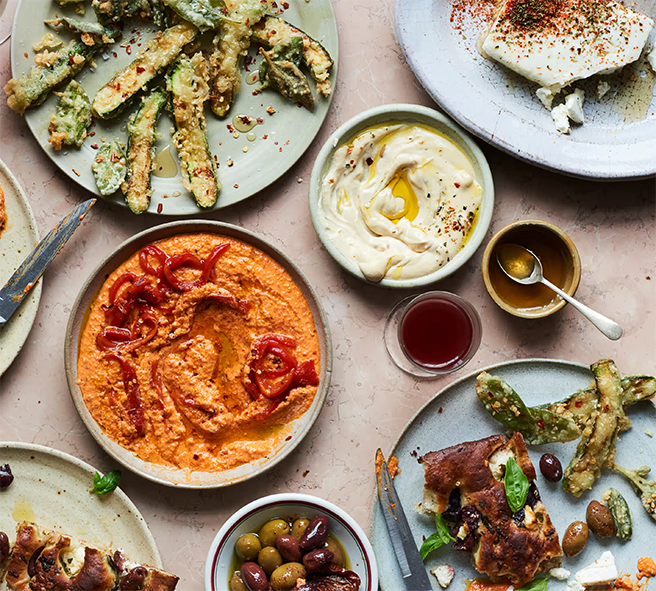 A range of cold starters/entrées.
Welcome to FabulousFusionFood's Starters/Entrée Recipes Page — A starter, also synonymous with entrée, in modern French table service and that of much of the English-speaking world, is a dish served before the main course of a meal. Outside North America and parts of English-speaking Canada, it is generally synonymous with the terms hors d'oeuvre or appetizer. It may be the first dish served, or it may follow a soup or other small dish or dishes.
The word entrée as a culinary term first appears in print around 1536 in the Petit traicté auquel verrez la maniere de faire cuisine, more widely known from a later edition titled Livre fort excellent de cuisine[b], in a collection of menus[c] at the end of the book. There, the first stage of each meal is called the entree de table (entrance to the table); the second stage consists of potaiges (foods boiled or simmered "in pots"); the third consists of one or more services de rost (meat or fowl "roasted" in dry heat); and the last is the issue de table (departure from the table). These four stages of the meal appear consistently in this order in all the books that derive from the Petit traicté.
The stages of the meal underwent several significant changes between the mid-16th and mid-17th century. Notably, the potage became the first stage of the service and the entrée became the second stage; and by 1650, the term "entrée" had lost its literal meaning and had come to refer to the stage of the meal after the potage and before the roast, entremets, and dessert.
The term "entrée" also came to refer to the dishes served at the entrée stage. While cookbooks and dictionaries of the 17th and 18th centuries rarely discuss the type of dishes appropriate to each stage of the meal with any specificity, entrées and the dishes of the other stages of the meal can be distinguished from each other by certain characteristics, such as their ingredients, cooking methods, and serving temperatures.[7] The distinct characteristics of the entrée were at first loosely observed, or perhaps more accurately, the "rules" were in a formative stage for several decades. By the early 18th century, though, certain ingredients and cooking methods were increasingly confined to the entrée stage of the meal.
Distinctions between the various types of entrées (grosses, grandes, de broche, relevé) had largely fallen out of use by the end of the 19th century, and menus of the first half of the 20th century routinely include entrées but not relevés. In France, the entrée slowly came to be associated primarily with its position in the meal rather than the composition of its dishes. Despite the objections of various food authorities who insisted on retaining the classical meaning of the word,[29] the term entrée came to refer to the first course of the meal, a small dish that precedes the main course (plat principal) in a three-course meal. The "new" use of the term, now common almost worldwide, is a return to the literal meaning of the word and a partial return to the medieval arrangement of the meal.
The alphabetical list of all the starters/entrée recipes on this site follows, (limited to 100 recipes per page). There are 1821 recipes in total:
Page 11 of 19
| Mrs Beeton Leek Soup Origin: British | Nettle Purée Origin: Britain | Onion Soup with Cheese Origin: Czech |
| Mullet Soup Origin: Cornwall | Nettle, Sorrel and Lentil Pâté Origin: Britain | Orange Salad Origin: Britain |
| Mulligatawney Soup Origin: Britain | New Potato Curry Origin: Britain | Orange Wakame Salad Origin: American |
| Mulligatawny Soup Origin: Anglo-Indian | New York Minestrone Origin: American | Other grand Sallet of Watercresses. Origin: British |
| Mulligatawny Soup Origin: Anglo-Indian | Nigerian Fresh Fish Pepper Soup Origin: Nigeria | Ova Elixa (Boiled Eggs) Origin: Roman |
| Mushroom and Burdock Soup Origin: Fusion | Nigerian Spiced Goat Meat Pepper Soup Origin: Nigeria | Ova Frixa (Fried Eggs) Origin: Roman |
| Mushroom and Sherry Soup Origin: Britain | Nigerian Spiced Mixed Meat Pepper Soup Origin: Nigeria | Ox-cheek Soup Origin: British |
| Mushroom Bruschetta Origin: Britain | Nipplewort Crème Fraîche Origin: Britain | Ox-cheek Soup Origin: British |
| Mushroom Chilli Dry Fry Origin: Britain | Noix de St-Jacques à la crème d'oignons de Roscoff (Scallops with Roscoff Onion Cream) Origin: France | Ox-tail Soup Origin: British |
| Mushroom Millefeuille Origin: Britain | North Cornish Pea Soup Origin: England | Ox-tail Soup Origin: British |
| Mushroom Pâté Origin: Britain | Noteye (Nutty) Origin: England | Ox-tail Soup Origin: British |
| Mushroom Pâté en Croûte Origin: Britain | Num Banh Choc (Rice Noodle Fish Soup) Origin: Cambodia | Oxeye Daisy Tabbolueh Origin: Fusion |
| Mushroom Soup Origin: British | Num Pa-chok Tirk Ka-chuii (Khmer Noodle Soup with Fingerroot) Origin: Cambodia | Oyster Croquets Origin: Britain |
| Mushrooms à la Greque Origin: France | Nyona Penang Assam Laska Origin: Malaysia | Oyster Mushroom Tom Yum (Thai Hot and Sour Soup with Oyster Mushrooms) Origin: Thailand |
| Mushrooms with Parsley and Garlic Origin: Britain | Nyponsoppa (Wild Rosehip Soup) Origin: Sweden | Oyster Soup Origin: British |
| Mussel Brose Origin: Scotland | Oatmeal Bacon Pancakes Origin: Ireland | Oyster Soup I Origin: British |
| Mussel Hodi Origin: Sri Lanka | Oatmeal Soup Origin: Scotland | Oyster Soup II Origin: British |
| Mussel Soup Origin: Scotland | Octapodhi Ksydhato (Pickled Octopus) Origin: Cyprus | Oyster Stew Origin: Britain |
| Mutabal Origin: Jordan | Ofellae Aprogineo (Starters in the Manner of Wild Boar) Origin: Roman | Oysters Origin: British |
| Muttabal Origin: Turkey | Ofellas Apicianas (Starters, Apician Style) Origin: Roman | Oysters in Stout Batter with Carrageen Origin: Ireland |
| Mutton Broth Origin: Britain | Ofellas Assas (Roast Morsels) Origin: Roman | Oysters Kirkpatrick Origin: British |
| Mutton Pies à la Windsor Origin: Britain | Ofellas Garatas (Braised Morsels) Origin: Roman | Oysters on the Half Shell with Mignonette Sauce Origin: France |
| My Lady of Portlandàs Mince Pyes Origin: Britain | Ofellas Garaton (Morsels with Fish-sauce) Origin: Roman | Oysters Rockerfeller Origin: American |
| Nõgesesupp (Nettle Soup with Egg Garnish) Origin: Estonia | Ofellas Ostienses (Ostian-style Starters) Origin: Roman | Oysters with Bloody Mary Sauce Origin: American |
| Naengmyŏn Origin: North Korea | Oignons à la Monégasque (Sweet and Sour Onions, Monegasque Style) Origin: Monaco | Pâté Cregyn Gleision y Fenai (Menai Straits Mussel Pâté) Origin: Welsh |
| Namasu (Daikon and Carrot in Vinegar Dressing) Origin: Japan | Oktapodhi Krasato (Octopus in Wine) Origin: Cyprus | Pâté Nadolig (Christmas Pâté) Origin: Welsh |
| Nasturtium Flower Tabbolueh Origin: Fusion | Old-fashioned Turkey Soup Origin: British | Pakistani Lamb Chops Origin: Britain |
| Nasturtium Soup Origin: American | Olivarum Conditurae (Olive and Celery Tapenade) Origin: Roman | Palestine Soup Origin: British |
| Nasturtiums with Cream Cheese and Almond Filling Origin: Britain | Olives Origin: British | Palpina (Purslane and Lentil Soup) Origin: Iran |
| Nems au poulet (Chicken Spring Rolls) Origin: Tahiti | Onion Bhajee Origin: Britain | Pan Kail Origin: British |
| Nepalese Lentil Soup Origin: Nepal | Onion Porridge Origin: British | Pan-fried Squat Lobsters Origin: England |
| Nettle and Sausage Soup Origin: Britain | Onion Salad with Honey Origin: Andorra | Pancit Bihon (Thin Rice Noodles with Vegetables) Origin: Philippines |
| Nettle and Wild Garlic Soup Origin: Britain | Onion Soup Origin: British | |
| Nettle Pâté Origin: British | Onion Soup Mix Origin: American |
Page 11 of 19