FabulousFusionFood's Vegetarian Recipes 24th Page
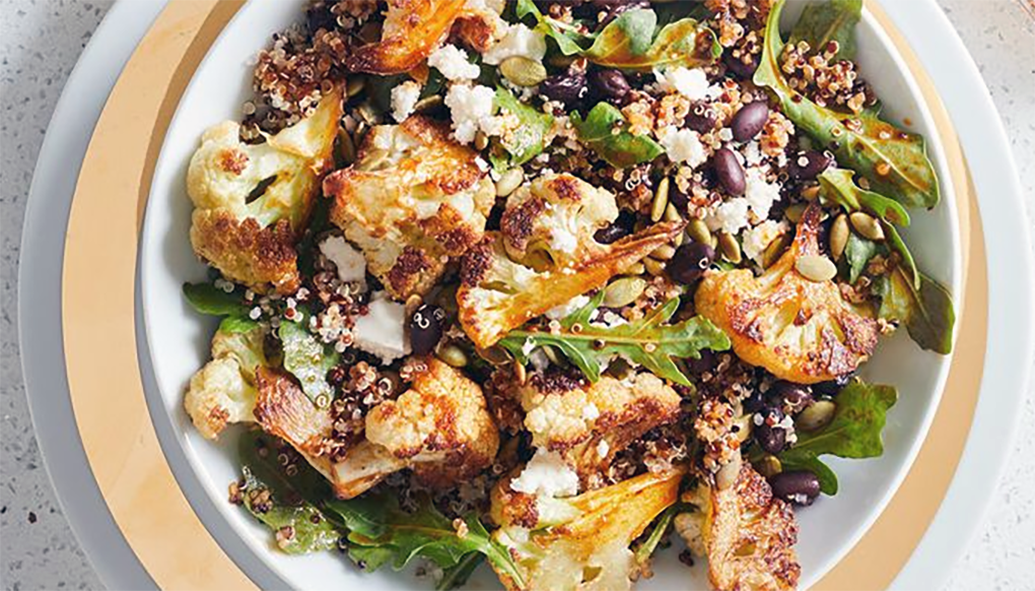 Image of a vegetarian dish based on cauliflower.
Welcome to FabulousFusionFood's Vegetarian Recipes Page — A vegetarian dish is one that eschews the addition of meat or meat products. As a practice, vegetarianism is the practice of abstaining from the consumption of meat (red meat, poultry, seafood, insects, and the flesh of any other animal). It may also include abstaining from eating all by-products of animal slaughter. A person who practices vegetarianism is known as a vegetarian
There are many variations of the vegetarian diet: an ovo-vegetarian diet includes eggs and a lacto-vegetarian diet includes dairy products, while a lacto-ovo vegetarian diet includes both. As the strictest of vegetarian diets, a vegan diet excludes all animal products, and can be accompanied by abstention from the use of animal-derived products, such as leather shoes.
The earliest record of vegetarianism comes from the 9th century BCE, inculcating tolerance towards all living beings. Parshwanatha and Mahavira, the 23rd and 24th tirthankaras in Jainism, respectively, revived and advocated ahimsa and Jain vegetarianism between the 8th and 6th centuries BCE; the most comprehensive and strictest form of vegetarianism. In Indian culture, vegetarianism has been closely connected with the attitude of nonviolence towards animals (called ahimsa in India) for millennia and was promoted by religious groups and philosophers. The Ācārāṅga Sūtra from 5th century BCE advocates Jain-vegetarianism; and forbids the monks from walking on grass in order to avoid inflicting pain on them and prevent small insects dwelling inside from getting killed. The ancient Indian work of the Tirukkuṟaḷ, dated before the 5th century CE, explicitly and unambiguously emphasizes shunning meat and non-killing as a common man's virtues.
Among the Hellenes, Egyptians, and others, vegetarianism had medical or ritual purification purposes. Vegetarianism was also practiced in ancient Greece and the earliest reliable evidence for vegetarian theory and practice in Greece dates from the 6th century BCE. The Orphics, a religious movement spreading in Greece at that time, also practiced and promoted vegetarianism. Greek teacher Pythagoras, who promoted the altruistic doctrine of metempsychosis, may have practiced vegetarianism, but is also recorded as eating meat. A fictionalized portrayal of Pythagoras appears in Ovid's Metamorphoses, in which he advocates a form of strict vegetarianism. It was through this portrayal that Pythagoras was best known to English-speakers throughout the early modern period and, prior to the coinage of the word "vegetarianism", vegetarians were referred to in English as "Pythagoreans".
The first written use of the term "vegetarian" originated in the early 19th century, when authors referred to a vegetable regimen diet. Historically, 'vegetable' could be used to refer to any type of edible vegetation. Modern dictionaries explain its origin as a compound of vegetable (adjective) and the suffix -arian (in the sense of agrarian). The term was popularized with the foundation of the Vegetarian Society in Manchester in 1847, although it may have appeared in print before 1847. The earliest occurrences of the term seem to be related to Alcott House—a school on the north side of Ham Common, London—which was opened in July 1838 by James Pierrepont Greaves.
Western vegetarian diets are typically high in carotenoids, but relatively low in omega-3 fatty acids and vitamin B12. Vegans can have particularly low intake of vitamin B and calcium if they do not eat enough items such as collard greens, leafy greens, tempeh and tofu (soy). In contrast, high levels of dietary fibre, folic acid, vitamins C and E, and magnesium, and low consumption of saturated fat are all considered to be beneficial aspects of a vegetarian diet.
The alphabetical list of all the vegetarian recipes on this site follows, (limited to 100 recipes per page). There are 4093 recipes in total:
Page 24 of 41
| Microwave Honey Christmas Ring Cake Origin: Britain | Mint Chocolate Brownies Origin: American | Mologathanni Soup Origin: Sri Lanka |
| Microwave Honey Gingerbread Origin: Britain | Mint Jelly Origin: Britain | Molokhia (Egyptian Greens Soup) Origin: Egypt |
| Microwave Hot Honey Fruit Punch Origin: Britain | Mint Shortbread Biscuits Origin: Ireland | Momo Achar Origin: Nepal |
| Microwave Mug Cake with Chia Seeds Origin: American | Minted Peas Origin: Britain | Monarda Syrup Origin: American |
| Microwave Nutty Bramble Crumble Origin: Britain | Miondo (Cassava Sticks) Origin: Cameroon | Mont Blanc Coco Antillais (Antillean Coconut Mont Blanc Cake) Origin: French Guiana |
| Microwave Sesame Wholemeal Rolls Origin: Britain | Misir W'ot Origin: Ethiopia | Mont Blanc Coco Antillais (Antillean Coconut Mont Blanc Cake) Origin: Saint Barthelemy |
| Microwave Spinach and Cheese Soufflé Origin: Britain | Missi Roti Origin: India | Mont Blanc Coco Antillais (Antillean Coconut Mont Blanc Cake) Origin: Saint-Martin |
| Microwave Strawberry and Pistachio Shortcake Origin: Britain | Missi Roti Origin: India | Mont Blanc Coco Antillais (Antillean Coconut Mont Blanc Cake) Origin: Guadeloupe |
| Microwave Tomato Omelette Origin: Britain | Mitmita Origin: Ethiopia | Mont Blanc Coco Antillais (Antillean Coconut Mont Blanc Cake) Origin: Martinique |
| Middle Eastern Rice Origin: Middle East | Mitumba (Cassava Sticks) Origin: Cameroon | Mont Blanc Cupcakes Origin: Britain |
| Middle Easters Falafel (Middle Eastern Falafel) Origin: Middle East | Mixed Mushroom Soup with Chu Hou Origin: Fusion | Montenegrin Imam Bajeldi Origin: Montenegro |
| Mielie Fritters Origin: Zimbabwe | Mixed Vegetable Curry Origin: Britain | Montserratian Black Bean Soup Origin: Montserrat |
| Mieliebrood (Zulu Corn Bread Recipe) Origin: South Africa | Mixed Wild Mushroom Soup Origin: Britain | Montserratian Corn Soup Origin: Montserrat |
| Migod Sir Benfro (Pembrokshire Buns) Origin: Welsh | Mixtura cum amygdalinam et sesamae (Almond, Seame and Herb Purée) Origin: Roman | Montserratian Green Seasoning Origin: Montserrat |
| Mikates (Congolese Sweet Doughnuts) Origin: DR-Congo | Mixtura cum Caseo (Soft Cheese with a Herb Purée) Origin: Roman | Moong Pulao (Mung Bean Pulao) Origin: Pakistan |
| Milk Cake Origin: India | Mixtura cum Caseo (Soft Cheese and Herb Purée) Origin: Roman | Moongre ki Subzi (Radish Pod and Potato Sauté) Origin: India |
| Milka Micic (Cheese-filled Crepes) Origin: Serbia | Mixtura cum Nucleis Pineis (Pine Nut, Cheese and Herb Pâté) Origin: Roman | Mor Kulambu Origin: India |
| Minari-buchimgae (Water Dropwort Pancake) Origin: Korea | Miyeok Julgi Bokkeum (Korean Kelp Stem Accompaniment) Origin: Korea | Morel Mattar Masala Origin: Fusion |
| Mincemat, Macadamia and Cranberry Biscotti Origin: Fusion | Mkatra Siniya (Comorian Tray Cake) Origin: Comoros | Mornay Toasts Origin: Britain |
| Mincemeat and Mulled Wine Sorbet Origin: Britain | Mocha Fudge Origin: Britain | Moro de guandules con coco (Christmas Rice and Pigeon Peas) Origin: Dominican Republic |
| Mincemeat Blondies Origin: Fusion | Mochi Pancakes Origin: Hawaii | Moroccan Chickpea Soup Origin: Morocco |
| Mincemeat Buns Origin: Britain | Mochi Pancakes Origin: Japan | Moroccan Rice Pudding Origin: Morocco |
| Mincemeat Chelsea Buns Origin: Britain | Mofo Akondro (Malagasy Banana Fritters) Origin: Madagascar | Moroccan Vegetable Harira Origin: Morocco |
| Mincemeat Croissants Origin: Britain | Mofo Sakay (Spiced Fritters) Origin: Madagascar | Moroccan-style Five-grain Pilaf Origin: African Fusion |
| Mincemeat Eccles Cakes II Origin: Britain | Moh Let Saung (Coconut Milk with Sago) Origin: Myanmar | Morogo Wa Dinawa (Bean Leaf Stew) Origin: Botswana |
| Mincemeat Flapjacks Origin: Britain | Moi-Moi Origin: Nigeria | Morogo with Butternut Squash Origin: Botswana |
| Mincemeat Samosas Origin: South Africa | Moina Tai (Coconut Cream Sauce) Origin: Cook Islands | Moroho (Fried Greens) Origin: Lesotho |
| Mincemeat Streusel Traybake Origin: Britain | Moist Chocolate Sponge Cake Origin: Ireland | Mother's Day Simnel Cupcakes Origin: Britain |
| Minestra (Maltese Vegetable Soup) Origin: Malta | Mojo Marinade Origin: Cuba | Mousseline de fruit à pain (Breadfruit mousseline) Origin: Martinique |
| Mini Blueberry and Lemon Muffins Origin: Britain | Molasses Refrigerator Muffins Origin: American | Moutchentra (Lentil and Rice Pilaff) Origin: Cyprus |
| Mini Chocolate Cupcakes Origin: Britain | Mole Poblano Enmoladas Origin: Mexico | Mozambique Peri-Peri Origin: Mozambique |
| Mini Jackfruit Tacos with Charred Sweetcorn and Gochujang Mayo Origin: Fusion | Mole-style Sweet Potato Chili Origin: American | Mozzarella Fritters Origin: Ireland |
| Mini Orange Polenta Cake Origin: Fusion | Molho de Piri-Piri (Mozambican Peri-peri Sauce) Origin: Mozambique | |
| Mini Victoria Sandwiches Origin: Britain | Molho Piri-piri (Portuguese Piri-piri Sauce) Origin: Portugal |
Page 24 of 41