FabulousFusionFood's Vegetarian Recipes 22tn Page
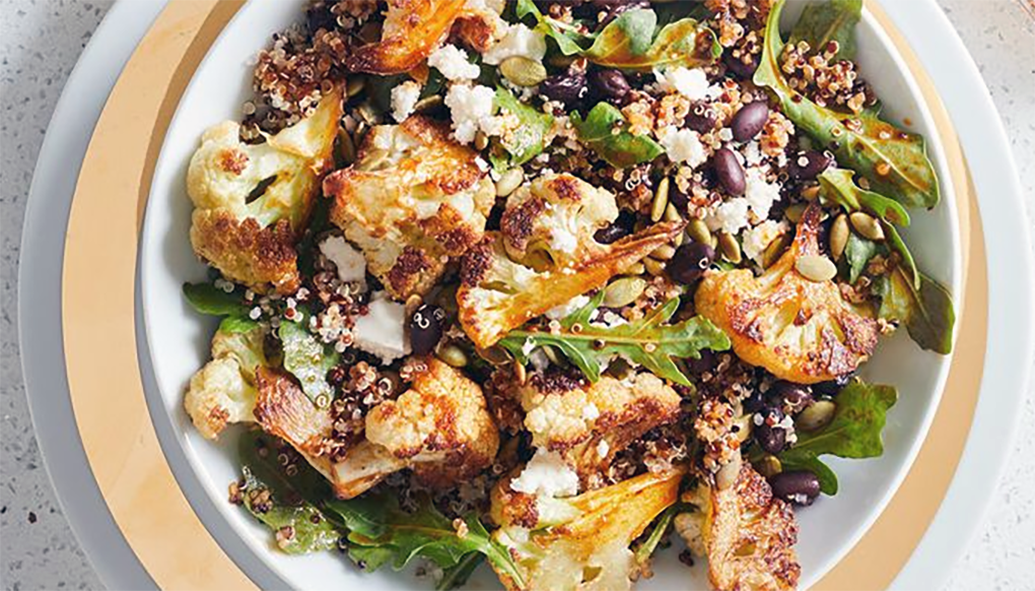 Image of a vegetarian dish based on cauliflower.
Welcome to FabulousFusionFood's Vegetarian Recipes Page — A vegetarian dish is one that eschews the addition of meat or meat products. As a practice, vegetarianism is the practice of abstaining from the consumption of meat (red meat, poultry, seafood, insects, and the flesh of any other animal). It may also include abstaining from eating all by-products of animal slaughter. A person who practices vegetarianism is known as a vegetarian
There are many variations of the vegetarian diet: an ovo-vegetarian diet includes eggs and a lacto-vegetarian diet includes dairy products, while a lacto-ovo vegetarian diet includes both. As the strictest of vegetarian diets, a vegan diet excludes all animal products, and can be accompanied by abstention from the use of animal-derived products, such as leather shoes.
The earliest record of vegetarianism comes from the 9th century BCE, inculcating tolerance towards all living beings. Parshwanatha and Mahavira, the 23rd and 24th tirthankaras in Jainism, respectively, revived and advocated ahimsa and Jain vegetarianism between the 8th and 6th centuries BCE; the most comprehensive and strictest form of vegetarianism. In Indian culture, vegetarianism has been closely connected with the attitude of nonviolence towards animals (called ahimsa in India) for millennia and was promoted by religious groups and philosophers. The Ācārāṅga Sūtra from 5th century BCE advocates Jain-vegetarianism; and forbids the monks from walking on grass in order to avoid inflicting pain on them and prevent small insects dwelling inside from getting killed. The ancient Indian work of the Tirukkuṟaḷ, dated before the 5th century CE, explicitly and unambiguously emphasizes shunning meat and non-killing as a common man's virtues.
Among the Hellenes, Egyptians, and others, vegetarianism had medical or ritual purification purposes. Vegetarianism was also practiced in ancient Greece and the earliest reliable evidence for vegetarian theory and practice in Greece dates from the 6th century BCE. The Orphics, a religious movement spreading in Greece at that time, also practiced and promoted vegetarianism. Greek teacher Pythagoras, who promoted the altruistic doctrine of metempsychosis, may have practiced vegetarianism, but is also recorded as eating meat. A fictionalized portrayal of Pythagoras appears in Ovid's Metamorphoses, in which he advocates a form of strict vegetarianism. It was through this portrayal that Pythagoras was best known to English-speakers throughout the early modern period and, prior to the coinage of the word "vegetarianism", vegetarians were referred to in English as "Pythagoreans".
The first written use of the term "vegetarian" originated in the early 19th century, when authors referred to a vegetable regimen diet. Historically, 'vegetable' could be used to refer to any type of edible vegetation. Modern dictionaries explain its origin as a compound of vegetable (adjective) and the suffix -arian (in the sense of agrarian). The term was popularized with the foundation of the Vegetarian Society in Manchester in 1847, although it may have appeared in print before 1847. The earliest occurrences of the term seem to be related to Alcott House—a school on the north side of Ham Common, London—which was opened in July 1838 by James Pierrepont Greaves.
Western vegetarian diets are typically high in carotenoids, but relatively low in omega-3 fatty acids and vitamin B12. Vegans can have particularly low intake of vitamin B and calcium if they do not eat enough items such as collard greens, leafy greens, tempeh and tofu (soy). In contrast, high levels of dietary fibre, folic acid, vitamins C and E, and magnesium, and low consumption of saturated fat are all considered to be beneficial aspects of a vegetarian diet.
The alphabetical list of all the vegetarian recipes on this site follows, (limited to 100 recipes per page). There are 4093 recipes in total:
Page 22 of 41
| Lime Pickle Origin: India | Luss-Ny-Greg Saillt (Pickled Samphire) Origin: Manx | Malabi Milk Pudding with Rose Water Origin: Israel |
| Limoo Amani (Persian Dried Limes) Origin: Iran | M'Baazi Origin: Kenya | Malaga Raisin Ice Cream Origin: Britain |
| Lingonpäron (Lingonberry Pears) Origin: Sweden | M'chicha (Spinach with Peanuts) Origin: Tanzania | Malagasy Coconut and Vanilla Rice Origin: Madagascar |
| Linguine and Trumpet Chanterelles Origin: Britain | M'hajeb (Filled Pastries) Origin: Algeria | Malai Curry Sauce Origin: India |
| Linguine with Chanterelles and Leeks Origin: Italy | M'raad (Egyptian Aubergine Salad) Origin: Egypt | Malai Kofta with Spicy Gravy Origin: India |
| Linguine with saffron, roasted garlic, herb butter and hazelnuts Origin: Britain | Mǎmǎligǎ (Romanian Cornmeal Porridge) Origin: Romania | Malasadas Origin: Portugal |
| Liphaphatha (Lesothan Bakestone Bread) Origin: Lesotho | Ma'amool Bil Tamer (Date Cakes) Origin: Saudi Arabia | Malawi Yellow Rice Origin: Malawi |
| Liquamen ex Piris (A Liquamen from Pears) Origin: Roman | Maïs Grillé (Barbecued Corn Cobs) Origin: Niger | Malaysian Fish Curry Powder Origin: Malaysia |
| Liver and Onion Kebabs Origin: Britain | Maacouda bil Batata (Potato Omelette) Origin: Tunisia | Malaysian Peanut Sauce Origin: Malaysia |
| Llymru Sucan (Sowans Flummery) Origin: Welsh | Macadamia Nut Pie Origin: Marshall Islands | Malewa (Bamboo and Peanut Soup) Origin: Uganda |
| Llysiau Gyda Saws Caws (Vegetables in a Cheese Sauce) Origin: Welsh | Macanese Choy Sum Origin: Macau | Malian Simbala Powder Origin: Mali |
| Llysiau Pob (Roast Vegetables) Origin: Welsh | Macaroni Cheese Origin: Britain | Mallow Cheese with Seaweed Paste Origin: Fusion |
| Lobio Supi (Red Bean Soup) Origin: Georgia | Macaroni Salad Origin: American | Mallow Soup Origin: Britain |
| Lobio Tkemali (Red Beans with Sour Plums and Balsamic Vinegar) Origin: Georgia | Macaroon-topped Mince Pies Origin: Britain | Malpua (Sweet Indian Pancakes) Origin: India |
| Locrio (Dominican Cassava Bread) Origin: Dominican Republic | Macedonia Tropical (Tropical Fruit Salad) Origin: Spain | Malpua with Rabri (Indian Pancakes with Saffron and Rosewater Cream) Origin: India |
| Locro de papa (Ecuadorian potato and cheese soup) Origin: Ecuador | Macedonian Ajvar (Macedonian Pepper Relish) Origin: North Macedonia | Maltese Sauce Origin: Malta |
| Locro de Zapallo Origin: Peru | Macedonian Tarator (Cucumber and Sour Cream Salad) Origin: North Macedonia | Malty Oat Biscuits Origin: Britain |
| Lokše (Slovak Potato Pancakes) Origin: Slovakia | Mada (Green Banana Dumplings) Origin: Norfolk Island | Mambazha Pulissery Origin: India |
| Lokma (Syrup-drenched Doughnuts) Origin: Turkey | Madaba (Cassava Leaf and Coconut Stew) Origin: Britain | Mandas Origin: India |
| Lokmadhes (Cypriot Doughnuts with Honey Syrup) Origin: Cyprus | Madeeda Hilba II (Fenugreek Porridge) Origin: South Sudan | Mandas of Cucumber Origin: India |
| Longan Tong Sui (Snow Fungus Dessert Soup) Origin: China | Madungo Bakes Origin: Saint Vincent | Mandas of Red Pumpkin Origin: India |
| Lontong (Compressed Rice Cakes) Origin: Malaysia | Mafa (Breadfruit Pudding) Origin: Marshall Islands | Mandelspritzgebäck (German Almond Christmas Biscuits) Origin: Germany |
| Lontong (Compressed Rice Cakes) Origin: Cocos Islands | mafè tatou nènn (Naked Peanut Stew) Origin: Mali | Mandioca Frita (Cassava Fries) Origin: Mozambique |
| Lopo (Fried Summer Squash and Greens) Origin: Lesotho | Maffi Gumbo (Okra Sauce) Origin: Guinea | Mandioca Fritata (Fried Cassava) Origin: Angola |
| Loseyns in Fysch Day (Lozenge Cakes for Fish Day) Origin: England | Mafura with Sweet Potatoes Origin: Mozambique | Mangai Palakottai Kuzhambu (Raw Mango Jackfruit Seed Curry) Origin: India |
| Loubia B'dersa (Algerian Chili) Origin: Algeria | Maharagwe (Spiced Red Beans in Coconut Milk) Origin: Kenya | Mangalorean Spinach and Black Eyed Beans Curry Origin: India |
| Loubia bil Luz (Green Beans with Almonds) Origin: Algeria | Maharashtrian Masala Bhat (Spicy Maharashtrian Rice) Origin: India | Mango Atjar Origin: South Africa |
| Louisiana Hot Sauce Origin: America | Mahjouba (Algerian Crêpes) Origin: Algeria | Mango Bingsu (Korean Mango Shaved Ice) Origin: Korea |
| Love-apple Soup Origin: British | Maisbrot aus Namibia (Namibian-style Cornbread) Origin: Namibia | Mango Coconut Ladoo Origin: Anglo-Indian |
| Lucknow Chicken Korma Origin: India | Maize Meal Bagobe (Maize Meal Porridge) Origin: Botswana | Mango Falooda Origin: Pakistan |
| Lucky Leprechaun Lime Drink Origin: American | Makara (Banana Fritters) Origin: Equatorial Guinea | Mango Seboseb Origin: Palau |
| Lumpia Wrappers Origin: Philippines | Makhlouta (All-bean Soup) Origin: Lebanon | Mango Snow Origin: Kenya |
| Lupis (Sticky Rice Rolls with Palm Sugar Syrup) Origin: Indonesia | Makki di Roti Origin: India | |
| Luscious Lime Cupcakes Origin: Britain | Makoenya (Lesothan Fat Cakes) Origin: Lesotho |
Page 22 of 41