FabulousFusionFood's Vegetarian Recipes 29th Page
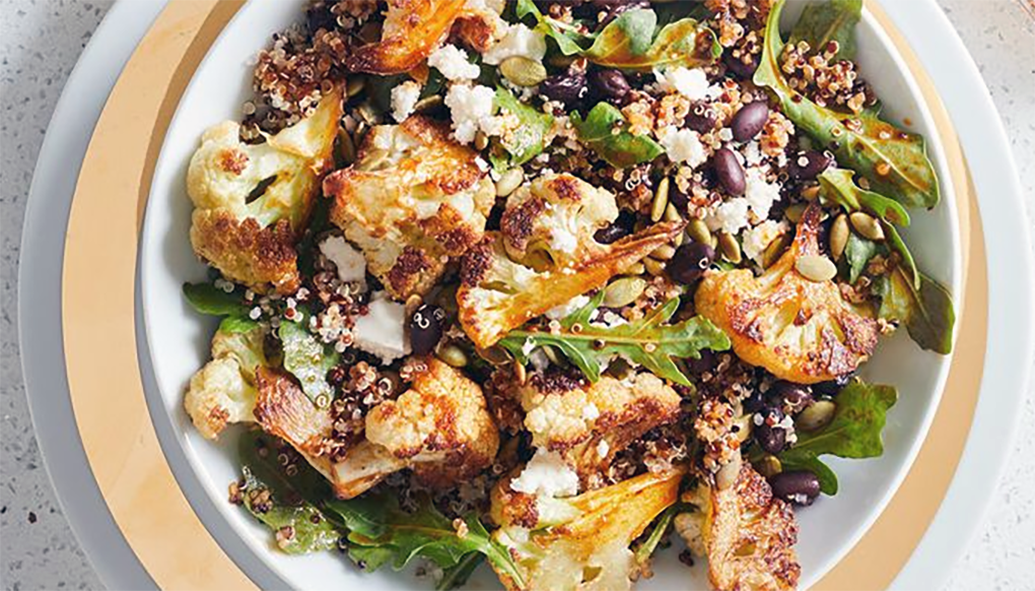 Image of a vegetarian dish based on cauliflower.
Welcome to FabulousFusionFood's Vegetarian Recipes Page — A vegetarian dish is one that eschews the addition of meat or meat products. As a practice, vegetarianism is the practice of abstaining from the consumption of meat (red meat, poultry, seafood, insects, and the flesh of any other animal). It may also include abstaining from eating all by-products of animal slaughter. A person who practices vegetarianism is known as a vegetarian
There are many variations of the vegetarian diet: an ovo-vegetarian diet includes eggs and a lacto-vegetarian diet includes dairy products, while a lacto-ovo vegetarian diet includes both. As the strictest of vegetarian diets, a vegan diet excludes all animal products, and can be accompanied by abstention from the use of animal-derived products, such as leather shoes.
The earliest record of vegetarianism comes from the 9th century BCE, inculcating tolerance towards all living beings. Parshwanatha and Mahavira, the 23rd and 24th tirthankaras in Jainism, respectively, revived and advocated ahimsa and Jain vegetarianism between the 8th and 6th centuries BCE; the most comprehensive and strictest form of vegetarianism. In Indian culture, vegetarianism has been closely connected with the attitude of nonviolence towards animals (called ahimsa in India) for millennia and was promoted by religious groups and philosophers. The Ācārāṅga Sūtra from 5th century BCE advocates Jain-vegetarianism; and forbids the monks from walking on grass in order to avoid inflicting pain on them and prevent small insects dwelling inside from getting killed. The ancient Indian work of the Tirukkuṟaḷ, dated before the 5th century CE, explicitly and unambiguously emphasizes shunning meat and non-killing as a common man's virtues.
Among the Hellenes, Egyptians, and others, vegetarianism had medical or ritual purification purposes. Vegetarianism was also practiced in ancient Greece and the earliest reliable evidence for vegetarian theory and practice in Greece dates from the 6th century BCE. The Orphics, a religious movement spreading in Greece at that time, also practiced and promoted vegetarianism. Greek teacher Pythagoras, who promoted the altruistic doctrine of metempsychosis, may have practiced vegetarianism, but is also recorded as eating meat. A fictionalized portrayal of Pythagoras appears in Ovid's Metamorphoses, in which he advocates a form of strict vegetarianism. It was through this portrayal that Pythagoras was best known to English-speakers throughout the early modern period and, prior to the coinage of the word "vegetarianism", vegetarians were referred to in English as "Pythagoreans".
The first written use of the term "vegetarian" originated in the early 19th century, when authors referred to a vegetable regimen diet. Historically, 'vegetable' could be used to refer to any type of edible vegetation. Modern dictionaries explain its origin as a compound of vegetable (adjective) and the suffix -arian (in the sense of agrarian). The term was popularized with the foundation of the Vegetarian Society in Manchester in 1847, although it may have appeared in print before 1847. The earliest occurrences of the term seem to be related to Alcott House—a school on the north side of Ham Common, London—which was opened in July 1838 by James Pierrepont Greaves.
Western vegetarian diets are typically high in carotenoids, but relatively low in omega-3 fatty acids and vitamin B12. Vegans can have particularly low intake of vitamin B and calcium if they do not eat enough items such as collard greens, leafy greens, tempeh and tofu (soy). In contrast, high levels of dietary fibre, folic acid, vitamins C and E, and magnesium, and low consumption of saturated fat are all considered to be beneficial aspects of a vegetarian diet.
The alphabetical list of all the vegetarian recipes on this site follows, (limited to 100 recipes per page). There are 4093 recipes in total:
Page 29 of 41
| Pickled Sea Aster Origin: England | Pisum cum Acetam (Peas with Vinaigrette) Origin: Roman | Plantain and Coconut Soup Origin: Uganda |
| Pickled Sea Lettuce Origin: Britain | Pit Pit in Coconut Cream Origin: Papua New Guinea | Plantain Pie Origin: Dominica |
| Pickled Sea Purslane Origin: Britain | Pit Pit in Coconut Cream Origin: Fiji | Plantain Pilé à la Sauce d'Arachide (Crushed Plantains with Peanut Sauce) Origin: Cameroon |
| Pickled Serrated Wrack Origin: Britain | Pit Pit in Coconut Cream Origin: Niue | Plantain Seed Mix Origin: Britain |
| Pickled Spanish Onions Origin: British | Pit Pit in Coconut Cream Origin: Papua | Plantainipannkoogid (Dominican Plantain Pancakes) Origin: Dominica |
| Pickled Three-cornered Leek Bulbs Origin: Britain | Pit Pit in Coconut Cream Origin: Samoa | Plantains in Coconut Milk Origin: South Africa |
| Pico de Gallo Origin: Mexico | Pit Pit in Coconut Cream Origin: Tonga | Plantano Macho Frito (Fried Plantain Chips) Origin: Equatorial Guinea |
| Piezly Mukhat (Chickpea and Onion Stew) Origin: Tajikistan | Pit Pit in Coconut Cream Origin: Vanuatu | Plum Muffins (Plum Muffins) Origin: Britain |
| Pigeon Peas and Rice Origin: Barbados | Pit Pit in Coconut Cream Origin: Kiribati | Plum Traybake Slices Origin: Britain |
| Pihlohlo mwehng Origin: Federated States Micronesia | Pit Pit in Coconut Cream Origin: Federated States Micronesia | Plun (Banana) Pie Origin: Pitcairn Islands |
| Pika (Onion and Chilli Pickle) Origin: Curacao | Pit Pit in Coconut Cream Origin: Cook Islands | Po'e Origin: Tahiti |
| Pikliz Origin: Haiti | Pit Pit in Coconut Cream Origin: New Caledonia | Po'e II Origin: Easter Island |
| Pilau Rice Origin: India | Pit Pit in Coconut Cream Origin: Wallis Futuna | Pochee (Poached Eggs) Origin: England |
| Pilau Rice Origin: Britain | Pit Pit in Coconut Cream Origin: Society Islands | Poddash Meinn-corkey (Oatmeal Porridge) Origin: Manx |
| Piment d'Attiéké (Pepper Sauce for Attiéké) Origin: Cote dIvoire | Pit Pit in Coconut Cream Origin: Marshall Islands | Podin Bara Amenyn (Bread and Butter Pudding) Origin: England |
| Pindzur Origin: North Macedonia | Pit Pit in Coconut Cream Origin: Marquesas Islands | Podin Lymmaval (Lemmon Pudding) Origin: England |
| Pineapple Chutney Origin: Zambia | Pitcairn Roasted Breadfruit Origin: Pitcairn Islands | Poha Chivda (Cabbage Chivda) Origin: India |
| Pineapple Pudding Origin: India | Pittu Origin: Sri Lanka | Pointed Gourd Bhaji Origin: Anglo-Indian |
| Pineapple Pulissery Origin: India | Pizza (Made Without Yeast) Origin: Argentina | Pois-sucré Bollite (Boiled Tiger Nuts) Origin: Burkina Faso |
| Pineapple Upside-down Pudding Origin: Britain | Pizza Giardiniera Origin: Italy | Pol Sambol Origin: Sri Lanka |
| Pineappleweed and Coconut Ice Lollies Origin: Britain | Pizzoccheri Origin: Italy | Poland Pierogi Origin: Poland |
| Pineappleweed Bud Jam Origin: Britain | Pizzoccheri with Miso Cabbage and Spiced Breadcrumbs Origin: Fusion | Polenta aux Herbes (Herbed Polenta) Origin: Guinea |
| Pineappleweed Cordial Origin: Britain | Placali Origin: Cote dIvoire | Polentam (Polenta) Origin: Roman |
| Pineappleweed Posset Pots Origin: Britain | Plăcintă cu Branza (Romanian Cheese Pie) Origin: Romania | Polka-dot Cupcakes Origin: Britain |
| Pineappleweed Syrup Origin: Britain | Placki z Kwiatow Bzu (Polish Elderflower Pancakes) Origin: Poland | Polvorones puertorriqueños (Guava Thumbprint Biscuits) Origin: Puerto Rico |
| Pineappleweed Tea Origin: Britain | Plain Boiled Rice Origin: Anglo-Indian | Polynesian Curry Powder Origin: Polynesia |
| Piperade Origin: Fusion | Plain Oliebollen (Dutch New Year Doughnuts) Origin: Netherlands | Pomegranate and Vanilla Cupcakes Origin: Britain |
| Piragua Origin: Puerto Rico | Plain Omelette Origin: France | Pomegranate Molasses Glazed Carrots with Pistachios Origin: Fusion |
| Pirohi Origin: Slovakia | Plain Omelette with Sorrel Origin: France | Poné de Cassave (Cassava Pone) Origin: French Guiana |
| Pirozhki (Stuffed Yeasted Buns) Origin: Russia | Plain Paratha Origin: India | Poné de Citrouille (Pumpkin Pone) Origin: French Guiana |
| Pisam Vitellianam sive fabam (Peas or Broad Beans Beans in a Herb Sauce) Origin: Roman | Plain Pickled Fiddleheads Origin: Canada | Poné de Citrouille (Pumpkin Pone) Origin: Guyana |
| Pishies (Pastries with Syrup) Origin: Cyprus | Plain Pound Cake Origin: Britain | Pontac Catsup for Fish Origin: Britain |
| Pistachio and Yoghurt Cake Origin: Britain | Plakali (Ivorian Pepper Soup) Origin: Cote dIvoire | |
| Pistachio Dukkah Origin: Australia | Plantain and Coconut Beef Soup Origin: Gambia |
Page 29 of 41