FabulousFusionFood's Vegetarian Recipes 31st Page
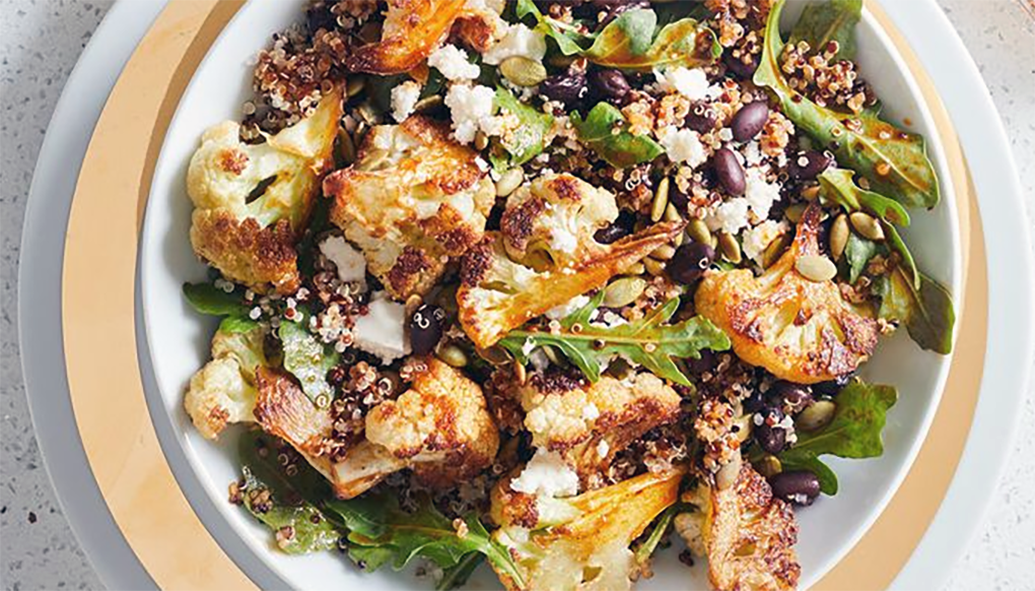 Image of a vegetarian dish based on cauliflower.
Welcome to FabulousFusionFood's Vegetarian Recipes Page — A vegetarian dish is one that eschews the addition of meat or meat products. As a practice, vegetarianism is the practice of abstaining from the consumption of meat (red meat, poultry, seafood, insects, and the flesh of any other animal). It may also include abstaining from eating all by-products of animal slaughter. A person who practices vegetarianism is known as a vegetarian
There are many variations of the vegetarian diet: an ovo-vegetarian diet includes eggs and a lacto-vegetarian diet includes dairy products, while a lacto-ovo vegetarian diet includes both. As the strictest of vegetarian diets, a vegan diet excludes all animal products, and can be accompanied by abstention from the use of animal-derived products, such as leather shoes.
The earliest record of vegetarianism comes from the 9th century BCE, inculcating tolerance towards all living beings. Parshwanatha and Mahavira, the 23rd and 24th tirthankaras in Jainism, respectively, revived and advocated ahimsa and Jain vegetarianism between the 8th and 6th centuries BCE; the most comprehensive and strictest form of vegetarianism. In Indian culture, vegetarianism has been closely connected with the attitude of nonviolence towards animals (called ahimsa in India) for millennia and was promoted by religious groups and philosophers. The Ācārāṅga Sūtra from 5th century BCE advocates Jain-vegetarianism; and forbids the monks from walking on grass in order to avoid inflicting pain on them and prevent small insects dwelling inside from getting killed. The ancient Indian work of the Tirukkuṟaḷ, dated before the 5th century CE, explicitly and unambiguously emphasizes shunning meat and non-killing as a common man's virtues.
Among the Hellenes, Egyptians, and others, vegetarianism had medical or ritual purification purposes. Vegetarianism was also practiced in ancient Greece and the earliest reliable evidence for vegetarian theory and practice in Greece dates from the 6th century BCE. The Orphics, a religious movement spreading in Greece at that time, also practiced and promoted vegetarianism. Greek teacher Pythagoras, who promoted the altruistic doctrine of metempsychosis, may have practiced vegetarianism, but is also recorded as eating meat. A fictionalized portrayal of Pythagoras appears in Ovid's Metamorphoses, in which he advocates a form of strict vegetarianism. It was through this portrayal that Pythagoras was best known to English-speakers throughout the early modern period and, prior to the coinage of the word "vegetarianism", vegetarians were referred to in English as "Pythagoreans".
The first written use of the term "vegetarian" originated in the early 19th century, when authors referred to a vegetable regimen diet. Historically, 'vegetable' could be used to refer to any type of edible vegetation. Modern dictionaries explain its origin as a compound of vegetable (adjective) and the suffix -arian (in the sense of agrarian). The term was popularized with the foundation of the Vegetarian Society in Manchester in 1847, although it may have appeared in print before 1847. The earliest occurrences of the term seem to be related to Alcott House—a school on the north side of Ham Common, London—which was opened in July 1838 by James Pierrepont Greaves.
Western vegetarian diets are typically high in carotenoids, but relatively low in omega-3 fatty acids and vitamin B12. Vegans can have particularly low intake of vitamin B and calcium if they do not eat enough items such as collard greens, leafy greens, tempeh and tofu (soy). In contrast, high levels of dietary fibre, folic acid, vitamins C and E, and magnesium, and low consumption of saturated fat are all considered to be beneficial aspects of a vegetarian diet.
The alphabetical list of all the vegetarian recipes on this site follows, (limited to 100 recipes per page). There are 4093 recipes in total:
Page 31 of 41
| Pumpkin Bread Origin: American | Pwdin Mêl (Honey Pudding) Origin: Welsh | Rapa Nui Dumplings Origin: Easter Island |
| Pumpkin Chelsea Buns Origin: Britain | Pwdin Rhiwbob ac Afal Siocled Origin: Welsh | Rapas (Turnips) Origin: Roman |
| Pumpkin Crisps Origin: Britain | Pwdin Triog Melyn (Golden Syrup Pudding) Origin: Welsh | Rapeseed and Peanut Butter Cupcakes Origin: British |
| Pumpkin Croquettes Origin: Fusion | Quatre-quarts à la Mangue (Mango Pound Cake) Origin: Senegal | Rarebit Toasts Origin: Britain |
| Pumpkin Crunch Origin: American | Queen Cakes Origin: Britain | Rasabali Origin: India |
| Pumpkin Curry Origin: Britain | Queen Mary Pudding Origin: eSwatini | Rasam Origin: Southern India |
| Pumpkin Hummus Origin: American | Queen of Hearts Jam Tarts Origin: Britain | Raspberry and White Chocolate Tray Bake Origin: Britain |
| Pumpkin Parcels with Chilli and Lime Origin: Britain | Queijada de Coco (Baked Coconut Custard) Origin: Cape Verde | Raspberry Jam Origin: Britain |
| Pumpkin Ricotta gnocchi (Gnocchi de Zucca e Ricotta) Origin: Italy | Queso Fresco Origin: Peru | Raspberry Jam Shortbreads Origin: Britain |
| Pumpkin Sambar Origin: India | Queso Fresco Origin: Mexico | Raspberry Lemon Muffins with Streusel Origin: Britain |
| Pumpkin Skin Chutney Origin: Anglo-Indian | Queso Fresco Origin: Bolivia | Raspberry Meringue Pie Origin: Scotland |
| Pumpkin Sopaipillas Origin: Chile | Queso Fresco Origin: Ecuador | Raspberry Preserve Origin: Britain |
| Pumpkin Vine Tips Tarkari Origin: Nepal | Queso Fresco Origin: Colombia | Ratatouille Origin: France |
| Pumpkin with Nilgiri Sauce Origin: India | Queso Fresco Origin: Honduras | Rav Uppuma Origin: Sri Lanka |
| Pumpkin, Goat's Cheese and Kale Tart with Three-cornered Leeks Origin: Britain | Queso Frito (Fried Cheese) Origin: Spain | Rava Idli (Semolina Idli) Origin: India |
| Pumpkin, Goat's Cheese and Kale Tart Origin: Britain | Quick Berry Cheesecake In a Glass Origin: Britain | Ravitoto sy Voanjo (Cassava Leaves with Peanuts) Origin: Madagascar |
| Punch à la Vanille (Vanilla Punch) Origin: Madagascar | Quick Doubanjiang Origin: Fusion | Ravjul (Maltese Ravioli) Origin: Malta |
| Punch Coco (Coconut Punch) Origin: Comoros | Quick Mǎmǎligǎ Origin: Romania | Raw Beetroot Raita Origin: India |
| Punjabi Frying Garam Masala Origin: India | Quince and Chestnut Crumble Cake Origin: Britain | Raw Gluten Origin: Britain |
| Punjabi Lobia (Black-eyed Bean Curry) Origin: Sri Lanka | Quince Meringue Pie Origin: Britain | Raw Gluten Seitan Origin: Britain |
| Punjabi Style Tinda ki Sabzi Origin: India | Ragi Rava Ladoo Origin: India | Raw Seaweed Salad Origin: Fusion |
| Puolukkahillo (Finnish Lingonberry Jam) Origin: Finland | Ragi Roti Origin: India | Red Bean Soup with Guacamole Salsa Origin: Mexico |
| Pupusas de Frijoles y Queso (Bean and Cheese Pupusas) Origin: El Salvador | Ragoût aux épinards (Spinach Stew) Origin: Central African Republic | Red Bell Pepper Coulis Origin: France |
| Purée d'Aubergines (Aubergine Purée) Origin: Rwanda | Rainkohl und Grünkern-Suppe (Nipplewort and Green Spelt Soup) Origin: Germany | Red Bell Pepper Letcho Origin: Hungary |
| Purée d'aubergines à la Rwandaise (Rwandan Aubergine Paste) Origin: Rwanda | Raisin Pudding Origin: Britain | Red Deadnettle Rice Bake Origin: Britain |
| Pwdin Bara (Bread Pudding) Origin: Welsh | Raivas (Portuguese Cinnamon Butter Biscuits) Origin: Guinea-Bissau | Red Grout Dessert Origin: British Virgin Islands |
| Pwdin Berw Bara Lawr (Laverbread Suet Pudding) Origin: Welsh | Rajma (Kidney Bean Curry) Origin: Bangladesh | Red Grout Dessert Origin: US Virgin Islands |
| Pwdin Berw Cennin Sawrus (Savoury Steamed Leek Pudding) Origin: Welsh | Rajmah Curry Origin: India | Red Lentil Bhuna Kedgeree Origin: Anglo-Indian |
| Pwdin Berwi (Boiled Pudding) Origin: Welsh | Ramson and Sea Sandwort Tzatziki Origin: Britain | Red Lentil Dosa Origin: India |
| Pwdin Bricyll Siocled (Chocolate Apricot Pudding) Origin: Welsh | Ramson Flower Fritters Origin: Britain | Red Lentil, Chickpea and Chilli Soup Origin: Britain |
| Pwdin Bricyll Siocled (Chocolate Rhubarb Pudding) Origin: Welsh | Ramson Purée Origin: Britain | Red Millet Asida (Brown Ugali) Origin: Uganda |
| Pwdin Efa Santes Ddwynwen (St Dwynwen's Day Eve's Pudding) Origin: Welsh | Rangood na Vaal (Gujarati Butter Bean Curry) Origin: India | Red Onion and Mozzarella Pizza Origin: Britain |
| Pwdin Eirin Mair Siocled (Chocolate Gooseberry Pudding) Origin: Welsh | Ranonapango (Burned Rice Drink) Origin: Madagascar | |
| Pwdin Eirin Melyn Siocled (Chocolate Greengage Pudding) Origin: Welsh | Ranonapango Origin: Madagascar |
Page 31 of 41