FabulousFusionFood's Vegetarian Recipes 26th Page
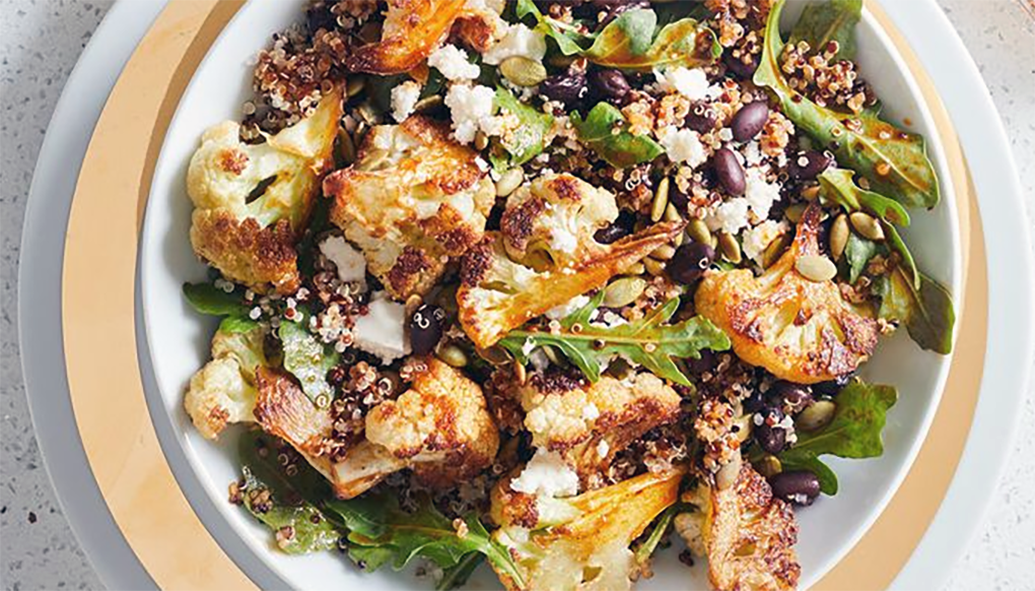 Image of a vegetarian dish based on cauliflower.
Welcome to FabulousFusionFood's Vegetarian Recipes Page — A vegetarian dish is one that eschews the addition of meat or meat products. As a practice, vegetarianism is the practice of abstaining from the consumption of meat (red meat, poultry, seafood, insects, and the flesh of any other animal). It may also include abstaining from eating all by-products of animal slaughter. A person who practices vegetarianism is known as a vegetarian
There are many variations of the vegetarian diet: an ovo-vegetarian diet includes eggs and a lacto-vegetarian diet includes dairy products, while a lacto-ovo vegetarian diet includes both. As the strictest of vegetarian diets, a vegan diet excludes all animal products, and can be accompanied by abstention from the use of animal-derived products, such as leather shoes.
The earliest record of vegetarianism comes from the 9th century BCE, inculcating tolerance towards all living beings. Parshwanatha and Mahavira, the 23rd and 24th tirthankaras in Jainism, respectively, revived and advocated ahimsa and Jain vegetarianism between the 8th and 6th centuries BCE; the most comprehensive and strictest form of vegetarianism. In Indian culture, vegetarianism has been closely connected with the attitude of nonviolence towards animals (called ahimsa in India) for millennia and was promoted by religious groups and philosophers. The Ācārāṅga Sūtra from 5th century BCE advocates Jain-vegetarianism; and forbids the monks from walking on grass in order to avoid inflicting pain on them and prevent small insects dwelling inside from getting killed. The ancient Indian work of the Tirukkuṟaḷ, dated before the 5th century CE, explicitly and unambiguously emphasizes shunning meat and non-killing as a common man's virtues.
Among the Hellenes, Egyptians, and others, vegetarianism had medical or ritual purification purposes. Vegetarianism was also practiced in ancient Greece and the earliest reliable evidence for vegetarian theory and practice in Greece dates from the 6th century BCE. The Orphics, a religious movement spreading in Greece at that time, also practiced and promoted vegetarianism. Greek teacher Pythagoras, who promoted the altruistic doctrine of metempsychosis, may have practiced vegetarianism, but is also recorded as eating meat. A fictionalized portrayal of Pythagoras appears in Ovid's Metamorphoses, in which he advocates a form of strict vegetarianism. It was through this portrayal that Pythagoras was best known to English-speakers throughout the early modern period and, prior to the coinage of the word "vegetarianism", vegetarians were referred to in English as "Pythagoreans".
The first written use of the term "vegetarian" originated in the early 19th century, when authors referred to a vegetable regimen diet. Historically, 'vegetable' could be used to refer to any type of edible vegetation. Modern dictionaries explain its origin as a compound of vegetable (adjective) and the suffix -arian (in the sense of agrarian). The term was popularized with the foundation of the Vegetarian Society in Manchester in 1847, although it may have appeared in print before 1847. The earliest occurrences of the term seem to be related to Alcott House—a school on the north side of Ham Common, London—which was opened in July 1838 by James Pierrepont Greaves.
Western vegetarian diets are typically high in carotenoids, but relatively low in omega-3 fatty acids and vitamin B12. Vegans can have particularly low intake of vitamin B and calcium if they do not eat enough items such as collard greens, leafy greens, tempeh and tofu (soy). In contrast, high levels of dietary fibre, folic acid, vitamins C and E, and magnesium, and low consumption of saturated fat are all considered to be beneficial aspects of a vegetarian diet.
The alphabetical list of all the vegetarian recipes on this site follows, (limited to 100 recipes per page). There are 4093 recipes in total:
Page 26 of 41
| Nettle, Squash and Almond Curry Origin: Britain | Nougat Traditionelle (Traditional Nougat) Origin: France | Okpa (Bambara Groundnut Breakfast Pudding) Origin: Nigeria |
| Nettles Origin: Britain | Nước Cốt Dừa (Coconut Milk Sauce) Origin: Vietnam | Okra in Tomato Sauce with Emperor's Mint Origin: African Fusion |
| Neujahrspretzel (German New Year's Pretzels) Origin: Germany | Nut Cutlet Origin: British | Okra Relish Origin: Tanzania |
| Nevis Hot Pepper Sauce Recipe Origin: Saint Kitts | Nut-topped Sticky Toffee Pudding Origin: Britain | Okra with Seaweed Paste Origin: Fusion |
| New Orleans Style Pumpkin Pie Origin: South Africa | Nutty Moroccan Couscous Origin: Morocco | Oktoshi (Candied Puffed Rice) Origin: Japan |
| New Potato and Fennel Kebabs Origin: Ireland | Nutty Rice Burgers Origin: Britain | Olan Origin: India |
| New Potato Curry Origin: Britain | Nyambeh Nyebbeh (Black-eyed Bean stew with Cassava) Origin: Ghana | Old Bay Seasoning Mix Origin: American |
| New Potato Parcels Origin: Ireland | Nyebbeh with Oli Gravy Origin: Gambia | Old-fashioned Brined Mushrooms Origin: British |
| New Year's Eve Latkes Origin: Germany | Nyekoe (Lesotho Sorghum and Beans) Origin: Lesotho | Old-fashioned Home-made Sauerkraut Origin: Germany |
| New Zealand Kiwi Fruit Bread Origin: New Zealand | Nyembwe Sauce Origin: Gabon | Old-fashioned Sweet Pickled Sea Sandwort Origin: Britain |
| Ngaiwa Phala (Sweetened Maize Porridge) Origin: Malawi | Nyete Greens with Peanut Butter Origin: South Sudan | Oleleh Origin: Sierra Leone |
| Ngukassa (Plantain Soup) Origin: Central African Republic | Nyonya-style Curry with Eggs Origin: Malaysia | Oleum Liburnicum Sic Facies (Liburnian Oil is Made Thus) Origin: Roman |
| Nhangana com Coco (Cowpea Leaves with Coconuts) Origin: Mozambique | Nypon och Lingonsylt (Rose-hip and Lingonberry Jam) Origin: Sweden | Olio di Peperoncino (Chilli Oil) Origin: Italy |
| Nhopi Dovi (Pumpkin with Groundnut Sauce) Origin: Zimbabwe | Nysebek (A Dish, Nice for the Mouth) Origin: England | Olive and Sun-dried Tomato Mash Origin: Britain |
| Nigeria's Mother Sauce Origin: Nigeria | Oat and Currant Biscuits Origin: Britain | Omajova-Pilz-Ragout mit Hirse (Omajova Mushroom Ragout with Millet) Origin: Namibia |
| Nigerian Beans Porridge Origin: Nigeria | Oat Biscuits Origin: Britain | Ombidi (Namibian Spinach Stew) Origin: Namibia |
| Nigerian FuFu Origin: Nigeria | Oat Mittai with Fruit and Nuts Origin: India | Omelett mit Kalahari-trüffeln (Omelette with Kalahari Truffles) Origin: Namibia |
| Nigerian Pancakes with Suya-spiced Tofu Scramble Origin: Nigeria | Oatmeal Bilberry Bread Origin: Northern Ireland | Omled Sloj (Onion Greens Omelette) Origin: Welsh |
| Nigerian Pepper Soup Spices Origin: Nigeria | Oatmeal Gingerbread Origin: Scotland | Omo Tuo (Hausa Rice Balls) Origin: Ghana |
| Nigerian Rice Flour FuFu Origin: Nigeria | Oatmeal Muffins (Oatmeal Muffins) Origin: American | Onion Bean Dip Origin: India |
| Nigerian-style Spaghetti Origin: Nigeria | Oatmeal Potatoes Origin: Scotland | Onion Bhajee Origin: Britain |
| Nimki (Crispy Flour Crackers) Origin: Bengal | Oats Swallow Origin: Nigeria | Onion Bhaji Origin: India |
| Niramish Kochur Loti (Colocasia Stem Curry) Origin: Bangladesh | Oaty Crumbles Origin: Scotland | Onion Salad with Honey Origin: Andorra |
| Niter Kebbeh (Spiced Ghee) Origin: Ethiopia | Oaxacan Black Beans with Avocado Leaf Origin: Mexico | Onion-flavoured Potatoes Origin: Ireland |
| Njahi in Coconut Sauce (Kenyan Black Beans in Coconut Sauce) Origin: Kenya | Obe-Onigba (Garden Egg Sauce) Origin: Nigeria | Onunu (Mashed Yam and Plantain) Origin: Nigeria |
| No-bake Lemon Soufflé Origin: Britain | Obuoliu Blynai (Lithuanian Apple Pancakes) Origin: Lithuania | Orange and Poppy Seed Cupcakes Origin: Britain |
| No-bake Peanut Butter Flapjack Origin: Britain | Ofam (Ripe Plantain Loaf) Origin: Ghana | Orange Bergamot Nuts Origin: American |
| No-cook Chocolate Silk Tarts Origin: American | Ofio Drink (Tiger Nut Drink) Origin: Nigeria | Orange Cranberry Sauce Origin: America |
| Noix de Coco Caramélisée (Caramelized Coconut) Origin: Cameroon | Ogórki kiszone (Polish Pickled Cucumbers) Origin: Korea | Orange Crumble Mince Pies Origin: Britain |
| Noodle Curry Paste Origin: Laos | Ohn Htamin (Burmese Coconut Rice) Origin: Myanmar | Orange Curd Origin: Britain |
| Nopal and Banana Smoothie Origin: America | Oignons à la Monégasque (Sweet and Sour Onions, Monegasque Style) Origin: Monaco | Orange Date Muffins (Orange Date Muffins) Origin: American |
| Ñoquis de Papa (Potato Gnocchi) Origin: Uruguay | Oil-based Flapjacks Origin: Britain | Orange Marmalade Cupcakes Origin: Britain |
| Nougat d'Arachide (Peanut Nougat) Origin: Togo | Oil-based Sponge Origin: Britain | |
| Nougat de Montélimar Origin: France | Okok (Eru Leaf Stew) Origin: Cameroon |
Page 26 of 41