FabulousFusionFood's Vegetarian Recipes 20th Page
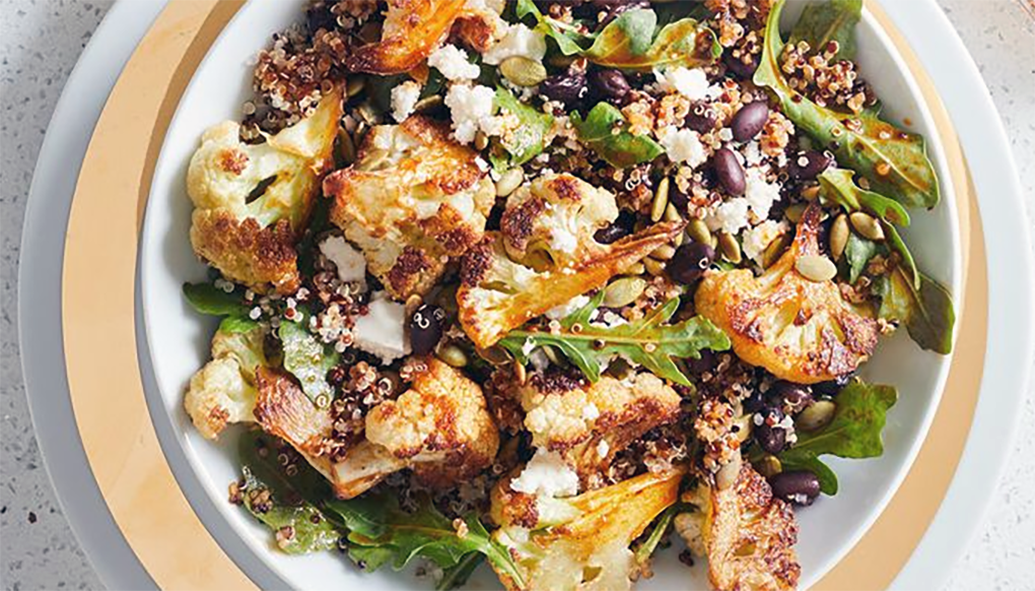 Image of a vegetarian dish based on cauliflower.
Welcome to FabulousFusionFood's Vegetarian Recipes Page — A vegetarian dish is one that eschews the addition of meat or meat products. As a practice, vegetarianism is the practice of abstaining from the consumption of meat (red meat, poultry, seafood, insects, and the flesh of any other animal). It may also include abstaining from eating all by-products of animal slaughter. A person who practices vegetarianism is known as a vegetarian
There are many variations of the vegetarian diet: an ovo-vegetarian diet includes eggs and a lacto-vegetarian diet includes dairy products, while a lacto-ovo vegetarian diet includes both. As the strictest of vegetarian diets, a vegan diet excludes all animal products, and can be accompanied by abstention from the use of animal-derived products, such as leather shoes.
The earliest record of vegetarianism comes from the 9th century BCE, inculcating tolerance towards all living beings. Parshwanatha and Mahavira, the 23rd and 24th tirthankaras in Jainism, respectively, revived and advocated ahimsa and Jain vegetarianism between the 8th and 6th centuries BCE; the most comprehensive and strictest form of vegetarianism. In Indian culture, vegetarianism has been closely connected with the attitude of nonviolence towards animals (called ahimsa in India) for millennia and was promoted by religious groups and philosophers. The Ācārāṅga Sūtra from 5th century BCE advocates Jain-vegetarianism; and forbids the monks from walking on grass in order to avoid inflicting pain on them and prevent small insects dwelling inside from getting killed. The ancient Indian work of the Tirukkuṟaḷ, dated before the 5th century CE, explicitly and unambiguously emphasizes shunning meat and non-killing as a common man's virtues.
Among the Hellenes, Egyptians, and others, vegetarianism had medical or ritual purification purposes. Vegetarianism was also practiced in ancient Greece and the earliest reliable evidence for vegetarian theory and practice in Greece dates from the 6th century BCE. The Orphics, a religious movement spreading in Greece at that time, also practiced and promoted vegetarianism. Greek teacher Pythagoras, who promoted the altruistic doctrine of metempsychosis, may have practiced vegetarianism, but is also recorded as eating meat. A fictionalized portrayal of Pythagoras appears in Ovid's Metamorphoses, in which he advocates a form of strict vegetarianism. It was through this portrayal that Pythagoras was best known to English-speakers throughout the early modern period and, prior to the coinage of the word "vegetarianism", vegetarians were referred to in English as "Pythagoreans".
The first written use of the term "vegetarian" originated in the early 19th century, when authors referred to a vegetable regimen diet. Historically, 'vegetable' could be used to refer to any type of edible vegetation. Modern dictionaries explain its origin as a compound of vegetable (adjective) and the suffix -arian (in the sense of agrarian). The term was popularized with the foundation of the Vegetarian Society in Manchester in 1847, although it may have appeared in print before 1847. The earliest occurrences of the term seem to be related to Alcott House—a school on the north side of Ham Common, London—which was opened in July 1838 by James Pierrepont Greaves.
Western vegetarian diets are typically high in carotenoids, but relatively low in omega-3 fatty acids and vitamin B12. Vegans can have particularly low intake of vitamin B and calcium if they do not eat enough items such as collard greens, leafy greens, tempeh and tofu (soy). In contrast, high levels of dietary fibre, folic acid, vitamins C and E, and magnesium, and low consumption of saturated fat are all considered to be beneficial aspects of a vegetarian diet.
The alphabetical list of all the vegetarian recipes on this site follows, (limited to 100 recipes per page). There are 4093 recipes in total:
Page 20 of 41
| Kelewele III Origin: Ghana | Kiri Bath (Coconut Milk Rice) Origin: Sri Lanka | Kougin Patatez (Breton Potato Cake) Origin: France |
| Kenyan Chapati Origin: Kenya | Kisra (Sudanese Flatbread) Origin: Sudan-a | Kouign Amann (Breton Layered Pastry Cake) Origin: France |
| Kenyan Pilau Masala Origin: Kenya | Kissra Origin: Sudan-a | Kouign amann aux pommes (Kouign Amann with Apples) Origin: France |
| Kenyan Ugali (Maize Meal Pap) Origin: Kenya | Kittitian Pumpkin And Lentil Curry Origin: Saint Kitts | Kourabiedes (Greek Almond Crescents) Origin: Greece |
| Ker-Y-Pom (Apple in Shortbread) Origin: France | Knekkebrød (Norwegian Crispbread) Origin: Norway | Koushari (Lentils, Macaroni and Rice in Oil) Origin: Egypt |
| Kerala Matta Rice Origin: India | Knol Khol Poriyal (Spicy Fried Kholrabi) Origin: India | Koushry (Rice with Lentils) Origin: Egypt |
| Kerala Plantain Errisery Origin: India | Kobi Bhaji Origin: India | Kozhukattai Payasam Origin: India |
| Keralan Garam Masala Origin: India | Kobi Sabji (Cabbage Sabji) Origin: India | Kpé (Peanut Paste) Origin: Central African Republic |
| Keres Choklet (Cherry Chocolate Biscuits) Origin: England | Kokada (Aruban Coconut Candy) Origin: Aruba | Krækiberjasaft Chatni (Crowberry Chutney) Origin: Iceland |
| Kerrie-aartappels en Uie (Curried Potatoes and Onions) Origin: South Africa | Kokada (Bonaire Coconut Candy) Origin: Bonaire | Krækiberjasaft Súpa (Crowberry Soup) Origin: Iceland |
| Kewa Datshi (Potatoes with Cheese) Origin: Bhutan | Kokada (Curaçao Coconut Candy) Origin: Dominica | Kroeung Samlor (Khmer Yellow Kroeung) Origin: Cambodia |
| Khachapuri (Georgian Cheese Pie) Origin: Georgia | Kokam Aloo (Kokam Potatoes) Origin: India | Kuba (Mushroom and Barley Casserole) Origin: Czech |
| Khachapuri iz Fasoli (Georgian Bean Pie) Origin: Georgia | Kokam Sharbat Origin: India | Kubani (Dried Apricot Dessert) Origin: India |
| Khamas (Persian Dried Fruit Dessert) Origin: Iran | Kokam Soup Origin: India | Kuku Kadoo (Persian Courgette Omelette) Origin: Iran |
| Khatai Biscuits Origin: Afghanistan | Koko Alaisa (Cocoa Rice Pudding) Origin: Samoa | Kuli-kuli Origin: Benin |
| Khatta Curry Origin: India | Kokonte Origin: Ghana | Kuli-kuli (Groundnut Cakes) Origin: Nigeria |
| Khatta Meetha (Cabbage Curry) Origin: India | Kokonte Origin: Togo | Kunu Zaki (Millet Kunu Drink) Origin: Nigeria |
| Khatte Pudina Aloo (Tangy Minted Potatoes) Origin: India | Kokos Taart (Coconut Tart) Origin: Sint Eustatius | Kunun gyada Origin: Nigeria |
| Khayan thee Hnat (Burmese Stuffed Aubergine Curry) Origin: Myanmar | Kokos Taart (Coconut Tart) Origin: Sint Maarten | Kunun Kwakwa Origin: Nigeria |
| Khichidi Origin: India | Kokos Taart (Coconut Tart) Origin: Aruba | Kurambiedes (Greek Christmas Biscuits) Origin: Greece |
| Khichiri Origin: India | Kokos Taart (Coconut Tart) Origin: Curacao | Kuru Börülce (Black-eyed Bean Salad) Origin: Northern Cyprus |
| Khichuri Origin: India | Kokum Kari (Kokam Curry) Origin: India | Kusabi Chutney (Safflower Seed and Tamarind Chutney) Origin: India |
| Khobz Ftir (Algerian Flatbread) Origin: Algeria | Koliko (Fried Yam Chips) Origin: Togo | Kyboi (Dice Bread) Origin: Roman |
| Khoshaf'ar'asali (Pumpkin and Nut Pudding) Origin: Egypt | Kolokitha Yiemista me Rizi (Courgette Stuffed with Rice) Origin: Cyprus | Kykeon (Barley Water) Origin: Roman |
| Khowsuey Origin: Chile | Kolokotes (Pastries Stuffed with Pumpkin) Origin: Cyprus | Kypriaka Lazania (Cypriot Lasagne) Origin: Cyprus |
| Khoya (Condensed Milk Solids) Origin: India | Kongodo (Peanut Brittle) Origin: Equatorial Guinea | Kypriakes Ravioles (Cypriot Ravioli) Origin: Cyprus |
| Khumb Matar (Mushroom and Green Pea Curry) Origin: India | Kopto à l'arachide (Kopto in Peanut Sauce) Origin: Niger | Lémou Hari (Lemon Juice with Ginger) Origin: Niger |
| Khumbi Aloo (Mushroom and Potato Curry) Origin: India | Korean-inspired Oxeye Daisy Greens Origin: Fusion | La Bouille du Tchad (Chadian Porridge) Origin: Chad |
| Kıbrıs Pidesi (Cypriot Pita Bread) Origin: Cyprus | Korma Curry Paste Origin: Britain | La Pagne aux Fruits (Fruited Bread) Origin: Monaco |
| Kidney Bean and Black Bean Curry Origin: Fusion | Korrat (Stewed Leeks) Origin: Egypt | La Salade à la Nigerienne (Niger-style Salad) Origin: Niger |
| Kidney Bean Curry Origin: Britain | Koshari (Lentils, Pasta and Rice) Origin: Egypt | Laban Sauce Origin: Lebanon |
| Kik Wot (Yellow Split Pea Stew) Origin: Ethiopia | Kosheri Origin: Egypt | Lablabi Origin: Tunisia |
| Kimchi Origin: Korea | Kosksu bil-Ful (Couscous with Broad Beans) Origin: Malta | |
| Kinpira Gobo (Japanese-style Braised Burdock Root) Origin: Japan | Kotleciki Owsiane (Savoury Rolled Oat Croquettes) Origin: Poland |
Page 20 of 41