FabulousFusionFood's Vegetarian Recipes 14th Page
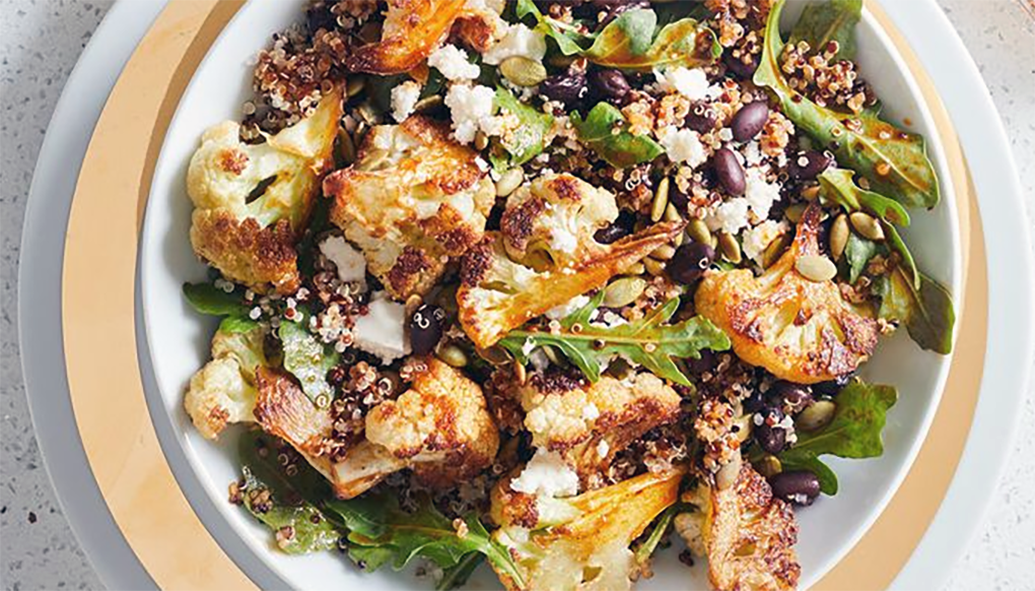 Image of a vegetarian dish based on cauliflower.
Welcome to FabulousFusionFood's Vegetarian Recipes Page — A vegetarian dish is one that eschews the addition of meat or meat products. As a practice, vegetarianism is the practice of abstaining from the consumption of meat (red meat, poultry, seafood, insects, and the flesh of any other animal). It may also include abstaining from eating all by-products of animal slaughter. A person who practices vegetarianism is known as a vegetarian
There are many variations of the vegetarian diet: an ovo-vegetarian diet includes eggs and a lacto-vegetarian diet includes dairy products, while a lacto-ovo vegetarian diet includes both. As the strictest of vegetarian diets, a vegan diet excludes all animal products, and can be accompanied by abstention from the use of animal-derived products, such as leather shoes.
The earliest record of vegetarianism comes from the 9th century BCE, inculcating tolerance towards all living beings. Parshwanatha and Mahavira, the 23rd and 24th tirthankaras in Jainism, respectively, revived and advocated ahimsa and Jain vegetarianism between the 8th and 6th centuries BCE; the most comprehensive and strictest form of vegetarianism. In Indian culture, vegetarianism has been closely connected with the attitude of nonviolence towards animals (called ahimsa in India) for millennia and was promoted by religious groups and philosophers. The Ācārāṅga Sūtra from 5th century BCE advocates Jain-vegetarianism; and forbids the monks from walking on grass in order to avoid inflicting pain on them and prevent small insects dwelling inside from getting killed. The ancient Indian work of the Tirukkuṟaḷ, dated before the 5th century CE, explicitly and unambiguously emphasizes shunning meat and non-killing as a common man's virtues.
Among the Hellenes, Egyptians, and others, vegetarianism had medical or ritual purification purposes. Vegetarianism was also practiced in ancient Greece and the earliest reliable evidence for vegetarian theory and practice in Greece dates from the 6th century BCE. The Orphics, a religious movement spreading in Greece at that time, also practiced and promoted vegetarianism. Greek teacher Pythagoras, who promoted the altruistic doctrine of metempsychosis, may have practiced vegetarianism, but is also recorded as eating meat. A fictionalized portrayal of Pythagoras appears in Ovid's Metamorphoses, in which he advocates a form of strict vegetarianism. It was through this portrayal that Pythagoras was best known to English-speakers throughout the early modern period and, prior to the coinage of the word "vegetarianism", vegetarians were referred to in English as "Pythagoreans".
The first written use of the term "vegetarian" originated in the early 19th century, when authors referred to a vegetable regimen diet. Historically, 'vegetable' could be used to refer to any type of edible vegetation. Modern dictionaries explain its origin as a compound of vegetable (adjective) and the suffix -arian (in the sense of agrarian). The term was popularized with the foundation of the Vegetarian Society in Manchester in 1847, although it may have appeared in print before 1847. The earliest occurrences of the term seem to be related to Alcott House—a school on the north side of Ham Common, London—which was opened in July 1838 by James Pierrepont Greaves.
Western vegetarian diets are typically high in carotenoids, but relatively low in omega-3 fatty acids and vitamin B12. Vegans can have particularly low intake of vitamin B and calcium if they do not eat enough items such as collard greens, leafy greens, tempeh and tofu (soy). In contrast, high levels of dietary fibre, folic acid, vitamins C and E, and magnesium, and low consumption of saturated fat are all considered to be beneficial aspects of a vegetarian diet.
The alphabetical list of all the vegetarian recipes on this site follows, (limited to 100 recipes per page). There are 4093 recipes in total:
Page 14 of 41
| Elderflower Tart Origin: Britain | Fakatokelau Origin: Tokelau | Ffroes (Pancakes) Origin: Welsh |
| Elies Tsakistes (Crushed Green Olives) Origin: Cyprus | Fakes Soupa (Greek Lentil Soup) Origin: Greece | Fiddlehead and Morel Mushroom Risotto Origin: American |
| Elubo (Yam Flour) Origin: Nigeria | Falafel Origin: Bahrain | Fiddlehead Pasta Primavera Origin: American |
| Ema Datshi (Chillies with Cheese) Origin: Bhutan | Family Spaghetti Sauce Origin: Italy | Field Mushroom Frittata Origin: British |
| Empadãi de Queijo (Cheese Pie) Origin: Brazil | Fanouropita (Greek Spiced Sultana Cake) Origin: Greece | Field Mushrooms in Buttermilk Origin: British |
| Empanadas de frijoles negros y queso (Black Bean and Cheese Empanadas) Origin: Mexico | Far breton aux pruneaux (Breton Far with Prunes) Origin: France | Fig and Honey Cupcakes Origin: Britain |
| Enchilada Pie Origin: Fusion | Farine and Pear Origin: Saint Lucia | Fijian Khatar (Jackfruit Curry) Origin: Fiji |
| Enchilada Sauce Origin: Mexico | Farine Breakfast Porridge Origin: Guyana | Fijian Raita Origin: Fiji |
| Enchiladas de Espinaca (Spinach Enchiladas) Origin: Mexico | Farro Breakfast Pudding Origin: Fusion | Fijian Roti Origin: Fiji |
| English Muffins Origin: English | Fasolada (Greek Bean Soup) Origin: Greece | Filipino Yellow Curry Powder Origin: Philippines |
| Ensalada de Endibias al Cabrales (Salad of Chicory Leaves and Blue Cheese) Origin: Spain | Fasooleyah Khodra bi Zeit (Saudi Green Bean Salad) Origin: Saudi Arabia | Finadene Origin: Guam |
| Ensalada de Frutas Tropicales (Tropical Fruit Salad) Origin: Equatorial Guinea | Fassolada (Greek White Bean Soup) Origin: Greece | Fini N'Gomi (Fonio Fritters) Origin: Mali |
| Ensalada Palmito (Heart of Palm Salad) Origin: Costa Rica | Fat Cakes Origin: Botswana | Flødekartofler (Scalloped Potatoes) Origin: Denmark |
| Enselada de Palmitos de Primavera (Heart of Palm Spring Salad) Origin: Argentina | Fat Hen and Potato Gratin Origin: Britain | Flaky Pastry Origin: Britain |
| Epicurean Sauce Origin: Britain | Fat Hen Cream Sauce with Potatoes Origin: British | Flaming Eggs Origin: Thailand |
| Erbowle Origin: England | Fat Hen Quiche Origin: Britain | Flan Origin: Puerto Rico |
| Erebinthoi Knakosymmigeis (Chickpeas in Saffron) Origin: Roman | Fava Pure e Cicorielle (Mashed Broad Beans with Potatoes and Chicory) Origin: Italy | Flan (Guatemalan Caramel Custard) Origin: Guatemala |
| Erebinthoi syn Xeroi Tyroi (Chickpeas with Cheese) Origin: Roman | Fekei Origin: Tuvalu | Flan Amande et d'abricot (Almond and Apricot Flan) Origin: France |
| Eritrean Berbere Spice Origin: Eritrea | Fekei Origin: Rotuma | Flaounes II (Easter Cheese Cakes) Origin: Cyprus |
| Esfiha (Savory Stuffed Pastries) Origin: Brazil | Fénénésti (Blended Rice Pancakes) Origin: Mayotte | Flourless Chocolate Cake Origin: Britain |
| Eté Fufu (Pounded Yam Fufu) Origin: Togo | Fénénésti (Blended Rice Pancakes) Origin: Comoros | Fluffy Mashed Alexanders Root Origin: Britain |
| Ethiopian Berbere Sauce Origin: Ethiopia | Fenkel in Soppes (Fennel in Sauce) Origin: England | Fluffy Mashed Swedes Origin: Britain |
| Evening Primrose Root Gobo (Japanese-style Braised Evening Primrose Root) Origin: Britain | Fennel and Almond Soup Origin: North Africa | Foamy Sauce Origin: Scotland |
| Ewedu Origin: Nigeria | Fennel Sauce Origin: Britain | Fondant baulois (Baule fondant) Origin: France |
| Ezay (Bhutanese Chilli Condiment) Origin: Bhutan | Fermented Oil Beans Origin: Nigeria | Fondant Icing Origin: Britain |
| Ezme (Spicy Turkish Salad) Origin: Turkey | Feta Cheese Puffs Origin: Britain | Fondé de Mil (Millet Porridge) Origin: Senegal |
| Fa'apapa (Samoan Coconut Bread) Origin: Samoa | Feta Falafel Burger Origin: Fusion | Fonio and Oat Balls in Peanut Sauce Origin: Fusion |
| Fa'apapa (Samoan Coconut Bread) Origin: American Samoa | Feta Tacos with Guacamole Origin: Britain | Fool Medames (Egyptian Beans) Origin: Egypt |
| Fabaciae Frictae (Fried Green Beans) Origin: Roman | Fettucine Alfredo Origin: Italy | Forager’s Risotto Origin: Britain |
| Fabaciae Virides (Green Beans) Origin: Roman | Fettucine with Sun-Dried Tomatoes and Basil Origin: Italy | Foubey (Millet Couscous with Moringa) Origin: Niger |
| Fafa (Taro Leaves with Coconut Cream) Origin: Tahiti | Fettuna con Rucola (Grilled Ciabatta with Tomatoes and Rocket) Origin: Italy | French Fry Seasoning Origin: America |
| Faggi Ksidhati (Lentil Soup with Vinegar) Origin: Cyprus | Fettuna Toscana (Grilled Ciabatta with Tomatoes) Origin: Italy | Fresh Fig Compote Origin: Britain |
| Fairy Cakes Origin: Britain | Feuilles de Consoude Farcies (Stuffed Comfrey Leaves) Origin: France | |
| Fairy Ring Champignon Omelette Origin: France | Fflan Cenin a Phys (Leek and Pea Flan) Origin: Welsh |
Page 14 of 41