FabulousFusionFood's Vegetarian Recipes 10th Page
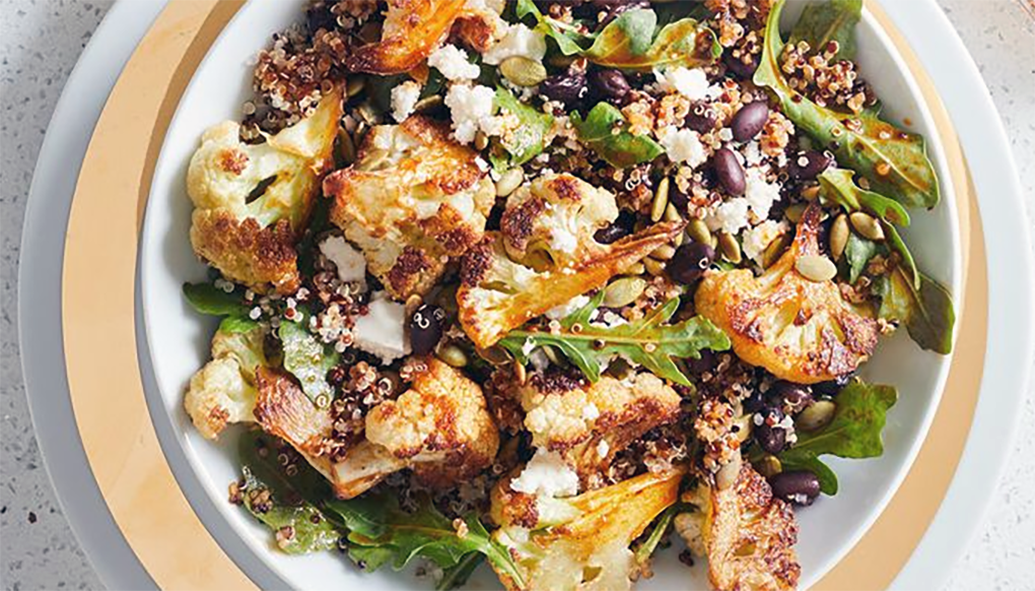 Image of a vegetarian dish based on cauliflower.
Welcome to FabulousFusionFood's Vegetarian Recipes Page — A vegetarian dish is one that eschews the addition of meat or meat products. As a practice, vegetarianism is the practice of abstaining from the consumption of meat (red meat, poultry, seafood, insects, and the flesh of any other animal). It may also include abstaining from eating all by-products of animal slaughter. A person who practices vegetarianism is known as a vegetarian
There are many variations of the vegetarian diet: an ovo-vegetarian diet includes eggs and a lacto-vegetarian diet includes dairy products, while a lacto-ovo vegetarian diet includes both. As the strictest of vegetarian diets, a vegan diet excludes all animal products, and can be accompanied by abstention from the use of animal-derived products, such as leather shoes.
The earliest record of vegetarianism comes from the 9th century BCE, inculcating tolerance towards all living beings. Parshwanatha and Mahavira, the 23rd and 24th tirthankaras in Jainism, respectively, revived and advocated ahimsa and Jain vegetarianism between the 8th and 6th centuries BCE; the most comprehensive and strictest form of vegetarianism. In Indian culture, vegetarianism has been closely connected with the attitude of nonviolence towards animals (called ahimsa in India) for millennia and was promoted by religious groups and philosophers. The Ācārāṅga Sūtra from 5th century BCE advocates Jain-vegetarianism; and forbids the monks from walking on grass in order to avoid inflicting pain on them and prevent small insects dwelling inside from getting killed. The ancient Indian work of the Tirukkuṟaḷ, dated before the 5th century CE, explicitly and unambiguously emphasizes shunning meat and non-killing as a common man's virtues.
Among the Hellenes, Egyptians, and others, vegetarianism had medical or ritual purification purposes. Vegetarianism was also practiced in ancient Greece and the earliest reliable evidence for vegetarian theory and practice in Greece dates from the 6th century BCE. The Orphics, a religious movement spreading in Greece at that time, also practiced and promoted vegetarianism. Greek teacher Pythagoras, who promoted the altruistic doctrine of metempsychosis, may have practiced vegetarianism, but is also recorded as eating meat. A fictionalized portrayal of Pythagoras appears in Ovid's Metamorphoses, in which he advocates a form of strict vegetarianism. It was through this portrayal that Pythagoras was best known to English-speakers throughout the early modern period and, prior to the coinage of the word "vegetarianism", vegetarians were referred to in English as "Pythagoreans".
The first written use of the term "vegetarian" originated in the early 19th century, when authors referred to a vegetable regimen diet. Historically, 'vegetable' could be used to refer to any type of edible vegetation. Modern dictionaries explain its origin as a compound of vegetable (adjective) and the suffix -arian (in the sense of agrarian). The term was popularized with the foundation of the Vegetarian Society in Manchester in 1847, although it may have appeared in print before 1847. The earliest occurrences of the term seem to be related to Alcott House—a school on the north side of Ham Common, London—which was opened in July 1838 by James Pierrepont Greaves.
Western vegetarian diets are typically high in carotenoids, but relatively low in omega-3 fatty acids and vitamin B12. Vegans can have particularly low intake of vitamin B and calcium if they do not eat enough items such as collard greens, leafy greens, tempeh and tofu (soy). In contrast, high levels of dietary fibre, folic acid, vitamins C and E, and magnesium, and low consumption of saturated fat are all considered to be beneficial aspects of a vegetarian diet.
The alphabetical list of all the vegetarian recipes on this site follows, (limited to 100 recipes per page). There are 4093 recipes in total:
Page 10 of 41
| Chuño Phuti Origin: Bolivia | Cocadas (Coconut Bars) Origin: Ecuador | Colokassi Mesatrico (Colocassi, Mesoorias Style) Origin: Cyprus |
| Churah Gerthe (Rice and Peanut Porridge) Origin: Gambia | Cocktail Mangue Orange (Mango and Orange Cocktail) Origin: Niger | Colombo Curry Paste Origin: Martinique |
| Churra Gertehe (Peanut and Rice Porridge) Origin: Gambia | Coconut and Maraschino Cherry Cake Origin: Britain | Colourful Vegetarian Kebabs Origin: Britain |
| Churros (Fried Choux Pastries) Origin: Spain | Coconut Bean Rice Origin: Nigeria | Coltsfoot Greens Origin: British |
| Chycches (Vetches) Origin: England | Coconut Caramel Fudge with Wild Flour Origin: Britain | Comfiture de Noix de Coco (Coconut Preserve) Origin: Senegal |
| Chytni Betys (Beetroot Chutney) Origin: Welsh | Coconut Chickpea Curry with Spinach Origin: Britain | Comfrey Aloo Origin: Fusion |
| Chytni Ffa Dringo (Runner Bean Chutney) Origin: Welsh | Coconut Chickpea Dumpling Curry Origin: Britain | Common Hogweed à la Polonaise Origin: Britain |
| Chytni Tomato (Tomato Chutney) Origin: Welsh | Coconut Chutney Origin: India | Common Hogweed Floret Gratin Origin: Britain |
| Cinnamon Bonnag Origin: Manx | Coconut Collard Greens Origin: Puerto Rico | Common Hogweed Flower Bud Tempura Origin: Britain |
| Cinnamon Buttercream Icing Origin: American | Coconut Curry Origin: Seychelles | Common Mallow in Garlic, Lemon and Herbs Origin: British |
| Cinnamon Raisin Bread Origin: American | Coconut Ice Origin: Britain | Common Purslane Chimichurri Origin: Britain |
| Cinnamon Spiced Jollof Rice Origin: Sierra Leone | Coconut Ice Cream Origin: Philippines | Compost Origin: England |
| Cinnamon Stars Origin: Britain | Coconut Latiya Origin: Guam | Compota de Uvas con Crujiente de Boniato (Grape Compote with Crispy Sweet Potato) Origin: Spain |
| Cisnes de Verano (Summer Swans) Origin: Spain | Coconut Pineapple Muffins (Coconut Pineapple Muffins) Origin: Britain | Compote de Rhubarbe Sauvage (Wild Rhubarb Compote) Origin: Switzerland |
| Citrus Redbush Tea Smoothie Origin: South Africa | Coconut Pitha Origin: Anglo-Indian | Concombre cuit à l'indienne (Indian-style Cooked Cucumber) Origin: France |
| Citrusy Mincemeat Origin: Britain | Coconut Rice Origin: Cocos Islands | Confit d'Algue (Confit of Seaweed) Origin: France |
| Clafoutis aux Fleurs Sauvages (Wildflower Clafouti) Origin: France | Coconut Rice Origin: Christmas Island | Confiture de Ananas (Pineapple Jam) Origin: Martinique |
| Clafoutis de Pissenlit (Dandelion Clafouti) Origin: France | Coconut Tapioca Pudding Origin: Tuvalu | Confiture de Ananas (Pineapple Jam) Origin: Saint Barthelemy |
| Clafoutis de Pommes (Apple Clafoutis) Origin: Togo | Coconut Tart Origin: US Virgin Islands | Confiture de Banane (Banana Jam) Origin: Martinique |
| Clapshot Origin: Scotland | Coconut Tart Origin: Bonaire | Confiture de figues violettes vanille (Fig and Vanilla Jam) Origin: Mayotte |
| Clapshot II Origin: Scotland | Coconut, Banana and Chocolate Mini Muffins (Coconut, Banana and Chocolate Mini Muffins) Origin: Britain | Confiture de Madd (Madd Preserve) Origin: Senegal |
| Clarified Butter Origin: British | Coconut, Cassava and Papaya Pudding Origin: Federated States Micronesia | Confiture de Poivrons (Confit of Peppers) Origin: Monaco |
| Classic Crêpes Suzette Origin: France | Coconut, Red Beans and Rice Origin: Anguilla | Confiture de Potiron au Gingembre (Pumpkin and Ginger Preserve) Origin: Senegal |
| Classic Potato Salad Origin: Ireland | Coconut-suit (Coconut Candy) Origin: Equatorial Guinea | Confiture de Rhubarbe Sauvage (Alpine Dock Jam) Origin: Switzerland |
| Clate Origin: England | Cocos Islands Acar Origin: Cocos Islands | Confiture de Tamarin (Tamarind Jam) Origin: Senegal |
| Clotted Cream Origin: England | Cocoyam Eto Origin: Ghana | Congress Tarts Origin: England |
| Clotted Cream Fudge Origin: Britain | Cocoyam Fufu Origin: Ghana | Cooked Rice Dosa Origin: India |
| Clotted Cream Splits Origin: England | Coeur Coulant Chocolat Fruits Rouges (Chocolate Pudding with Flowing Berry Hearts) Origin: France | Cooked Tomato Coulis Origin: France |
| Cloveroot Syrup Origin: Britain | Coffee Custard Cups Origin: American | Çörek (Turkmen Bread) Origin: Turkmenistan |
| Coburg Cakes Origin: Scotland | Colcannon II Origin: Ireland | Coriander Lime Rice Origin: America |
| Coca de San Juan (St James Cake) Origin: Spain | Cold Bruet (Cold Brewet) Origin: England | Corn on the Cob with Blue Cheese Dressing Origin: Britain |
| Coca Mallorquina (Spanish Pizza) Origin: Spain | Coliflor Salteado (Sautéed Cauliflower with Garlic) Origin: Spain | Corn pilhi Origin: Norfolk Island |
| Coca Massegada Origin: Spain | Collard Greens with Coconut Milk Origin: East Africa | |
| Coca Massegada Origin: Andorra | Collumella's Moretum Origin: Roman |
Page 10 of 41