FabulousFusionFood's Vegetarian Recipes 34th Page
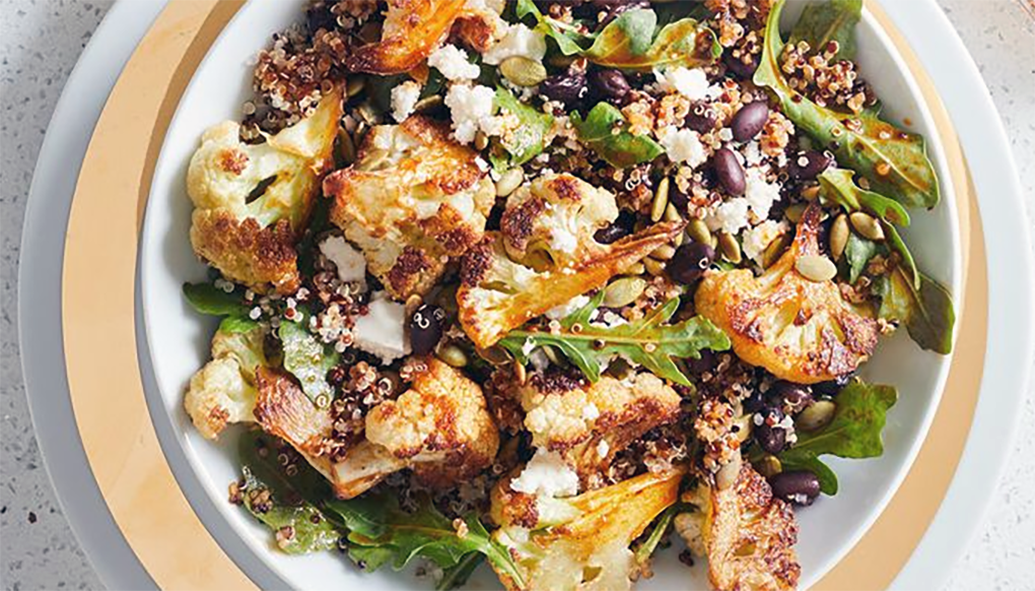 Image of a vegetarian dish based on cauliflower.
Welcome to FabulousFusionFood's Vegetarian Recipes Page — A vegetarian dish is one that eschews the addition of meat or meat products. As a practice, vegetarianism is the practice of abstaining from the consumption of meat (red meat, poultry, seafood, insects, and the flesh of any other animal). It may also include abstaining from eating all by-products of animal slaughter. A person who practices vegetarianism is known as a vegetarian
There are many variations of the vegetarian diet: an ovo-vegetarian diet includes eggs and a lacto-vegetarian diet includes dairy products, while a lacto-ovo vegetarian diet includes both. As the strictest of vegetarian diets, a vegan diet excludes all animal products, and can be accompanied by abstention from the use of animal-derived products, such as leather shoes.
The earliest record of vegetarianism comes from the 9th century BCE, inculcating tolerance towards all living beings. Parshwanatha and Mahavira, the 23rd and 24th tirthankaras in Jainism, respectively, revived and advocated ahimsa and Jain vegetarianism between the 8th and 6th centuries BCE; the most comprehensive and strictest form of vegetarianism. In Indian culture, vegetarianism has been closely connected with the attitude of nonviolence towards animals (called ahimsa in India) for millennia and was promoted by religious groups and philosophers. The Ācārāṅga Sūtra from 5th century BCE advocates Jain-vegetarianism; and forbids the monks from walking on grass in order to avoid inflicting pain on them and prevent small insects dwelling inside from getting killed. The ancient Indian work of the Tirukkuṟaḷ, dated before the 5th century CE, explicitly and unambiguously emphasizes shunning meat and non-killing as a common man's virtues.
Among the Hellenes, Egyptians, and others, vegetarianism had medical or ritual purification purposes. Vegetarianism was also practiced in ancient Greece and the earliest reliable evidence for vegetarian theory and practice in Greece dates from the 6th century BCE. The Orphics, a religious movement spreading in Greece at that time, also practiced and promoted vegetarianism. Greek teacher Pythagoras, who promoted the altruistic doctrine of metempsychosis, may have practiced vegetarianism, but is also recorded as eating meat. A fictionalized portrayal of Pythagoras appears in Ovid's Metamorphoses, in which he advocates a form of strict vegetarianism. It was through this portrayal that Pythagoras was best known to English-speakers throughout the early modern period and, prior to the coinage of the word "vegetarianism", vegetarians were referred to in English as "Pythagoreans".
The first written use of the term "vegetarian" originated in the early 19th century, when authors referred to a vegetable regimen diet. Historically, 'vegetable' could be used to refer to any type of edible vegetation. Modern dictionaries explain its origin as a compound of vegetable (adjective) and the suffix -arian (in the sense of agrarian). The term was popularized with the foundation of the Vegetarian Society in Manchester in 1847, although it may have appeared in print before 1847. The earliest occurrences of the term seem to be related to Alcott House—a school on the north side of Ham Common, London—which was opened in July 1838 by James Pierrepont Greaves.
Western vegetarian diets are typically high in carotenoids, but relatively low in omega-3 fatty acids and vitamin B12. Vegans can have particularly low intake of vitamin B and calcium if they do not eat enough items such as collard greens, leafy greens, tempeh and tofu (soy). In contrast, high levels of dietary fibre, folic acid, vitamins C and E, and magnesium, and low consumption of saturated fat are all considered to be beneficial aspects of a vegetarian diet.
The alphabetical list of all the vegetarian recipes on this site follows, (limited to 100 recipes per page). There are 4093 recipes in total:
Page 34 of 41
| Sao Tomean Feijoada Origin: Sao Tome | Scotch Stew Origin: Scotland | Seitan Nyembwe Origin: African Fusion |
| Sarikayo Telor (Steamed Egg and Coconut Milk Pudding) Origin: Indonesia | Scots Colcannon Origin: Scotland | Selsig Morgannwg (Glamorgan Sausages) Origin: Welsh |
| Sarson Aloo Origin: Fusion | Scottish Marmalade Bread and Butter Pudding Origin: Scotland | Semizotu Yemegi (Turkish Purslane Stew) Origin: Turkey |
| Sarson ka Saag (Mustard Greens and Spinach Curry) Origin: India | Scottish Parkin Biscuits Origin: Scotland | Semolina Gnocchi Origin: Italy |
| Satatsuri (Georgian Asparagus Soup) Origin: Georgia | Scottish Parkin with Lemon Sauce Origin: Scotland | Semovita Origin: Nigeria |
| Satay Chicken Curry Origin: Malaysia | Scottish Pickled Eggs Origin: Scotland | Semovita Origin: Nigeria |
| Satay Skewers Origin: Cocos Islands | Scottish Potato Scones Origin: Scotland | Senegalese Vegetable Stew with Millet Origin: Senegal |
| Sauce à l'Arachide Congolaise (Congolese Peanut Sauce) Origin: DR-Congo | Scottish Snow Cake Origin: Scotland | Serviceberry Mini Tarts Origin: Canada |
| Sauce à la Noix de Coco (Coconut Sauce) Origin: Togo | Scrambled Chanterelles Origin: Britain | Sesame Seed Dry-roasted Sprinkles Origin: Middle East |
| Sauce de Tamarin Pimentée (Spicy Tamarind Sauce) Origin: Burkina Faso | Sea Aster Aloo Origin: Fusion | Setas al Horno (Baked Oyster Mushrooms) Origin: Spain |
| Sauce Gombo (Gombo Sauce) Origin: Guinea | Sea Aster and Cheese Strata Origin: Italy | Sev Origin: India |
| Sauce Gombos Burkinabé (Burkinabe Okra Sauce) Origin: Burkina Faso | Sea Aster and Parmesan Croquettes Origin: British | Sevillum (Sweetened Cheese Dough) Origin: Roman |
| Sauce piquante créole (Creole Hot Sauce) Origin: Guadeloupe | Sea Aster Fritters Origin: British | Seviyan (Fine Noodle Pudding) Origin: India |
| Sauce sarzyne (Saracen Sauce) Origin: England | Sea Aster Pasta Origin: British | Seychellois Massalé Origin: Seychelles |
| Saudi Arabian Jareesh Origin: Saudi Arabia | Sea Aster Pesto Origin: Britain | Sfoungato (Cretan Eggs, Tomatoes and Courgettes) Origin: Greece |
| Sautéed Spring Greens Origin: Britain | Sea Moss Jellies Origin: Anglo-Indian | Sglodion Ffwrn Sbeislydr (Spicy Oven Chips) Origin: Welsh |
| Sautéed Chickpeas Origin: South Sudan | Sea Plantain Risotto Origin: Britain | Sgoniau Tatws (Potato Scones) Origin: Welsh |
| Sautéed Mushrooms and Rocket Origin: Britain | Sea Purslane and Sea Rocket Purée Origin: Britain | Shahi Paneer Origin: India |
| Sautéed Mustard Greens Origin: Britain | Sea Purslane Dhal Origin: Britain | Shalgham Korma (Turnip Curry) Origin: India |
| Savoury Corn Muffins Origin: American | Sea Purslane, Potatoes and Peas Origin: Britain | Shamrock Shakes Origin: American |
| Savoury Honey Fungus Tart Origin: Britain | Sea Spaghetti and Carrot Salad Origin: Ireland | Shamrock Sugar Biscuits Origin: Ireland |
| Saws Béchamel (Béchamel Sauce) Origin: Welsh | Sea Spaghetti with Garlic and Butter Origin: Ireland | Shaped Dinner Rolls Origin: Britain |
| Saws Persli (Parsley Sauce) Origin: Welsh | Sea Spaghetti with Summer Truffles Origin: Ireland | Sharaab el toot (Mulberry Syrup) Origin: Lebanon |
| Sazón Goya Origin: Puerto Rico | Sea-buckthorn Berry Jelly with Italian Flavours Origin: Britain | Shatkora Achar (Bangladeshi Shatkora Pickle) Origin: Bangladesh |
| Sbiaat Origin: Morocco | Sea-buckthorn Jam Origin: Britain | Shav (Cold Polish Sorrel Soup) Origin: Poland |
| Scalloped Morel Mushrooms Origin: American | Sea-buckthorn Jelly Origin: Britain | Shawarma Spice and Paste Origin: Levant |
| Schalada Origin: Morocco | Seam, Potato and Peas Chakee Origin: Anglo-Indian | Sheer Khurma Origin: Indonesia |
| Schenecken (Crispy Butterhorns) Origin: Germany | Seam, Potato, and Peas Chahkee Origin: Anglo-Indian | Shiamali (Semolina Cakes) Origin: Cyprus |
| Schug (Middle Eastern Hot Pepper Dip) Origin: Middle East | Seasoned Red Pepper Paste Origin: Aruba | Shigni (Somali Hot Sauce) Origin: Somalia |
| Schurbat Adas Ma Qar (Iraqi Lentil and Pumpkin Soup) Origin: Iraq | Seaweed Relish Origin: Britain | Shikanji (Indian Lemonade) Origin: India |
| Scone and Butter Pudding Origin: Scotland | Seaweed Ribollita Origin: Fusion | Shishwala (Maize Porridge) Origin: eSwatini |
| Scotch Bonnet Pepper Sauce Origin: Jamaica | Seengre ke Satha Tori Kari (Courgette Curry with Radish Pods) Origin: India | Sholeh Zard (Persian Yellow Rice Pudding) Origin: Iran |
| Scotch Currant Loaf Origin: Scotland | Seeni Sambol (Sri Lankan Beetroot Curry) Origin: Sri Lanka | |
| Scotch Kale Origin: Scotland | Seitan Origin: Britain |
Page 34 of 41