FabulousFusionFood's Vegetarian Recipes 37th Page
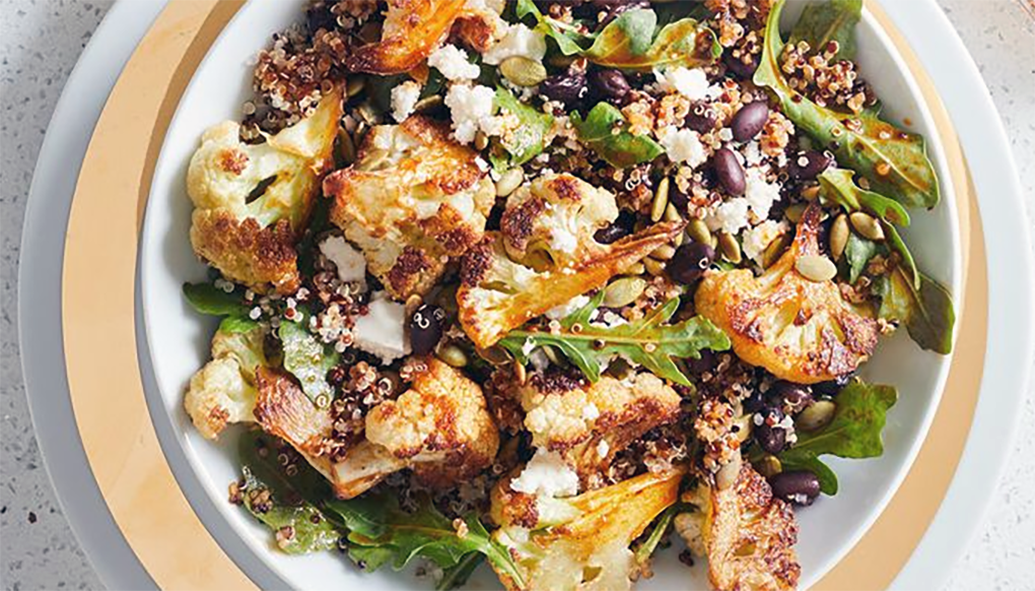 Image of a vegetarian dish based on cauliflower.
Welcome to FabulousFusionFood's Vegetarian Recipes Page — A vegetarian dish is one that eschews the addition of meat or meat products. As a practice, vegetarianism is the practice of abstaining from the consumption of meat (red meat, poultry, seafood, insects, and the flesh of any other animal). It may also include abstaining from eating all by-products of animal slaughter. A person who practices vegetarianism is known as a vegetarian
There are many variations of the vegetarian diet: an ovo-vegetarian diet includes eggs and a lacto-vegetarian diet includes dairy products, while a lacto-ovo vegetarian diet includes both. As the strictest of vegetarian diets, a vegan diet excludes all animal products, and can be accompanied by abstention from the use of animal-derived products, such as leather shoes.
The earliest record of vegetarianism comes from the 9th century BCE, inculcating tolerance towards all living beings. Parshwanatha and Mahavira, the 23rd and 24th tirthankaras in Jainism, respectively, revived and advocated ahimsa and Jain vegetarianism between the 8th and 6th centuries BCE; the most comprehensive and strictest form of vegetarianism. In Indian culture, vegetarianism has been closely connected with the attitude of nonviolence towards animals (called ahimsa in India) for millennia and was promoted by religious groups and philosophers. The Ācārāṅga Sūtra from 5th century BCE advocates Jain-vegetarianism; and forbids the monks from walking on grass in order to avoid inflicting pain on them and prevent small insects dwelling inside from getting killed. The ancient Indian work of the Tirukkuṟaḷ, dated before the 5th century CE, explicitly and unambiguously emphasizes shunning meat and non-killing as a common man's virtues.
Among the Hellenes, Egyptians, and others, vegetarianism had medical or ritual purification purposes. Vegetarianism was also practiced in ancient Greece and the earliest reliable evidence for vegetarian theory and practice in Greece dates from the 6th century BCE. The Orphics, a religious movement spreading in Greece at that time, also practiced and promoted vegetarianism. Greek teacher Pythagoras, who promoted the altruistic doctrine of metempsychosis, may have practiced vegetarianism, but is also recorded as eating meat. A fictionalized portrayal of Pythagoras appears in Ovid's Metamorphoses, in which he advocates a form of strict vegetarianism. It was through this portrayal that Pythagoras was best known to English-speakers throughout the early modern period and, prior to the coinage of the word "vegetarianism", vegetarians were referred to in English as "Pythagoreans".
The first written use of the term "vegetarian" originated in the early 19th century, when authors referred to a vegetable regimen diet. Historically, 'vegetable' could be used to refer to any type of edible vegetation. Modern dictionaries explain its origin as a compound of vegetable (adjective) and the suffix -arian (in the sense of agrarian). The term was popularized with the foundation of the Vegetarian Society in Manchester in 1847, although it may have appeared in print before 1847. The earliest occurrences of the term seem to be related to Alcott House—a school on the north side of Ham Common, London—which was opened in July 1838 by James Pierrepont Greaves.
Western vegetarian diets are typically high in carotenoids, but relatively low in omega-3 fatty acids and vitamin B12. Vegans can have particularly low intake of vitamin B and calcium if they do not eat enough items such as collard greens, leafy greens, tempeh and tofu (soy). In contrast, high levels of dietary fibre, folic acid, vitamins C and E, and magnesium, and low consumption of saturated fat are all considered to be beneficial aspects of a vegetarian diet.
The alphabetical list of all the vegetarian recipes on this site follows, (limited to 100 recipes per page). There are 4093 recipes in total:
Page 37 of 41
| Sugar Cake Origin: Saint Kitts | Ta'amia (Egyptian Falafel) Origin: Egypt | Tarhana Dough Origin: Turkey |
| Sugar Mice Origin: Britain | Tabouleh (Parsley and Bulgur Wheat Salad) Origin: Middle East | Tarja Bil-Bajt (Fried Noodles) Origin: Malta |
| Sukuma Wiki Origin: South Sudan | Taffi (Condensed Milk Toffee) Origin: Togo | Tarka Dal Origin: Britain |
| Summer Soup Origin: British | Tagine of Yam, Carrots and Prunes Origin: Algeria | Taro Leaf Stew Origin: Pitcairn Islands |
| Summer Truffle Paste Origin: Britain | Tagliarini al Porcini Origin: Italy | Taro Poi Origin: Tuvalu |
| Summer Vegetable Parcels Origin: Britain | Tahin (Coconut Candy) Origin: Tahiti | Taro Pudding Origin: Tuvalu |
| Summer Vegetable Stew Origin: Britain | Taitei cu Varza (Noodles with Shredded Cabbage) Origin: Romania | Taro Rösti Origin: Palau |
| Sumo de Cabaceira (Baobab Fruit Juice) Origin: Guinea-Bissau | Tajin Seasoning Origin: Mexico | Tart au Citron Vert avec Sauce Cassis (Lime Tart with Cassis Sauce) Origin: France |
| Sun and Moon Biscuits Origin: Britain | Tajine Kefta aux Oeufs (Vegetarian Koftas with Eggs) Origin: Algeria | Tart in Ymbre Day (Amber Day Tart) Origin: England |
| Sun-dried Tomato Bread Origin: Ireland | Takihi Origin: Niue | Tartare d'algues fraîches (Tartare of Fresh Seaweed) Origin: France |
| Supoesi (Papaya and Tapioca Soup) Origin: Samoa | Talétalé (Banana Fritters) Origin: Cote dIvoire | Tarte au fromage blanc (White Cheeseeake) Origin: France |
| Supoesi (Papaya and Tapioca Soup) Origin: American Samoa | Talattouri (Yoghurt and Cucumber Salad) Origin: Cyprus | Tarte au Rumex Alpin (Alpine Dock Tart) Origin: Switzerland |
| Suriname Hot Pepper Sambal Origin: Suriname | Talautu (Coconut and Pineapple Dessert) Origin: Papua New Guinea | Tarte aux oignons de Roscoff (Roscoff onion tart) Origin: France |
| Surun Cyffaith Poeth (Hot Sour Confection) Origin: Welsh | Tamal de Maicena Origin: Costa Rica | Tarte aux Poireaux (Leek Tart) Origin: France |
| Suss-Saures Rotkraut (Sweet and Sour Red Cabbage) Origin: Germany | Tamarind-chilli Dipping Sauce Origin: Britain | Tarte aux Poireaux (Leek Tart) Origin: Saint Pierre |
| Svekla Pkhali (Beet Pkhali) Origin: Georgia | Tamil Nadu Meat Curry Powder Origin: India | Tarte Banane Congolaise (Congolese Banana Tart) Origin: Congo |
| Swahili Aubergine Curry Origin: East Africa | Tamil Nadu Sambar Curry Origin: India | Tarte noix de Coco (Coconut Tart) Origin: Saint-Martin |
| Swala (South Sudanese Okra Soup with Kombo) Origin: South Sudan | Tamina (Semolina Dessert) Origin: Niger | Tarten Afal (Welsh Apple Tart) Origin: Welsh |
| Sweet and Sour Vegetables on Noodle Pancakes Origin: China | Tandoori Cauliflower Origin: India | Tarten Bricyll a Mafon (Apricot and Raspberry Tart) Origin: Welsh |
| Sweet Chilli and Pepper Salsa Origin: Ascension | Tandoori Gobi (Baked Tandoori-spiced Cauliflower) Origin: India | Tarten Bwmpen (Marrow Pie) Origin: Welsh |
| Sweet Cicely and Wild Thyme Flavoured Labnah Origin: Lebanon | Tandoori Masala Origin: India | Tarten Caws a Chennin (Cheese and Leek Tart) Origin: Welsh |
| Sweet Dandelion Flower Fritters Origin: Britain | Tandoori Paste Origin: Fusion | Tarten Gwreiddlysiau wedi'i Charameleiddio (Caramelised Root Vegetable Tart) Origin: Welsh |
| Sweet Marigold Buns Origin: Britain | Tandoori Roti Origin: India | Tarten Planc Rhiwbob (Rhubarb Bakestone Pie) Origin: Welsh |
| Sweet Pickle Relish Origin: American | Tangy Butter Origin: Britain | Tarten Rhiwbob a Mafon (Rhubarb and Raspberry Tart) Origin: Welsh |
| Sweet Potato and Coconut Soup Origin: Pitcairn Islands | Tangy Pineapple Cabbage Origin: Jamaica | Tarten Triog (Treacle Tart) Origin: Welsh |
| Sweet Potato and Peanut Curry Origin: Fusion | Tankora Powder Origin: Ghana | Tartys Choklet (Chocolate Tarts) Origin: England |
| Sweet Potato Bread Origin: Britain | Tanzanian Coconut Bean Soup Origin: Tanzania | Tasalsan Guril (Mongolian Fried Noodles) Origin: Mongolia |
| Sweet Potato Brownies Origin: Britain | Tanzanian Curried Okra Origin: Tanzania | Tatlı Biber Salçası (Sweet Red Bell pepper Paste) Origin: Turkey |
| Sweet Potato Stew Origin: African Fusion | Tanzanian Plantain Curry Origin: Tanzania | Tatws Ffrio (Sauté Potatoes) Origin: Welsh |
| Sweet Potato Stuffing Origin: Jamaica | Tanzanian Vegetable Rice Origin: Tanzania | Tavče Gravče Origin: North Macedonia |
| Sweet Potatoes with Groundnuts Origin: Zambia | Tapenade Monegasque (Monaco-style Tapenade) Origin: Monaco | Tavë Prizreni (Baked Vegetables in Cheese Sauce) Origin: Kosovo |
| Swffle Bara Lawr (Laverbread Soufflé) Origin: Welsh | Tapioca Origin: Nigeria | Tawa Paneer Origin: India |
| Swiss Soup Origin: Britain | Tapp's Sauce Origin: Anglo-Indian | |
| Swiss-style Muesli Origin: Switzerland | Tarbooz ke Chilke ki Sabji (Watermelon Rind Curry) Origin: India |
Page 37 of 41