FabulousFusionFood's Vegetarian Recipes 35th Page
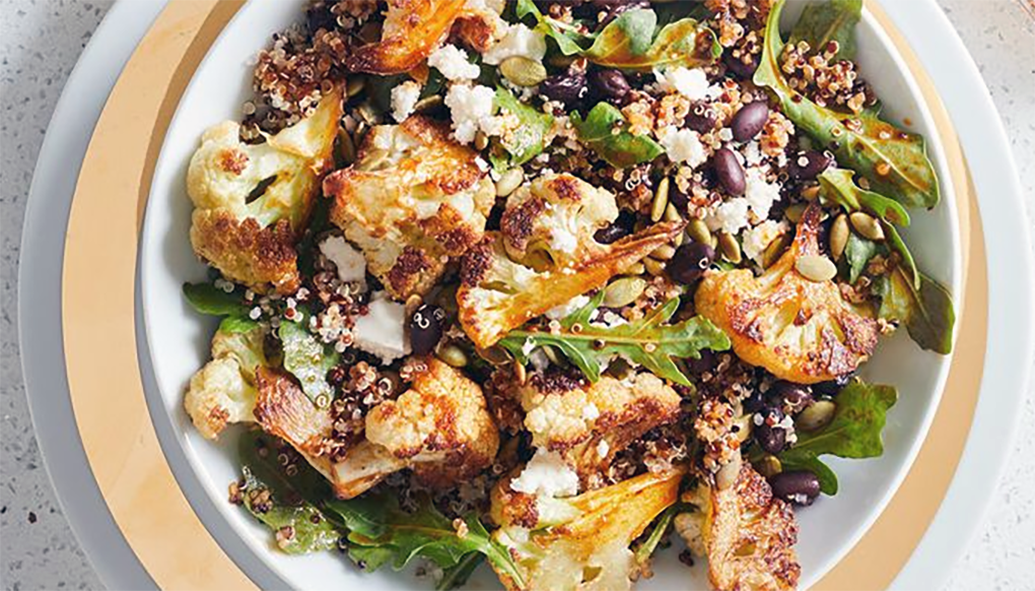 Image of a vegetarian dish based on cauliflower.
Welcome to FabulousFusionFood's Vegetarian Recipes Page — A vegetarian dish is one that eschews the addition of meat or meat products. As a practice, vegetarianism is the practice of abstaining from the consumption of meat (red meat, poultry, seafood, insects, and the flesh of any other animal). It may also include abstaining from eating all by-products of animal slaughter. A person who practices vegetarianism is known as a vegetarian
There are many variations of the vegetarian diet: an ovo-vegetarian diet includes eggs and a lacto-vegetarian diet includes dairy products, while a lacto-ovo vegetarian diet includes both. As the strictest of vegetarian diets, a vegan diet excludes all animal products, and can be accompanied by abstention from the use of animal-derived products, such as leather shoes.
The earliest record of vegetarianism comes from the 9th century BCE, inculcating tolerance towards all living beings. Parshwanatha and Mahavira, the 23rd and 24th tirthankaras in Jainism, respectively, revived and advocated ahimsa and Jain vegetarianism between the 8th and 6th centuries BCE; the most comprehensive and strictest form of vegetarianism. In Indian culture, vegetarianism has been closely connected with the attitude of nonviolence towards animals (called ahimsa in India) for millennia and was promoted by religious groups and philosophers. The Ācārāṅga Sūtra from 5th century BCE advocates Jain-vegetarianism; and forbids the monks from walking on grass in order to avoid inflicting pain on them and prevent small insects dwelling inside from getting killed. The ancient Indian work of the Tirukkuṟaḷ, dated before the 5th century CE, explicitly and unambiguously emphasizes shunning meat and non-killing as a common man's virtues.
Among the Hellenes, Egyptians, and others, vegetarianism had medical or ritual purification purposes. Vegetarianism was also practiced in ancient Greece and the earliest reliable evidence for vegetarian theory and practice in Greece dates from the 6th century BCE. The Orphics, a religious movement spreading in Greece at that time, also practiced and promoted vegetarianism. Greek teacher Pythagoras, who promoted the altruistic doctrine of metempsychosis, may have practiced vegetarianism, but is also recorded as eating meat. A fictionalized portrayal of Pythagoras appears in Ovid's Metamorphoses, in which he advocates a form of strict vegetarianism. It was through this portrayal that Pythagoras was best known to English-speakers throughout the early modern period and, prior to the coinage of the word "vegetarianism", vegetarians were referred to in English as "Pythagoreans".
The first written use of the term "vegetarian" originated in the early 19th century, when authors referred to a vegetable regimen diet. Historically, 'vegetable' could be used to refer to any type of edible vegetation. Modern dictionaries explain its origin as a compound of vegetable (adjective) and the suffix -arian (in the sense of agrarian). The term was popularized with the foundation of the Vegetarian Society in Manchester in 1847, although it may have appeared in print before 1847. The earliest occurrences of the term seem to be related to Alcott House—a school on the north side of Ham Common, London—which was opened in July 1838 by James Pierrepont Greaves.
Western vegetarian diets are typically high in carotenoids, but relatively low in omega-3 fatty acids and vitamin B12. Vegans can have particularly low intake of vitamin B and calcium if they do not eat enough items such as collard greens, leafy greens, tempeh and tofu (soy). In contrast, high levels of dietary fibre, folic acid, vitamins C and E, and magnesium, and low consumption of saturated fat are all considered to be beneficial aspects of a vegetarian diet.
The alphabetical list of all the vegetarian recipes on this site follows, (limited to 100 recipes per page). There are 4093 recipes in total:
Page 35 of 41
| Shopska Salad Origin: North Macedonia | Slow Cooker Aloo Gobi Origin: Britain | Sourdough Pancakes Origin: America |
| Shopska Salad II Origin: Bulgaria | Slow Cooker Mushy Peas Origin: England | South African Curried Peanut Soup Origin: South Africa |
| Shorbat Adas (Jordanian Red Lentil Soup) Origin: Jordan | Slow Cooker Vegetable Curry Origin: Britain | South African Fig Jam Origin: South Africa |
| Shorbat Adas (Lebanese Red Lentil Soup) Origin: Lebanon | Slow-simmered Beefsteak Fungus Origin: Britain | South African Potato Salad Origin: South Africa |
| Shortcrust Pastry Dough Origin: British | Smočani kačamak (Fatty porridge) Origin: Montenegro | South African Sorrel Soup Origin: South Africa |
| Shredded, Dried and Salted Kelp Stems Origin: Korea | Smoked Chillies Origin: Mexico | South African Vegetable Biryani Origin: South Africa |
| Shtitha Batata (Potato Stew) Origin: Algeria | Smoky Aubergine Curry with Cauliflower Parathas Origin: India | Southern Succotash Origin: America |
| Shukto Origin: Bangladesh | Smoky Mushroom and Chickpea Fajitas with Charred Spring Onion Salsa Origin: British | Sowpes Dorry (Golden Sops) Origin: British |
| Shwe Payon Thee Hin (Thai Vegan Pumpkin Curry) Origin: Thailand | Smoky Pumpkin Chili Origin: American | Sowpes of Galentyne (Sops of Galingale) Origin: England |
| Siberian Bird Cherry Cake Origin: Russia | Smoky Sweetcorn and Avocado Salsa Origin: South Africa | Spaetzle (German Noodles) Origin: Germany |
| Sibirskie Jeskimosy (Siberian Huskies) Origin: Siberia | Smothie à l'avocat (Avocado Smoothie) Origin: Mauritania | Spaetzle Noodles Origin: Germany |
| Siboyo den pika (Onions in Hot Sauce) Origin: Bonaire | Soba with Shiitake and Fucus Origin: Japan | Spaghetti with Scarlet Elf Cups and Wild Garlic Origin: Britain |
| Sichuan Hot Pot Soup Base Origin: China | Sobre Sauce (Prudent Sauce) Origin: England | Spanachorizo (Rice Pilaff with Spinach) Origin: Cyprus |
| Sidvudvu (Pumpkin Porridge) Origin: eSwatini | Socca Origin: Monaco | Spanagh Geragoor (Spinach and Rice Stew) Origin: Armenia |
| Sienimunaskas-kääryle (Wild Mushroom Omelette Roll) Origin: Finland | Soda Bread Origin: Britain | Spanagh-Banir Boerag (Cheese and Spinach Filo Bake) Origin: Armenia |
| Sierra Leonean Ginger Beer Origin: Sierra Leone | Soft-centred Chocolate Pudding Origin: Australia | Spanish Empanada Dough Origin: Spain |
| Sierra Leonean Ginger Cake Origin: Sierra Leone | Som Tam (Thai Green Papaya Salad) Origin: Thailand | Spanish Fries Origin: Spain |
| Sierra Leonean Rice Bread Origin: Sierra Leone | Sonhos de Banana (Banana Dreams) Origin: Sao Tome | Spanish Summer Soup Origin: Britain |
| Siljo (Fermented Safflower Seed and Broad Bean Flour Paste) Origin: India | Sonso de Yuca Origin: Bolivia | Spanish Tomato Soup with Garlic Bread Croûtons Origin: Spain |
| Silsi (Eritrean Tomato Sauce) Origin: Eritrea | Soorok (Iranian Fry Bread) Origin: Iran | Spanokopita (Cheese and Spinach Pie) Origin: Greece |
| Simit (Turkish sesame bread rings) Origin: Turkey | Sopa de Feijao Verde (String Bean Soup) Origin: Mozambique | Spas (Yoghurt and Barley Soup with Herbs) Origin: Armenia |
| Simple Okra Curry Origin: Australia | Sopa di Plátano Verde (Cuban Green Plantain Soup) Origin: Cuba | Special Bunloaf Origin: Manx |
| Simple White Sauce Origin: British | Sopa Seca (Mexican-style Rice) Origin: Mexico | Speedy Chilli Bean Wraps Origin: Fusion |
| Sint Eustatius Rice and Black Beans Origin: Sint Eustatius | Sorbet à la mangue (Guiana Mango Sorbet) Origin: French Guiana | Spelt, Fig and Pomegranate Salad Origin: Britain |
| Sippets à la Reine Origin: Britain | Sou-Boerag (Cheese-filled Flaky Pastry) Origin: Armenia | Spice Bread Origin: Ireland |
| Sirop de Bissap (Roselle Syrup) Origin: Mauritania | Soubise Sauce Origin: Britain | Spice-infused Oli Origin: Britain |
| Sirop de Menthe au Lait (Mint Syrup with Milk) Origin: Gabon | Soufflé Flan of St George's Mushrooms Origin: France | Spiced Apricot Oat Muffins Origin: British |
| Six-week Refrigerator Bran Muffins Origin: American | Soufflé Potatoes with Carrot and Asparagus Origin: Ireland | Spiced Basmati Rice Origin: India |
| Sladký Lokše (Sweet Slovak Potato Pancakes) Origin: Slovakia | Soupa Louvana (Yellow Split Pea Soup) Origin: Cyprus | Spiced Chestnut, Feta and Squash Filo Pie Origin: Britain |
| Slangetjies (Pea Flour Noodles) Origin: South Africa | Soupe aux Lentilles et Legumes (Lentil and Bean Soup) Origin: Burundi | Spiced Crab Apples Origin: Britain |
| Slappap (Soft Maize Porridge) Origin: South Africa | Soupe Panade (Panade Soup) Origin: France | Spiced Honey Loaf Origin: South Africa |
| Slete Soppes Origin: British | Souphet (Thai Maitake Salad) Origin: Thailand | Spiced Japanese Knotweed Pickles Origin: Britain |
| Slim Cakes Origin: Ireland | Souppa Hoummi (Chickpea Soup) Origin: Cyprus | |
| Slime Smoothie Origin: American | Sourdough Dinner Rolls Origin: Britain |
Page 35 of 41