FabulousFusionFood's Vegetarian Recipes 33rd Page
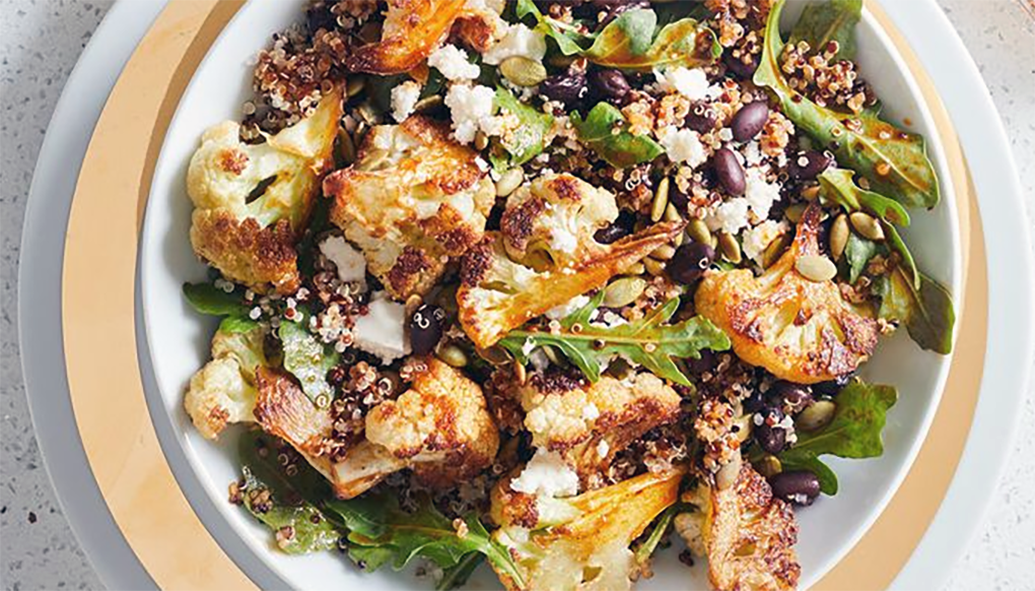 Image of a vegetarian dish based on cauliflower.
Welcome to FabulousFusionFood's Vegetarian Recipes Page — A vegetarian dish is one that eschews the addition of meat or meat products. As a practice, vegetarianism is the practice of abstaining from the consumption of meat (red meat, poultry, seafood, insects, and the flesh of any other animal). It may also include abstaining from eating all by-products of animal slaughter. A person who practices vegetarianism is known as a vegetarian
There are many variations of the vegetarian diet: an ovo-vegetarian diet includes eggs and a lacto-vegetarian diet includes dairy products, while a lacto-ovo vegetarian diet includes both. As the strictest of vegetarian diets, a vegan diet excludes all animal products, and can be accompanied by abstention from the use of animal-derived products, such as leather shoes.
The earliest record of vegetarianism comes from the 9th century BCE, inculcating tolerance towards all living beings. Parshwanatha and Mahavira, the 23rd and 24th tirthankaras in Jainism, respectively, revived and advocated ahimsa and Jain vegetarianism between the 8th and 6th centuries BCE; the most comprehensive and strictest form of vegetarianism. In Indian culture, vegetarianism has been closely connected with the attitude of nonviolence towards animals (called ahimsa in India) for millennia and was promoted by religious groups and philosophers. The Ācārāṅga Sūtra from 5th century BCE advocates Jain-vegetarianism; and forbids the monks from walking on grass in order to avoid inflicting pain on them and prevent small insects dwelling inside from getting killed. The ancient Indian work of the Tirukkuṟaḷ, dated before the 5th century CE, explicitly and unambiguously emphasizes shunning meat and non-killing as a common man's virtues.
Among the Hellenes, Egyptians, and others, vegetarianism had medical or ritual purification purposes. Vegetarianism was also practiced in ancient Greece and the earliest reliable evidence for vegetarian theory and practice in Greece dates from the 6th century BCE. The Orphics, a religious movement spreading in Greece at that time, also practiced and promoted vegetarianism. Greek teacher Pythagoras, who promoted the altruistic doctrine of metempsychosis, may have practiced vegetarianism, but is also recorded as eating meat. A fictionalized portrayal of Pythagoras appears in Ovid's Metamorphoses, in which he advocates a form of strict vegetarianism. It was through this portrayal that Pythagoras was best known to English-speakers throughout the early modern period and, prior to the coinage of the word "vegetarianism", vegetarians were referred to in English as "Pythagoreans".
The first written use of the term "vegetarian" originated in the early 19th century, when authors referred to a vegetable regimen diet. Historically, 'vegetable' could be used to refer to any type of edible vegetation. Modern dictionaries explain its origin as a compound of vegetable (adjective) and the suffix -arian (in the sense of agrarian). The term was popularized with the foundation of the Vegetarian Society in Manchester in 1847, although it may have appeared in print before 1847. The earliest occurrences of the term seem to be related to Alcott House—a school on the north side of Ham Common, London—which was opened in July 1838 by James Pierrepont Greaves.
Western vegetarian diets are typically high in carotenoids, but relatively low in omega-3 fatty acids and vitamin B12. Vegans can have particularly low intake of vitamin B and calcium if they do not eat enough items such as collard greens, leafy greens, tempeh and tofu (soy). In contrast, high levels of dietary fibre, folic acid, vitamins C and E, and magnesium, and low consumption of saturated fat are all considered to be beneficial aspects of a vegetarian diet.
The alphabetical list of all the vegetarian recipes on this site follows, (limited to 100 recipes per page). There are 4093 recipes in total:
Page 33 of 41
| Roti Canai Origin: Malaysia | Sabz Jaipuri (Vegetable Jaipuri Curry) Origin: India | Salady Voankazo (Fruit Salad with Lychees) Origin: Madagascar |
| Roti Guiane (French Guianese Roti) Origin: French Guiana | Sabzi Gutab (Green Gutab) Origin: Azerbaijan | Salara Origin: Guyana |
| Rotis Origin: India | Sabzi Polo (Herbed Rice) Origin: Iran | Salara Cake Origin: French Guiana |
| Rourou Balls Origin: Fiji | Sadza reZviyo (Finger Millet Pap) Origin: Zimbabwe | Salat Bzainjan Eswed bel-Filfil (Aubergine and Chilli Salad) Origin: Saudi Arabia |
| Rowan and Apple Jelly Origin: Britain | Safflower Rice Origin: Britain | Salat Tangiers Origin: Morocco |
| Rowan and Orange Marmalade Origin: Britain | Saffron and Fig Risotto Origin: Italy | Salata Aswad be Zabadi (Fried Aubergine Salad) Origin: South Sudan |
| Rugbrød (Danish Rye Bread) Origin: Denmark | Saffron Black Cardamom Fudge Origin: Pakistan | Salata Ducos (Green Coriander Salad) Origin: Saudi Arabia |
| Rujak (Spicy Fruit Salad) Origin: Indonesia | Saffron Milk Cap Fricassee Origin: Britain | Salata Méchouia Nablia (Grilled Red Pepper, Chilli and Tomato Salad) Origin: Tunisia |
| Rum And Coconut Bread Pudding Origin: Cayman Islands | Saffron Milk Cap Pâté Origin: Britain | Salsa Bandera Origin: Mexico |
| Rum Cake Origin: British Virgin Islands | Saffron Milk Caps with Cream Origin: Britain | Salsa Bayda (Lebanese White Sauce) Origin: Lebanon |
| Rum Cake Origin: US Virgin Islands | Saffron Rice Origin: India | Salsa con Queso Jalapeña (Nicaraguan Cream Sauce with Cheese) Origin: Nicaragua |
| Russian Pierogi Origin: Russia | Safou a la Sauce Tomate (Bush Pears in Tomato Sauce) Origin: Cameroon | Salsa de Chile Rojo (Red Chilli Sauce) Origin: Spain |
| Rwandan Ugali Origin: Rwanda | Safra (Semolina and Date Cake) Origin: Libya | Salsa de Molcajete (Stone-ground Mexican Salsa) Origin: Mexico |
| Rwlâd Bara Lawr (Laverbread Roulade) Origin: Welsh | Sage Jelly Origin: Britain | Salsa de Tomate Casero (Home-style Tomato Sauce) Origin: Spain |
| Rødgrød med Fløde (Danish Red Berry Pudding) Origin: Denmark | Sahina Origin: Trinidad | Salsa de Tomate Casero (Home-style Tomato Sauce) Origin: Gibraltar |
| Süßer Hirsebrei (Sweet Millet Porridge) Origin: Namibia | Saint Lucia Green Seasoning Origin: Saint Lucia | Salsa de Tomatillo (Tomatillo Salsa) Origin: Mexico |
| Sŵffle Cennin (Leek Mousses) Origin: Welsh | Saint Lucia Papaya Hot Pepper Sauce Origin: Saint Lucia | Salsa di Pomodoro (Tomato Sauce) Origin: Italy |
| Saag Aloo (Stir-fried Potatoes with Spinach) Origin: India | Saint Vincent Curry Breadfruit Origin: Saint Vincent | Salsa di Pomodoro II (Tomato Sauce II) Origin: Italy |
| Saag Aloo (Stir-fried Potatoes with Rapeseed Greens) Origin: India | Saint Vincent Fry Bakes Origin: Saint Vincent | Salsa Macha (Arbol Chilli Oil) Origin: Mexico |
| Saag Bhaji (Spinach Curry) Origin: India | Saint Vincent Green Seasoning Origin: Saint Vincent | Salsa Pebre Origin: Chile |
| Saag Dhal with Carrot Greens Origin: Fusion | Saka saka (Congolese Cassava Leaves) Origin: Congo | Salsa Pizzaiola Origin: Italy |
| Saag Dhal with Wild Carrot Greens Origin: Fusion | Salad Gwydrwymon gyda Ffenigl ac Oren (Gutweed Salad with Fennel and Orange) Origin: Welsh | Salsa Verde de Tomatillo (Mexican Green Tomatillo Salsa) Origin: Mexico |
| Saag Khumb (Mushroom Saag) Origin: Britain | Salad Palmis (Palmito Salad) Origin: Seychelles | Salsa Verde de Tomatillo (Tomatillo Salsa Verde) Origin: Mexico |
| Saak-er Ghanto Origin: Bangladesh | Salad with Asparagus, Samphire and Sea-blite Origin: Britain | Salsify Fritters Origin: Britain |
| Saate Origin: India | Salada Limao (Lemon Salad) Origin: Angola | Salted Peanut Brittle Origin: Britain |
| Saba Breadfruit Curry Origin: Saba | Salada Pêra de Abacate (Avocado Salad) Origin: Mozambique | Sambar Podi (Sambar Powder) Origin: India |
| Saba Pigeon Pea Stew Origin: Saba | Salade au Fonio (Fonio Salad) Origin: Mali | Sambhar (Lentil Curry) Origin: India |
| Saba Rice and Black Beans Origin: Saba | Salade Chou Chou (Chako Salad) Origin: Mauritius | Samosa Wrapper Origin: India |
| Sabat Moong Bhajji (Mung Bean Bhaji) Origin: India | Salade complète au chitoumou (Salad of Whole Chitoumou) Origin: Burkina Faso | Samp and Beans Croquettes Origin: South Africa |
| Sabayaad (Somlai Oiled Flatbread) Origin: Somalia | Salade de Palmiers et Avocat (Heart of Palm and Avocado Salad) Origin: New Caledonia | Sana Thongba (Manipuri Paneer Curry) Origin: India |
| Sabich Origin: Israel | Salade de Papaye (Papaya Salad) Origin: Togo | Sangkhaya Fakthong (Custard Pumpkin) Origin: Thailand |
| Sablés Bretons Maison (Home-made Breton Shortbread) Origin: France | Salade de Zaalouk (Salad of Cooked Vegetables) Origin: Tunisia | Sangría Especial (Special Sangria) Origin: Spain |
| Sabnekh (Spinach) Origin: Egypt | Salade du Tchad (Chadian Salad) Origin: Chad | |
| Sabudana Kheer (Tapioca Pudding with Saffron and Nuts) Origin: India | Salade Kopto (Moringa Leaf Salad) Origin: Niger |
Page 33 of 41