FabulousFusionFood's Vegetarian Recipes 11th Page
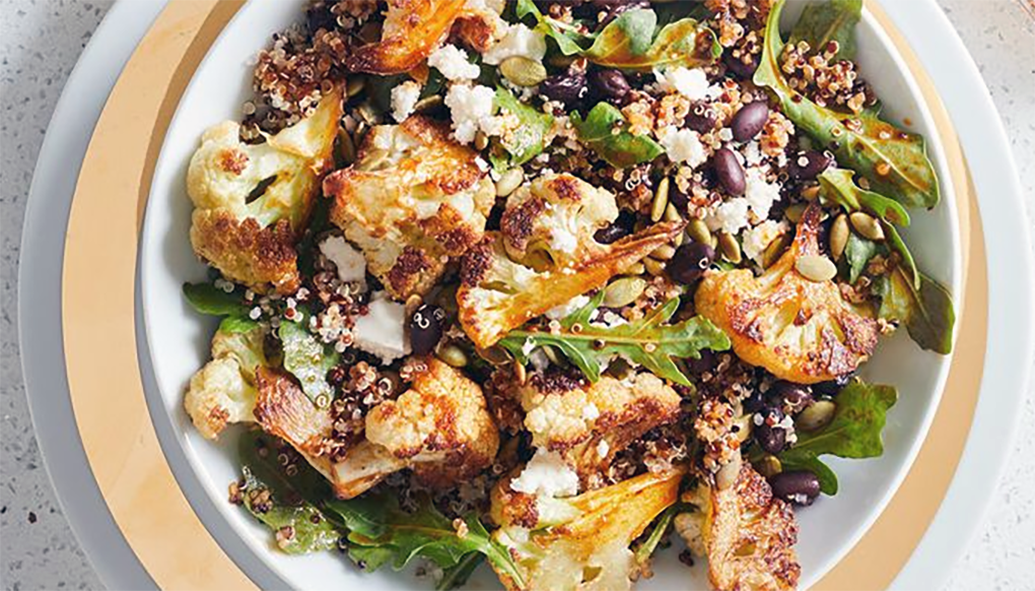 Image of a vegetarian dish based on cauliflower.
Welcome to FabulousFusionFood's Vegetarian Recipes Page — A vegetarian dish is one that eschews the addition of meat or meat products. As a practice, vegetarianism is the practice of abstaining from the consumption of meat (red meat, poultry, seafood, insects, and the flesh of any other animal). It may also include abstaining from eating all by-products of animal slaughter. A person who practices vegetarianism is known as a vegetarian
There are many variations of the vegetarian diet: an ovo-vegetarian diet includes eggs and a lacto-vegetarian diet includes dairy products, while a lacto-ovo vegetarian diet includes both. As the strictest of vegetarian diets, a vegan diet excludes all animal products, and can be accompanied by abstention from the use of animal-derived products, such as leather shoes.
The earliest record of vegetarianism comes from the 9th century BCE, inculcating tolerance towards all living beings. Parshwanatha and Mahavira, the 23rd and 24th tirthankaras in Jainism, respectively, revived and advocated ahimsa and Jain vegetarianism between the 8th and 6th centuries BCE; the most comprehensive and strictest form of vegetarianism. In Indian culture, vegetarianism has been closely connected with the attitude of nonviolence towards animals (called ahimsa in India) for millennia and was promoted by religious groups and philosophers. The Ācārāṅga Sūtra from 5th century BCE advocates Jain-vegetarianism; and forbids the monks from walking on grass in order to avoid inflicting pain on them and prevent small insects dwelling inside from getting killed. The ancient Indian work of the Tirukkuṟaḷ, dated before the 5th century CE, explicitly and unambiguously emphasizes shunning meat and non-killing as a common man's virtues.
Among the Hellenes, Egyptians, and others, vegetarianism had medical or ritual purification purposes. Vegetarianism was also practiced in ancient Greece and the earliest reliable evidence for vegetarian theory and practice in Greece dates from the 6th century BCE. The Orphics, a religious movement spreading in Greece at that time, also practiced and promoted vegetarianism. Greek teacher Pythagoras, who promoted the altruistic doctrine of metempsychosis, may have practiced vegetarianism, but is also recorded as eating meat. A fictionalized portrayal of Pythagoras appears in Ovid's Metamorphoses, in which he advocates a form of strict vegetarianism. It was through this portrayal that Pythagoras was best known to English-speakers throughout the early modern period and, prior to the coinage of the word "vegetarianism", vegetarians were referred to in English as "Pythagoreans".
The first written use of the term "vegetarian" originated in the early 19th century, when authors referred to a vegetable regimen diet. Historically, 'vegetable' could be used to refer to any type of edible vegetation. Modern dictionaries explain its origin as a compound of vegetable (adjective) and the suffix -arian (in the sense of agrarian). The term was popularized with the foundation of the Vegetarian Society in Manchester in 1847, although it may have appeared in print before 1847. The earliest occurrences of the term seem to be related to Alcott House—a school on the north side of Ham Common, London—which was opened in July 1838 by James Pierrepont Greaves.
Western vegetarian diets are typically high in carotenoids, but relatively low in omega-3 fatty acids and vitamin B12. Vegans can have particularly low intake of vitamin B and calcium if they do not eat enough items such as collard greens, leafy greens, tempeh and tofu (soy). In contrast, high levels of dietary fibre, folic acid, vitamins C and E, and magnesium, and low consumption of saturated fat are all considered to be beneficial aspects of a vegetarian diet.
The alphabetical list of all the vegetarian recipes on this site follows, (limited to 100 recipes per page). There are 4093 recipes in total:
Page 11 of 41
| Cornelian Cherry and Apple Jelly Origin: British | Costmary Shortbread Origin: Britain | Creamed Onions Origin: American |
| Cornish Barley Bread Origin: Britain | Cotswold Dumplings II Origin: England | Creamed Turnips Origin: American |
| Cornish Black Cake Origin: England | Cou-cou Origin: Barbados | Creamy Chocolate Frosting Origin: American |
| Cornish Cauliflower and Cheese Soup Origin: England | Courges avec des arachides (Squash with Peanuts) Origin: Gabon | Creamy Potato and Vegetable Pie Origin: Ireland |
| Cornish Clotted Cream Origin: England | Courgette and Cheese Parcels Origin: Britain | Creamy Potato Gratin Origin: Britain |
| Cornish Clotted Cream Cake Origin: England | Courgette Curry with Himalayan Balsam Seed Pods Origin: Britain | Creamy Rum Balls Origin: Australia |
| Cornish Clotted Cream Chocolate Fudge Origin: England | Courgette Halwa Origin: Fusion | Creamy Samp Origin: eSwatini |
| Cornish Clotted Cream Fudge Origin: England | Courgette Poêlêe (Courgette Skillet) Origin: Madagascar | Crema Catalana (Catalan Caramel Cream) Origin: Spain |
| Cornish Clotted Cream Rice Pudding Origin: England | Courgette Soup Origin: Britain | Crema de Frutas con Barquillo (Fruit and Cream with Wafers) Origin: Spain |
| Cornish Cream Tea Scone Origin: England | Courgette with Tomato Sauce Origin: British | Crema de Naranja (Orange Cream) Origin: Spain |
| Cornish Fairings Origin: England | Couscous with Dried Fruit, Nuts and Cinnamon Origin: Morocco | Crema Untable de Plántanos (Banana Curd Spread) Origin: Equatorial Guinea |
| Cornish Farmhouse Cake Origin: Britain | Cowberry Jam Origin: British | Crème de Marrons (Chestnut Cream) Origin: France |
| Cornish Farmhouse Sultana Cake Origin: England | Crème de Corossol (Soursop Cream) Origin: Senegal | Creme de Milho Verde (Creamed Corn) Origin: Brazil |
| Cornish Gingerbreads Origin: England | Crème de Corossol Glacée (Soursop Cream Ice Cream) Origin: Senegal | Creme of almanndes (Cream of Almonds) Origin: England |
| Cornish Great Cake Origin: England | Crème Renversée à la Noix de Coco (Coconut Caramel Custard) Origin: Senegal | Cremes caramel au beurre sale (Salted butter caramel candies) Origin: France |
| Cornish Junket Origin: Britain | Crèpes avec Raisins Sec (French Currant Pancakes) Origin: France | Cremes caramel au beurre sale (Salted Butter Caramel Sauce) Origin: France |
| Cornish Miner's Bread Origin: Britain | Cranachan flapjacks Origin: Scotland | Cremes caramel au beurre sale (Breton salted butter caramel cake) Origin: France |
| Cornish Oatmeal Scones Origin: England | Cranberry and Orange Marmalade Origin: American | Crempog Cennin a Chaws Caerffili (Leek and Caerphilly Cheese Pancakes) Origin: Welsh |
| Cornish Porter Cake Origin: England | Cranberry Eggnog Muffins (Cranberry Eggnog Muffins) Origin: American | Crempog Furum (Yeast Pancake) Origin: Welsh |
| Cornish Potato Cakes Origin: England | Cranberry Jam Origin: Britain | Crempog Gaernarfon (Caernarfon Pancakes) Origin: Welsh |
| Cornish Railway Pudding Origin: England | Cranberry Jelly Origin: Britain | Crempog Geirch (Oatmeal Pancakes) Origin: Welsh |
| Cornish Rock Cakes Origin: England | Cream Cheese Filled Cupcakes Origin: American | Crempog Gri (Currant Pancakes) Origin: Welsh |
| Cornish Saffron Buns Origin: England | Cream Cheese Gingerbread Muffins Origin: Britain | Crempog Surgeirch (Sour-oats Pancake) Origin: Welsh |
| Cornish Saffron Cake Origin: England | Cream of Chestnut Soup Origin: Britain | Crempogau Cennin a Madarch (Savoury Steamed Leek Pudding) Origin: Welsh |
| Cornish Salted Fudge Origin: England | Cream of Giant Puffball Soup Origin: Britain | Creole Succotash Origin: America |
| Cornish Seedy Cake Origin: Britain | Cream of Nettle and Bear Garlic Soup Origin: British | Crêpe Farine de Mil (Senegalese Millet Flour Crêpes) Origin: Senegal |
| Cornish Strawberry Conserve Origin: England | Cream of Onion Soup Origin: Britain | Crêpes Banane Dakar (Dakar-style Banana Crêpes) Origin: Senegal |
| Cornish Wine Cake Origin: England | Cream of Potato Soup Origin: American | Crisp Fried Onion Rings Origin: British |
| Cornmeal Chapati Origin: Fusion | Cream of Rice Origin: American | Crisp-fried Gutweed Origin: Fusion |
| Cornmeal Fufu Origin: Central African Republic | Cream of Tannia Soup Origin: Dominica | Crisp-fried Morels Origin: Britain |
| Cossack's Asparagus Origin: Russia | Cream of Tomato Soup Origin: Britain | Crisp-fried Wood Avens Leaves Origin: Britain |
| Cossey (Bean Fritters) Origin: Chad | Cream of Vegetable Soup Origin: Britain | Croatian Bolete Soup with Buckwheat Origin: Croatia |
| Costa Rican Chimichurri Origin: Costa Rica | Creamed Apples with Strawberry Jelly Origin: England | |
| Costa Rican-Style Beans Origin: Costa Rica | Creamed Corn Origin: American |
Page 11 of 41