FabulousFusionFood's Herb-based Recipes 5th Page
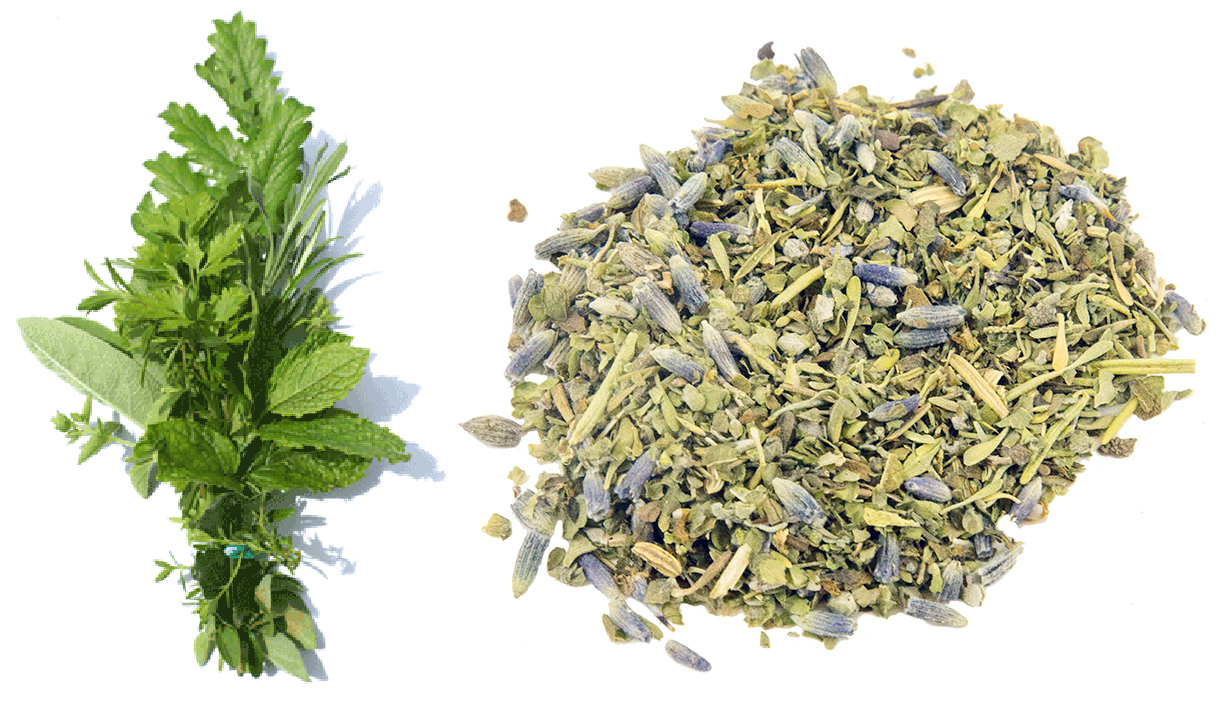 Bunch of fresh herbs and the classic dried Herbes de Provence blend.
Welcome to FabulousFusionFood's Herb-based Recipes Page — Herbs are typically the milder of the flavourings added to food. By definition a herb is any herbaceous part of a plant. This means any combination of the stems the leaves and the flowers. Basically those parts of a plant that live above ground (in contrast the roots of a plant if used as a flavouring are generally considered as spices, as are the seeds and fruit of a plant). The list below therefore describes as many parts of a plant as possible if they are used (either fresh or dried) as a food flavouring. The exception here is the woody stem, which tends to be thought of as a spice rather than an herb.
In terms of flavouring, at least for economic impact, herbs have tended to play second fiddle to spices. The majority of herbs need to be used fresh, their flavour chemicals tend to be volatile. As a result, herbs, typically, are grown locally, added fresh and used towards the end of cookery. Which is not to say that they're not important in cookery. They can be vital and some combinations, like French fines herbes, herbes de provence or bouquets garnis are key to the flavour profile of a dish.
Culinary herbs are typically added fresh towards the end of cooking though dried herb blends such as herbes de provence are available. Most herbs lose their potency on drying. The exception being oregano, which is typically superior dried as opposed to fresh.
Herbs are a widely distributed and widespread group of plants, excluding vegetables, with savory or aromatic properties that are used for flavoring and garnishing food, for medicinal purposes, or for fragrances. Culinary use typically distinguishes herbs from spices. Herbs generally refers to the leafy green or flowering parts of a plant (either fresh or dried), while spices are usually dried and produced from other parts of the plant, including seeds, bark, roots and fruits.
Herbs have a variety of uses including culinary, medicinal, aromatic and in some cases, spiritual. General usage of the term "herb" differs between culinary herbs and medicinal herbs; in medicinal or spiritual use, any parts of the plant might be considered "herbs", including leaves, roots, flowers, seeds, root bark, inner bark (and cambium), resin and pericarp.
In botany, the term herb refers to a herbaceous plant, defined as a small, seed-bearing plant without a woody stem in which all aerial parts (i.e. above ground) die back to the ground at the end of each growing season. Usually the term refers to perennials, although herbaceous plants can also be annuals (plants that die at the end of the growing season and grow back from seed next year), or biennials. This term is in contrast to shrubs and trees which possess a woody stem. Shrubs and trees are also defined in terms of size, where shrubs are less than ten meters tall, and trees may grow over ten meters. The word herbaceous is derived from Latin herbāceus meaning "grassy", from herba "grass, herb".
Culinary herbs are distinguished from vegetables in that, like spices, they are used in small amounts and provide flavour rather than substance to food.
Herbs can be perennials such as thyme, oregano, sage or lavender, biennials such as parsley, or annuals like basil. Perennial herbs can be shrubs such as rosemary (Rosmarinus officinalis), or trees such as bay laurel (Laurus nobilis) – this contrasts with botanical herbs, which by definition cannot be woody plants. Some plants are used as both herbs and spices, such as dill weed and dill seed or coriander leaves and seeds. There are also some herbs, such as those in the mint family, that are used for both culinary and medicinal purposes.
For more information on culinary herbs, please visit this site's herb guide where you will find information on over 100 herbs.
This is a continuation of the recipes listings for the herb-based recipes and dishes on this site (the page in fact). If you would like to learn a little more about this history of herbs and the methods of cooking with spices then please go to the first listing page for these Herb-based recipes information page. Here you will get just a list of the additional Herb-based recipes on this site.
The alphabetical list of all the herb-based recipes on this site follows, (limited to 100 recipes per page). There are 1998 recipes in total:
Page 5 of 20
| Chakapuli (Georgian Lamb and Tarragon Stew) Origin: Georgia | Chicken Machboos Origin: Oman | Christmas Island Pickled Eggs Origin: Christmas Island |
| Chana Chaat (Chickpea Chaat) Origin: India | Chicken Machbous (Chicken Machboos) Origin: Iraq | Christmas Pastelles Origin: Trinidad |
| Chanterelle and Rosemary Galette Origin: Britain | Chicken Madrouba Origin: Oman | Chu Chee Curry Paste Origin: Thailand |
| Chantilly Soup Origin: British | Chicken Madrouba Origin: Qatar | Chubolet (Fish Balls in Tomato Sauce) Origin: Gambia |
| Char-grilled Bream Origin: Britain | Chicken Madrouba Origin: Bahrain | Chuleta de Chancho a la Naranja (Pork Chop with Orange) Origin: Ecuador |
| Char-grilled Tuna with Lime Origin: American | Chicken Satay Origin: Fusion | Chulitas de Cordero (Spanish Lamb Cutlets) Origin: Spain |
| Char-grilled Turkey with Cheesy Pockets Origin: Britain | Chicken Soup with Dumplings Origin: Britain | Chykenys in hocchee (Stuffed Chickens Cooked in Broth) Origin: England |
| Char-grilled Venison Steaks Origin: Britain | Chicken Stock Origin: Britain | Ciabatta Lambada Origin: Italy |
| Chargrilled Devils Origin: Britain | Chicken White Curry Origin: Sri Lanka | Cig oen bys a bawd gyda saws bara lawr (Lamb Finger Food with Laverbread Sauce) Origin: Welsh |
| Charred Spicy Salsa Origin: America | Chicken with Potatoes, Tomatoes and Fennel Origin: Ireland | Cig Oen Cymreig Gyda Saws Mafon (Welsh Lamb with Raspberry Sauce) Origin: Welsh |
| Charred Tuna Steaks Origin: Britain | Chicken, Black Bean and Sweet Potato Enchiladas Origin: America | Cig Oen gyda Saws Bara Lawr Llysieuog (Lamb with Herby Laverbread Sauce) Origin: Welsh |
| Chaudage (Pork and Beef Stew) Origin: Guadeloupe | Chicken, Herb and Lemon Pie Origin: Ireland | Cig Oen Mewn Mêl a Seidr (Lamb in Honey and Cider) Origin: Welsh |
| Cheese and Chive Scones with Pears and Honey Origin: England | Chicken, Leek and Celery Soup Origin: Britain | Citrium (Citron) Origin: Roman |
| Cheese Crumble Topped Mash Origin: Britain | Chickpea Curry Origin: Britain | Citrus Redbush Tea Smoothie Origin: South Africa |
| Cheese Dumplings Origin: Britain | Chickweed Soup Origin: Ancient | Civet de Cerf (Venison Stew) Origin: Reunion |
| Cheese Fruit Log Origin: Britain | Chikhirtma (Coriander and Onion Soup) Origin: Georgia | Civet of Hare Origin: Britain |
| Cheesy Scallop Gratin Origin: Britain | Chilaca Pork Stew Origin: Mexico | Clam Stovies Origin: Scotland |
| Chefy Umngqusho (Chefy Samp and Beans) Origin: South Africa | Chilaquiles Origin: Mexico | Classic Coleslaw Origin: France |
| Cherchem Origin: Mauritania | Chile Verde (Green Chili) Origin: Mexico | Classic Potato Salad Origin: Ireland |
| Cherry Tomato Bites Origin: Britain | Chilean Ceviche Origin: Chile | Classic Tartar Sauce Origin: France |
| Cherupayar Curry (Whole Green Lentil Curry) Origin: India | Chili Seasoning Mix Origin: American | Clay-baked Fish Origin: Ancient |
| Chestnut Fazzoletti Origin: Italy | Chiltomate Salsa Origin: Mexico | Clay-baked Leg of Goat Origin: Britain |
| Chia Fresca Origin: Mexico | Chin Baung Kyaw (Fried Roselle Leaves) Origin: Myanmar | Clear Tarragon Sauce Origin: Britain |
| Chicken and Leek Soup with Prunes Origin: Britain | Chinese Fish Cakes Origin: China | Cobnut Pesto Origin: Britain |
| Chicken and Lentil Soup Origin: Britain | Chinese Five-spice Spare Ribs Origin: China | Coca-Cola Ham Origin: American |
| Chicken and Pumpkin Laksa Origin: Fusion | Chinese Meatballs Origin: China | Cochinillo (Suckling Pig) Origin: Spain |
| Chicken Baked with Potatoes and Garlic Origin: Ireland | Chirnia Souvlakia (Pork Kebabs) Origin: Cyprus | Cocodrilo en su Salsa (Crocodile in Sauce) Origin: Equatorial Guinea |
| Chicken Boileen Origin: Saint Vincent | Chive and Cheese Blinis with Scrambled Eggs and Smoked Salmon Origin: Britain | Coconut Lime Chicken Curry Origin: Cayman Islands |
| Chicken Broth Origin: American | Chive Omelette Origin: Britain | Cocos Islands Ayam Goreng (Malaysian-style Fried Chicken) Origin: Cocos Islands |
| Chicken Jalfrezi Origin: Britain | Chivo Picante (Dominican Spicy Goat) Origin: Dominican Republic | Cocos Islands Turmeric Rice Origin: Cocos Islands |
| Chicken Kabsa Origin: Saudi Arabia | Chmeli-Suneli Origin: Kyrgyzstan | Cod à la Mâitre d'Hôtel Origin: British |
| Chicken Kyiv Origin: Ukraine | Chopped Liver with Zhoug Origin: Jewish | Cod with Mustard Sauce Origin: Scotland |
| Chicken Liver Mousse Origin: Philippines | Chou Sautés au Boeuf (Cabbage Sautéed with Beef) Origin: Cameroon | |
| Chicken Machboos Origin: Bahrain | Christmas Goose Origin: British |
Page 5 of 20