FabulousFusionFood's Herb-based Recipes 2nd Page
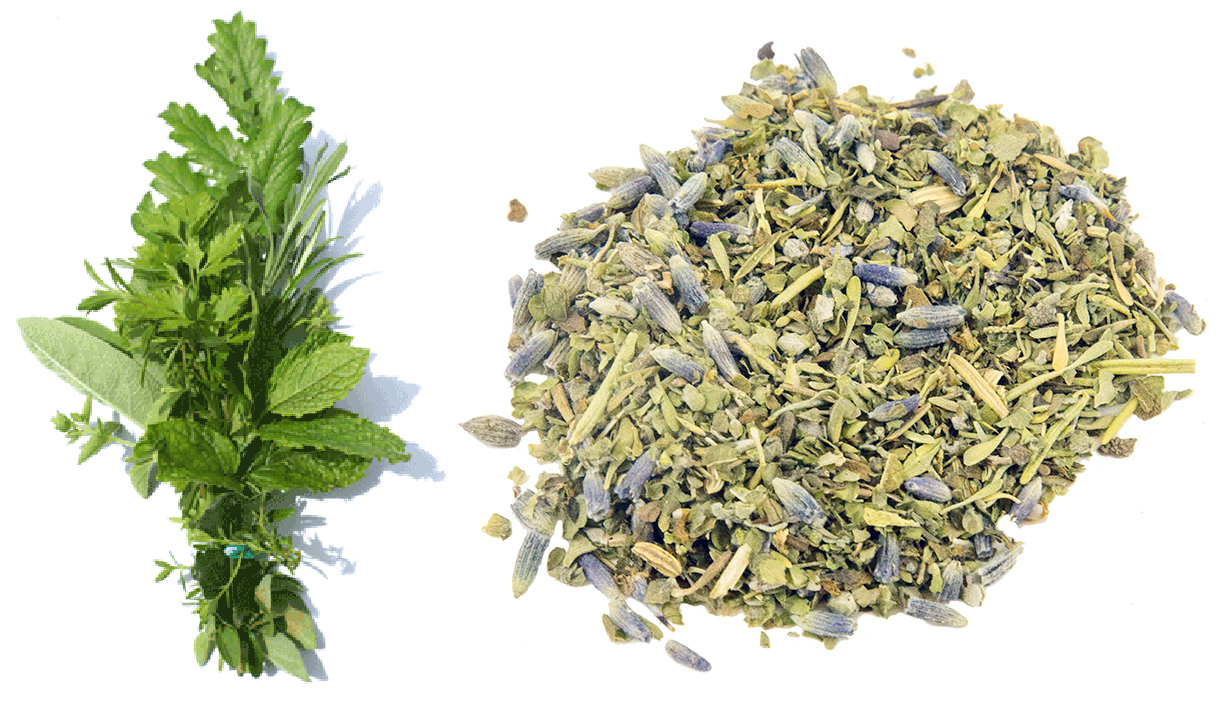 Bunch of fresh herbs and the classic dried Herbes de Provence blend.
Welcome to FabulousFusionFood's Herb-based Recipes Page — Herbs are typically the milder of the flavourings added to food. By definition a herb is any herbaceous part of a plant. This means any combination of the stems the leaves and the flowers. Basically those parts of a plant that live above ground (in contrast the roots of a plant if used as a flavouring are generally considered as spices, as are the seeds and fruit of a plant). The list below therefore describes as many parts of a plant as possible if they are used (either fresh or dried) as a food flavouring. The exception here is the woody stem, which tends to be thought of as a spice rather than an herb.
In terms of flavouring, at least for economic impact, herbs have tended to play second fiddle to spices. The majority of herbs need to be used fresh, their flavour chemicals tend to be volatile. As a result, herbs, typically, are grown locally, added fresh and used towards the end of cookery. Which is not to say that they're not important in cookery. They can be vital and some combinations, like French fines herbes, herbes de provence or bouquets garnis are key to the flavour profile of a dish.
Culinary herbs are typically added fresh towards the end of cooking though dried herb blends such as herbes de provence are available. Most herbs lose their potency on drying. The exception being oregano, which is typically superior dried as opposed to fresh.
Herbs are a widely distributed and widespread group of plants, excluding vegetables, with savory or aromatic properties that are used for flavoring and garnishing food, for medicinal purposes, or for fragrances. Culinary use typically distinguishes herbs from spices. Herbs generally refers to the leafy green or flowering parts of a plant (either fresh or dried), while spices are usually dried and produced from other parts of the plant, including seeds, bark, roots and fruits.
Herbs have a variety of uses including culinary, medicinal, aromatic and in some cases, spiritual. General usage of the term "herb" differs between culinary herbs and medicinal herbs; in medicinal or spiritual use, any parts of the plant might be considered "herbs", including leaves, roots, flowers, seeds, root bark, inner bark (and cambium), resin and pericarp.
In botany, the term herb refers to a herbaceous plant, defined as a small, seed-bearing plant without a woody stem in which all aerial parts (i.e. above ground) die back to the ground at the end of each growing season. Usually the term refers to perennials, although herbaceous plants can also be annuals (plants that die at the end of the growing season and grow back from seed next year), or biennials. This term is in contrast to shrubs and trees which possess a woody stem. Shrubs and trees are also defined in terms of size, where shrubs are less than ten meters tall, and trees may grow over ten meters. The word herbaceous is derived from Latin herbāceus meaning "grassy", from herba "grass, herb".
Culinary herbs are distinguished from vegetables in that, like spices, they are used in small amounts and provide flavour rather than substance to food.
Herbs can be perennials such as thyme, oregano, sage or lavender, biennials such as parsley, or annuals like basil. Perennial herbs can be shrubs such as rosemary (Rosmarinus officinalis), or trees such as bay laurel (Laurus nobilis) – this contrasts with botanical herbs, which by definition cannot be woody plants. Some plants are used as both herbs and spices, such as dill weed and dill seed or coriander leaves and seeds. There are also some herbs, such as those in the mint family, that are used for both culinary and medicinal purposes.
For more information on culinary herbs, please visit this site's herb guide where you will find information on over 100 herbs.
This is a continuation of the recipes listings for the herb-based recipes and dishes on this site (the page in fact). If you would like to learn a little more about this history of herbs and the methods of cooking with spices then please go to the first listing page for these Herb-based recipes information page. Here you will get just a list of the additional Herb-based recipes on this site.
The alphabetical list of all the herb-based recipes on this site follows, (limited to 100 recipes per page). There are 1998 recipes in total:
Page 2 of 20
| Ansjovistorsk (Cod with Anchovies) Origin: Sweden | Ash Reshteh (Persian Noodle Soup with Beans) Origin: Iran | Baghali Shevid Polow (Lima Bean with Dill Rice) Origin: Iran |
| Antiguan Curry Powder Origin: Antigua | Asheh Mast (Persian Herb and Yoghurt Soup) Origin: Iran | Bahamian Cracked Conch Origin: Bahamas |
| Antiguan Green Seasoning Origin: Antigua | Asparagus Salad Origin: Britain | Bajan Curry Powder Origin: Barbados |
| Antiguan Hot Sauce Origin: Antigua | Assaisonnement Vert (Guianan Green Seasoning) Origin: French Guiana | Bajan Green Seasoning Origin: Barbados |
| Antiguan Jerk Curry Paste Origin: Antigua | Assaturas in collare (Of Roast Neck) Origin: Roman | Bajan Macaroni Pie Origin: Barbados |
| Antiguan Jerk Seasoning Origin: Antigua | Athenian Cabbage Origin: Roman | Bajan Pepperpot Origin: Barbados |
| Antiguan Rice Pudding Origin: Antigua | Aubergine et Citrouille à la pâte d’arachides (Aubergine and Pumpkin with Peanut Paste) Origin: Senegal | Baked Brown Trout Origin: Scotland |
| Antiguan Tomato Sauce Origin: Antigua | Augurken (Dutch Lunch Pickles) Origin: Netherlands | Baked Butternut Squash with Cranberries Origin: American |
| Antipasto Chef's Salad Origin: Britain | Aurangabadi Naan Qaliya Origin: India | Baked Carp Origin: British |
| Apelsin och rosmarinlax (Orange and Rosemary Salmon) Origin: Sweden | Australian Cheese Garlic and Chive Damper Origin: Australia | Baked Haddock with Tomatoes and Lemons Origin: Gibraltar |
| Apelsin och timjansfisk (Orange and Thyme Fish) Origin: Sweden | Autumnal Soup with Mallow Cheeses Origin: British | Baked Lamb with Potatoes and Artichokes Origin: Ireland |
| Apelsinfisk (Fish with Orange) Origin: Sweden | Avocado and Basil Leaf Pesto Origin: Fusion | Baked Mackerel with Wild Flavours Origin: Britain |
| Aper ita conditur (Seasoned Wild Boar) Origin: Roman | Avocado Leaf Chimichurri Origin: Fusion | Baked Morel Escargot Origin: Britain |
| Apfel-, Knollensellerie- und Beifußsoße (Apple, Celeriac and Mugwort Gravy for Goose) Origin: India | Avocado Leaf Flavoured Bean Stew Origin: Fusion | Baked New Potatoes with Wilted Wild Garlic Origin: Britain |
| Apple and Mint Jelly Origin: Britain | Avocado Leaf Flavoured Leek and Potato Soup Origin: Fusion | Baked Papaya with Sweet Coconut Cream Origin: Marshall Islands |
| Apple, Chestnut and Mugwort Stuffing for Roast Goose Origin: Britain | Avocado Leaf Flavoured Pickle Origin: Fusion | Baked Salmon Origin: Canada |
| Apricot and Bergamot Chicken Origin: Britain | Avocado Leaf Infused Oil Origin: Fusion | Baked Stuffed Razor Clams Origin: Britain |
| Arabic Pasta with Beef and Yogurt Sauce Origin: Fusion | Avocado Leaf Spice Blend Origin: Fusion | Baked Tandoori Whole Fish Origin: India |
| Argentinian Salsa Criolla Origin: Argentina | Avocado Leaf Tea Origin: Mexico | Baklazhan Pkhali (Aubergine Pkhali) Origin: Georgia |
| Arjoli Dip Origin: Malta | Avocado Leaf Yoghurt Salad Dressing Origin: Fusion | Balloc Broth Origin: England |
| Aromatic Pork and Potato Casserole Origin: Ireland | Ayam Goreng (Malaysian Fried Chicken) Origin: Malaysia | Ballotine of Turkey Origin: Britain |
| Arroz com Camarão (Rice with Prawns) Origin: Brazil | Ayam Panggang (Grilled Whole Chicken) Origin: Indonesia | Ballymaloe Fruit Tarts Origin: Ireland |
| Arroz con Calamares (Rice with Squid) Origin: Spain | Ayran (Turkish Cypriot Chicken and Taro Stew) Origin: Northern Cyprus | Balnamoon Skink Origin: Ireland |
| Arroz con Camarón (Rice with Prawns) Origin: Ecuador | Béarnaise Sauce Origin: France | Balti Garam Masala Origin: India |
| Arroz con Menestra y Carne (Rice with Meat in Stew) Origin: Ecuador | Béarnaise Sauce II Origin: France | Bamies Yiahni (Okra with Tomato Sauce) Origin: Cyprus |
| Arroz Con Pollo (Costa Rican Arroz con Pollo) Origin: Costa Rica | Bò Tái Chanh (Lemon-cured Beef with Rice Paddy Herb) Origin: Vietnam | Banana leaf mackerel Origin: Sri Lanka |
| Arroz Con Pollo Panameño (Panamanian Arroz con Pollo) Origin: Panama | Baajiya (Somali Black-eyed Pea Fritters) Origin: Somalia | Bara Pot Clai Bacheldre (Bacheldre Clay-pot Bread) Origin: Welsh |
| Arroz Rojo (Mexican Red Rice) Origin: Mexico | Bacalaitos (Salted Cod Fritters) Origin: Dominican Republic | Barbecue Seasoning Origin: American |
| Artichauts camus sauce bretonne (Camus artichokes with Breton sauce) Origin: France | Bacalao à la Naranja (Cod with Orange) Origin: Spain | Barbecue Spice Rub Origin: Botswana |
| Artichoke Salsa Origin: American | Bacalhau à Brás (Salt Cod, Potatoes and Eggs) Origin: Portugal | Barbecue-poached Salmon Origin: British |
| Aruba Green Seasoning Origin: Aruba | Bacon and Egg Pasty Origin: England | Barbecued Aubergines with Tsatziki Origin: Britain |
| Aruban Curry Chicken Origin: Aruba | Bacon Koftas Origin: Britain | Barbecued Balsamic Veal Chops Origin: American |
| Aruk Khass (Lettuce Fritters) Origin: Iraq | Badia Sazon Completa (Badia Complete Seasoning) Origin: Chile | |
| Ascot Pie Origin: England | Baghali Polo (Persian Dill Rice) Origin: Iran |
Page 2 of 20