FabulousFusionFood's Herb-based Recipes 3rd Page
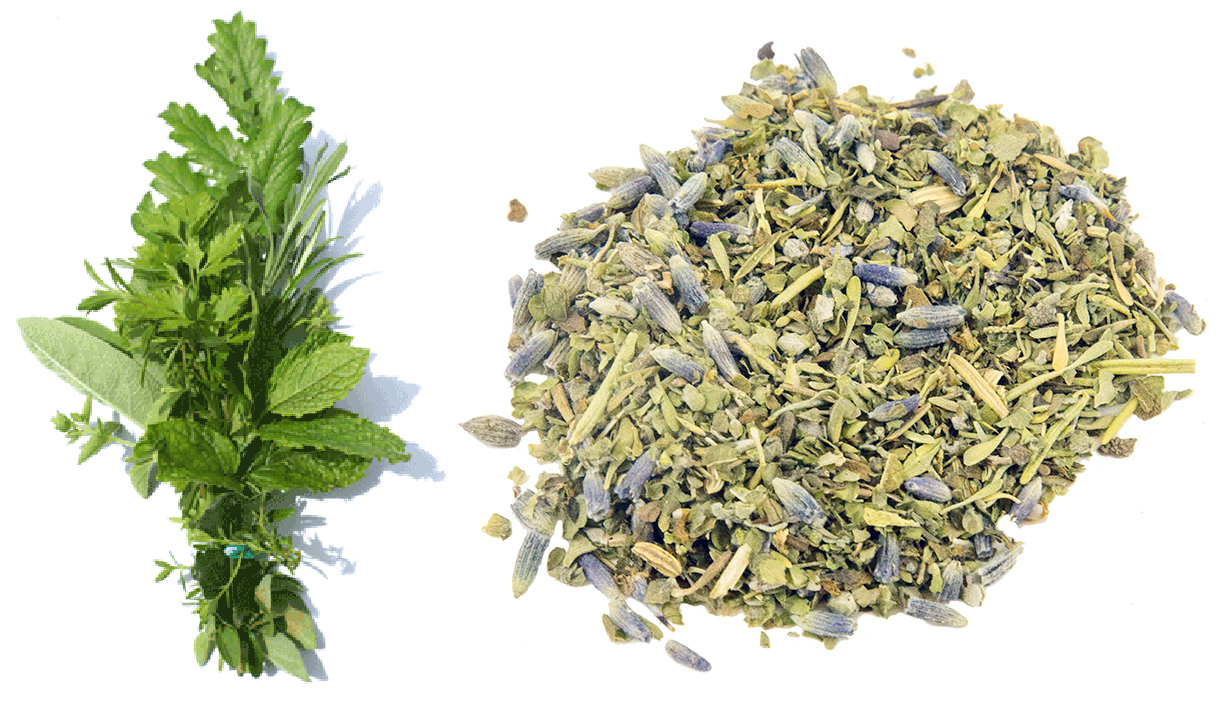 Bunch of fresh herbs and the classic dried Herbes de Provence blend.
Welcome to FabulousFusionFood's Herb-based Recipes Page — Herbs are typically the milder of the flavourings added to food. By definition a herb is any herbaceous part of a plant. This means any combination of the stems the leaves and the flowers. Basically those parts of a plant that live above ground (in contrast the roots of a plant if used as a flavouring are generally considered as spices, as are the seeds and fruit of a plant). The list below therefore describes as many parts of a plant as possible if they are used (either fresh or dried) as a food flavouring. The exception here is the woody stem, which tends to be thought of as a spice rather than an herb.
In terms of flavouring, at least for economic impact, herbs have tended to play second fiddle to spices. The majority of herbs need to be used fresh, their flavour chemicals tend to be volatile. As a result, herbs, typically, are grown locally, added fresh and used towards the end of cookery. Which is not to say that they're not important in cookery. They can be vital and some combinations, like French fines herbes, herbes de provence or bouquets garnis are key to the flavour profile of a dish.
Culinary herbs are typically added fresh towards the end of cooking though dried herb blends such as herbes de provence are available. Most herbs lose their potency on drying. The exception being oregano, which is typically superior dried as opposed to fresh.
Herbs are a widely distributed and widespread group of plants, excluding vegetables, with savory or aromatic properties that are used for flavoring and garnishing food, for medicinal purposes, or for fragrances. Culinary use typically distinguishes herbs from spices. Herbs generally refers to the leafy green or flowering parts of a plant (either fresh or dried), while spices are usually dried and produced from other parts of the plant, including seeds, bark, roots and fruits.
Herbs have a variety of uses including culinary, medicinal, aromatic and in some cases, spiritual. General usage of the term "herb" differs between culinary herbs and medicinal herbs; in medicinal or spiritual use, any parts of the plant might be considered "herbs", including leaves, roots, flowers, seeds, root bark, inner bark (and cambium), resin and pericarp.
In botany, the term herb refers to a herbaceous plant, defined as a small, seed-bearing plant without a woody stem in which all aerial parts (i.e. above ground) die back to the ground at the end of each growing season. Usually the term refers to perennials, although herbaceous plants can also be annuals (plants that die at the end of the growing season and grow back from seed next year), or biennials. This term is in contrast to shrubs and trees which possess a woody stem. Shrubs and trees are also defined in terms of size, where shrubs are less than ten meters tall, and trees may grow over ten meters. The word herbaceous is derived from Latin herbāceus meaning "grassy", from herba "grass, herb".
Culinary herbs are distinguished from vegetables in that, like spices, they are used in small amounts and provide flavour rather than substance to food.
Herbs can be perennials such as thyme, oregano, sage or lavender, biennials such as parsley, or annuals like basil. Perennial herbs can be shrubs such as rosemary (Rosmarinus officinalis), or trees such as bay laurel (Laurus nobilis) – this contrasts with botanical herbs, which by definition cannot be woody plants. Some plants are used as both herbs and spices, such as dill weed and dill seed or coriander leaves and seeds. There are also some herbs, such as those in the mint family, that are used for both culinary and medicinal purposes.
For more information on culinary herbs, please visit this site's herb guide where you will find information on over 100 herbs.
This is a continuation of the recipes listings for the herb-based recipes and dishes on this site (the page in fact). If you would like to learn a little more about this history of herbs and the methods of cooking with spices then please go to the first listing page for these Herb-based recipes information page. Here you will get just a list of the additional Herb-based recipes on this site.
The alphabetical list of all the herb-based recipes on this site follows, (limited to 100 recipes per page). There are 1998 recipes in total:
Page 3 of 20
| Barbecued Bourbon Tri-tip Origin: American | Beef Picadillo Origin: Dominican Republic | Bokit au Poulet (Chicken in Fried Bread Rolls) Origin: Guadeloupe |
| Barbecued Butterflied Leg of Lamb Origin: Australia | Beef with Wild Mushrooms Origin: Britain | Boldo Leaf Tea Origin: Argentina |
| Barbecued Catfish, Cajun Style Origin: American | Beetroot and Mint Soda Bread Rolls Origin: Ireland | Boletos Fungos (Bolete Mushrooms) Origin: Roman |
| Barbecued Cuban Sandwich Origin: American | Beignets d'Aubergines (Aubergine Fritters) Origin: Mauritius | Bolinhos de Bacalhau (Brazilian Salt Cod Balls) Origin: Brazil |
| Barbecued Fish Origin: Gambier Islands | Beijino (Coconut Kisses) Origin: Brazil | Bolinhos de Peixe com Mancarra (Fish Fritters with Peanuts) Origin: Guinea-Bissau |
| Barbecued Flank Steak with Chimichurri Sauce Origin: American | Bergamot and Cheese Tuiles Origin: Britain | Bombay Potatoes Origin: India |
| Barbecued Garlic Potato Wedges Origin: Britain | Bergamot and Onion Stuffing Origin: British | Bonaire Green Seasoning Origin: Bonaire |
| Barbecued Herbed Chicken Schnitzel Origin: British | Bergamot and Orange Tea Origin: American | Bonito con Cebolla y Tomate (Bonito with Onion and Tomato Sauce) Origin: Spain |
| Barbecued Megrim with Citrus Butter Origin: England | Bergamot Jelly Origin: British | Borage Flower Soup Origin: Britain |
| Barbecued Pork Chops Dijonnaise Origin: British | Bergamot, Basil and Almond Pesto Origin: Fusion | Bosanski Lonac (Bosnian Pot Stew) Origin: Bosnia |
| Barbecued Portobello Burgers Origin: American | Bergens Fiskesuppe (Bergen Fish Soup) Origin: Norway | Bosnian Goulash Origin: Bosnia |
| Barbecued Salmon with Mango Salsa Origin: Fusion | Bermuda Curry Powder Origin: Bermuda | Bottle Masala Origin: India |
| Barbecued Spiral Wrack Capers Origin: Britain | Berry Agua Fresca Origin: America | Bottle Masala Meatball Curry Origin: India |
| Barbecued Stuffed Tomatoes Origin: Britain | Beshbarmak (Grilled Tamarind Fish) Origin: Kazakhstan | Boudin Créole (Creole Black Pudding) Origin: French Guiana |
| Barbecued Teriyaki-glazed Trout Origin: American | Beurre Persillade (Parsley Butter) Origin: France | Boudin Créole Rouge (Creole Black Pudding) Origin: Guadeloupe |
| Barbecued, Marinated, Portobello Mushrooms Origin: British | Big Bowl Chili Origin: American | Bouillabaisse II Origin: France |
| Barbel Origin: British | Bigilla (Broad Bean Dip) Origin: Malta | Bouillabaisse III Origin: France |
| Basil Pesto Origin: Britain | Bigos (Polish Hunter's Stew) Origin: Poland | Bouillon Origin: Britain |
| Basil-grilled Chicken Origin: American | Bigos (Lithuanian Hunter's Stew) Origin: Lithuania | Bouillon de Crabes (Swimmer Crab Bouillon) Origin: Mauritius |
| Bassi (Malian Couscous) Origin: Mali | Bissara Origin: Morocco | Bouillon de Petits Crabes (Stew of Small Crabs) Origin: Mauritius |
| Bay Boletes with Veal and Sage Origin: Britain | Bistec de Higado (Beef Liver Steaks) Origin: Ecuador | Boulettes à l'Igname (Fried Yam Balls) Origin: Togo |
| Bayth Mashi (Stuffed Eggs) Origin: Saudi Arabia | Black Bean Huevos Rancheros Origin: Mexico | Boulettes à l'igname Nigerienne (Yam Dumplings from Niger) Origin: Niger |
| Bayth Mashi (Stuffed Eggs) Origin: Lebanon | Blackberry and Anise Hyssop Sorbet Origin: Britain | Boulettes de Poisson Burkinabé (Burkinabe Fish Balls) Origin: Burkina Faso |
| Bazlama Flatbread Origin: Turkey | Blackened Fish on the Barbecue Origin: Fusion | Boulgour aux Fruits Secs (Bulgur Wheat with Dried Fruit) Origin: Mauritania |
| Bean and Gari Loaf Origin: Ghana | Blackened Tuna Origin: Fusion | Bourguignon de cerf (Venison Bourguignon) Origin: France |
| Bean and Wild Mushroom Stew Origin: Britain | Blaff de poisson (Fish Blaff) Origin: Guadeloupe | Bourguignon de cerf (Venison Bourguignon) Origin: New Caledonia |
| Bean Foogath Origin: India | Blaff de poisson (Fish Blaff) Origin: French Guiana | Bozartma (Lamb Stewed with Vegetables and Cherry Plums) Origin: Azerbaijan |
| Bébélé (Tripe and Plantain Stew) Origin: Guadeloupe | Bloms (Blom Meatballs) Origin: France | Braf (Broth) Origin: Dominica |
| Beef and Pistachio Terrine Origin: Britain | Blossoms of Health Tea Origin: American | Braised Greek-style Lamb Chops Origin: Fusion |
| Beef Braised in Rooibos Tea with Sweet Potatoes Origin: South Africa | Boboli Pizza Crust Origin: Italy | Braised Monkfish Provençal Origin: Fusion |
| Beef Enchiladas Origin: Britain | Boeuf en Daube Origin: France | Braised Tuna Origin: Seychelles |
| Beef in Bistort Leaves Origin: Britain | Boiled Eels Origin: British | Brazilian-style Venison with Rice Origin: Fusion |
| Beef in Claret Origin: Scotland | Boiled Fish and Hominy Origin: Turks Caicos | |
| Beef Mince and Coriander Soup Origin: China | Boiled Tench Origin: British |
Page 3 of 20