FabulousFusionFood's Herb-based Recipes 7th Page
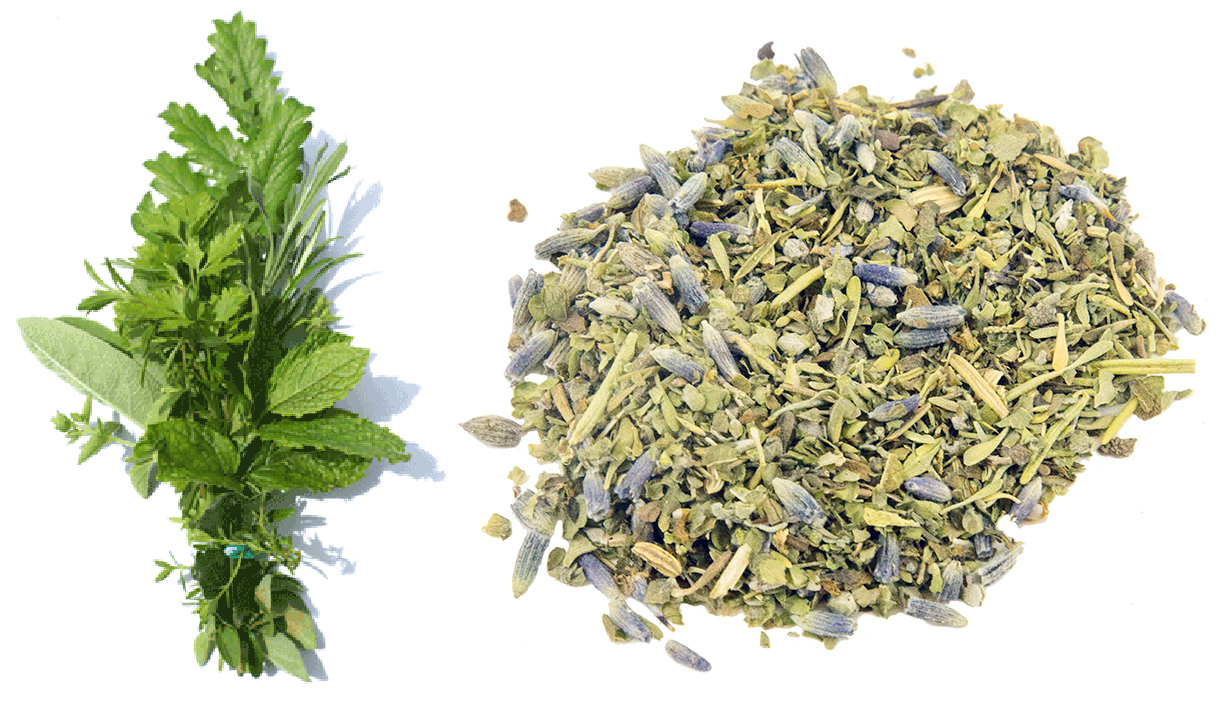 Bunch of fresh herbs and the classic dried Herbes de Provence blend.
Welcome to FabulousFusionFood's Herb-based Recipes Page — Herbs are typically the milder of the flavourings added to food. By definition a herb is any herbaceous part of a plant. This means any combination of the stems the leaves and the flowers. Basically those parts of a plant that live above ground (in contrast the roots of a plant if used as a flavouring are generally considered as spices, as are the seeds and fruit of a plant). The list below therefore describes as many parts of a plant as possible if they are used (either fresh or dried) as a food flavouring. The exception here is the woody stem, which tends to be thought of as a spice rather than an herb.
In terms of flavouring, at least for economic impact, herbs have tended to play second fiddle to spices. The majority of herbs need to be used fresh, their flavour chemicals tend to be volatile. As a result, herbs, typically, are grown locally, added fresh and used towards the end of cookery. Which is not to say that they're not important in cookery. They can be vital and some combinations, like French fines herbes, herbes de provence or bouquets garnis are key to the flavour profile of a dish.
Culinary herbs are typically added fresh towards the end of cooking though dried herb blends such as herbes de provence are available. Most herbs lose their potency on drying. The exception being oregano, which is typically superior dried as opposed to fresh.
Herbs are a widely distributed and widespread group of plants, excluding vegetables, with savory or aromatic properties that are used for flavoring and garnishing food, for medicinal purposes, or for fragrances. Culinary use typically distinguishes herbs from spices. Herbs generally refers to the leafy green or flowering parts of a plant (either fresh or dried), while spices are usually dried and produced from other parts of the plant, including seeds, bark, roots and fruits.
Herbs have a variety of uses including culinary, medicinal, aromatic and in some cases, spiritual. General usage of the term "herb" differs between culinary herbs and medicinal herbs; in medicinal or spiritual use, any parts of the plant might be considered "herbs", including leaves, roots, flowers, seeds, root bark, inner bark (and cambium), resin and pericarp.
In botany, the term herb refers to a herbaceous plant, defined as a small, seed-bearing plant without a woody stem in which all aerial parts (i.e. above ground) die back to the ground at the end of each growing season. Usually the term refers to perennials, although herbaceous plants can also be annuals (plants that die at the end of the growing season and grow back from seed next year), or biennials. This term is in contrast to shrubs and trees which possess a woody stem. Shrubs and trees are also defined in terms of size, where shrubs are less than ten meters tall, and trees may grow over ten meters. The word herbaceous is derived from Latin herbāceus meaning "grassy", from herba "grass, herb".
Culinary herbs are distinguished from vegetables in that, like spices, they are used in small amounts and provide flavour rather than substance to food.
Herbs can be perennials such as thyme, oregano, sage or lavender, biennials such as parsley, or annuals like basil. Perennial herbs can be shrubs such as rosemary (Rosmarinus officinalis), or trees such as bay laurel (Laurus nobilis) – this contrasts with botanical herbs, which by definition cannot be woody plants. Some plants are used as both herbs and spices, such as dill weed and dill seed or coriander leaves and seeds. There are also some herbs, such as those in the mint family, that are used for both culinary and medicinal purposes.
For more information on culinary herbs, please visit this site's herb guide where you will find information on over 100 herbs.
This is a continuation of the recipes listings for the herb-based recipes and dishes on this site (the page in fact). If you would like to learn a little more about this history of herbs and the methods of cooking with spices then please go to the first listing page for these Herb-based recipes information page. Here you will get just a list of the additional Herb-based recipes on this site.
The alphabetical list of all the herb-based recipes on this site follows, (limited to 100 recipes per page). There are 1998 recipes in total:
Page 7 of 20
| Dominica Crab Callaloo Origin: Dominica | Economical Mince Origin: Scotland | Fanesca ecuatoriana (Ecuadorian Easter soup) Origin: Ecuador |
| Dominica Curried Goat Origin: Dominica | Economical Stock Origin: British | Fatayas Sénégalais (Senegalese Fatayas) Origin: Senegal |
| Dominica Curry Prawns Origin: Dominica | Eel Soup Origin: British | Fennel Sauce Origin: Britain |
| Dominica Jerk Seasoning Origin: Dominica | Egg Pockets Origin: American | Ffagod Cig Oen (Welsh Lamb Faggots) Origin: Welsh |
| Dominica Red Beans Soup Origin: Dominica | Eggless Quiche Origin: British | Ffiledi Cegddu wedi eu Llenwi (Stuffed Fillets of Hake) Origin: Welsh |
| Dominica Saltfish Accra Origin: Dominica | Einbrennsuppe (Flour Soup) Origin: Germany | Ffiledi Gorbenfras wedi eu Llenwi (Stuffed Fillets of Haddock) Origin: Welsh |
| Dominica Sancocho Origin: Dominica | Einbrennsuppe (Flour Soup) Origin: Austria | Ffiledi Gwyniad wedi eu Llenwi (Stuffed Fillets of Whiting) Origin: Welsh |
| Dominica Spicy Guacamole Origin: Dominica | El Salvador Salsa Roja (Salvadorean Red Sauce) Origin: El Salvador | Ffiledi Môr-leisiad wedi eu Llenwi (Stuffed Fillets of Pollack) Origin: Welsh |
| Dominica Titiwi Accra Origin: Dominica | El Tuco Origin: Argentina | Ffiledi Penfras wedi eu Llenwi (Stuffed Fillets of Cod) Origin: Welsh |
| Dominican Adobo Seasoning Origin: Dominican Republic | Elleniké arnié aiga Paschast (Greek Easter Lamb or Kid) Origin: Greece | Ffowlyn Morganwg Rhost gyda Chaws a Pherlysiau (Roast Glamorgan Chicken with Cheese and Herbs) Origin: Welsh |
| Dominican Adobo Seasoning Origin: Dominican Republic | Elumas Curry (Mutton Curry) Origin: Sri Lanka | Fiddlehead Pasta Primavera Origin: American |
| Dominican Codfish Sancoche Origin: Dominica | Empanadas de Carne Molida (Minced Beef Empanadas) Origin: Mexico | Field Mushrooms in Buttermilk Origin: British |
| Dominican Hot Pepper Sauce Origin: Dominica | Encebollado Origin: Ecuador | Fierkelsjhelli (Suckling Pig in Aspic) Origin: Luxembourg |
| Dominican Mango Chutney Origin: Dominica | Eog (neu Wyniedyn) Agerog (Steamed Salmon (or Sewin)) Origin: Welsh | Filipino Beef Rendang Origin: Philippines |
| Dominican Sazón Origin: Dominican Republic | Eog wedi ei Bobi gyda Thatws a Teim (Salmon Baked with Potatoes and Thyme) Origin: Welsh | Fillet of Salmon with Green Couscous Origin: Fusion |
| Dominican Sofrito Origin: Dominican Republic | Eowtes of Flessh (Herbs Like Flesh) Origin: England | Fine-herbs Sauce Origin: Britain |
| Dominican Souse Origin: Dominica | Epityrum (Olives with Herbs) Origin: Roman | Fines Herbes Origin: France |
| Doner Spice Mix Origin: Germany | Erbolat Origin: England | Firin Makarna (Macaroni Bake) Origin: Northern Cyprus |
| Dorada con coco mozambiqueño (Miozambican Gilt-head Bream with Coconut) Origin: Mozambique | Eritrean Berbere Spice Origin: Eritrea | Fish Cake Origin: British |
| Dovga (Pea and Sorrel Soup with Meatballs) Origin: Azerbaijan | Escargots à la Bourguignonne Origin: France | Fish in Vine Leaves Origin: Greece |
| Dracula's Revenge Origin: American | Esfiha (Savory Stuffed Pastries) Origin: Brazil | Fish Kebabs Origin: Britain |
| Draenog y Môr o'r Badell gyda Tatws Newydd wedi Malu a Saets (Pan-fried Sea Bass with Garlic and Sage Smashed New Potatoes) Origin: Welsh | Espetada (Madeiran Beef Kebabs) Origin: Portugal | Fish Stock Origin: British |
| Dried Morel Bisque Origin: Britain | Extract of Game for Gravy Origin: Britain | Fiskgryta med citron och gräslök (Fish Stew with Lemon and Chives) Origin: Sweden |
| Dried Sweet Woodruff Origin: Britain | Extumer Lamb Roast Origin: Germany | Fisksoppa (Swedish Fish Soup) Origin: Sweden |
| Dried Vegetable Soup Origin: Britain | Ezay (Bhutanese Chilli Condiment) Origin: Bhutan | Foil-baked Chicken with English Mace Origin: Britain |
| Dry Rice and Fish Origin: Liberia | Ezme (Spicy Turkish Salad) Origin: Turkey | Fougasse de Monégasque (Monaco-style Fougasse) Origin: Monaco |
| Dry-fry Pork, Kenyan Style Origin: Kenya | F'rell am Rèisleck (Trout in Riesling Sauce) Origin: Luxembourg | Frango Zambeziana (Zambezi Chicken) Origin: Mozambique |
| Duckling with New Peas Origin: Britain | Fabaciae Virides (Green Beans) Origin: Roman | Freekeh Mfalfaleh (Palestinian Freekeh Pilaf) Origin: Palestine |
| Dumpling Mix Origin: Britain | Faenum Graecum (Fenugreek) Origin: Roman | French Fry Seasoning Origin: America |
| Durban Fish Masala Origin: South Africa | Faggi Ksidhati (Lentil Soup with Vinegar) Origin: Cyprus | French Stuffing Origin: France |
| Durban Leaf Masala Origin: South Africa | Fah-Fah (Soupe Djiboutienne) Origin: Djibouti | Fresco de Arrayan Origin: El Salvador |
| Dwmplinau Caws (Cheese Dumplings) Origin: Welsh | Fajita Seasoning Blend Origin: America | Fresh Fish Pepper Soup Origin: West Africa |
| Early Spring Salad Origin: Britain | Fakalate (Coconut Dumplings) Origin: Tonga | |
| Easter Greek Lamb Origin: Greece | Falafel Origin: Bahrain |
Page 7 of 20