FabulousFusionFood's Herb-based Recipes 8th Page
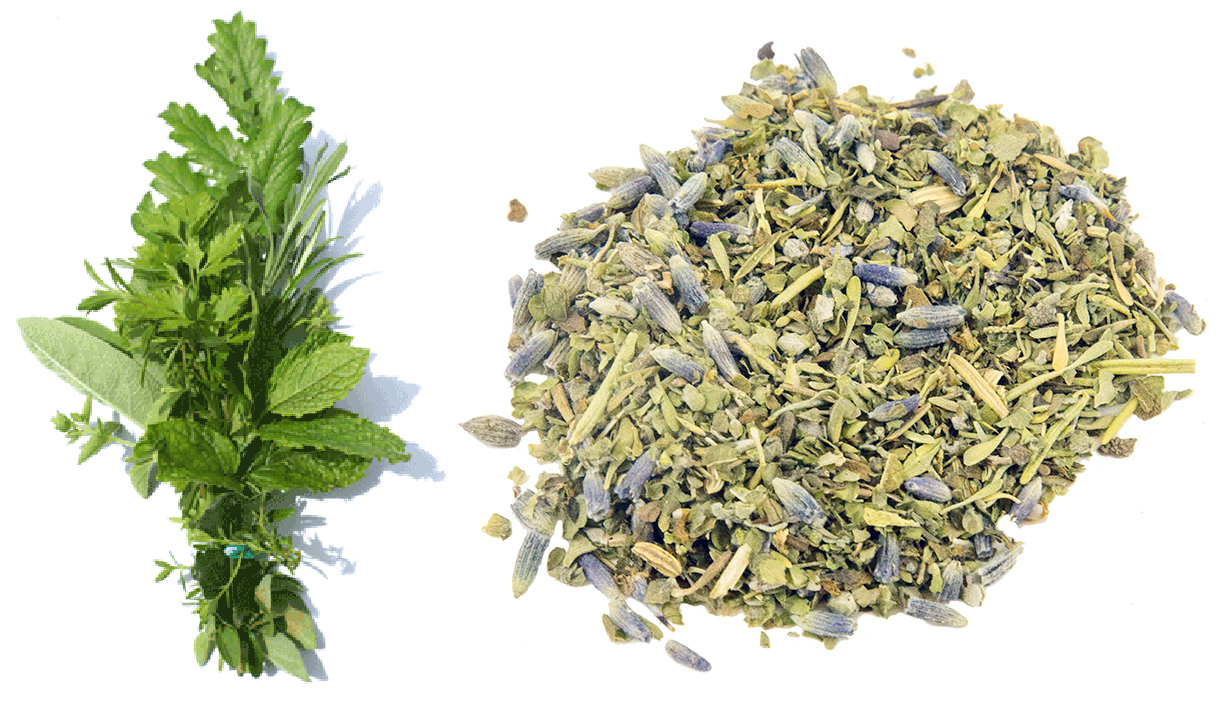 Bunch of fresh herbs and the classic dried Herbes de Provence blend.
Welcome to FabulousFusionFood's Herb-based Recipes Page — Herbs are typically the milder of the flavourings added to food. By definition a herb is any herbaceous part of a plant. This means any combination of the stems the leaves and the flowers. Basically those parts of a plant that live above ground (in contrast the roots of a plant if used as a flavouring are generally considered as spices, as are the seeds and fruit of a plant). The list below therefore describes as many parts of a plant as possible if they are used (either fresh or dried) as a food flavouring. The exception here is the woody stem, which tends to be thought of as a spice rather than an herb.
In terms of flavouring, at least for economic impact, herbs have tended to play second fiddle to spices. The majority of herbs need to be used fresh, their flavour chemicals tend to be volatile. As a result, herbs, typically, are grown locally, added fresh and used towards the end of cookery. Which is not to say that they're not important in cookery. They can be vital and some combinations, like French fines herbes, herbes de provence or bouquets garnis are key to the flavour profile of a dish.
Culinary herbs are typically added fresh towards the end of cooking though dried herb blends such as herbes de provence are available. Most herbs lose their potency on drying. The exception being oregano, which is typically superior dried as opposed to fresh.
Herbs are a widely distributed and widespread group of plants, excluding vegetables, with savory or aromatic properties that are used for flavoring and garnishing food, for medicinal purposes, or for fragrances. Culinary use typically distinguishes herbs from spices. Herbs generally refers to the leafy green or flowering parts of a plant (either fresh or dried), while spices are usually dried and produced from other parts of the plant, including seeds, bark, roots and fruits.
Herbs have a variety of uses including culinary, medicinal, aromatic and in some cases, spiritual. General usage of the term "herb" differs between culinary herbs and medicinal herbs; in medicinal or spiritual use, any parts of the plant might be considered "herbs", including leaves, roots, flowers, seeds, root bark, inner bark (and cambium), resin and pericarp.
In botany, the term herb refers to a herbaceous plant, defined as a small, seed-bearing plant without a woody stem in which all aerial parts (i.e. above ground) die back to the ground at the end of each growing season. Usually the term refers to perennials, although herbaceous plants can also be annuals (plants that die at the end of the growing season and grow back from seed next year), or biennials. This term is in contrast to shrubs and trees which possess a woody stem. Shrubs and trees are also defined in terms of size, where shrubs are less than ten meters tall, and trees may grow over ten meters. The word herbaceous is derived from Latin herbāceus meaning "grassy", from herba "grass, herb".
Culinary herbs are distinguished from vegetables in that, like spices, they are used in small amounts and provide flavour rather than substance to food.
Herbs can be perennials such as thyme, oregano, sage or lavender, biennials such as parsley, or annuals like basil. Perennial herbs can be shrubs such as rosemary (Rosmarinus officinalis), or trees such as bay laurel (Laurus nobilis) – this contrasts with botanical herbs, which by definition cannot be woody plants. Some plants are used as both herbs and spices, such as dill weed and dill seed or coriander leaves and seeds. There are also some herbs, such as those in the mint family, that are used for both culinary and medicinal purposes.
For more information on culinary herbs, please visit this site's herb guide where you will find information on over 100 herbs.
This is a continuation of the recipes listings for the herb-based recipes and dishes on this site (the page in fact). If you would like to learn a little more about this history of herbs and the methods of cooking with spices then please go to the first listing page for these Herb-based recipes information page. Here you will get just a list of the additional Herb-based recipes on this site.
The alphabetical list of all the herb-based recipes on this site follows, (limited to 100 recipes per page). There are 1998 recipes in total:
Page 8 of 20
| Fresh Herb Scones Origin: Britain | Githeri Origin: Kenya | Green Yoghurt Chutney Origin: Pakistan |
| Fresh Mushroom Salad Origin: British | Glace de Viande Origin: France | Grenada Breadfruit Soup Origin: Grenada |
| Fresh Puffball Mushroom Ragú Origin: Britain | Glazed Turnips Origin: British | Grenada Green Seasoning Origin: Grenada |
| Fresh Tomato Gravy Sauce Origin: Anglo-Indian | Gnocchi al Vaticano Origin: Vatican City | Grenadian Pelau Origin: Grenada |
| Fresh Tomato Sauce with Bergamot Origin: Britain | Gnocchi alla Puttanesca al Forno (Puttanesca Baked Gnocchi) Origin: Italy | Grilled Beef Tenderloin with Red Wine and Pistachios Origin: American |
| Fricandeau of Veal Origin: British | Gnocchi Basilico con Salsa al Pomodoro e Rucola (Basil Gnocchi with Tomato Sauce and Wild Rocket) Origin: Italy | Grilled Figs in Prosciutto Origin: Britain |
| Fricase de Pollo (Cuban Chicken Fricassee) Origin: Cuba | Go-ferwi Eog (Poaching Salmon) Origin: Welsh | Grilled Langoustine with Herb Butter Origin: Scotland |
| Fricasée de Gibier (Fricasee of Bushmeat) Origin: French Guiana | Goat Meat Pepper Soup with Calabash Nutmeg Origin: Nigeria | Grilled Mackerel Two Ways Origin: Fusion |
| Fricassée de Coq (Chicken Fricassee) Origin: Mauritius | Goat Meat Tagine Origin: African Fusion | Grilled Oysters with Fennel Crumbs Origin: South Africa |
| Fricassé de chatrou (Chatrou Fricassee) Origin: Guadeloupe | Goat Meat With Peas and Rice Origin: Saba | Grilled Potato Slices Origin: Ireland |
| Fricassé de ouassous (Fricassée of Freshwater Prawns) Origin: Guadeloupe | Goat Water Origin: Saint Kitts | Grouse Game Soup Origin: Britain |
| Fried Fish Roe Origin: Saint Lucia | Goat's Cheese Muffins (Goat's Cheese Muffins) Origin: Britain | Guatita (Ecuadorian Tripe Stew) Origin: Ecuador |
| Fried Morels Origin: Britain | Golbeda Achar (Nepali Tomato Achar) Origin: Nepal | Guiana Green Seasoning Origin: French Guiana |
| Fried Potatoes with Rosemary and Garlic Origin: Ireland | Golwython Oen Cymreig (Welsh Lamb Chops) Origin: Welsh | Guisado de carne de porco com Amêijoas (Pork Stew with Cockles) Origin: Angola |
| Fried Rice with Mushrooms and Bergamot Origin: British | Gonos (Fried Whitebait) Origin: Roman | Gulai Kambing (Sumatran Goat Curry) Origin: Martinique |
| Frikadelu Zupa (Meatball Soup) Origin: Latvia | Gormeh Sabzi (Persian Lamb and Herb Stew) Origin: Iran | Gulai Lemak (Beef Spicy Stew) Origin: Indonesia |
| Fruity Chicken Curry Origin: African Fusion | Gorse Flower Ice Cream Origin: Britain | Gurnard with Porthilly Sauce Origin: British |
| Fruity Pork Skewers Origin: Britain | Granita mit Waldmeister und Beeren (Granita with Woodruff and Strawberries) Origin: Germany | Gurnard with Tomato and Mint Sauce Origin: British |
| Frytour of Erebes (Herb Fritters) Origin: England | Grated Carrot Salad with Pomegranate and Bergamot Origin: British | Gutap (Kazakh Deep-Fried Herb Pastries) Origin: Kazakhstan |
| Fukusazushi Origin: Japan | Gravadlax Smørrebrød (Danish Smoked Salmon Open Sandwich) Origin: Denmark | Guyana Black Pudding Origin: Guyana |
| Gaeng Pa (Jungle Curry Paste) Origin: Thailand | Gravy Soup Origin: British | Guyana White Pudding Origin: Guyana |
| Gala Pie Origin: England | Greek Gyros Seasoning Origin: Greece | Guyanese Cook-up Rice and Peas Origin: Guyana |
| Galician-style Goose Barnacles Origin: Spain | Greek Pizza Origin: Greece | Guyanese Green Seasoning (Guianan Green Seasoning) Origin: Guyana |
| Gambas ou langoustines au pastis (Prawns or Langoustines with Pastis) Origin: Monaco | Green Bean and Basil Salad Origin: British | Guyanese Green Seasoning Origin: Guyana |
| Gardener's Chicken Origin: Ireland | Green Coconut Chutney Origin: India | Gwledd Gŵydd â Llenwad o Fricyll (Apricot-stuffed Festive Goose) Origin: Welsh |
| Garlic and Chives Sauce Origin: Fusion | Green Mango Bhurta Origin: Anglo-Indian | Hígado Aromático (Aromatic Liver) Origin: Colombia |
| Garlic and Herb Seasoning Origin: America | Green Mango Chutney with Cuban Oregano Origin: Trinidad | Habichuelas Guisadas (Dominican Bean Stew) Origin: Dominican Republic |
| Garlic Potatoes Origin: Ireland | Green Masala Origin: India | Haddock Supper Origin: Ireland |
| Garlic Roasted Chicken Origin: American | Green Pea and Liver Curry Origin: Sri Lanka | Harira Bidaouia Origin: Morocco |
| Garlic Soup Origin: France | Green Ravigotte Sauce Origin: Britain | Harira Mauritanienne (Mauritanian Harira) Origin: Mauritania |
| Gees in hoggepot (Hodge-podge of Geese) Origin: England | Green Seasoning Origin: Trinidad | Hariyali Murgh Tikka (Green Chicken Tikka) Origin: India |
| Ghana Green Marinade Origin: Ghana | Green Tea Smoothie Origin: Britain | Hashed Potatoes Origin: Ireland |
| Gheema Origin: Britain | Green Tea Sponge Cake Origin: American | |
| Giblet Pie Origin: British | Green Tomato Soup Origin: Britain |
Page 8 of 20