FabulousFusionFood's Herb-based Recipes 12th Page
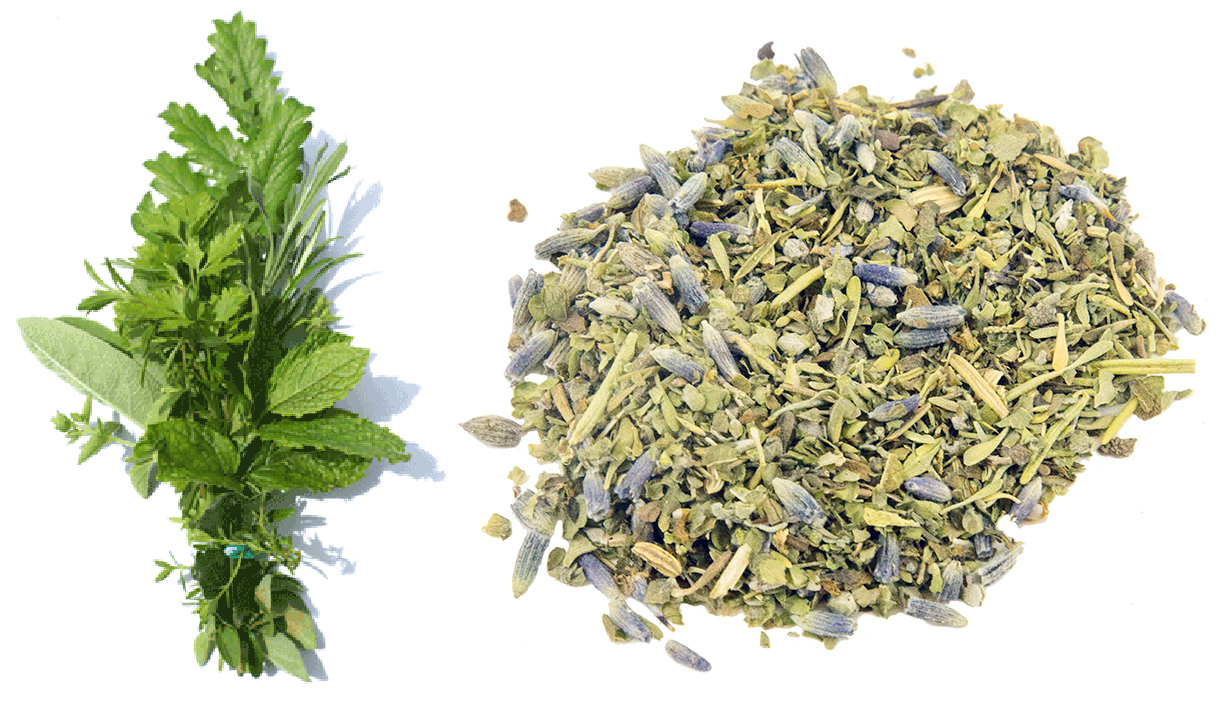 Bunch of fresh herbs and the classic dried Herbes de Provence blend.
Welcome to FabulousFusionFood's Herb-based Recipes Page — Herbs are typically the milder of the flavourings added to food. By definition a herb is any herbaceous part of a plant. This means any combination of the stems the leaves and the flowers. Basically those parts of a plant that live above ground (in contrast the roots of a plant if used as a flavouring are generally considered as spices, as are the seeds and fruit of a plant). The list below therefore describes as many parts of a plant as possible if they are used (either fresh or dried) as a food flavouring. The exception here is the woody stem, which tends to be thought of as a spice rather than an herb.
In terms of flavouring, at least for economic impact, herbs have tended to play second fiddle to spices. The majority of herbs need to be used fresh, their flavour chemicals tend to be volatile. As a result, herbs, typically, are grown locally, added fresh and used towards the end of cookery. Which is not to say that they're not important in cookery. They can be vital and some combinations, like French fines herbes, herbes de provence or bouquets garnis are key to the flavour profile of a dish.
Culinary herbs are typically added fresh towards the end of cooking though dried herb blends such as herbes de provence are available. Most herbs lose their potency on drying. The exception being oregano, which is typically superior dried as opposed to fresh.
Herbs are a widely distributed and widespread group of plants, excluding vegetables, with savory or aromatic properties that are used for flavoring and garnishing food, for medicinal purposes, or for fragrances. Culinary use typically distinguishes herbs from spices. Herbs generally refers to the leafy green or flowering parts of a plant (either fresh or dried), while spices are usually dried and produced from other parts of the plant, including seeds, bark, roots and fruits.
Herbs have a variety of uses including culinary, medicinal, aromatic and in some cases, spiritual. General usage of the term "herb" differs between culinary herbs and medicinal herbs; in medicinal or spiritual use, any parts of the plant might be considered "herbs", including leaves, roots, flowers, seeds, root bark, inner bark (and cambium), resin and pericarp.
In botany, the term herb refers to a herbaceous plant, defined as a small, seed-bearing plant without a woody stem in which all aerial parts (i.e. above ground) die back to the ground at the end of each growing season. Usually the term refers to perennials, although herbaceous plants can also be annuals (plants that die at the end of the growing season and grow back from seed next year), or biennials. This term is in contrast to shrubs and trees which possess a woody stem. Shrubs and trees are also defined in terms of size, where shrubs are less than ten meters tall, and trees may grow over ten meters. The word herbaceous is derived from Latin herbāceus meaning "grassy", from herba "grass, herb".
Culinary herbs are distinguished from vegetables in that, like spices, they are used in small amounts and provide flavour rather than substance to food.
Herbs can be perennials such as thyme, oregano, sage or lavender, biennials such as parsley, or annuals like basil. Perennial herbs can be shrubs such as rosemary (Rosmarinus officinalis), or trees such as bay laurel (Laurus nobilis) – this contrasts with botanical herbs, which by definition cannot be woody plants. Some plants are used as both herbs and spices, such as dill weed and dill seed or coriander leaves and seeds. There are also some herbs, such as those in the mint family, that are used for both culinary and medicinal purposes.
For more information on culinary herbs, please visit this site's herb guide where you will find information on over 100 herbs.
This is a continuation of the recipes listings for the herb-based recipes and dishes on this site (the page in fact). If you would like to learn a little more about this history of herbs and the methods of cooking with spices then please go to the first listing page for these Herb-based recipes information page. Here you will get just a list of the additional Herb-based recipes on this site.
The alphabetical list of all the herb-based recipes on this site follows, (limited to 100 recipes per page). There are 1998 recipes in total:
Page 12 of 20
| Marinated Tofu Skewers Origin: Britain | Microwave Croûtons Origin: Britain | Molho peri-peri moçambicano (Mozambican peri-peri sauce) Origin: Mozambique |
| Marjoram Jelly Origin: Britain | Microwave Shakshuka Origin: Fusion | Mologothannie Origin: Sri Lanka |
| Marrow Croustades Origin: Britain | Microwave Spaghetti with Bacon and Pesto Sauce Origin: Britain | Molokhia (Egyptian Greens Soup) Origin: Egypt |
| Maryland Oyster Stew Origin: America | Microwave Spaghetti with Garlic Sausage Origin: Britain | Mongolian Spice Origin: Mongolia |
| Marzipan Karotten (Marzipan Carrots) Origin: Switzerland | Middle Eastern style Curry Powder Origin: Middle East | Monkfish Choo Chee Curry Origin: Britain |
| Masaaledaar Pudine wal Quimah (Minced Lamb with Mint and Spices) Origin: India | Middle Easters Falafel (Middle Eastern Falafel) Origin: Middle East | Monkfish, Bacon, Bell Pepper and Mushroom Kebabs Origin: Fusion |
| Masala Omelette with Avocado and Coriander Salsa Origin: South Africa | Midia Atmou me Aspro Krasi (Mussels Steamed in White Wine) Origin: Greece | Monnchelet (Veal or Mutton Stew with Herbs and Egg Liaison) Origin: England |
| Masala Raita Origin: India | Midia Pilaf (Mussels Pilaf) Origin: Armenia | Montpelier Butter Origin: France |
| Mashed Sweet Potato Stuffing Origin: US Virgin Islands | Minestra di farro (Tuscan Farro Soup with White Beans and Vegetables) Origin: Italy | Montserrat Jerk Prawns Origin: Montserrat |
| Massaman Curry Paste Origin: Thailand | Mini Crab Cakes Origin: Fusion | Montserratian Green Seasoning Origin: Montserrat |
| Massaman Nuea (Beef Masaman Curry) Origin: Thailand | Mint Chutney Origin: Britain | Montserratian Jerk Seasoning Origin: Montserrat |
| Massaman Nuea (Beef Massaman Curry) Origin: Thailand | Mint Chutney Origin: India | Montserratian Souse Origin: Montserrat |
| Maté (Barbecued Chicken Skewers) Origin: Wallis Futuna | Mint Flower Ice Cream Origin: Britain | Moqueca de Pixe à Baiana (Grilled Fish, Baian Style) Origin: Brazil |
| Mazze de Tamburo (Fried Shaggy Parasols) Origin: Italy | Mint Jelly Origin: Britain | Morels in Aspic Origin: Britain |
| Mbaxal Dieune Origin: Senegal | Mint Sauce Origin: Britain | Moretariaum (Country Sauce) Origin: Roman |
| MBoume au Néverdaye (Senegalese Fish, Peanut and Cassava Stew with Millet Couscous) Origin: Senegal | Mint Tea Origin: Morocco | Moretum (Garlic and Herb Pâté) Origin: Roman |
| Meat and Poultry Spice Blend Origin: America | Minted Fruit Kebabs Origin: South Africa | Moro de guandules con coco (Christmas Rice and Pigeon Peas) Origin: Dominican Republic |
| Meatballs on Sticks Origin: Britain | Minted Peas Origin: Britain | Moules Bretonnes a la Marinière (Breton Mussels Mariner-style) Origin: France |
| Mecryll mewn Saws (Mackerel in Sauce) Origin: Welsh | Minted Racks of Lamb Origin: Canada | Mousseline de fruit à pain (Breadfruit mousseline) Origin: Martinique |
| Mediterranean Mint Salad Origin: Mediterranean | Minutal ex Iecineribus et Pulmonibus Leporis (Hare's Liver and Lights Ragout) Origin: Roman | Mrs Beeton Asparagus Soup Origin: British |
| Mediterranean-style Farro Salad with Rocket and Walnuts Origin: America | Miso Soup with Tade Origin: Japan | Mrs Beeton Béchamel Sauce Origin: British |
| Mediterranean-style Sardines Origin: Britain | Mistura de especiarias (Portuguese Spice Mix) Origin: Portugal | Mrs Beeton Cucumber Soup Origin: British |
| Medium Stock Origin: Britain | Mixtura cum amygdalinam et sesamae (Almond, Seame and Herb Purée) Origin: Roman | Mrs Beeton's Fish Forcemeat Origin: British |
| Meen Moilee (Keralan Fish Curry) Origin: India | Mixtura cum Caseo (Soft Cheese with a Herb Purée) Origin: Roman | Mucver (Turkish Courgette Patties) Origin: Turkey |
| Mendip Wallfish Origin: England | Mixtura cum Caseo (Soft Cheese and Herb Purée) Origin: Roman | Mulet Farci à la Saint-Louisienne (Stuffed Mullet in the style of Saint-Louis) Origin: Senegal |
| Menthe Vert (Green Mint Syrup) Origin: France | Mixtura cum Nucibus (Hazelnuts with Herb Purée) Origin: Roman | Mullos Anethatos sic Facie (Red Mullets with Aniseed is Made Thus) Origin: Roman |
| Methi Mushroom Masala Origin: India | Mixtura cum Nucleis Pineis (Pine Nut, Cheese and Herb Pâté) Origin: Roman | Murenam aut Anguillas vel Mulos (Moray Eels and Eels or Mullets) Origin: Roman |
| Mexican Fiesta Dip Origin: America | Miyan Kuka II (Baobab Leaf Soup II) Origin: Nigeria | Mushroom Masala Origin: India |
| Mexican Red Sauce Origin: American | Mock Turtle I Origin: British | Mushroom Pâté Origin: Britain |
| Mexican Spirals Origin: American | Mock Turtle II Origin: British | Mushroom Stock II Origin: Britain |
| Mexican-style Steaks with Avocado Salsa Origin: Britain | Mojo Marinade Origin: Cuba | Mushroom Stroganoff Origin: Britain |
| Meygoo Dopiyazeh (Persian Prawn, Pepper and Onion Curry) Origin: Iran | Mojo Verde (Canaries Green Sauce) Origin: Spain | Mushroom Tacos Origin: Britain |
| Mhogo na tzouzi (Cassava in Coconut Sauce) Origin: Mayotte | Mole Negro Origin: Mexico | |
| Mici (Garlicky Skinless Grilled Sausages) Origin: Romania | Molho de Piri-Piri (Mozambican Peri-peri Sauce) Origin: Mozambique |
Page 12 of 20