FabulousFusionFood's Herb-based Recipes 6th Page
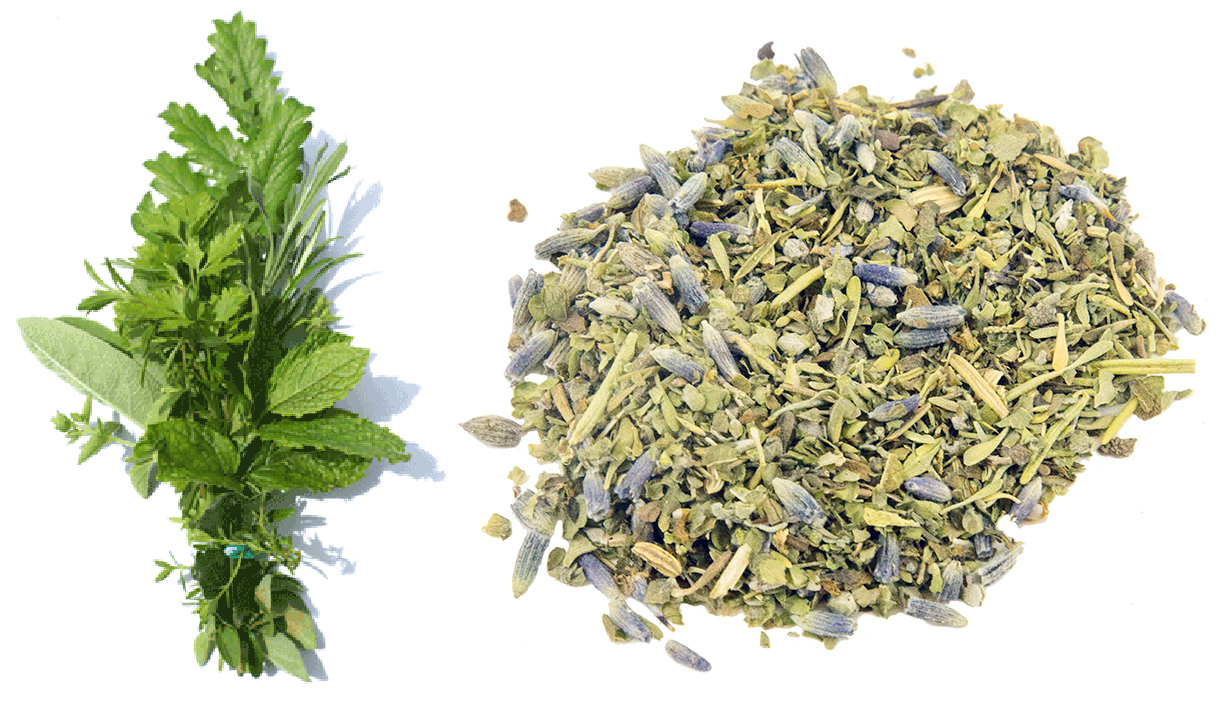 Bunch of fresh herbs and the classic dried Herbes de Provence blend.
Welcome to FabulousFusionFood's Herb-based Recipes Page — Herbs are typically the milder of the flavourings added to food. By definition a herb is any herbaceous part of a plant. This means any combination of the stems the leaves and the flowers. Basically those parts of a plant that live above ground (in contrast the roots of a plant if used as a flavouring are generally considered as spices, as are the seeds and fruit of a plant). The list below therefore describes as many parts of a plant as possible if they are used (either fresh or dried) as a food flavouring. The exception here is the woody stem, which tends to be thought of as a spice rather than an herb.
In terms of flavouring, at least for economic impact, herbs have tended to play second fiddle to spices. The majority of herbs need to be used fresh, their flavour chemicals tend to be volatile. As a result, herbs, typically, are grown locally, added fresh and used towards the end of cookery. Which is not to say that they're not important in cookery. They can be vital and some combinations, like French fines herbes, herbes de provence or bouquets garnis are key to the flavour profile of a dish.
Culinary herbs are typically added fresh towards the end of cooking though dried herb blends such as herbes de provence are available. Most herbs lose their potency on drying. The exception being oregano, which is typically superior dried as opposed to fresh.
Herbs are a widely distributed and widespread group of plants, excluding vegetables, with savory or aromatic properties that are used for flavoring and garnishing food, for medicinal purposes, or for fragrances. Culinary use typically distinguishes herbs from spices. Herbs generally refers to the leafy green or flowering parts of a plant (either fresh or dried), while spices are usually dried and produced from other parts of the plant, including seeds, bark, roots and fruits.
Herbs have a variety of uses including culinary, medicinal, aromatic and in some cases, spiritual. General usage of the term "herb" differs between culinary herbs and medicinal herbs; in medicinal or spiritual use, any parts of the plant might be considered "herbs", including leaves, roots, flowers, seeds, root bark, inner bark (and cambium), resin and pericarp.
In botany, the term herb refers to a herbaceous plant, defined as a small, seed-bearing plant without a woody stem in which all aerial parts (i.e. above ground) die back to the ground at the end of each growing season. Usually the term refers to perennials, although herbaceous plants can also be annuals (plants that die at the end of the growing season and grow back from seed next year), or biennials. This term is in contrast to shrubs and trees which possess a woody stem. Shrubs and trees are also defined in terms of size, where shrubs are less than ten meters tall, and trees may grow over ten meters. The word herbaceous is derived from Latin herbāceus meaning "grassy", from herba "grass, herb".
Culinary herbs are distinguished from vegetables in that, like spices, they are used in small amounts and provide flavour rather than substance to food.
Herbs can be perennials such as thyme, oregano, sage or lavender, biennials such as parsley, or annuals like basil. Perennial herbs can be shrubs such as rosemary (Rosmarinus officinalis), or trees such as bay laurel (Laurus nobilis) – this contrasts with botanical herbs, which by definition cannot be woody plants. Some plants are used as both herbs and spices, such as dill weed and dill seed or coriander leaves and seeds. There are also some herbs, such as those in the mint family, that are used for both culinary and medicinal purposes.
For more information on culinary herbs, please visit this site's herb guide where you will find information on over 100 herbs.
This is a continuation of the recipes listings for the herb-based recipes and dishes on this site (the page in fact). If you would like to learn a little more about this history of herbs and the methods of cooking with spices then please go to the first listing page for these Herb-based recipes information page. Here you will get just a list of the additional Herb-based recipes on this site.
The alphabetical list of all the herb-based recipes on this site follows, (limited to 100 recipes per page). There are 1998 recipes in total:
Page 6 of 20
| Cod-fish Balls Origin: Dominica | Courgette Poêlêe (Courgette Skillet) Origin: Madagascar | Cumin Potatoes with Peas Origin: Ireland |
| Coes Oen gyda Rhosmari a Mwstad (Roast Leg of Lamb with Rosemary and Mustard) Origin: Welsh | Courgette with Tomato Sauce Origin: British | Cunillo (Rabbit in Tomato Sauce) Origin: Andorra |
| Cold-smoked Haddock Origin: Britain | Courgettes à la Monégasque (Monaco-style Courgettes) Origin: Monaco | Curried Prawn Noodle Soup with Stevia Origin: Fusion |
| Collared Eel Origin: British | Couscous with Dried Fruit, Nuts and Cinnamon Origin: Morocco | Curried Scallops in Coconut Milk with Stevia Origin: American |
| Collumella's Moretum Origin: Roman | Crème Fraîche and Coriander Chicken Origin: Britain | Curried Squash, Coconut and Lime Soup Origin: Solomon Islands |
| Colombo de Chèvre (Goat Colombo Curry) Origin: Sint Maarten | Crème Verde Origin: France | Curry de pollo y coco (Chicken and Coconut Curry) Origin: Dominican Republic |
| Colombo de Chèvre (Goat Colombo Curry) Origin: Saint-Martin | Crabe et Riz (Crab and rice) Origin: Saint-Martin | Curry Vert avec Poisson, Cuit à Vapeur (Steamed Green Curry with Fish) Origin: France |
| Colonial Goose II Origin: New Zealand | Crackled Pork Belly with Fennel and Apple Slaw Origin: Britain | Curtido Picante (Spicy Pickled Cabbage Slaw) Origin: El Salvador |
| Colourful Vegetarian Kebabs Origin: Britain | Cranberry-rosemary Stuffed Pork Loin Origin: America | Custard-based Rooibos Tea Ice Cream Origin: South Africa |
| Coltsfoot Greens Origin: British | Cream of Potato Soup Origin: American | Czech Liver Dumplings Origin: Czech |
| Comlek (Rabbit Casserole) Origin: Albania | Creamed Corn Origin: American | Dabgadz Banir Boerag (Fried Cheese Turnovers) Origin: Armenia |
| Conch Mango Salad Origin: Turks Caicos | Creamed Sweet Potatoes with Carrots and Turnips Origin: American | Damaa Origin: Sudan |
| Conchiclam Apicianam (Dried Peas à la Apicius) Origin: Roman | Creamed Turnips Origin: American | Dan Dan Noodles Origin: America |
| Conchiclam de Pisa Simplici (A Dish of Plain Peas) Origin: Roman | Creamy Buffalo Shrimp Tacos Origin: America | Date Chutney Origin: India |
| Concoction Rice Origin: Nigeria | Crema Mexicana Origin: Mexico | Daube de Thon (Tuna Daube) Origin: Mauritius |
| Confiture de Poivrons (Confit of Peppers) Origin: Monaco | Crempog Las (Green Pancake) Origin: Welsh | Dauphinoise with an African Twist Origin: Fusion |
| Conger in sawce (Conger Eels in Sauce) Origin: England | Creole Fried Fish with Green Seasoning Origin: Trinidad | Daurade Grillée Sénégalaise (Grilled Sea Bream, Senegalese Style) Origin: Senegal |
| Consommé Origin: Britain | Crépinettes Origin: Seychelles | Dhal Dhokla Origin: India |
| Cooked Tomato Coulis Origin: France | Crispy Flautas with Chicken or Beef Origin: Mexico | Dhallo Black Curry (Cuttlefish Black Curry) Origin: Sri Lanka |
| Coq au Vin Origin: France | Crispy Pork Roast with Basil Sauce Origin: Germany | Dharan Pork Momos Origin: Nepal |
| Coquilles Saint-Jaques à la Bretonne (Breton Scallops) Origin: France | Croquets of Meat or Fish Origin: Britain | Dhiafora Khorta sto Fourno (Mixed oven-baked Vegetables) Origin: Cyprus |
| Corate Origin: England | Croquettes d'ignames (Yam Croquettes) Origin: Guinea | Dhiafora Parayiemista (Mixed Stuffed Vegetables) Origin: Cyprus |
| Coriander Lime Rice Origin: America | Croquettes de Manioc (Cassava Croquettes) Origin: Senegal | Dill Dip Origin: France |
| Coriander Mint Chutney Origin: India | Croquettes de Samoun (Salmon Croquettes) Origin: Canada | Dill Pickles Origin: Britain |
| Coriander Paste Origin: India | Crumbed Chicken with Green Mayonnaise Origin: Britain | Dill Pilaf Origin: Azerbaijan |
| Cornish Charter Pie Origin: England | Crwst Persli (Parsley Pastry) Origin: Welsh | Diod Sinsir Rhiwbob (Rhubarb Ginger Beer) Origin: Welsh |
| Cornish Crab Chowder Origin: England | Crwst Sawrus Cyfoethog (Rich Savoury Pastry) Origin: Welsh | Diri Ak Pwa (Haitian Rice and Beans) Origin: Haiti |
| Cornish Fruit Loaf Origin: England | Cuban Salsa Criolla Origin: Cuba | Djed b'l-Qasbour (Chicken and Olive Stew) Origin: Algeria |
| Cornish Hog's Pudding Origin: England | Cucumber and Mint Soup Origin: British | Dock Flour Pizzoccheri Origin: Britain |
| Cossack's Asparagus Origin: Russia | Cucumber and Yoghurt Salad Origin: Armenia | Dodra (Nine-part Sauce) Origin: Roman |
| Costa Rican Chimichurri Origin: Costa Rica | Cucumber Mint Smoothie Origin: American | Dombrés de Morue Salé (Salt Cod Dombres) Origin: Martinique |
| Costa Rican-Style Beans Origin: Costa Rica | Cum faba (Broad Beans in a Coriander Sauce) Origin: Roman | Dominica Calypso Chicken Origin: Dominica |
| Costmary Shortbread Origin: Britain | Cumberland Sausage Origin: England | |
| Country Style Guinea Fowl Potje Origin: Southern Africa | Cumin Paste Origin: India |
Page 6 of 20