FabulousFusionFood's Herb-based Recipes 9th Page
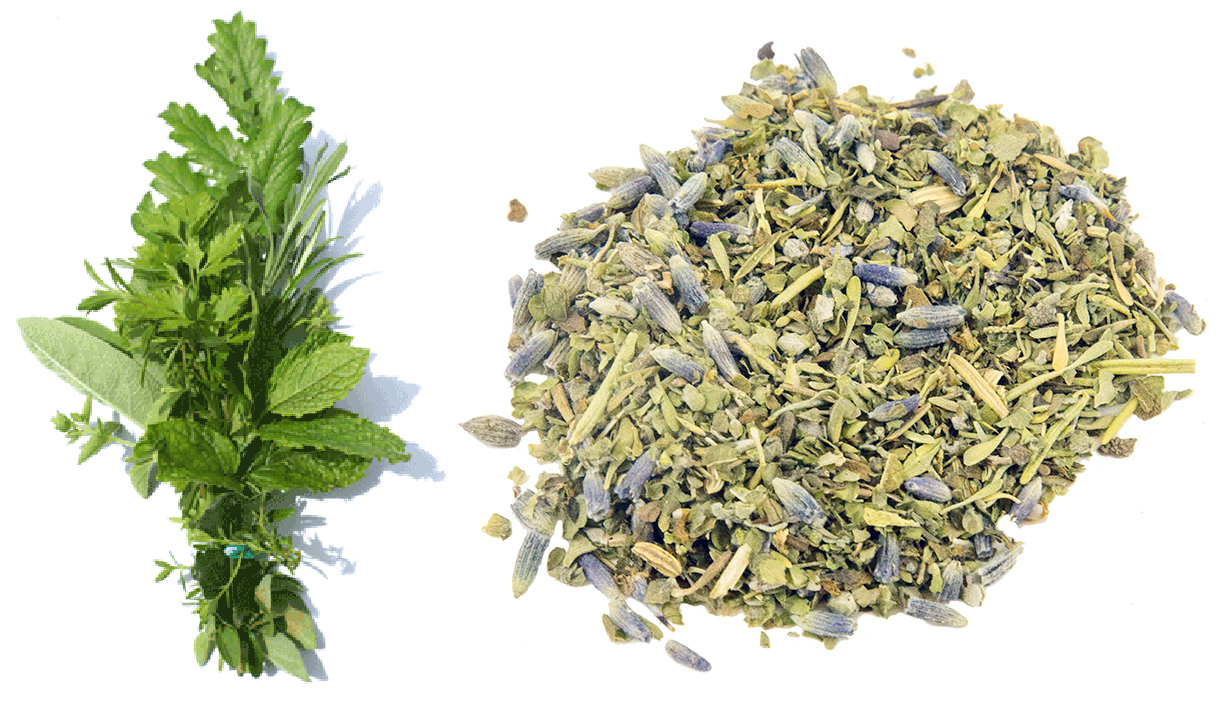 Bunch of fresh herbs and the classic dried Herbes de Provence blend.
Welcome to FabulousFusionFood's Herb-based Recipes Page — Herbs are typically the milder of the flavourings added to food. By definition a herb is any herbaceous part of a plant. This means any combination of the stems the leaves and the flowers. Basically those parts of a plant that live above ground (in contrast the roots of a plant if used as a flavouring are generally considered as spices, as are the seeds and fruit of a plant). The list below therefore describes as many parts of a plant as possible if they are used (either fresh or dried) as a food flavouring. The exception here is the woody stem, which tends to be thought of as a spice rather than an herb.
In terms of flavouring, at least for economic impact, herbs have tended to play second fiddle to spices. The majority of herbs need to be used fresh, their flavour chemicals tend to be volatile. As a result, herbs, typically, are grown locally, added fresh and used towards the end of cookery. Which is not to say that they're not important in cookery. They can be vital and some combinations, like French fines herbes, herbes de provence or bouquets garnis are key to the flavour profile of a dish.
Culinary herbs are typically added fresh towards the end of cooking though dried herb blends such as herbes de provence are available. Most herbs lose their potency on drying. The exception being oregano, which is typically superior dried as opposed to fresh.
Herbs are a widely distributed and widespread group of plants, excluding vegetables, with savory or aromatic properties that are used for flavoring and garnishing food, for medicinal purposes, or for fragrances. Culinary use typically distinguishes herbs from spices. Herbs generally refers to the leafy green or flowering parts of a plant (either fresh or dried), while spices are usually dried and produced from other parts of the plant, including seeds, bark, roots and fruits.
Herbs have a variety of uses including culinary, medicinal, aromatic and in some cases, spiritual. General usage of the term "herb" differs between culinary herbs and medicinal herbs; in medicinal or spiritual use, any parts of the plant might be considered "herbs", including leaves, roots, flowers, seeds, root bark, inner bark (and cambium), resin and pericarp.
In botany, the term herb refers to a herbaceous plant, defined as a small, seed-bearing plant without a woody stem in which all aerial parts (i.e. above ground) die back to the ground at the end of each growing season. Usually the term refers to perennials, although herbaceous plants can also be annuals (plants that die at the end of the growing season and grow back from seed next year), or biennials. This term is in contrast to shrubs and trees which possess a woody stem. Shrubs and trees are also defined in terms of size, where shrubs are less than ten meters tall, and trees may grow over ten meters. The word herbaceous is derived from Latin herbāceus meaning "grassy", from herba "grass, herb".
Culinary herbs are distinguished from vegetables in that, like spices, they are used in small amounts and provide flavour rather than substance to food.
Herbs can be perennials such as thyme, oregano, sage or lavender, biennials such as parsley, or annuals like basil. Perennial herbs can be shrubs such as rosemary (Rosmarinus officinalis), or trees such as bay laurel (Laurus nobilis) – this contrasts with botanical herbs, which by definition cannot be woody plants. Some plants are used as both herbs and spices, such as dill weed and dill seed or coriander leaves and seeds. There are also some herbs, such as those in the mint family, that are used for both culinary and medicinal purposes.
For more information on culinary herbs, please visit this site's herb guide where you will find information on over 100 herbs.
This is a continuation of the recipes listings for the herb-based recipes and dishes on this site (the page in fact). If you would like to learn a little more about this history of herbs and the methods of cooking with spices then please go to the first listing page for these Herb-based recipes information page. Here you will get just a list of the additional Herb-based recipes on this site.
The alphabetical list of all the herb-based recipes on this site follows, (limited to 100 recipes per page). There are 1998 recipes in total:
Page 9 of 20
| Hassa (Libyan Gravy) Origin: Libya | Hot Water Dough Dumplings Origin: China | Island Fish Tea Origin: Bahamas |
| Hazelnut and Garlic Mustard Pesto Origin: Britain | Hot-smoked Sea Trout Origin: Britain | Israeli Falafel Origin: Israel |
| Hebolace Origin: England | Hyderabad Mutton Dopyaza Origin: India | Israeli Salad Origin: Israel |
| Hedgehog Fungus and Filo Parcels Origin: Britain | Hypotrimma (Condiment Sauce) Origin: Roman | Isso Vade Origin: Sri Lanka |
| Heicht mat Kraïderzooss (Pike in Green Sauce) Origin: Luxembourg | Hyssop Olive Oil Origin: France | Istarski krumpir (Istrian Potatoes) Origin: Croatia |
| Henan Hu La Tang (Hot Pepper Soup) Origin: China | Hægeldaðir lambalæri (Slow-cooked Lamb Shanks) Origin: Iceland | Istrian Jota Origin: Croatia |
| Henne in Bokenade (Hen in Sauce) Origin: England | Iab Origin: Ethiopia | Italian Herbs Origin: American |
| Herb Crusted Cod Origin: Britain | Iced Cucumber, Prawn and Yoghurt Soup Origin: Britain | Italian Salad Dressing Origin: France |
| Herb Dressing Origin: Middle East | Igname Rôtie (Baked Yam) Origin: Burkina Faso | Italian Sauce Origin: Britain |
| Herbed Beer Bread Origin: American | Ijjah Bil Tawabel (Seasoned Herby Frittata) Origin: Algeria | Italian Seasoning Origin: Italy |
| Herbed Cheesy Buns Origin: Botswana | Ikan Assam Pedas (Hot-and-sour Fish Stew) Origin: Malaysia | Ius album in copadiis (White Sauce for Choice Cuts II) Origin: Roman |
| Herbed Dumplings Origin: Britain | Imam Bayildi (The Imam Fainted) Origin: Turkey | Ius diabotanon in pisce frixo (Fish in Herb Sauce) Origin: Roman |
| Herbed Gorgonzola Cheesecake Origin: American | In Aprum Assum Iura Ferventia Facies Sic (Hot Sauce for Roast Wild Boar is Made Thus) Origin: Roman | Ius Diabotanon in Pisce Frixo (A Herb Sauce for Fried Fish) Origin: Roman |
| Herbed Lemon Sorbet Origin: Britain | In Dentice Elixo (Sauce for Poached Bream) Origin: Roman | Ius Frigidum in Aprum Elixum (Cold Sauce for Boiled Wild Boar) Origin: Roman |
| Herbed Potato Pastry Origin: British | In Omne Genus Conchyliorum (For All Kinds of Shellfish) Origin: Roman | Ius in Aprum Elixum (Sauce for Boiled Wild Boar) Origin: Roman |
| Herbes de Provence Origin: France | In Sardis (Sauce for Bonito) Origin: Roman | Ius in Caprea Assa (Sauce for Roast Roebuck) Origin: Roman |
| Herby Millet Rings Origin: African Fusion | In Torpedine Elixa (Sauce for Boiled Ray) Origin: Roman | Ius in Caprea Assa (Sauce for Roebuck, Another Way) Origin: Roman |
| Herby Pasty Origin: England | In Vulva [et] Sterili ([Sauce] for Sterile Sow's Womb) Origin: Roman | Ius in copadiis (Sauce for Choice Cuts) Origin: Roman |
| Herby Suet Dumplings Origin: England | Indian Takeaway Style Seekh Kebabs Origin: Britain | Ius in copadiis II (Sauce for Choice Cuts II) Origin: Roman |
| Herring Pasty Origin: England | Insal Nga Lapu Lapu (Grilled Grouper with Aubergine-prune Compote) Origin: Philippines | Ius in copadiis III (Sauce for Choice Cuts III) Origin: Roman |
| Herring Rougail (Le Rougail Z'hareng) Origin: Reunion | Insalata Caprese Origin: Italy | Ius in copadiis IV (Sauce for Choice Cuts IV) Origin: Roman |
| Hers ys aysel (Marinated Pilchards) Origin: England | Involtini Aka di Salvia (Sage and Anchovy Fritters) Origin: Italy | Ius in Cordula Assa (Sauce for Baked Tuna) Origin: Roman |
| Hessian Soup Origin: British | Iraqi Adana Kebab Origin: Iraq | Ius in Dentice Asso (Sauce for Baked Bream) Origin: Roman |
| Hinbeh B'zeit (Dandelion Greens with Caramelized Onions) Origin: Lebanon | Irish Beef In Guinness Origin: Ireland | Ius in Diversis Avibus (Sauce for Various Birds) Origin: Roman |
| Hindle Wakes Origin: England | Irish Beef Stew Origin: Ireland | Ius in elixam (Sauce for Boiled Meats) Origin: Roman |
| Home-made Chili Powder Origin: America | Irish Fish Cakes Origin: Ireland | Ius in elixam (Sauce for Boiled Meats) Origin: Roman |
| Home-made Diced Tomatoes with Green Chillies Origin: America | Irish Parliament Bean Soup Origin: Ireland | Ius in elixam anethatum crudum (Aniseed Marinade for Pork Delicacies) Origin: Roman |
| Home-made Gyros Origin: Greece | Irish Potato Soup Origin: Ireland | Ius in elixam omnem (Sauce for All Boiled Meats) Origin: Roman |
| Home-made Peppermint Extract Origin: Britain | Irish Potato Wedges Origin: Ireland | Ius in Mugile Salso (Sauce for Salted Grey Mullet) Origin: Roman |
| Honduran Salpicón Origin: Honduras | Irish Stew Origin: Ireland | Ius in Ovifero Fervens (Hot Sauce for Wild Sheep) Origin: Roman |
| Honey Mushroom Stuffing Origin: American | Irish Vegetable Soup Origin: Ireland | Ius in pelamyde assa (Sauce for Grilled Young Tuna) Origin: Roman |
| Honey-glazed Prawns Origin: Roman | Iron Age Pork and Beans Origin: Ancient | Ius in Perdices (Sauce for Partridges) Origin: Roman |
| Hong Kong Snake Soup Origin: Hong Kong | Isicia Amulata a Balineo sic Facies (Meatballs with Starch Cooked in a Pan) Origin: Roman | |
| Hot Sesame Beef Origin: China | Isicia de Cerebellis (Brain Dumplings) Origin: Roman |
Page 9 of 20