FabulousFusionFood's Herb-based Recipes 13th Page
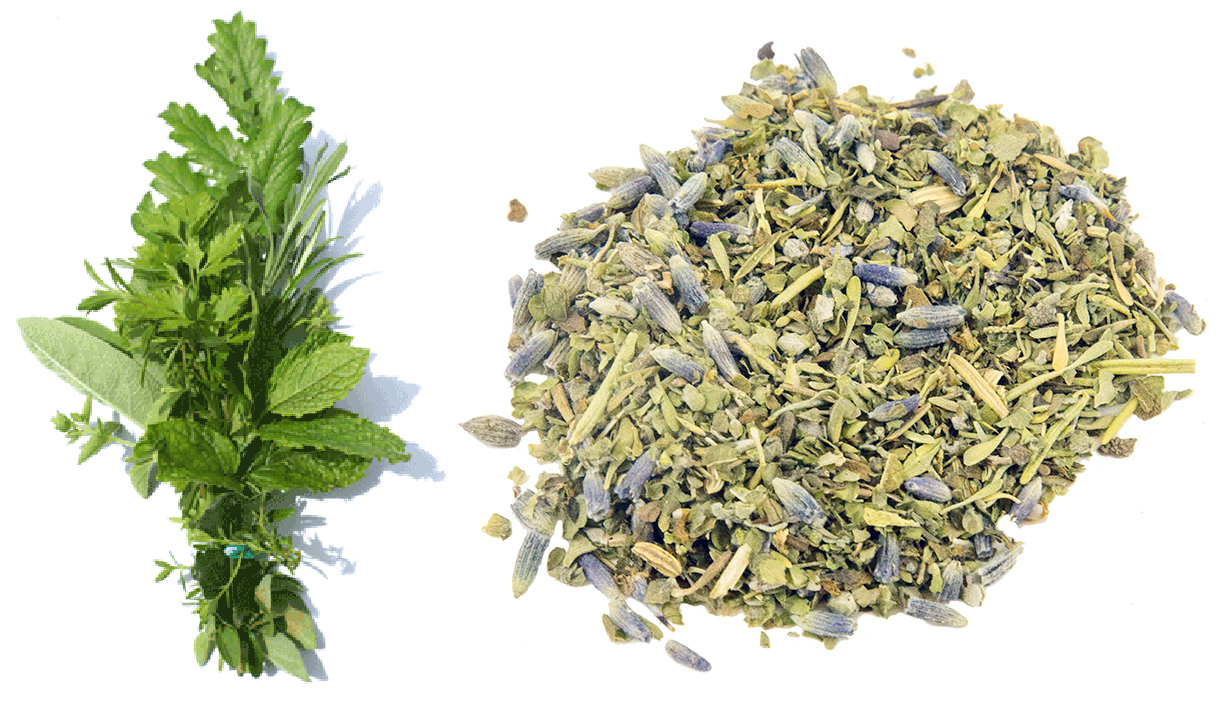 Bunch of fresh herbs and the classic dried Herbes de Provence blend.
Welcome to FabulousFusionFood's Herb-based Recipes Page — Herbs are typically the milder of the flavourings added to food. By definition a herb is any herbaceous part of a plant. This means any combination of the stems the leaves and the flowers. Basically those parts of a plant that live above ground (in contrast the roots of a plant if used as a flavouring are generally considered as spices, as are the seeds and fruit of a plant). The list below therefore describes as many parts of a plant as possible if they are used (either fresh or dried) as a food flavouring. The exception here is the woody stem, which tends to be thought of as a spice rather than an herb.
In terms of flavouring, at least for economic impact, herbs have tended to play second fiddle to spices. The majority of herbs need to be used fresh, their flavour chemicals tend to be volatile. As a result, herbs, typically, are grown locally, added fresh and used towards the end of cookery. Which is not to say that they're not important in cookery. They can be vital and some combinations, like French fines herbes, herbes de provence or bouquets garnis are key to the flavour profile of a dish.
Culinary herbs are typically added fresh towards the end of cooking though dried herb blends such as herbes de provence are available. Most herbs lose their potency on drying. The exception being oregano, which is typically superior dried as opposed to fresh.
Herbs are a widely distributed and widespread group of plants, excluding vegetables, with savory or aromatic properties that are used for flavoring and garnishing food, for medicinal purposes, or for fragrances. Culinary use typically distinguishes herbs from spices. Herbs generally refers to the leafy green or flowering parts of a plant (either fresh or dried), while spices are usually dried and produced from other parts of the plant, including seeds, bark, roots and fruits.
Herbs have a variety of uses including culinary, medicinal, aromatic and in some cases, spiritual. General usage of the term "herb" differs between culinary herbs and medicinal herbs; in medicinal or spiritual use, any parts of the plant might be considered "herbs", including leaves, roots, flowers, seeds, root bark, inner bark (and cambium), resin and pericarp.
In botany, the term herb refers to a herbaceous plant, defined as a small, seed-bearing plant without a woody stem in which all aerial parts (i.e. above ground) die back to the ground at the end of each growing season. Usually the term refers to perennials, although herbaceous plants can also be annuals (plants that die at the end of the growing season and grow back from seed next year), or biennials. This term is in contrast to shrubs and trees which possess a woody stem. Shrubs and trees are also defined in terms of size, where shrubs are less than ten meters tall, and trees may grow over ten meters. The word herbaceous is derived from Latin herbāceus meaning "grassy", from herba "grass, herb".
Culinary herbs are distinguished from vegetables in that, like spices, they are used in small amounts and provide flavour rather than substance to food.
Herbs can be perennials such as thyme, oregano, sage or lavender, biennials such as parsley, or annuals like basil. Perennial herbs can be shrubs such as rosemary (Rosmarinus officinalis), or trees such as bay laurel (Laurus nobilis) – this contrasts with botanical herbs, which by definition cannot be woody plants. Some plants are used as both herbs and spices, such as dill weed and dill seed or coriander leaves and seeds. There are also some herbs, such as those in the mint family, that are used for both culinary and medicinal purposes.
For more information on culinary herbs, please visit this site's herb guide where you will find information on over 100 herbs.
This is a continuation of the recipes listings for the herb-based recipes and dishes on this site (the page in fact). If you would like to learn a little more about this history of herbs and the methods of cooking with spices then please go to the first listing page for these Herb-based recipes information page. Here you will get just a list of the additional Herb-based recipes on this site.
The alphabetical list of all the herb-based recipes on this site follows, (limited to 100 recipes per page). There are 1998 recipes in total:
Page 13 of 20
| Mushrooms à la Greque Origin: France | Noisettes of Lamb Origin: Britain | Oxford Sausages Origin: England |
| Mushrooms with Parsley and Garlic Origin: Britain | Nom Banh Chok Origin: Cambodia | Oysters in Cynee (Oysters in Spiced Bread Sauce) Origin: England |
| Mutton Kulambu (Pondicherry Mutton Curry) Origin: India | North Cornish Pea Soup Origin: England | Oysters Mombassa Origin: Kenya |
| N'dzan (Hibiscus Leaves Stew) Origin: Cameroon | Northern Irish Beef Stew Origin: Northern Ireland | Pâté Cregyn Gleision y Fenai (Menai Straits Mussel Pâté) Origin: Welsh |
| Nakelda (Istrian Bread Rolls) Origin: Slovenia | Num Banh Choc (Rice Noodle Fish Soup) Origin: Cambodia | Pão de Ervas (Herbed Sourdough Bread) Origin: Brazil |
| Nali Sauce (Piri-piri Sauce) Origin: Malawi | Numb-fish (Electric Ray) Origin: Roman | Pašticada II (Veal Stew with Tomatoes) Origin: Montenegro |
| Nandji Ivorienne Origin: Cote dIvoire | Nyambeh Nyebbeh (Black-eyed Bean stew with Cassava) Origin: Ghana | Pad Kee Mao Origin: Thailand |
| Nasi Impit (Compressed Rice Cakes) Origin: Indonesia | Nyona Penang Assam Laska Origin: Malaysia | Pad Kra Pao (Thai Holy Basil Stir Fry with Beef) Origin: Thailand |
| Nasi Impit (Compressed Rice Cakes) Origin: Singapore | Nyonya Curry Paste Origin: Singapore | Pad Thai Origin: Thailand |
| Nasi Kuning (Yellow Rice) Origin: Indonesia | Oatmeal Potatoes Origin: Scotland | Paella Valencia de la Huerta (Traditional Chicken Paella) Origin: Spain |
| Nasturtium Vinaigrette Origin: American | Oaxacan Black Beans with Avocado Leaf Origin: Mexico | Paia Katsarolas (Duck Casserole) Origin: Cyprus |
| Ndengu (Lentil Stew) Origin: Kenya | Ochazuke (Japanese Green Tea Rice) Origin: Japan | Pakistani Chicken Biryani Origin: Pakistan |
| Ndomba de Poisson (Fish Cooked in Banana Leaves) Origin: Cameroon | Ock-lam (Barbecued Pork with Mushrooms and Beans) Origin: Laos | Pakistani Chicken Karahi Origin: Pakistan |
| Ndomba de Porc (Pork Cooked in Banana Leaves) Origin: Cameroon | Oenogarum cum Thymum et Satureiam in Tubera (Truffles in Savory-thyme Wine Sauce) Origin: Roman | Palakottai Curry (Jackfruit Seed Curry) Origin: India |
| Neapolitan Sauce Origin: Britain | Oenogarum et Coriandrum in Tubera (Truffles in Coriander Wine Sauce) Origin: Roman | Palermo Pizza Sauce Origin: Italy |
| Neckham's Green Sauce Origin: England | Ofada-Ugba Jollof (Fermented Jollof Rice) Origin: Nigeria | Palestinian Meat Stuffing Origin: Palestine |
| Nettle and Wild Garlic Soup Origin: Britain | Ofellae Aprogineo (Starters in the Manner of Wild Boar) Origin: Roman | Pan-fried Megrim with Tarragon Origin: England |
| Nevis Jerk Chicken Origin: Saint Kitts | Ogórki kiszone (Polish Pickled Cucumbers) Origin: Korea | Panamanian Adobo Seasoning Origin: Panama |
| Nevis Jerk Marinade Origin: Saint Kitts | Ohn Htamin (Burmese Coconut Rice) Origin: Myanmar | Panamanian Sazon Origin: Panama |
| New Caledonia Civet de Cerf (Venison Stew) Origin: New Caledonia | Oignons à la Monégasque (Sweet and Sour Onions, Monegasque Style) Origin: Monaco | Paneer Korma Origin: Britain |
| New Potato Parcels Origin: Ireland | Oka Popo (Samoan Raw Fish) Origin: Samoa | Panes Rellenos (Salvadorean-style Smothered Rolls) Origin: El Salvador |
| New Zealand Classic Roast Lamb with Mint Sauce Origin: New Zealand | Oka Popo (Samoan Raw Fish) Origin: American Samoa | Pangratto Origin: Italy |
| New Zealand Meat Pie Origin: New Zealand | Oleum Liburnicum Sic Facies (Liburnian Oil is Made Thus) Origin: Roman | Papeda Kuah Kuning (Papuan Sago with Turmeric Fish Soup) Origin: Papua |
| Nga Atoiba Thongba (Manipuri Broken Fish Curry) Origin: India | Olla de Carne Origin: Costa Rica | Papeeta Kari (Green Papaya Curry) Origin: India |
| Nicaraguan Salsa Criolla Origin: Nicaragua | Omentata ita Fiunt (Smoked Liver Meatballs) Origin: Roman | Paramin Green Seasoning Origin: Trinidad |
| Nigerian Catfish Stew Origin: Nigeria | Opor Ayam (Java Chicken Curry) Origin: Indonesia | Pargo rojo frito (Fried Red Snapper) Origin: Dominican Republic |
| Nigerian Seasoning Mix Origin: Nigeria | Orange Bergamot Nuts Origin: American | Parmentier de confit de canard (Confit of Duck Cottage Pie) Origin: France |
| Nigerian Spiced Goat Meat Pepper Soup Origin: Nigeria | Orange Salad Origin: Scotland | Parmentier Potatoes Origin: France |
| Nigerian Spiced Grasscutter Pepper Soup Origin: Nigeria | Osban (Offal Sausages) Origin: Libya | Parmesan Oatmeal Muffins Origin: British |
| Nigerian Spicy Scrambled Eggs Origin: Nigeria | Ossetian Chicken with Sour Cream Origin: South Ossetia | Parseli daenog y môr gyda pesto (Sea Bass Parcels with Pesto) Origin: Welsh |
| Nigerian Uziza Ribs Origin: Nigeria | Oven-baked Jollof Rice Origin: Nigeria | Parsley and Fennel Soup Origin: Britain |
| Nilgiri Chicken Korma Origin: India | Ox-cheek Soup Origin: British | Parsley Pasty Origin: England |
| NjaNjaMoto (Smelt in Njangsa Sauce) Origin: Cameroon | Ox-tail Soup Origin: British | |
| Njeguški Pršut (Montenegrin Dry-cured Pork) Origin: Montenegro | Oxeye Daisy Filo Rolls Origin: Fusion |
Page 13 of 20