FabulousFusionFood's Herb-based Recipes 19th Page
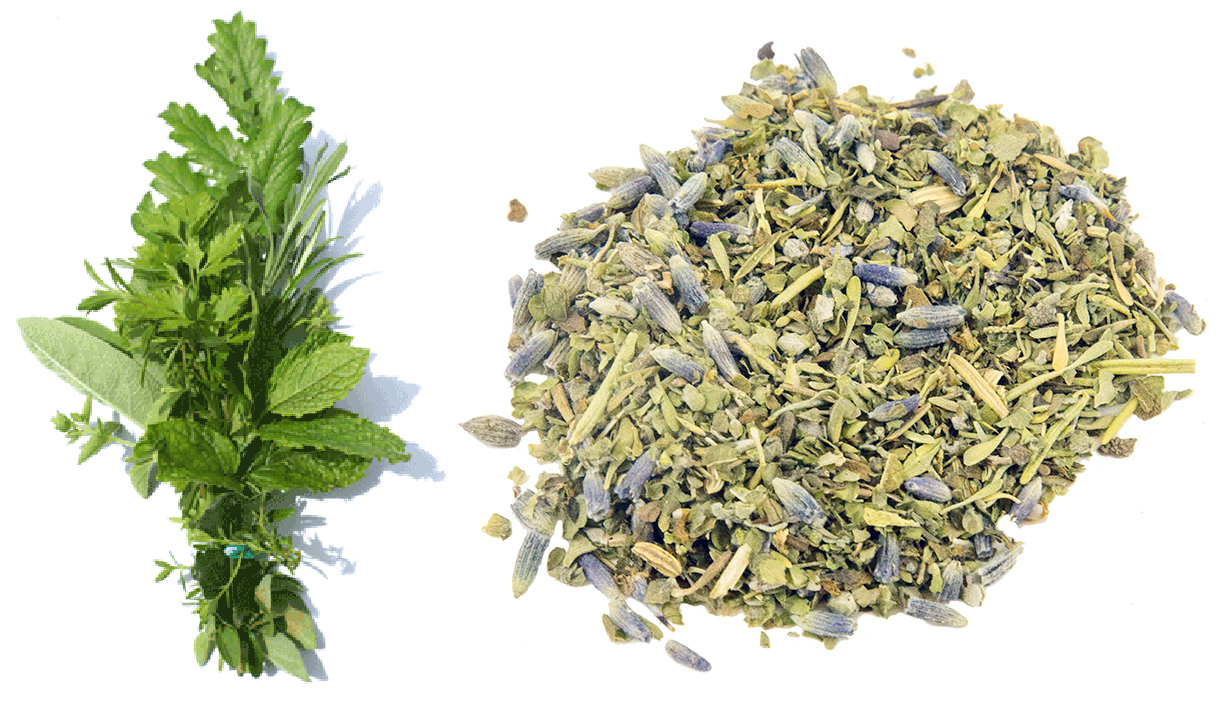 Bunch of fresh herbs and the classic dried Herbes de Provence blend.
Welcome to FabulousFusionFood's Herb-based Recipes Page — Herbs are typically the milder of the flavourings added to food. By definition a herb is any herbaceous part of a plant. This means any combination of the stems the leaves and the flowers. Basically those parts of a plant that live above ground (in contrast the roots of a plant if used as a flavouring are generally considered as spices, as are the seeds and fruit of a plant). The list below therefore describes as many parts of a plant as possible if they are used (either fresh or dried) as a food flavouring. The exception here is the woody stem, which tends to be thought of as a spice rather than an herb.
In terms of flavouring, at least for economic impact, herbs have tended to play second fiddle to spices. The majority of herbs need to be used fresh, their flavour chemicals tend to be volatile. As a result, herbs, typically, are grown locally, added fresh and used towards the end of cookery. Which is not to say that they're not important in cookery. They can be vital and some combinations, like French fines herbes, herbes de provence or bouquets garnis are key to the flavour profile of a dish.
Culinary herbs are typically added fresh towards the end of cooking though dried herb blends such as herbes de provence are available. Most herbs lose their potency on drying. The exception being oregano, which is typically superior dried as opposed to fresh.
Herbs are a widely distributed and widespread group of plants, excluding vegetables, with savory or aromatic properties that are used for flavoring and garnishing food, for medicinal purposes, or for fragrances. Culinary use typically distinguishes herbs from spices. Herbs generally refers to the leafy green or flowering parts of a plant (either fresh or dried), while spices are usually dried and produced from other parts of the plant, including seeds, bark, roots and fruits.
Herbs have a variety of uses including culinary, medicinal, aromatic and in some cases, spiritual. General usage of the term "herb" differs between culinary herbs and medicinal herbs; in medicinal or spiritual use, any parts of the plant might be considered "herbs", including leaves, roots, flowers, seeds, root bark, inner bark (and cambium), resin and pericarp.
In botany, the term herb refers to a herbaceous plant, defined as a small, seed-bearing plant without a woody stem in which all aerial parts (i.e. above ground) die back to the ground at the end of each growing season. Usually the term refers to perennials, although herbaceous plants can also be annuals (plants that die at the end of the growing season and grow back from seed next year), or biennials. This term is in contrast to shrubs and trees which possess a woody stem. Shrubs and trees are also defined in terms of size, where shrubs are less than ten meters tall, and trees may grow over ten meters. The word herbaceous is derived from Latin herbāceus meaning "grassy", from herba "grass, herb".
Culinary herbs are distinguished from vegetables in that, like spices, they are used in small amounts and provide flavour rather than substance to food.
Herbs can be perennials such as thyme, oregano, sage or lavender, biennials such as parsley, or annuals like basil. Perennial herbs can be shrubs such as rosemary (Rosmarinus officinalis), or trees such as bay laurel (Laurus nobilis) – this contrasts with botanical herbs, which by definition cannot be woody plants. Some plants are used as both herbs and spices, such as dill weed and dill seed or coriander leaves and seeds. There are also some herbs, such as those in the mint family, that are used for both culinary and medicinal purposes.
For more information on culinary herbs, please visit this site's herb guide where you will find information on over 100 herbs.
This is a continuation of the recipes listings for the herb-based recipes and dishes on this site (the page in fact). If you would like to learn a little more about this history of herbs and the methods of cooking with spices then please go to the first listing page for these Herb-based recipes information page. Here you will get just a list of the additional Herb-based recipes on this site.
The alphabetical list of all the herb-based recipes on this site follows, (limited to 100 recipes per page). There are 1998 recipes in total:
Page 19 of 20
| Stone Age Venison and Bulrush Stew Origin: Ancient | Tacos di Pesce (Fish Tacos) Origin: Mexico | The Prince of Wales' Sauce Origin: Britain |
| Stoved Chicken Origin: Scotland | Tagine of Yam, Carrots and Prunes Origin: Algeria | The Ultimate Chilli Con Carne Origin: Fusion |
| Stracotto alla Romana Origin: Italy | Tahinat el Beid (Tahini with Eggs) Origin: Lebanon | Thepla Origin: India |
| Street Corn Salsa Origin: America | Tajine el Bey (Spinach and Rocotta Tagine) Origin: Algeria | Thiéré bassy Origin: Senegal |
| Street Food Pad Thai Origin: Thailand | Tajine Kefta aux Oeufs (Vegetarian Koftas with Eggs) Origin: Algeria | Thiebou Kéthiakh (Rice with Dried Fish, Seafood and Vegetables) Origin: Senegal |
| Stuffat Tal-Fenek (Rabbit Stew) Origin: Malta | Tajine Maadnous (Tunisian Tajine with Eggs, Parsley and Chicken) Origin: Tunisia | Three Cheese Ranch Dressing Origin: American |
| Stuffat Tal-Qarnit (Octopus Stew) Origin: Malta | Tansy Cordial Origin: Britain | Tiep bou wekh (White Senegalese Rice and Fish) Origin: Senegal |
| Stuffed Grilled Fish Origin: Liberia | Tapas de Hongos y Patatas Origin: Britain | Tiguadege Na Origin: Mali |
| Stuffed Nasturtium Leaves Origin: Fusion | Tapioca Origin: Nigeria | Tirk Prahok (Fish Pickle Sauce) Origin: Cambodia |
| Stuffed Poussin with Madeira Sauce Origin: Britain | Taramasalata Origin: Greece | Tisanam sic Facies (Barley Soup) Origin: Roman |
| Stuffed Sardines Origin: Britain | Tarhana Dough Origin: Turkey | Tkemali Sauce Origin: Georgia |
| Stuffed Shaggy Parasols Origin: America | Taro Guisado (Taro Stew) Origin: Easter Island | To bake an Olyve-Pye Origin: Britain |
| Stwffin Nionyn a Saets (Sage and Onion Stuffing) Origin: Welsh | Tarragon and Beech Mast Vinaigrette Origin: Britain | To boil a chine of veal, or a chicken in sharp broth with herbs Origin: Britain |
| Stwffin Saeta a Nionyn (Sage and Onion Stuffing) Origin: Welsh | Tarragon Turkey Origin: Britain | To make a florentine of veal Origin: Britain |
| Succotash Origin: Equatorial Guinea | Tarragon Vinegar Origin: Britain | To make a Haggas Pudding. Origin: Britain |
| Summer Vegetable Parcels Origin: Britain | Tarragon Vinegar II Origin: Britain | To Sowce a Pigge (Collar of Brawn) Origin: England |
| Suomen Kalakeitto (Finnish Fish Soup) Origin: Finland | Tartar Sauce Origin: Britain | Togolaise Juis de Gingembre (Togolese Ginger Juice) Origin: Togo |
| Şurpa (Shurpa) Origin: Turkmenistan | Tartare Sauce Origin: Britain | Tom Yam Goong 1 Origin: Thailand |
| Svekla Pkhali (Beet Pkhali) Origin: Georgia | Tatws a Chig Mewn Popty Araf (Potatoes and Meat in the Slow Cooker) Origin: Welsh | Tom Yam Goong Maenam Origin: Thailand |
| Swazi Babotie Origin: eSwatini | Tatws Trwy Crwyn (Potatoes in Their Skins) Origin: Welsh | Tom Yum Gai (Hot and Sour Chicken Soup) Origin: Thailand |
| Sweet Chestnut Soup Origin: British | Tawabel (Maghrebi Spice Blend) Origin: Algeria | Tom Yum Hed (Mushroom Tom Yum) Origin: Thailand |
| Sweet Chilli and Pepper Salsa Origin: Ascension | Tea-scented Eggs Origin: China | Tom Yum Het Mangsawirat (Mushroom and Lemongrass Soup) Origin: Thailand |
| Sweet Cicely and Lemon Drizzle Cupcakes Origin: Britain | Teisen Frau Noswaith Lawen (Pan-fried Parsnips and Mushrooms with a Garlic and Parsley Crust) Origin: Welsh | Tom Yum Pla (Hot and Sour Fish Soup) Origin: Thailand |
| Sweet Cicely and Raspberry Jelly Origin: Britain | Teisennau Eog Dyfrdwy (Dee Salmon Fish Cakes) Origin: Welsh | Tomates Monégasque (Monegasque Tomatoes) Origin: Monaco |
| Sweet Coconut Pumpkin with Pandan Leaves Origin: Kiribati | Tempeh Stroganoff with Parasol Mushrooms Origin: American | Tomato and Herb Salsa Origin: Britain |
| Sweet Pickled Reedmace Hearts and Fennel Origin: Britain | Tepsi kebabı (Turkish Tray Kebab) Origin: Turkey | Tomato and Lettuce Soup Origin: Britain |
| Sweet Woodruff and Marzipan Cake Origin: Britain | Tereré (Iced Yerba Mate) Origin: Paraguay | Tomato Coulis Origin: France |
| Swordfish Steaks with Chermoula Origin: South Africa | Terîn Cig Oen (Welsh Lamb Terrine) Origin: Welsh | Tomato Sauce for Pizza Origin: Italy |
| Tabah Moostafah (Tagine of Marrakech Lamb) Origin: Morocco | Thé à la Menthe (Mauritanian Mint Tea) Origin: Mauritania | Tomato Sauce with Emperor's Mint for Pizza Origin: British |
| Tabasco Steaks with Watercress Butter Origin: Fusion | Thai Green Curried Dandelion Roots and Chicken Origin: Malaysia | Tomato Smoor Origin: South Africa |
| Tabbouleh with Pomegranate Origin: Lebanon | Thai Green Curry Paste II Origin: Thailand | Tomato-less Jollof Rice Origin: Nigeria |
| Tabouleh (Parsley and Bulgur Wheat Salad) Origin: Middle East | Thai Red Curry Paste Origin: Thailand | Topcheta Corba (Meatball Soup) Origin: Bulgaria |
| Tacos de Cabra (Goat Tacos) Origin: Mexico | Thai-style Chicken Skewers Origin: Fusion | |
| Tacos de Comida Callejera (Mexican Street-food Tacos) Origin: Mexico | Tharoi Thongba (Water Snail Curry) Origin: India |
Page 19 of 20