FabulousFusionFood's Herb-based Recipes 20th Page
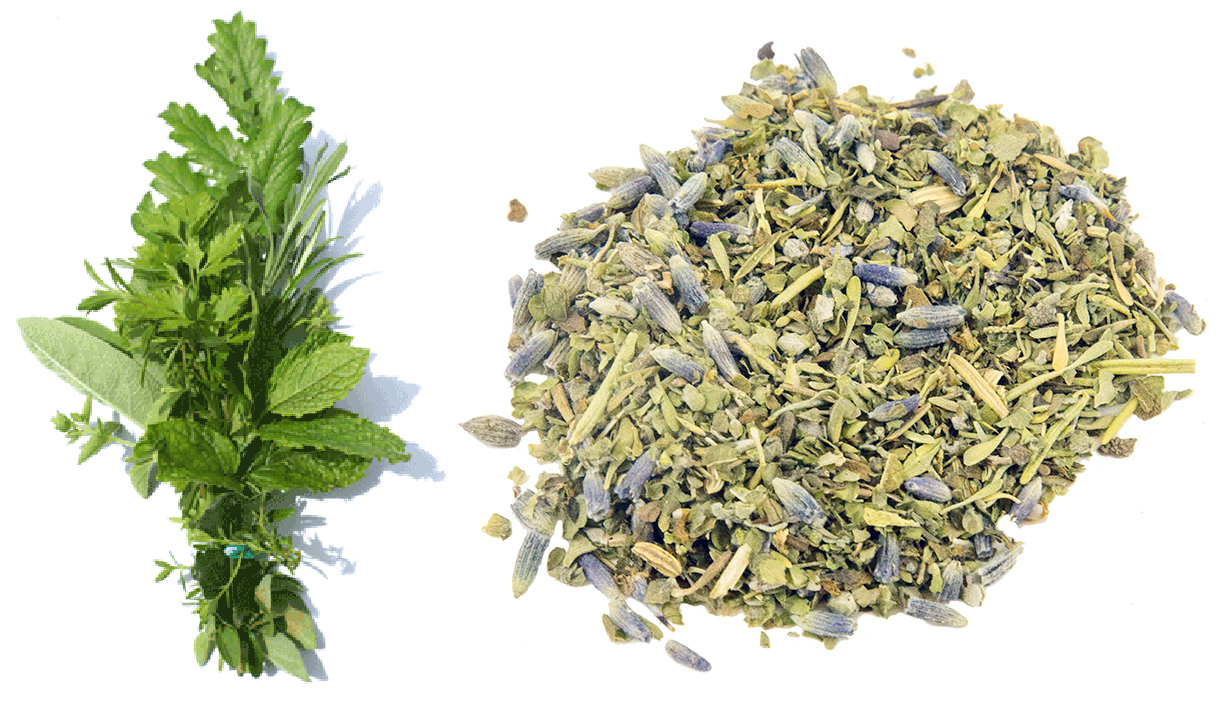 Bunch of fresh herbs and the classic dried Herbes de Provence blend.
Welcome to FabulousFusionFood's Herb-based Recipes Page — Herbs are typically the milder of the flavourings added to food. By definition a herb is any herbaceous part of a plant. This means any combination of the stems the leaves and the flowers. Basically those parts of a plant that live above ground (in contrast the roots of a plant if used as a flavouring are generally considered as spices, as are the seeds and fruit of a plant). The list below therefore describes as many parts of a plant as possible if they are used (either fresh or dried) as a food flavouring. The exception here is the woody stem, which tends to be thought of as a spice rather than an herb.
In terms of flavouring, at least for economic impact, herbs have tended to play second fiddle to spices. The majority of herbs need to be used fresh, their flavour chemicals tend to be volatile. As a result, herbs, typically, are grown locally, added fresh and used towards the end of cookery. Which is not to say that they're not important in cookery. They can be vital and some combinations, like French fines herbes, herbes de provence or bouquets garnis are key to the flavour profile of a dish.
Culinary herbs are typically added fresh towards the end of cooking though dried herb blends such as herbes de provence are available. Most herbs lose their potency on drying. The exception being oregano, which is typically superior dried as opposed to fresh.
Herbs are a widely distributed and widespread group of plants, excluding vegetables, with savory or aromatic properties that are used for flavoring and garnishing food, for medicinal purposes, or for fragrances. Culinary use typically distinguishes herbs from spices. Herbs generally refers to the leafy green or flowering parts of a plant (either fresh or dried), while spices are usually dried and produced from other parts of the plant, including seeds, bark, roots and fruits.
Herbs have a variety of uses including culinary, medicinal, aromatic and in some cases, spiritual. General usage of the term "herb" differs between culinary herbs and medicinal herbs; in medicinal or spiritual use, any parts of the plant might be considered "herbs", including leaves, roots, flowers, seeds, root bark, inner bark (and cambium), resin and pericarp.
In botany, the term herb refers to a herbaceous plant, defined as a small, seed-bearing plant without a woody stem in which all aerial parts (i.e. above ground) die back to the ground at the end of each growing season. Usually the term refers to perennials, although herbaceous plants can also be annuals (plants that die at the end of the growing season and grow back from seed next year), or biennials. This term is in contrast to shrubs and trees which possess a woody stem. Shrubs and trees are also defined in terms of size, where shrubs are less than ten meters tall, and trees may grow over ten meters. The word herbaceous is derived from Latin herbāceus meaning "grassy", from herba "grass, herb".
Culinary herbs are distinguished from vegetables in that, like spices, they are used in small amounts and provide flavour rather than substance to food.
Herbs can be perennials such as thyme, oregano, sage or lavender, biennials such as parsley, or annuals like basil. Perennial herbs can be shrubs such as rosemary (Rosmarinus officinalis), or trees such as bay laurel (Laurus nobilis) – this contrasts with botanical herbs, which by definition cannot be woody plants. Some plants are used as both herbs and spices, such as dill weed and dill seed or coriander leaves and seeds. There are also some herbs, such as those in the mint family, that are used for both culinary and medicinal purposes.
For more information on culinary herbs, please visit this site's herb guide where you will find information on over 100 herbs.
This is a continuation of the recipes listings for the herb-based recipes and dishes on this site (the page in fact). If you would like to learn a little more about this history of herbs and the methods of cooking with spices then please go to the first listing page for these Herb-based recipes information page. Here you will get just a list of the additional Herb-based recipes on this site.
The alphabetical list of all the herb-based recipes on this site follows, (limited to 100 recipes per page). There are 1954 recipes in total:
Page 20 of 20
| Venison Liver Pâté Origin: Britain | Watermint Flower Ice Cream Origin: Britain | Yalanchy Sarma (Armenian Stuffed Vine Leaves) Origin: Armenia |
| Verde Sawse (Green Sauce) Origin: England | White Crab and Cabbage Shanghai Buns Origin: China | Yalanci Dolma (Stuffed Vine Leaves) Origin: Northern Cyprus |
| Vermouth di Torino (Turin Vermouth) Origin: Italy | White Fish with Fennel Origin: Britain | Yam Curry Origin: Vanuatu |
| Versatus Broun Origin: England | White Stock Origin: Britain | Yaroa Dominicana Origin: Dominican Republic |
| Vichyssoise (Vichyssoise Soup) Origin: France | Whole Meat Mould Origin: England | Yarpakh Dolmasy (Vine Leaves Stuffed with Lamb and Rice) Origin: Azerbaijan |
| Victorian Beef Kofta Curry Origin: Anglo-Indian | Wigilijna Zupa Grzybowa (Polish Christmas Mushroom Soup) Origin: Poland | Yassa Au Poulet de la Casamance (Chicken Yassa in the Manner of Casamarance) Origin: Senegal |
| Victorian Fuluri Origin: Anglo-Indian | Wild Carrot and Water Mint Soup Origin: Britain | Yen Thongba (Manipuri Chicken Curry) Origin: India |
| Viennese Game Sauce Origin: Austria | Wild Marjoram Scones Origin: Britain | Yerba Mate Origin: Paraguay |
| Vindaloush with Fungee Origin: Caribbean | Wild Mushroom and Shallot Duxelles Origin: Britain | Yerba Mate Origin: Uruguay |
| Vinegar and Oil Pickled Mushrooms Origin: Britain | Wild Mushroom Pizza Origin: Britain | Yoghurt Lamb Steaks with Minted Yoghurt Origin: Britain |
| Virgin Islands Pates Origin: British Virgin Islands | Wild Mushroom Pizza Origin: Britain | Yoghurt Sharbat Origin: India |
| Virgin Islands Pates Origin: US Virgin Islands | Wild Mushroom Risotto Origin: Britain | Zagrebački krumpir (Zagreb Potatoes) Origin: Croatia |
| Vodhino Casarolas (Roast Beef Casserole) Origin: Cyprus | Wild Mushroom Stuffed Potato Cakes Origin: Britain | Zahtar Origin: Jordan |
| Vospov Khema (Lentil Dish) Origin: Armenia | Wild Rice Soup Origin: Britain | Zalzett Malti (Maltese Sausages) Origin: Malta |
| Waldorf Hotel's Waldorf Salad Origin: American | Wild Rocket, Nasturtium and Herb Salad Origin: Britain | Zhoum Origin: Yemen |
| Warm Salad of Oyster Mushrooms Origin: Britain | Winter Parsnip Stew Origin: Czech | Zupa Koperkowa (Polish Dill Soup) Origin: Poland |
| Water Mint Jelly Origin: Britain | Wisteria, Chickweed and Pea Flower Spring Rolls Origin: America | Zuppa di lenticchie di Capodann (Italian New Year Lentil Soup) Origin: Italy |
| Watercress Soup Origin: Britain | Worcestershire Wallfish Origin: England | Žuvies kukuliai (Fish Dumplings) Origin: Lithuania |
Page 20 of 20