FabulousFusionFood's Leafy Greens-based Recipes Home Page
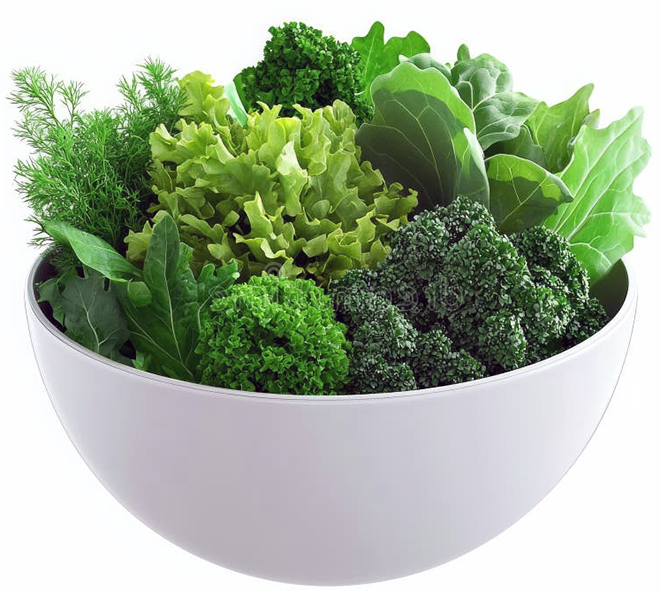 Mixed leafy greens in a bowl
Welcome to FabulousFusionFood's Leafy Greens-based Recipes Page —Leaf vegetables, also called leafy greens, vegetable greens, or simply greens, are plant leaves eaten as a vegetable. Those eaten raw in a salad can be called salad greens, whereas leaf vegetables eaten cooked can be called pot herbs.
Nearly 1,000 species of plants with edible leaves are known. Leaf vegetables most often come from short-lived herbaceous plants, such as lettuce and spinach, but also come from some woody plants. The leaves of many fodder crops (e.g. alfalfa, clover, and most grasses) are also edible by humans, but usually only as famine or processed food.
The leaves of many fodder crops are also edible by humans, but usually only as famine food. Examples include alfalfa, clover, and most grasses, including wheat and barley. Food processing, such as drying and grinding into powder or pulping and pressing for juice, may involve these crop leaves in a diet.
Leaf vegetables contain many typical plant nutrients, but being photosynthetic tissues, their vitamin K levels are particularly notable. Accordingly, users of vitamin K antagonist medications like warfarin must limit their consumption of leaf vegetables.
If leaves are cooked for food, they may be referred to in the United States as boiled greens. Leaf vegetables may be stir-fried, stewed, steamed, or consumed raw. Leaf vegetables stewed with pork is a traditional dish in soul food and Southern U.S. cuisine. They are also commonly eaten in South Asian dishes such as saag. Leafy greens can be used to wrap other ingredients into an edible package like a tortilla. Many green leafy vegetables, such as lettuce or spinach, can also be eaten raw, for example, in sandwiches or salads. A green smoothie enables large quantities of raw leafy greens to be consumed by blending the leaves with fruit and water.
The brassicaceae is a medium-sized and economically important family of flowering plants commonly known as the mustards, the crucifers, or the cabbage family. The family contains the cruciferous vegetables, including species such as Brassica oleracea (cultivated as cabbage, kale, cauliflower, broccoli and collards), Brassica rapa (turnip, Chinese cabbage, etc.), Brassica napus (rapeseed, etc.), Raphanus sativus (common radish), Armoracia rusticana (horseradish), the cut-flower Matthiola (stock) and the model organism Arabidopsis thaliana (thale cress).
This family includes important agricultural crops, particularly leafy greens, among which many vegetables such as cabbage, broccoli, cauliflower, kale, Brussels sprouts, collard greens, Savoy, kohlrabi, and gai lan (Brassica oleracea), turnip, napa cabbage, mizuna, bok choy and rapini (Brassica rapa), rocket salad/arugula (Eruca sativa), garden cress (Lepidium sativum), watercress (Nasturtium officinale) and radish (Raphanus) and a few spices like horseradish (Armoracia rusticana), wasabi (Eutrema japonicum), white, brown and black mustard (Sinapis alba, Brassica juncea and B. nigra respectively). Even if not specifically grown as leafy green vegetables, the leaves of the majority of these species can be and are consumed.
Outside the brassicaceae, the Amaranthaceae or Amaranth family are a major source of leafy greens worldwide, with the most common and well known species being Spinacia oleracea or spinach. Its leaves are a common vegetable consumed either fresh, cooked or after storage (using preservation techniques like canning, freezing, or dehydration). The taste differs considerably between cooked and raw: the high oxalate content may be reduced by blanching. So common is spinach as a leafy green that it's used as a common substitute for other local leafy greens.
Note that beetroot, a source of both an edible taproot and leafy greens. Beta vulgaris is also a member of the Amaranthaceae family, as is the closely related chard (Beta vulgaris subsp. vulgaris) which is grown for its edible stems and leafy greens.
In Africa, the leaves of cassava plants and sweet potato plants are widely consumed and leafy greens sourced from the wild are used to supplement the diet in countries across the globe.
The alphabetical list of all the leafy greens-based recipes on this site follows, (limited to 100 recipes per page). There are 3031 recipes in total:
Page 1 of 31
| A Messe of Greens Origin: Britain | Ajiaco Criollo (Cuban Creole Stew) Origin: Cuba | Aloo ki Bhujia (Pakistani Potato Curry) Origin: Pakistan |
| Aaloo Gosht (Mutton Curry with Potatoes) Origin: Pakistan | Akume with Ademe Sauce Origin: Togo | Aloo Masala (Potato Masala) Origin: India |
| Abacha Ncha (Dried Cassava with Garden Eggs) Origin: Nigeria | Alaskan Spruce Tip Syrup Origin: Britain | Aloo Paratha (Flatbread with a Spicy Potato Stuffing) Origin: India |
| Abak (Palm Nut Soup) Origin: Nigeria | Alexanders and Three Cornered Leek Frittata Origin: England | Alu Achari Origin: India |
| Abobora de Camarao (Prawn Abobora) Origin: Angola | Alexanders Seed and Wild Greens Cheese Scones Origin: Britain | Alu Bhindi (Okra and Potato Curry) Origin: Fiji |
| Abura-miso Origin: Japan | Aliter Assaturas (Another Sauce for Roast Meat) Origin: Roman | Alu Kesel (Sri Lankan Ash Plantain Curry) Origin: Sri Lanka |
| Acelgas con Jamón (Ham with Chard) Origin: Spain | Aliter Coliclos I (Sprouts, Another Way, I) Origin: Roman | Alu Tarkari (Potato Curry) Origin: Nepal |
| Achaari Jhinga (Indian Pickled Prawns) Origin: India | Aliter Coliclos II (Stalks, Another Way, II) Origin: Roman | Alubias Blancas Con Almejas (White Beans with Clams) Origin: Spain |
| Achu and Ndza Nikka (Cameroonian Achu Yellow Soup) Origin: Cameroon | Aliter Coliclos III (Stalks, Another Way, III) Origin: Roman | Améijoas (Clams in Beer) Origin: Mozambique |
| Ackee and Callaloo Bake Origin: Jamaica | Aliter Coliclos IV (Stalks, Another Way, IV) Origin: Roman | Amala and Ewedu Origin: Nigeria |
| Ad Digestionem (An Aid to Digestion) Origin: Roman | Aliter Coliclos V (Stalks, Another Way, V) Origin: Roman | Ambul Thial (Pickled Fish Curry) Origin: Sri Lanka |
| Adobo Marinade Origin: Puerto Rico | Aliter Fungi Farnei (Tree Mushrooms, Another Way) Origin: Roman | Ambul Thial (Pickled Fish) Origin: Sri Lanka |
| Adobong Pato a la Moja (Duck Adobo with Pineapple and Dates) Origin: Philippines | Aliter in Apro (Wild Boar, Another Way) Origin: Roman | American-style Chicken Curry Origin: America |
| Advieh Ash (Persian Soup Spice Blend) Origin: Iran | Aliter in Apro II (Wild Boar, Another Way II) Origin: Roman | Amia (Roman Fish in Vine Leaves) Origin: Roman |
| Advieh Mahi (Persian Fish Spice Blend) Origin: Iran | Aliter In Echino (Sea Urchin, Another Way) Origin: Roman | Amiæ (Barbecued Fish) Origin: Roman |
| Advieh Torshi (Persian Pickle Spice Blend) Origin: Iran | Aliter in Grue vel Qnate Elixa (Sauce for Boiled Crane or Duck, Another Way II) Origin: Roman | Amok Trey Khmer (Cambodian Fish Amok) Origin: Cambodia |
| Advieh-spiced Roast Chicken Origin: Fusion | Aliter in Gruem vel Anatem Elixam (Sauce for Boiled Crane or Duck, Another Way) Origin: Roman | Ampesi with Kontomire Stew Origin: Ghana |
| Afang Soup Origin: Nigeria | Aliter Ius Alexandrinum in Pisce Asso (Another Alexandrine Sauce for Baked Fish) Origin: Roman | Anadl y Ddraig (Dragon's Breath) Origin: Welsh |
| Afghan Kofta Curry Origin: Afghanistan | Aliter Ius Alexandrinum in Pisce Asso II (Another Alexandrine Sauce for Baked Fish II) Origin: Roman | Anamikto Siropi (Mixed Fruit Squash) Origin: Cyprus |
| Afghani Chicken Curry Origin: Pakistan | Aliter Ius in Mullos Assos (Another Sauce for Baked Red Mullet) Origin: Roman | Anardana Jheenga (Pomegranate-flavoured Prawns) Origin: India |
| African Chicken (Macanese One-pan Chicken Curry) Origin: Macau | Aliter Ius in Pisce Elixo (Another Sauce for Poached Fish) Origin: Roman | Anardana Pakora in Mustard Oil Origin: India |
| African-style Barbecue Sauce Origin: African Fusion | Aliter Patina (Patina, Another Way) Origin: Roman | Andhra Kodi Kura (Andhra Chicken Curry) Origin: India |
| Agatoke (Plantain and Vegetable Porridge) Origin: Burundi | Aliter patina de aparagis (A Dish of Asparagus, Another Way) Origin: Roman | Andhra Pappu Charu (Andhra-style Lentil Puree Curry) Origin: India |
| Agidi (Fermented Cornflour Pudding) Origin: Nigeria | Aliter Patina de Asparagis II (A Dish of Asparagus, Another Way II) Origin: Roman | Andhra Pepper Chicken (Dry Restaurant-style Pepper Chicken) Origin: India |
| Agidi Jollof Origin: Nigeria | Aliter porros (Boiled Leeks in Cabbage Leaf Salad) Origin: Roman | Anglo-Indian Ball Curry Origin: Anglo-Indian |
| Agneau au Cari (Lamb Curry) Origin: Reunion | Aliter Rapas (Vegetable Purée with Alexanders) Origin: Roman | Angolan Prego no Pão (Angolan Prego Rolls) Origin: Angola |
| Agushi Soup (Ghanaian Egusi Soup) Origin: Ghana | Aliter Sphondylos (Parsnips, Another Way) Origin: Roman | Antiguan Callaloo Origin: Antigua |
| Ah Mè Thar Hin (Myanmar Beef Curry) Origin: Myanmar | Aliter Sphondylos III (Parsnips, Another Way III) Origin: Roman | Antiguan Chop-up Origin: Antigua |
| Ah Mè Thar Hin (Beef Curry) Origin: Myanmar | All-purpose Tamale Seasoning Blend Origin: Mexico | Antiguan Curried King Prawns Origin: Antigua |
| Ahi Poke Origin: Hawaii | Alleppey Fish Curry Origin: India | Antiguan Tomato Sauce Origin: Antigua |
| Air Fryer Aloo Bread Pakora Origin: Britain | Almejas à la Marinera (Marinated Clams) Origin: Spain | Antipasto Chef's Salad Origin: Britain |
| Air Fryer Kale Chips Origin: America | Almôndegas com Molho de Caril (Portuguese Meatball Curry) Origin: Portugal | Antipasto di Funghi e Gamberetti (Mushroom and Prawn Antipasto) Origin: Italy |
| Air Fryer Spinach Origin: Britain | Aloo Badun (Potato Badun) Origin: Sri Lanka | |
| Ají de Tamarillo (Ecuadorian Tree Tomato Hot Sauce) Origin: Ecuador | Aloo Chaat (Savoury Potato Snack) Origin: India |
Page 1 of 31