FabulousFusionFood's Mutton-based Recipes Home Page
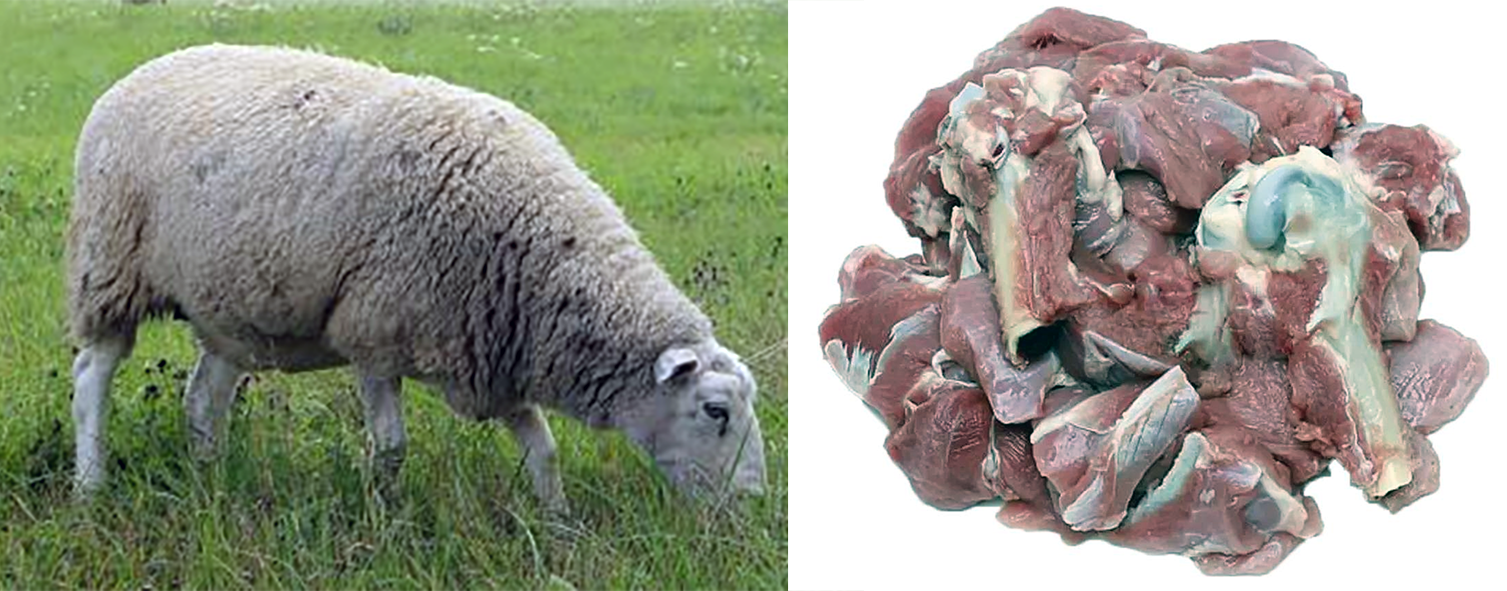 Mature sheep (mutton) and a selection of mutton cuts.
Welcome to FabulousFusionFood's Mutton-based Recipes Page — The recipes presented here are all based on sheep meat. Mutton represents a mature sheep (Ovis aries) which is more than two years old.
Hogget is term for a sheep of either sex having no more than two permanent incisors in wear, or its meat. In the UK, it means animals that are 11 to 24 months old. Still common in farming usage and among speciality butchers, it is now a rare term in British, Australian and New Zealand supermarkets, where meat of all sheep less than two years old tends to be called 'lamb'.
Mutton — the meat of a female (ewe) or castrated male (wether) sheep having more than two permanent incisors in wear. Thin strips of fatty mutton can be cut into a substitute for bacon called macon. In Northern Europe, mutton and lamb feature in many traditional dishes, including those of Iceland, Norway and Western Europe, including those of the United Kingdom, particularly in the western and northern uplands, Scotland and Wales.
Sheep are most likely descended from the wild mouflon of Europe and Asia, with Iran being a geographic envelope of the domestication centre. One of the earliest animals to be domesticated for agricultural purposes, sheep are raised for fleeces, meat (lamb, hogget or mutton), and milk. A sheep's wool is the most widely used animal fibre, and is usually harvested by shearing. In Commonwealth countries, ovine meat is called lamb when from younger animals and mutton when from older ones; in the United States, meat from both older and younger animals is usually called lamb. Sheep continue to be important for wool and meat today, and are also occasionally raised for pelts, as dairy animals, or as model organisms for science.
Sheep meat and milk were one of the earliest staple proteins consumed by human civilization after the transition from hunting and gathering to agriculture. Sheep meat prepared for food is known as either mutton or lamb, and approximately 540 million sheep are slaughtered each year for meat worldwide. "Mutton" is derived from the Old French moton, which was the word for sheep used by the Anglo-Norman rulers of much of the British Isles in the Middle Ages. This became the name for sheep meat in English, while the Old English word sceap was kept for the live animal. Throughout modern history, "mutton" has been limited to the meat of mature sheep usually at least two years of age; "lamb" is used for that of immature sheep less than a year.
Cuts of Mutton (UK, Canada, and other Commonwealth countries):
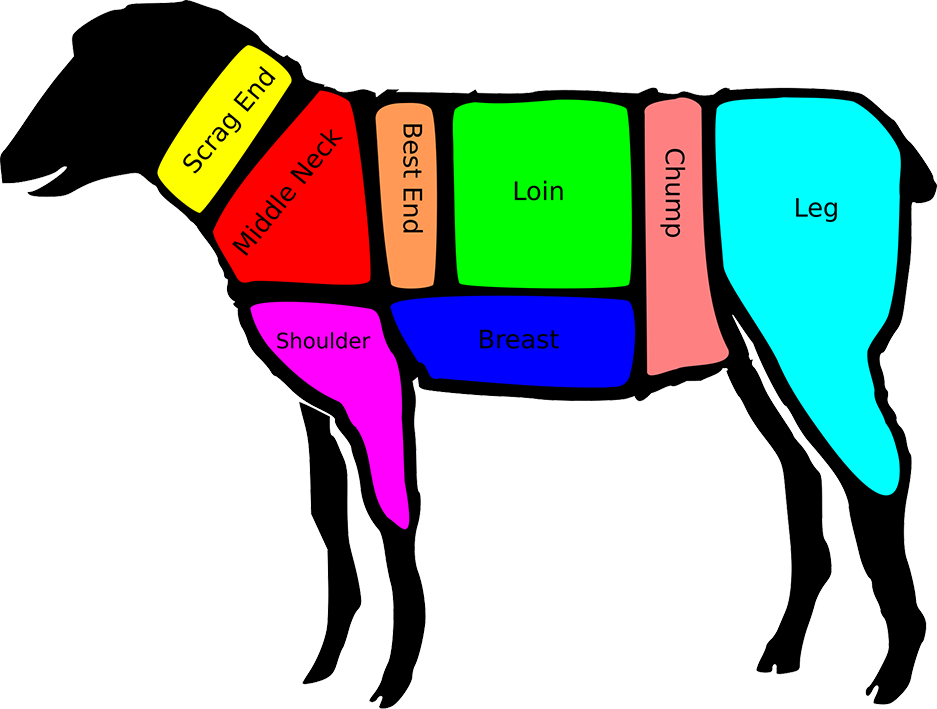 Cuts of Mutton:
Scrag end (of neck) — stewing
Middle neck — braising, stewing
Best End (of neck) — roasting, stewing, braising
Loin (including chops, racks and saddle) — roasting, frying, braising
Chump (and chump chops) — frying
Barnsley chop, a large double loin chop — frying
Leg (gigot in Scotland) including leg steaks — roasting, frying
Shank — braising
Shoulder — roasting Breast — braising
Offal — typically tongue, liver, heart, stomach, sweetbreads, testicles, intestines and kidneys
The alphabetical list of all the mutton-based recipes on this site follows, (limited to 100 recipes per page). There are 178 recipes in total:
Page 1 of 2
| A Bengal Currie Origin: Britain | Cape Malay Mutton Curry Origin: South Africa | Hara Mircha (Bell Pepper Curry) Origin: India |
| A Good Mutton Soup Origin: British | Cari Mouton (Mutton Curry) Origin: Saint Pierre | Individual Mutton Pies Origin: England |
| Aaloo Gosht (Mutton Curry with Potatoes) Origin: Pakistan | Cawl Wstrys Bro Gŵyr (Gower Peninsula Oyster Broth) Origin: Welsh | Iraqi Adana Kebab Origin: Iraq |
| Afghan Kofta Curry Origin: Afghanistan | Cig Dafad Mewn Dull Cig Moch (Welsh Mutton Ham) Origin: Welsh | Irish Farm Broth Origin: Ireland |
| Afrikaanse Yakhni Origin: South Africa | Coes Cig Dafad wedi Rhostio gyda Llysiau, Mêl Grug a Phrŵns (Roast Leg of Mutton with Heather Honey and Prunes) Origin: Welsh | Ius Frigidum in Ovifero (Cold Sauce for Wild Sheep) Origin: Roman |
| Ak-Ni Korma Origin: India | Colonial Goose II Origin: New Zealand | Ius in Ovifero Fervens (Hot Sauce for Wild Sheep) Origin: Roman |
| Aliter assaturas (Roast Meats, Another Way) Origin: Roman | Couscous à la Nigérienne (Niger-style Couscous) Origin: Niger | Jamaican Mutton and Lime Leaf Origin: Jamaica |
| Aliter assaturas (Roast Meats, Another Way) Origin: Roman | Cullen Broth Origin: Scotland | Japrak (Mutton-stuffed Vine Leaves) Origin: Bosnia |
| Almond Soup Origin: British | Curried Mutton Origin: Britain | Kadhai Gosht Origin: Pakistan |
| Anglo-Indian Ball Curry Origin: Anglo-Indian | Curried Mutton Stew Origin: South Africa | Kaeng Phet Pet Yang (Thai Red Roast Duck Curry) Origin: Thailand |
| Anglo-Indian Mutton Dakbungalow Origin: Anglo-Indian | Curried Neck of Mutton Potjie Origin: Namibia | Kari Kambing (Mutton or Goat Curry) Origin: Indonesia |
| Aruban Curried Mutton Origin: Aruba | Dakbungalow Chicken Curry Origin: Anglo-Indian | Keema Style Haggis Curry Origin: Scotland |
| Assaturas in collare (Of Roast Neck) Origin: Roman | Dakhine Origin: Senegal | Kheulwa de Tabaski (Fried Mutton for Tabaski) Origin: Senegal |
| Aurangabadi Naan Qaliya Origin: India | Dhaba Mutton Curry Origin: India | Khoresht-e Loobia (Stewed Mutton with String Beans) Origin: Iran |
| Bakari Riha (Mutton Curry) Origin: Maldives | Djaratankai Origin: Mali | Kofta Nakhod (Meatballs with Chickpeas) Origin: Afghanistan |
| Baked Haggis with Whisky Cumberland Sauce Origin: Scotland | Dograma (Meat and Pasta Dish) Origin: Turkmenistan | Kofta Nakhod (Meatballs with Chickpeas) Origin: Tajikistan |
| Bantan (Flour Porridge and Meat Soup) Origin: Mongolia | Dograma II Origin: Turkmenistan | Kuurdak (Stewed Meat, Onions and Potatoes) Origin: Kyrgyzstan |
| Barley Kail Origin: Scotland | Dounguouri Soko (Meat Stew with White Beans) Origin: Niger | Kyrgyz Plov Origin: Kyrgyzstan |
| Bengali Hot Dry Meat Curry Origin: India | Drisheen Origin: Ireland | Lagman Origin: Kyrgyzstan |
| Beshbarmak (Meat and Pasta Dish) Origin: Kazakhstan | Drisheen Sausage Origin: Ireland | Lagman Origin: Turkmenistan |
| Beshbarmak (Grilled Tamarind Fish) Origin: Kazakhstan | Durban Bunny Chow Origin: South Africa | Lampara Curry Origin: Sri Lanka |
| Beshbarmak (Meat and Pasta Dish) Origin: Kyrgyzstan | Durban-style Mutton Curry with Potatoes and Dumplings Origin: South Africa | Leksour (Mauritanian-style Pancakes with Sauce) Origin: Mauritania |
| Bo-Kaap Kerrie (Cape Malay Curry) Origin: South Africa | Elumas Curry (Mutton Curry) Origin: Sri Lanka | M'borokhé (Peanut Sauce with Spinach) Origin: Mali |
| Bonava (Meat and Potatoes Stew) Origin: Mauritania | Escudella i Carn D'olla Origin: Andorra | Madras-style Leftovers Curry Origin: India |
| Bosanski Lonac (Bosnian Pot Stew) Origin: Bosnia | Francatelli Boiled Neck of Mutton Origin: Britain | Mafé Origin: Senegal |
| Brochettes de Boeuf (Beef Kebabs) Origin: Rwanda | Gbékui (Spinach Sauce) Origin: Togo | Maffé de Tabaski (Maffé for Tabaski) Origin: Cote dIvoire |
| Brown Windsor Soup Origin: British | Gheema Origin: Britain | Maffé Mauritanienne (Aubergines and Pumpkin) Origin: Mauritania |
| Brunei Murtabak (Meat Rotis) Origin: Brunei | Goat Curry with Potatoes Origin: Pakistan | Makluba (Upside Down Dish) Origin: Palestine |
| Brunei Murtabak (Meat Rotis) Origin: Singapore | Goat Meat Suya Origin: Nigeria | Malaysian Lamb Rendang Origin: Malaysia |
| Budaatai Khuurga (Fried Rice, Meat and Vegetables) Origin: Mongolia | Haggis Origin: Scotland | Manti (Steamed Kyrgyz Dumplings) Origin: Kyrgyzstan |
| Buuz (Steamed Dumplings) Origin: Mongolia | Haggis Balls with Mustard-whisky Sauce Origin: Scotland | Manx Broth for a Wedding Origin: Manx |
| Cabbage Bredie Origin: South Africa | Haggis in the Hole Origin: Scotland | Manx Mutton Hot-pot Origin: Manx |
| Cape Malay Black-eyed Beans Curry Origin: South Africa | Haggis Kheema with Tattie Rotis Origin: Fusion | |
| Cape Malay Mutton and Dhal Curry Origin: South Africa | Haggis Koftas Origin: Scotland |
Page 1 of 2