FabulousFusionFood's Leafy Greens-based Recipes 2nd Page
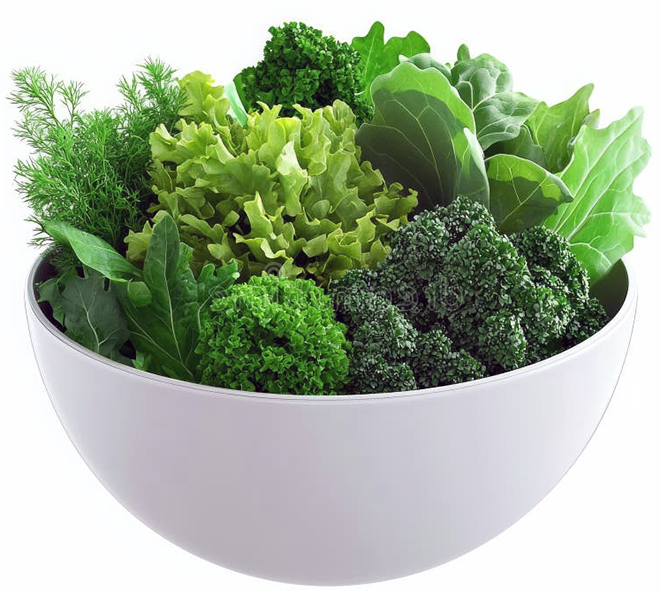 Mixed leafy greens in a bowl
Welcome to FabulousFusionFood's Leafy Greens-based Recipes Page —Leaf vegetables, also called leafy greens, vegetable greens, or simply greens, are plant leaves eaten as a vegetable. Those eaten raw in a salad can be called salad greens, whereas leaf vegetables eaten cooked can be called pot herbs.
Nearly 1,000 species of plants with edible leaves are known. Leaf vegetables most often come from short-lived herbaceous plants, such as lettuce and spinach, but also come from some woody plants. The leaves of many fodder crops (e.g. alfalfa, clover, and most grasses) are also edible by humans, but usually only as famine or processed food.
The leaves of many fodder crops are also edible by humans, but usually only as famine food. Examples include alfalfa, clover, and most grasses, including wheat and barley. Food processing, such as drying and grinding into powder or pulping and pressing for juice, may involve these crop leaves in a diet.
Leaf vegetables contain many typical plant nutrients, but being photosynthetic tissues, their vitamin K levels are particularly notable. Accordingly, users of vitamin K antagonist medications like warfarin must limit their consumption of leaf vegetables.
If leaves are cooked for food, they may be referred to in the United States as boiled greens. Leaf vegetables may be stir-fried, stewed, steamed, or consumed raw. Leaf vegetables stewed with pork is a traditional dish in soul food and Southern U.S. cuisine. They are also commonly eaten in South Asian dishes such as saag. Leafy greens can be used to wrap other ingredients into an edible package like a tortilla. Many green leafy vegetables, such as lettuce or spinach, can also be eaten raw, for example, in sandwiches or salads. A green smoothie enables large quantities of raw leafy greens to be consumed by blending the leaves with fruit and water.
The brassicaceae is a medium-sized and economically important family of flowering plants commonly known as the mustards, the crucifers, or the cabbage family. The family contains the cruciferous vegetables, including species such as Brassica oleracea (cultivated as cabbage, kale, cauliflower, broccoli and collards), Brassica rapa (turnip, Chinese cabbage, etc.), Brassica napus (rapeseed, etc.), Raphanus sativus (common radish), Armoracia rusticana (horseradish), the cut-flower Matthiola (stock) and the model organism Arabidopsis thaliana (thale cress).
This family includes important agricultural crops, particularly leafy greens, among which many vegetables such as cabbage, broccoli, cauliflower, kale, Brussels sprouts, collard greens, Savoy, kohlrabi, and gai lan (Brassica oleracea), turnip, napa cabbage, mizuna, bok choy and rapini (Brassica rapa), rocket salad/arugula (Eruca sativa), garden cress (Lepidium sativum), watercress (Nasturtium officinale) and radish (Raphanus) and a few spices like horseradish (Armoracia rusticana), wasabi (Eutrema japonicum), white, brown and black mustard (Sinapis alba, Brassica juncea and B. nigra respectively). Even if not specifically grown as leafy green vegetables, the leaves of the majority of these species can be and are consumed.
Outside the brassicaceae, the Amaranthaceae or Amaranth family are a major source of leafy greens worldwide, with the most common and well known species being Spinacia oleracea or spinach. Its leaves are a common vegetable consumed either fresh, cooked or after storage (using preservation techniques like canning, freezing, or dehydration). The taste differs considerably between cooked and raw: the high oxalate content may be reduced by blanching. So common is spinach as a leafy green that it's used as a common substitute for other local leafy greens.
Note that beetroot, a source of both an edible taproot and leafy greens. Beta vulgaris is also a member of the Amaranthaceae family, as is the closely related chard (Beta vulgaris subsp. vulgaris) which is grown for its edible stems and leafy greens.
In Africa, the leaves of cassava plants and sweet potato plants are widely consumed and leafy greens sourced from the wild are used to supplement the diet in countries across the globe.
The alphabetical list of all the leafy greens-based recipes on this site follows, (limited to 100 recipes per page). There are 3031 recipes in total:
Page 2 of 31
| Apple Coleslaw Origin: Britain | Autumnal Soup with Mallow Cheeses Origin: British | Bake and Saltfish Origin: Guyana |
| Apple Muffins with Ground Ivy Origin: Denmark | Avocado and Basil Leaf Pesto Origin: Fusion | Baked Celeriac with Wild Mushrooms and Cobnut Relish Origin: Britain |
| Apple, Cider and Onion Soup Origin: Britain | Avocado Leaf Chimichurri Origin: Fusion | Baked Chicken Chimichangas Origin: America |
| Arni Gemisto me Horta ke Feta (Leg of Lamb Stuffed with Greens and Feta) Origin: Greece | Avocado Leaf Flavoured Bean Stew Origin: Fusion | Baked Eggs Florentine Origin: Italy |
| Arni Kappamas (Lamb and Potatoes Cooked in Tomato Sauce) Origin: Cyprus | Avocado Leaf Flavoured Leek and Potato Soup Origin: Fusion | Baked Mackerel with Wild Flavours Origin: Britain |
| Arni me Spanaki (Lamb with Spinach) Origin: Cyprus | Avocado Leaf Flavoured Pickle Origin: Fusion | Baked New Potatoes with Wilted Wild Garlic Origin: Britain |
| Arni Souvla (Skewered Lamb) Origin: Cyprus | Avocado Leaf Infused Oil Origin: Fusion | Baked Papaya with Sweet Coconut Cream Origin: Marshall Islands |
| Arroz com Camarão (Rice with Prawns) Origin: Brazil | Avocado Leaf Tea Origin: Mexico | Baked Pineappleweed Custard Origin: Britain |
| Arroz con Gandules (Puerto Rican Rice and Beans with Sofrito) Origin: Puerto Rico | Ayam Goreng (Malaysian Fried Chicken) Origin: Malaysia | Baked Salmon Origin: Canada |
| Arroz con Menestra y Carne (Rice with Meat in Stew) Origin: Ecuador | Azindéssi aux Boeuf (Beef in Peanut Sauce) Origin: Togo | Baked Tandoori Whole Fish Origin: India |
| Arroz Con Pollo (Costa Rican Arroz con Pollo) Origin: Costa Rica | Azindéssi aux Poisson (Peanut Sauce with Fish) Origin: Togo | Baked Tilapia with Pineapple and Black Beans Origin: Costa Rica |
| Arroz Con Pollo Panameño (Panamanian Arroz con Pollo) Origin: Panama | Azindéssi aux Poulet (Peanut Sauce with Chicken) Origin: Togo | Baked, Spiced, Red Cabbage Origin: Canada |
| Arroz de Moringa (Rice with Moringa Leaves) Origin: Mozambique | Börek Sauvage (Wild Greens Börek) Origin: France | Balchão de Camarão (Goan Prawn Pickle) Origin: India |
| Arroz Rojo (Mexican Red Rice) Origin: Mexico | Bột Cary (Vietnamese Curry Powder) Origin: Vietnam | Ballymaloe Fruit Tarts Origin: Ireland |
| Arvi aur Gosht ka Khatta Salan (Taro and Lamb in a Tangy Sauce) Origin: India | Baabath (Tripe Curry) Origin: Sri Lanka | Balnamoon Skink Origin: Ireland |
| Asado Negro Origin: Venezuela | Baajiya (Somali Black-eyed Pea Fritters) Origin: Somalia | Balti Chicken Origin: Britain |
| Asaro (Special Yam Pottage) Origin: Nigeria | Baamiye Suqaar (Meat and Okra Stew) Origin: Somalia | Balti Garam Masala Origin: India |
| Asaro II (Yam Porridge) Origin: Nigeria | Bacalhau com Batatas (Salt Cod with Potatoes) Origin: Portugal | Balti Tandoori Keema Origin: Britain |
| Ash Gourd Coconut Curry Origin: India | Bachalu à Gomes (Salt Cod with Potatoes) Origin: Angola | Bambukeyo Bongara (Maldives Breadfruit Curry) Origin: Maldives |
| Ash Guznh Mazndrana (Mazandarani Style Nettle Soup) Origin: Iran | Bacon and Cabbage Origin: Ireland | Bamies Yiahni (Okra with Tomato Sauce) Origin: Cyprus |
| Ashanti Chicken Origin: Ghana | Bacon and Cabbage Soup Origin: Ireland | Banana leaf mackerel Origin: Sri Lanka |
| Asian Duck Curry Origin: Fusion | Bacwn Berw a Saws Persli (Boiled Bacon and Parsley Sauce) Origin: Welsh | Bananes Farci (Stuffed Bananas) Origin: Wallis Futuna |
| Asparagus Frittata Origin: Britain | Badanekaayi Gojju (Brinjal Curry) Origin: India | Banani Loko (Aloko with Chilli Sauce) Origin: Guinea |
| Asparagus in Egg Sauce Origin: Britain | Bafado Origin: India | Banankou Fida (Sokossoko with Kidneys) Origin: Guinea |
| Aspic Jelly Origin: Britain | Bagels with Halibut Cheeks Origin: Greenland | Bangladeshi Beef Shatkora Origin: Bangladesh |
| Assam Fish Curry Origin: Malaysia | Baguitchi (Hibiscus Leaf and Okra Sauce) Origin: Guinea-Bissau | Bangladeshi Garlic Daal Origin: Bangladesh |
| Atún con Pimientos y Tomate (Tuna with Chillies and Tomatoes) Origin: Spain | Bahamian Crab and Rice Origin: Saint Barthelemy | Bangladeshi Goat Curry Origin: Bangladesh |
| Athenian Cabbage Origin: Roman | Baingan au Tamatar ki Sabzi (Aubergine and Tomato Sabzi) Origin: India | Bangude Ghassi (Bunt-style Spicy Mangalorean Curry) Origin: India |
| Aubergine and Mozzarella Sandwiches Origin: Britain | Bajan Aubergine Curry Origin: Barbados | Bao Buns Origin: China |
| Aubergine, Potato and Chickpea Balti Origin: Fusion | Bajan Curry Powder Origin: Barbados | Bara (Surinamese Savoury Doughnuts) Origin: Suriname |
| Aubergine, Sweet Potato and Chickpea Balti Origin: South Africa | Bajan Spice Mix Origin: Barbados | Barbacoa Origin: Mexico |
| Aunu Senebre Origin: Papua | Bajiy (Red Lentil Fritters) Origin: Somalia | Barbagiuan Origin: Monaco |
| Aunu Senebre Origin: Papua New Guinea | Bakalca (Slovenian Lamb Stew) Origin: Slovenia | |
| Aurangabadi Naan Qaliya Origin: India | Bakari Riha (Mutton Curry) Origin: Maldives |
Page 2 of 31