FabulousFusionFood's Leafy Greens-based Recipes 7th Page
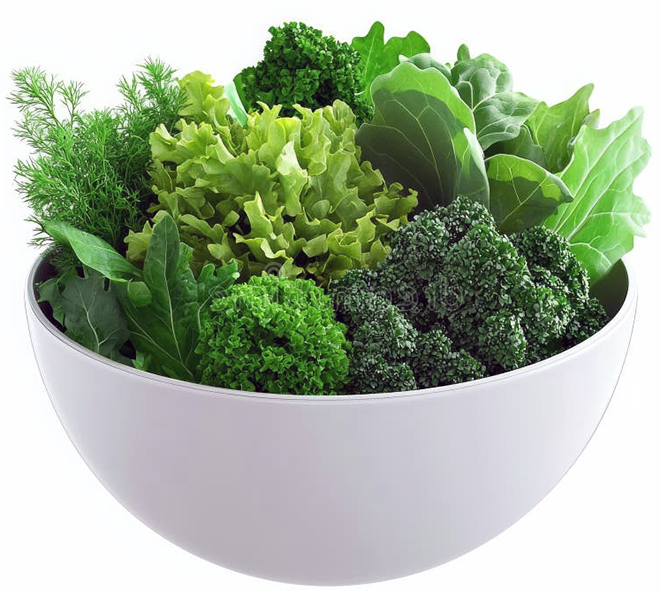 Mixed leafy greens in a bowl
Welcome to FabulousFusionFood's Leafy Greens-based Recipes Page —Leaf vegetables, also called leafy greens, vegetable greens, or simply greens, are plant leaves eaten as a vegetable. Those eaten raw in a salad can be called salad greens, whereas leaf vegetables eaten cooked can be called pot herbs.
Nearly 1,000 species of plants with edible leaves are known. Leaf vegetables most often come from short-lived herbaceous plants, such as lettuce and spinach, but also come from some woody plants. The leaves of many fodder crops (e.g. alfalfa, clover, and most grasses) are also edible by humans, but usually only as famine or processed food.
The leaves of many fodder crops are also edible by humans, but usually only as famine food. Examples include alfalfa, clover, and most grasses, including wheat and barley. Food processing, such as drying and grinding into powder or pulping and pressing for juice, may involve these crop leaves in a diet.
Leaf vegetables contain many typical plant nutrients, but being photosynthetic tissues, their vitamin K levels are particularly notable. Accordingly, users of vitamin K antagonist medications like warfarin must limit their consumption of leaf vegetables.
If leaves are cooked for food, they may be referred to in the United States as boiled greens. Leaf vegetables may be stir-fried, stewed, steamed, or consumed raw. Leaf vegetables stewed with pork is a traditional dish in soul food and Southern U.S. cuisine. They are also commonly eaten in South Asian dishes such as saag. Leafy greens can be used to wrap other ingredients into an edible package like a tortilla. Many green leafy vegetables, such as lettuce or spinach, can also be eaten raw, for example, in sandwiches or salads. A green smoothie enables large quantities of raw leafy greens to be consumed by blending the leaves with fruit and water.
The brassicaceae is a medium-sized and economically important family of flowering plants commonly known as the mustards, the crucifers, or the cabbage family. The family contains the cruciferous vegetables, including species such as Brassica oleracea (cultivated as cabbage, kale, cauliflower, broccoli and collards), Brassica rapa (turnip, Chinese cabbage, etc.), Brassica napus (rapeseed, etc.), Raphanus sativus (common radish), Armoracia rusticana (horseradish), the cut-flower Matthiola (stock) and the model organism Arabidopsis thaliana (thale cress).
This family includes important agricultural crops, particularly leafy greens, among which many vegetables such as cabbage, broccoli, cauliflower, kale, Brussels sprouts, collard greens, Savoy, kohlrabi, and gai lan (Brassica oleracea), turnip, napa cabbage, mizuna, bok choy and rapini (Brassica rapa), rocket salad/arugula (Eruca sativa), garden cress (Lepidium sativum), watercress (Nasturtium officinale) and radish (Raphanus) and a few spices like horseradish (Armoracia rusticana), wasabi (Eutrema japonicum), white, brown and black mustard (Sinapis alba, Brassica juncea and B. nigra respectively). Even if not specifically grown as leafy green vegetables, the leaves of the majority of these species can be and are consumed.
Outside the brassicaceae, the Amaranthaceae or Amaranth family are a major source of leafy greens worldwide, with the most common and well known species being Spinacia oleracea or spinach. Its leaves are a common vegetable consumed either fresh, cooked or after storage (using preservation techniques like canning, freezing, or dehydration). The taste differs considerably between cooked and raw: the high oxalate content may be reduced by blanching. So common is spinach as a leafy green that it's used as a common substitute for other local leafy greens.
Note that beetroot, a source of both an edible taproot and leafy greens. Beta vulgaris is also a member of the Amaranthaceae family, as is the closely related chard (Beta vulgaris subsp. vulgaris) which is grown for its edible stems and leafy greens.
In Africa, the leaves of cassava plants and sweet potato plants are widely consumed and leafy greens sourced from the wild are used to supplement the diet in countries across the globe.
The alphabetical list of all the leafy greens-based recipes on this site follows, (limited to 100 recipes per page). There are 3031 recipes in total:
Page 7 of 31
| Chicken Phall Origin: Britain | Chin Baung Kyaw (Fried Roselle Leaves) Origin: Myanmar | Coca-Cola Ham Origin: American |
| Chicken Rice Origin: Malaysia | Chin Hin (Sour Soup) Origin: Myanmar | Cocktail de Crevettes (Senegalese Prawn Cocktail) Origin: Senegal |
| Chicken Rice Origin: Singapore | Chinese Barbecue Sauce Origin: Fusion | Cocoa Nib Curried King Prawns Origin: American |
| Chicken Rice Origin: Christmas Island | Chinese Dumplings Origin: China | Cocodrilo en su Salsa (Crocodile in Sauce) Origin: Equatorial Guinea |
| Chicken Ruby Makhani Curry Origin: Britain | Chinese Mushroom Soup Origin: China | Coconut Chickpea Curry with Spinach Origin: Britain |
| Chicken Satay Origin: Fusion | Chinese Pickled Cabbage Origin: China | Coconut Chutney Origin: India |
| Chicken Seychelles Origin: Seychelles | Chingri Dopiaza (Bangladeshi Prawn Dopiaza) Origin: India | Coconut Collard Greens Origin: Puerto Rico |
| Chicken Sheek Kebabs Origin: Britain | Chivo Picante (Dominican Spicy Goat) Origin: Dominican Republic | Coconut Curry Origin: Seychelles |
| Chicken Stellette Soup Origin: Italy | Chmeli-Suneli Origin: Kyrgyzstan | Coconut Curry Fish Origin: Nauru |
| Chicken Stock Origin: Britain | Chole (Chickpea Curry) Origin: India | Coconut Curry Prawns With Plantains Origin: Antigua |
| Chicken Tikka Biryani Origin: India | Chop Suey Origin: Fusion | Coconut Curry Salmon Origin: Fusion |
| Chicken Tostadas Origin: Britain | Chorbah (Lamb and Vegetable Soup with Vermicelli) Origin: Tunisia | Coconut Fish Origin: Nauru |
| Chicken White Curry Origin: Sri Lanka | Chorizo and Spinach Linguine Origin: American | Cocos Islands Ayam Goreng (Malaysian-style Fried Chicken) Origin: Cocos Islands |
| Chicken with Green Mango Curry Origin: Fusion | Chou Sautés au Boeuf (Cabbage Sautéed with Beef) Origin: Cameroon | Cocos Penclawdd gyda Pasta Penne a Saws Gwin gyda Garlleg Gwyllt a Bara Lawr (Penclawdd Cockles with Penne Pasta and a Wild Garlic and Laverbread Wine Sauce) Origin: Welsh |
| Chicken, Black Bean and Sweet Potato Enchiladas Origin: America | Christmas Ham Origin: Ireland | Cocotte de poulet au cidre (Chicken Casseroled in Cider) Origin: France |
| Chicken, Herb and Lemon Pie Origin: Ireland | Christmas Island Crab Rendang Origin: Christmas Island | Coda di rospo con Barba di Frate (Monkfish with Monk's Beard Greens) Origin: Vatican City |
| Chicken, Leek and Celery Soup Origin: Britain | Christmas Island Pickled Eggs Origin: Christmas Island | Colcannon Origin: Ireland |
| Chicken-Sausage Jambalaya Origin: Cajun | Chu Chee Curry Paste Origin: Thailand | Colcannon II Origin: Ireland |
| Chickpea Curry Origin: Britain | Chubbagin Lélé et Raabie Origin: Mauritania | Colcannon Soup Origin: Ireland |
| Chickpea, Spinach and Egg Curry Origin: Britain | Chuck Rice with Gravy Origin: Liberia | Cold Pressed Ox Tongue Origin: South Africa |
| Chickweed Salad Origin: Britain | Chuletas al Limón (Lemon Pork Chops) Origin: Colombia | Collard Greens Origin: American |
| Chicons Au Gratin (Endive Rolls in a Cheese Sauce) Origin: Belgium | Chuwe Gunar (Gambian Chicken Stew) Origin: Gambia | Collard Greens with Coconut Milk Origin: East Africa |
| Chikwangue (Gabonnaise Cassava Sticks) Origin: Gabon | Ciabatta Pizza Origin: Italy | Collard Greens with Ham Hocks Origin: American |
| Chilaca Pork Stew Origin: Mexico | Cider and Apple Brined Turkey Origin: Britain | Collards and Cabbage Origin: Liberia |
| Chilaquiles Origin: Mexico | Cig Eidion Mewn Cwrw (Beef in Beer) Origin: Welsh | Collumella's Moretum Origin: Roman |
| Chile Verde (Green Chili) Origin: Mexico | Citrium (Citron) Origin: Roman | Colombo de Chèvre (Goat Colombo Curry) Origin: Sint Maarten |
| Chilean Ceviche Origin: Chile | Civet de Cerf (Venison Stew) Origin: Reunion | Colombo de Chèvre (Goat Colombo Curry) Origin: Saint-Martin |
| Chili Beans Origin: American | Civet de Sanglier aux Champignons, Châtaignes et Chorizo (Wild Boar Stew with Mushrooms, Chestnuts and Chorizo Sausage) Origin: France | Colonial Goose II Origin: New Zealand |
| Chili Con Carne Origin: Fusion | Clafoutis de Pissenlit (Dandelion Clafouti) Origin: France | Coltsfoot Greens Origin: British |
| Chili Con Carne II Origin: Fusion | Classic Coleslaw Origin: France | Comfrey Aloo Origin: Fusion |
| Chilli Garlic Lamb Origin: Britain | Clay-baked Fish Origin: Ancient | Comlek (Rabbit Casserole) Origin: Albania |
| Chilli Hot Devil Pork Origin: Sri Lanka | Clay-baked Leg of Goat Origin: Britain | Common Purslane Chimichurri Origin: Britain |
| Chimbama (Banana and Maize Meal Bread) Origin: Malawi | Clear Soup with Wakame Origin: Japan | |
| Chin Baung Kaw (Fried Roselle Leaves) Origin: Myanmar | Clementine Fish Curry Origin: Bangladesh |
Page 7 of 31