FabulousFusionFood's Leafy Greens-based Recipes 14th Page
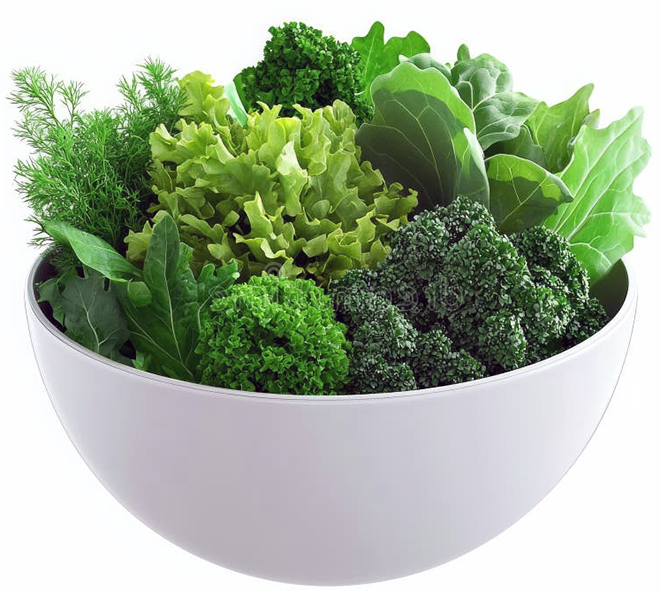 Mixed leafy greens in a bowl
Welcome to FabulousFusionFood's Leafy Greens-based Recipes Page —Leaf vegetables, also called leafy greens, vegetable greens, or simply greens, are plant leaves eaten as a vegetable. Those eaten raw in a salad can be called salad greens, whereas leaf vegetables eaten cooked can be called pot herbs.
Nearly 1,000 species of plants with edible leaves are known. Leaf vegetables most often come from short-lived herbaceous plants, such as lettuce and spinach, but also come from some woody plants. The leaves of many fodder crops (e.g. alfalfa, clover, and most grasses) are also edible by humans, but usually only as famine or processed food.
The leaves of many fodder crops are also edible by humans, but usually only as famine food. Examples include alfalfa, clover, and most grasses, including wheat and barley. Food processing, such as drying and grinding into powder or pulping and pressing for juice, may involve these crop leaves in a diet.
Leaf vegetables contain many typical plant nutrients, but being photosynthetic tissues, their vitamin K levels are particularly notable. Accordingly, users of vitamin K antagonist medications like warfarin must limit their consumption of leaf vegetables.
If leaves are cooked for food, they may be referred to in the United States as boiled greens. Leaf vegetables may be stir-fried, stewed, steamed, or consumed raw. Leaf vegetables stewed with pork is a traditional dish in soul food and Southern U.S. cuisine. They are also commonly eaten in South Asian dishes such as saag. Leafy greens can be used to wrap other ingredients into an edible package like a tortilla. Many green leafy vegetables, such as lettuce or spinach, can also be eaten raw, for example, in sandwiches or salads. A green smoothie enables large quantities of raw leafy greens to be consumed by blending the leaves with fruit and water.
The brassicaceae is a medium-sized and economically important family of flowering plants commonly known as the mustards, the crucifers, or the cabbage family. The family contains the cruciferous vegetables, including species such as Brassica oleracea (cultivated as cabbage, kale, cauliflower, broccoli and collards), Brassica rapa (turnip, Chinese cabbage, etc.), Brassica napus (rapeseed, etc.), Raphanus sativus (common radish), Armoracia rusticana (horseradish), the cut-flower Matthiola (stock) and the model organism Arabidopsis thaliana (thale cress).
This family includes important agricultural crops, particularly leafy greens, among which many vegetables such as cabbage, broccoli, cauliflower, kale, Brussels sprouts, collard greens, Savoy, kohlrabi, and gai lan (Brassica oleracea), turnip, napa cabbage, mizuna, bok choy and rapini (Brassica rapa), rocket salad/arugula (Eruca sativa), garden cress (Lepidium sativum), watercress (Nasturtium officinale) and radish (Raphanus) and a few spices like horseradish (Armoracia rusticana), wasabi (Eutrema japonicum), white, brown and black mustard (Sinapis alba, Brassica juncea and B. nigra respectively). Even if not specifically grown as leafy green vegetables, the leaves of the majority of these species can be and are consumed.
Outside the brassicaceae, the Amaranthaceae or Amaranth family are a major source of leafy greens worldwide, with the most common and well known species being Spinacia oleracea or spinach. Its leaves are a common vegetable consumed either fresh, cooked or after storage (using preservation techniques like canning, freezing, or dehydration). The taste differs considerably between cooked and raw: the high oxalate content may be reduced by blanching. So common is spinach as a leafy green that it's used as a common substitute for other local leafy greens.
Note that beetroot, a source of both an edible taproot and leafy greens. Beta vulgaris is also a member of the Amaranthaceae family, as is the closely related chard (Beta vulgaris subsp. vulgaris) which is grown for its edible stems and leafy greens.
In Africa, the leaves of cassava plants and sweet potato plants are widely consumed and leafy greens sourced from the wild are used to supplement the diet in countries across the globe.
The alphabetical list of all the leafy greens-based recipes on this site follows, (limited to 100 recipes per page). There are 3031 recipes in total:
Page 14 of 31
| Kadai Bhindi (Okra Kadai) Origin: India | Kati rolls Origin: India | King Scallop in Molee Sauce Origin: Manx |
| Kadala Curry Origin: India | Katles (Spiced Beef and Potato Cakes) Origin: Madagascar | Kiseli Kupus Origin: Croatia |
| Kadhi Origin: India | Kau See Soup (Matrimony Vine Leaf Soup with Goji Berries) Origin: China | Kishke (Stuffed Derma) Origin: Uzbekistan |
| Kaeng Khiao Wan (Thai Green Curry) Origin: Thailand | Kedjenou (Guineafowl Kedjenou) Origin: Cote dIvoire | Kishmish Vashli Tolma Origin: Armenia |
| Kaeng Phet Pet Yang (Thai Red Roast Duck Curry) Origin: Thailand | Keema and Lettuce Curry Origin: India | Kissuto Rombo (Baked Kid Goat) Origin: Sao Tome |
| Kajaik (Sudanese fish stew) Origin: South Sudan | Keema Curry Origin: Pakistan | Kitharos (Turbot) Origin: Roman |
| Kaju Butter Curry Origin: India | Kekefia (Plantain Pottage) Origin: Nigeria | Kittitian Style Conkies Origin: Saint Kitts |
| Kaju Maluwa (Cashew Curry) Origin: Sri Lanka | Kelbimbó (Brussels Sprouts Baked in Sour Cream) Origin: Hungary | Kizaca (Cassava Leaf and Peanut Stew) Origin: Angola |
| Kalderetang Manok (Chicken Caldereta) Origin: Philippines | Kelenkelen (Fish with Cassava Leaves) Origin: Cameroon | Kizaka with Palm Oil Origin: Angola |
| Kaldu (Senegalese Caldou) Origin: Senegal | Kelp Flour Origin: Britain | Kjötsúpa (Icelandic Lamb Stew) Origin: Iceland |
| Kale Brose Origin: British | Kenyan Chips Masala Origin: Kenya | Kleftiko (Lamb in the Oven) Origin: Cyprus |
| Kale in Butter Origin: Scotland | Kerala-style Snake Meat Curry Origin: India | Kleftiko (Roast Leg of Lamb) Origin: Cyprus |
| Kale with Cream Origin: Ireland | Kesar Mango Curry Origin: India | Knol Khol Poriyal (Spicy Fried Kholrabi) Origin: India |
| Kalia II (Meat and Potato Curry II) Origin: Bangladesh | Khachapuri iz Fasoli (Georgian Bean Pie) Origin: Georgia | Kobi Bhaji Origin: India |
| Kaluun iyo Bariis (Spicy Fish Sauce with Rice) Origin: Somalia | Khao Pune (Chicken Curry Noodles) Origin: Laos | Kobi Keema (Cabbage and Minced Meat Curry) Origin: India |
| Kalya de Poulet (Chicken Kalya) Origin: Mauritius | Kharcho Soup (Georgian Beef and Rice Soup) Origin: Georgia | Kobi Sabji (Cabbage Sabji) Origin: India |
| Kamuna Origin: Sierra Leone | Khasi Ko Masu (Nepali Goat Meat Curry) Origin: Nepal | Kodoyo (Fish with Baobab Leaves) Origin: Togo |
| Kang Ped Pla-dook (Red Curry with Catfish) Origin: Thailand | Khatta Meetha (Cabbage Curry) Origin: India | Kohl Westfalisch (Westphalian Cabbage II) Origin: Germany |
| Kao Lengmian (Grilled Cold Noodles) Origin: China | Khayan thee Hnat (Burmese Stuffed Aubergine Curry) Origin: Myanmar | Kohlapuri Chicken (Maharashtra Chicken Curry) Origin: India |
| Kapernschnitzel (Veal Cutlets With Capers) Origin: Germany | Khela Kalia (West Bengali Lamb Curry) Origin: India | Kokam Soup Origin: India |
| Kapr na černo (Carp in Black Sauce) Origin: Czech | Khiar Shoor (Persian Fermented Gherkins) Origin: Iran | Koki Origin: Cameroon |
| Kapuska z Kielbasa (Sauerkraut and Kielbasa) Origin: Poland | Khichuri Origin: India | Koko na Nyama (Meat with Koko) Origin: Central African Republic |
| Kapusniak (Sauerkraut Soup) Origin: Poland | Khinkali Origin: Georgia | Kokoda (Oceanian Ceviche) Origin: Fiji |
| Karahi Chicken Indian Restaurant Style Origin: Britain | Khmeli-Suneli Origin: Georgia | Kokoda (Fijian Ceviche) Origin: Fiji |
| Kare Ayam Jawa (Javanese Chicken Curry) Origin: Indonesia | Khoodra Mafrooka Origin: Sudan | Kokoda (Oceanian Ceviche) Origin: Papua New Guinea |
| Kari Ayam (Malaysian Chicken Curry) Origin: Malaysia | Khoresht-e Gheymeh (Persian Lamb Stew with Dried Limes and Split Peas) Origin: Iran | Kokoda (Oceanian Ceviche) Origin: Solomon Islands |
| Kari Ikan (Malaysian Fish Curry) Origin: Malaysia | Khowsuey Origin: Chile | Kokum Kari (Kokam Curry) Origin: India |
| Kari Kambing (Mutton or Goat Curry) Origin: Indonesia | Khumb Matar (Mushroom and Green Pea Curry) Origin: India | Kombdi Masala Origin: India |
| Kari Koko (Seychellois King Prawn and Coconut Curry) Origin: Seychelles | Kid Goat Korma Origin: Anglo-Indian | Komprek Eromba (Water Dropwort Eromba) Origin: India |
| Kari Koko Zourit (Octopus Curry) Origin: Seychelles | Kilmeny Kail Origin: Scotland | Kondré de Porc (Kondré of Pork) Origin: Cameroon |
| Kari Velouté (French Curry Sauce) Origin: France | Kilmeny Kail Origin: Scotland | Konkoé Turé Gbéli (Smoked Catfish Stew with Vegetables) Origin: Guinea |
| Karipap (Pressure Cooker Massaman Beef Curry) Origin: Malaysia | Kilo'a Origin: Tokelau | Kontomire Stew (Cocoyam Leaf Stew) Origin: Ghana |
| Karkandji (Hibiscus Sauce) Origin: Chad | King Prawn Dopiaza Curry Origin: Britain | |
| Kashmiri Masala Origin: Britain | King Prawn Pathia Origin: Britain |
Page 14 of 31