FabulousFusionFood's Leafy Greens-based Recipes 18th Page
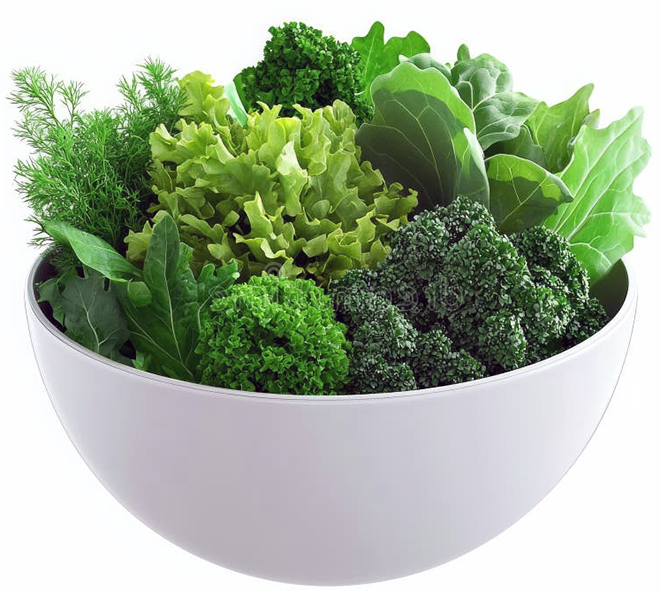 Mixed leafy greens in a bowl
Welcome to FabulousFusionFood's Leafy Greens-based Recipes Page —Leaf vegetables, also called leafy greens, vegetable greens, or simply greens, are plant leaves eaten as a vegetable. Those eaten raw in a salad can be called salad greens, whereas leaf vegetables eaten cooked can be called pot herbs.
Nearly 1,000 species of plants with edible leaves are known. Leaf vegetables most often come from short-lived herbaceous plants, such as lettuce and spinach, but also come from some woody plants. The leaves of many fodder crops (e.g. alfalfa, clover, and most grasses) are also edible by humans, but usually only as famine or processed food.
The leaves of many fodder crops are also edible by humans, but usually only as famine food. Examples include alfalfa, clover, and most grasses, including wheat and barley. Food processing, such as drying and grinding into powder or pulping and pressing for juice, may involve these crop leaves in a diet.
Leaf vegetables contain many typical plant nutrients, but being photosynthetic tissues, their vitamin K levels are particularly notable. Accordingly, users of vitamin K antagonist medications like warfarin must limit their consumption of leaf vegetables.
If leaves are cooked for food, they may be referred to in the United States as boiled greens. Leaf vegetables may be stir-fried, stewed, steamed, or consumed raw. Leaf vegetables stewed with pork is a traditional dish in soul food and Southern U.S. cuisine. They are also commonly eaten in South Asian dishes such as saag. Leafy greens can be used to wrap other ingredients into an edible package like a tortilla. Many green leafy vegetables, such as lettuce or spinach, can also be eaten raw, for example, in sandwiches or salads. A green smoothie enables large quantities of raw leafy greens to be consumed by blending the leaves with fruit and water.
The brassicaceae is a medium-sized and economically important family of flowering plants commonly known as the mustards, the crucifers, or the cabbage family. The family contains the cruciferous vegetables, including species such as Brassica oleracea (cultivated as cabbage, kale, cauliflower, broccoli and collards), Brassica rapa (turnip, Chinese cabbage, etc.), Brassica napus (rapeseed, etc.), Raphanus sativus (common radish), Armoracia rusticana (horseradish), the cut-flower Matthiola (stock) and the model organism Arabidopsis thaliana (thale cress).
This family includes important agricultural crops, particularly leafy greens, among which many vegetables such as cabbage, broccoli, cauliflower, kale, Brussels sprouts, collard greens, Savoy, kohlrabi, and gai lan (Brassica oleracea), turnip, napa cabbage, mizuna, bok choy and rapini (Brassica rapa), rocket salad/arugula (Eruca sativa), garden cress (Lepidium sativum), watercress (Nasturtium officinale) and radish (Raphanus) and a few spices like horseradish (Armoracia rusticana), wasabi (Eutrema japonicum), white, brown and black mustard (Sinapis alba, Brassica juncea and B. nigra respectively). Even if not specifically grown as leafy green vegetables, the leaves of the majority of these species can be and are consumed.
Outside the brassicaceae, the Amaranthaceae or Amaranth family are a major source of leafy greens worldwide, with the most common and well known species being Spinacia oleracea or spinach. Its leaves are a common vegetable consumed either fresh, cooked or after storage (using preservation techniques like canning, freezing, or dehydration). The taste differs considerably between cooked and raw: the high oxalate content may be reduced by blanching. So common is spinach as a leafy green that it's used as a common substitute for other local leafy greens.
Note that beetroot, a source of both an edible taproot and leafy greens. Beta vulgaris is also a member of the Amaranthaceae family, as is the closely related chard (Beta vulgaris subsp. vulgaris) which is grown for its edible stems and leafy greens.
In Africa, the leaves of cassava plants and sweet potato plants are widely consumed and leafy greens sourced from the wild are used to supplement the diet in countries across the globe.
The alphabetical list of all the leafy greens-based recipes on this site follows, (limited to 100 recipes per page). There are 3031 recipes in total:
Page 18 of 31
| Molohiya (Chicken and Jute Mallow Stew) Origin: Northern Cyprus | Mukimo (Potato and Pumpkin Mash) Origin: Kenya | Mutton Saag Origin: India |
| Molokheya au Poulet (Chicken Molokhia) Origin: Tunisia | Muland Saangi Ambat (Radish Pod Gravy) Origin: India | Mutton Sukha Curry Origin: India |
| Molokhia (Egyptian Greens Soup) Origin: Egypt | Mulet Farci à la Saint-Louisienne (Stuffed Mullet in the style of Saint-Louis) Origin: Senegal | Mutton with Peppers and Chironji Origin: India |
| Molokhia Origin: Egypt | Mullangi Sambar (White Radish Sambar) Origin: India | N'dolé (Bitterleaf Stew) Origin: Cameroon |
| Molokhia (Jute Mallow Soup) Origin: Egypt | Mullet Soup Origin: Cornwall | N'dolé avec Poisson (Fish and Bitterleaf Stew) Origin: Gabon |
| Moloukhia (Jute Leaf Stew) Origin: Niger | Mulligatawny Soup Origin: Anglo-Indian | N'dolé avec Poulet (Chicken N'Dolé) Origin: Cameroon |
| Mongolian Spice Origin: Mongolia | Mulligatawny Soup Origin: Anglo-Indian | N'dzan (Hibiscus Leaves Stew) Origin: Cameroon |
| Mongos (Mung Bean Soup with Chorizo and Squash) Origin: Philippines | Mumu Origin: Papua New Guinea | Nõgesesupp (Nettle Soup with Egg Garnish) Origin: Estonia |
| Monkfish Choo Chee Curry Origin: Britain | Murgh Makhani (Butter Chicken) Origin: India | Naatukodi Pulusu (Country Chicken Sour Curry) Origin: India |
| Moo Shu Pork Origin: China | Muriro weRape (Stir-fried Rape Greens) Origin: Zimbabwe | Nachynka Z Kapusty (Cabbage Filling For Vareniki) Origin: Ukraine |
| Mooli and Garlic Beef with Pine Nuts Origin: Australia | Musakhan (Chicken with Sumac and Caramelized Onions) Origin: Syria | Nactamales Origin: Nicaragua |
| Moongre ki Subzi (Radish Pod and Potato Sauté) Origin: India | Musakhan (Chicken with Sumac and Caramelized Onions) Origin: Jordan | Nadan Kozhi Curry Origin: India |
| Moqueca de Pixe à Baiana (Grilled Fish, Baian Style) Origin: Brazil | Musakhan (Chicken with Sumac and Caramelized Onions) Origin: Lebanon | Naengi-guk (Shepherd's Purse Soup) Origin: Korea |
| Mor Kulambu Origin: India | Musakhan (Chicken with Sumac and Caramelized Onions) Origin: Palestine | Naga Chicken Curry Origin: Britain |
| Morel Mattar Masala Origin: Fusion | Mushroom and Lesser Celandine Stroganoff Origin: Fusion | Naga Curry Origin: Fusion |
| Moretum (Garlic and Herb Pâté) Origin: Roman | Mushroom and Sea Aster Rustic Pie Origin: British | Nairobi-style Egg Curry Origin: Kenya |
| Moroccan-style Five-grain Pilaf Origin: African Fusion | Mushroom and Spinach Rustic Pie Origin: Britain | Nalli Nihari (Mutton Shank Nihari) Origin: India |
| Morogo Origin: South Africa | Mushroom Bhaji Origin: Britain | Namibian Beef Stew With Potatoes And Carrots Origin: Namibia |
| Morogo Wa Dinawa (Bean Leaf Stew) Origin: Botswana | Mushroom Catsup Origin: Fusion | Nanakusa-gayu (Seven Herb Congee) Origin: Japan |
| Morogo with Butternut Squash Origin: Botswana | Mushroom Cobbler Origin: Britain | Nandji de Boeuf (Nandji of Beef) Origin: Cote dIvoire |
| Moroho (Fried Greens) Origin: Lesotho | Mushroom Madras Origin: Britain | Nandji Ivorienne Origin: Cote dIvoire |
| Moschari me Saltsa Aspri (Veal with White Sauce) Origin: Cyprus | Mushroom Masala Origin: India | Nanohana no Karashi Miso-ae (Rape Blossoms in a Spicy Miso Sauce) Origin: Japan |
| Moshari me Patates (Veal with Potatoes) Origin: Cyprus | Mushroom Pâté en Croûte Origin: Britain | Nanohana no Shiro-ae (Tofu-dressed Rapeseed Shoots) Origin: Japan |
| Mother-in-law Masala Origin: South Africa | Mushroom Pilau Origin: Britain | Nasi Kuning (Yellow Rice) Origin: Indonesia |
| Moules Bretonnes a la Marinière (Breton Mussels Mariner-style) Origin: France | Mushroom Stock II Origin: Britain | Nasi Lemak Origin: Malaysia |
| Mouton à l'Arachide (Lamb with Peanuts) Origin: Benin | Mussel Hodi Origin: Sri Lanka | Nasi Lemak Origin: Cocos Islands |
| Mozambican Caldo Verde Origin: Mozambique | Mustacei (Must Rolls) Origin: Roman | Nasi Lemak Origin: Singapore |
| Mozambican Prego no Pão (Mozambican Prego Rolls) Origin: Mozambique | Muttai Kulambu (Tamil Nadu Egg Curry) Origin: India | Nasi Lemak Origin: Christmas Island |
| Mrs Beeton Asparagus Soup Origin: British | Mutton Dopiaza Origin: Pakistan | Nasturtium Flower Tabbolueh Origin: Fusion |
| Mrs Beeton Asparagus Soup II Origin: British | Mutton Kulambu (Pondicherry Mutton Curry) Origin: India | Nasturtium Leaf Pesto Origin: Britain |
| Mrs Beeton Cabbage Soup Origin: British | Mutton Madras Origin: India | Nasturtium Soup Origin: American |
| Mughlai Malai Kofta (Spiced Lamb Meatballs in a Creamy Sauce) Origin: Britain | Mutton Masala Origin: Sri Lanka | Nasturtium Vinegar Origin: American |
| Mugir Kosha (Chicken Kosha) Origin: India | Mutton Paya Origin: India | |
| Mujadara Origin: Israel | Mutton Rendang Origin: Indonesia |
Page 18 of 31