FabulousFusionFood's Leafy Greens-based Recipes 23rd Page
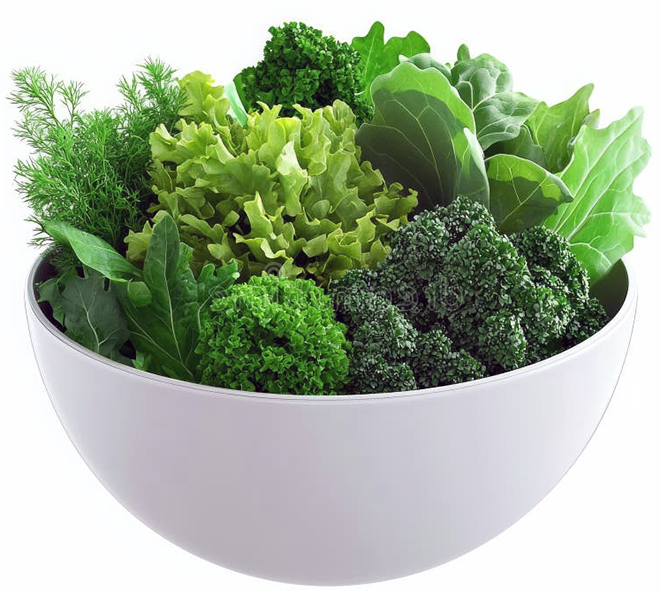 Mixed leafy greens in a bowl
Welcome to FabulousFusionFood's Leafy Greens-based Recipes Page —Leaf vegetables, also called leafy greens, vegetable greens, or simply greens, are plant leaves eaten as a vegetable. Those eaten raw in a salad can be called salad greens, whereas leaf vegetables eaten cooked can be called pot herbs.
Nearly 1,000 species of plants with edible leaves are known. Leaf vegetables most often come from short-lived herbaceous plants, such as lettuce and spinach, but also come from some woody plants. The leaves of many fodder crops (e.g. alfalfa, clover, and most grasses) are also edible by humans, but usually only as famine or processed food.
The leaves of many fodder crops are also edible by humans, but usually only as famine food. Examples include alfalfa, clover, and most grasses, including wheat and barley. Food processing, such as drying and grinding into powder or pulping and pressing for juice, may involve these crop leaves in a diet.
Leaf vegetables contain many typical plant nutrients, but being photosynthetic tissues, their vitamin K levels are particularly notable. Accordingly, users of vitamin K antagonist medications like warfarin must limit their consumption of leaf vegetables.
If leaves are cooked for food, they may be referred to in the United States as boiled greens. Leaf vegetables may be stir-fried, stewed, steamed, or consumed raw. Leaf vegetables stewed with pork is a traditional dish in soul food and Southern U.S. cuisine. They are also commonly eaten in South Asian dishes such as saag. Leafy greens can be used to wrap other ingredients into an edible package like a tortilla. Many green leafy vegetables, such as lettuce or spinach, can also be eaten raw, for example, in sandwiches or salads. A green smoothie enables large quantities of raw leafy greens to be consumed by blending the leaves with fruit and water.
The brassicaceae is a medium-sized and economically important family of flowering plants commonly known as the mustards, the crucifers, or the cabbage family. The family contains the cruciferous vegetables, including species such as Brassica oleracea (cultivated as cabbage, kale, cauliflower, broccoli and collards), Brassica rapa (turnip, Chinese cabbage, etc.), Brassica napus (rapeseed, etc.), Raphanus sativus (common radish), Armoracia rusticana (horseradish), the cut-flower Matthiola (stock) and the model organism Arabidopsis thaliana (thale cress).
This family includes important agricultural crops, particularly leafy greens, among which many vegetables such as cabbage, broccoli, cauliflower, kale, Brussels sprouts, collard greens, Savoy, kohlrabi, and gai lan (Brassica oleracea), turnip, napa cabbage, mizuna, bok choy and rapini (Brassica rapa), rocket salad/arugula (Eruca sativa), garden cress (Lepidium sativum), watercress (Nasturtium officinale) and radish (Raphanus) and a few spices like horseradish (Armoracia rusticana), wasabi (Eutrema japonicum), white, brown and black mustard (Sinapis alba, Brassica juncea and B. nigra respectively). Even if not specifically grown as leafy green vegetables, the leaves of the majority of these species can be and are consumed.
Outside the brassicaceae, the Amaranthaceae or Amaranth family are a major source of leafy greens worldwide, with the most common and well known species being Spinacia oleracea or spinach. Its leaves are a common vegetable consumed either fresh, cooked or after storage (using preservation techniques like canning, freezing, or dehydration). The taste differs considerably between cooked and raw: the high oxalate content may be reduced by blanching. So common is spinach as a leafy green that it's used as a common substitute for other local leafy greens.
Note that beetroot, a source of both an edible taproot and leafy greens. Beta vulgaris is also a member of the Amaranthaceae family, as is the closely related chard (Beta vulgaris subsp. vulgaris) which is grown for its edible stems and leafy greens.
In Africa, the leaves of cassava plants and sweet potato plants are widely consumed and leafy greens sourced from the wild are used to supplement the diet in countries across the globe.
The alphabetical list of all the leafy greens-based recipes on this site follows, (limited to 100 recipes per page). There are 3031 recipes in total:
Page 23 of 31
| Pumpkin Vine Tips Tarkari Origin: Nepal | Raspberry and Rosemary Barbecued Lamb Chops Origin: British | Rhubarb and Sweet Cicely Pudding Origin: Britain |
| Pumpkin with Nilgiri Sauce Origin: India | Rav Uppuma Origin: Sri Lanka | Ribnoye Kharcho (Salmon and Walnut Soup) Origin: Georgia |
| Pumpkin, Goat's Cheese and Kale Tart with Three-cornered Leeks Origin: Britain | Rava Idli (Semolina Idli) Origin: India | Ribollita Origin: Italy |
| Pumpkin, Goat's Cheese and Kale Tart Origin: Britain | Ravitoto sy Henakisoa (Pork with Cassava Leaves) Origin: Madagascar | Rice Bujambura Origin: Mozambique |
| Purée d'Oseille (Hibiscus Leaf Purée) Origin: Chad | Ravitoto sy Voanjo (Cassava Leaves with Peanuts) Origin: Madagascar | Rice Cakes Origin: Federated States Micronesia |
| Purslane and Potato Salad Origin: Britain | Raw Beetroot Raita Origin: India | Rice with Okra and Spinach Origin: Liberia |
| Pwdin Ffrwythau'r Berllan (Orchard Fruit Pudding) Origin: Welsh | Rayo Saag Ra Sungur Ko Masu (Pork and Spinach Curry) Origin: Nepal | Rich Minestrone Soup Origin: Britain |
| Pyi-gi Nga Kazun Ywet (Squid and Dandelions) Origin: Myanmar | Red Bean Soup with Guacamole Salsa Origin: Mexico | Risoto o Ddail Poethion a Pherlysiau Gwyllt (Risotto of Nettles and Wild Herbs) Origin: Welsh |
| Qabooli Rice Origin: Oman | Red Chicken Pakora Origin: Britain | Risotto All Accetostella (Risotto with Sorrel) Origin: Italy |
| Quatre Algues (Four-seaweed blend) Origin: France | Red Deadnettle Rice Bake Origin: Britain | Risotto All Ortica (Risotto with Nettles) Origin: Italy |
| Quesabirria Tacos Origin: Mexico | Red Lentil Bhuna Kedgeree Origin: Anglo-Indian | Risotto alla Arancia (Risotto with Orange) Origin: Italy |
| Quiche Dent-de-Lion (Swiss Dandelion Quiche) Origin: Switzerland | Red Lentil Dosa Origin: India | Risotto alle Erbe e Niputedda (Catmint and Herb Risotto) Origin: Italy |
| Quick Parsi Fish Patia Origin: India | Red Lentil Pancakes Origin: Fusion | Risotto di Girolle (Chanterele Risotto) Origin: Italy |
| Quince Tarte Tatin Origin: Britain | Red Oil Greens Origin: Liberia | Risotto of nettles and wild herbs Origin: Cape Verde |
| Quizaca (Cassava Leaf Stew) Origin: Angola | Red Oil Sweet Potato Greens Origin: Liberia | Risotto Rucola (Wild Rocket Risotto) Origin: Italy |
| Quzi (Iraqi Lamb over Rice) Origin: Iraq | Red Orach Soup Origin: Britain | Riz au Gras (Ivorian Fat Rice) Origin: Cote dIvoire |
| Rôti de Lapin aux Herbes (Roast Rabbit with Herbs) Origin: France | Red Saag and Omra Origin: Anglo-Indian | Riz au Gras Ivorienne (Ivorian Fat Rice) Origin: Cote dIvoire |
| Rabbit Stew with Mallow Cheeses Origin: British | Red Wine Lamb Skewers Origin: Britain | Riz Créole (Creole Rice) Origin: Guadeloupe |
| Rad Na Moo (Pork with Noodles in Gravy) Origin: Thailand | Red Zhug (Yemenite Hot Sauce) Origin: Yemen | Riz Gras du Burkinabé (Burkina Faso Fat Rice) Origin: Burkina Faso |
| Radicchio Leaves Stuffed with Field Mushrooms Origin: Britain | Red-red with Spiced Plantains Origin: Ghana | Riz Jollof du Niger (Niger-style Jollof Rice) Origin: Niger |
| Ragoût aux épinards (Spinach Stew) Origin: Central African Republic | Redbush Tea Origin: Botswana | Roast Chicken Noodle Soup with Chopsuey Greens Origin: Fusion |
| Ragoût de Chévre au Riz (Goat Stew with Rice) Origin: DR-Congo | Reedmace Pollen Bread Origin: France | Roast Cod with Sea Beans and Oyster Origin: Canada |
| Ragout d'Igname (Yam Porridge) Origin: Burkina Faso | Relajo (Salvadorean Red Chilli Sauce) Origin: El Salvador | Roast Duck with Orange Salad Origin: Britain |
| Ragù d'anatra (Venetian Duck Ragu) Origin: Italy | Rendang Curry Paste Origin: Fusion | Roast Fennel Mayonnaise Origin: British |
| Railway Lamb Curry Origin: Anglo-Indian | Rendang Fish Curry Origin: Fusion | Roast Goose with Sour Cherry Sauce Origin: Britain |
| Rainkohl und Grünkern-Suppe (Nipplewort and Green Spelt Soup) Origin: Germany | Renga Renga (Burundi Sweet Potato Leaf Stew) Origin: Burundi | Roast Haunch of Venison Origin: Britain |
| Rajma (Kidney Bean Curry) Origin: Bangladesh | Reshmi Kebab Origin: Britain | Roast Leg of Lamb with Moroccan Spices Origin: African Fusion |
| Ramson and Sea Sandwort Tzatziki Origin: Britain | Restaurant-style Butter Chicken Origin: India | Roast Pork with Cider Gravy Origin: Britain |
| Ramson Purée Origin: Britain | Restaurant-style Monkfish Curry Origin: Britain | Roast Pumpkin on Lamb's Lettuce Origin: Britain |
| Rangood na Vaal (Gujarati Butter Bean Curry) Origin: India | Restaurant-style Naan Bread Origin: India | Roast Rump of Lamb with Lamb's Lettuce Origin: Britain |
| Raparperi ja Spruce Vihje juoma (Rhubarb and Spruce Tip Drink) Origin: Finland | Restaurant-style Vegetable Dum Biryani Origin: Britain | Roast Turkey with Herbs Origin: Britain |
| Ras el hanout Origin: North Africa | Reuben Sandwich Origin: American | Roast Wild Boar Origin: Britain |
| Rasam Origin: Southern India | Rezala (Lamb Curry) Origin: Bangladesh | |
| Rasam Powder Origin: India | Rhubarb and Spruce Tip Crumble Origin: Britain |
Page 23 of 31