FabulousFusionFood's Leafy Greens-based Recipes 29th Page
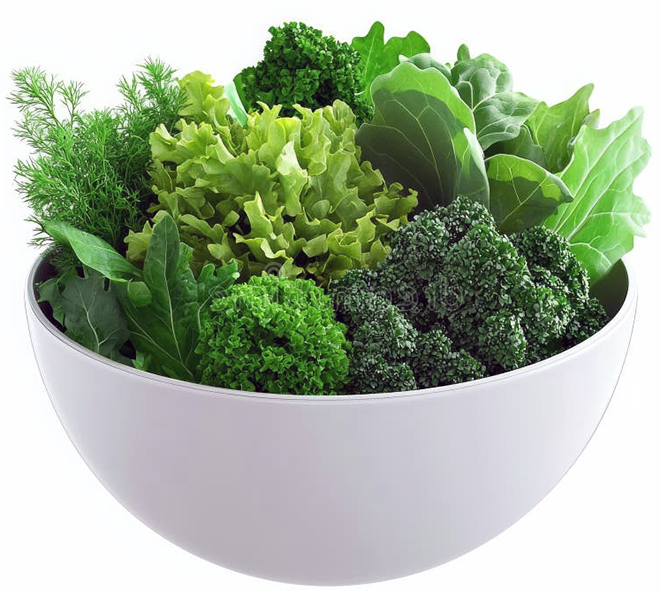 Mixed leafy greens in a bowl
Welcome to FabulousFusionFood's Leafy Greens-based Recipes Page —Leaf vegetables, also called leafy greens, vegetable greens, or simply greens, are plant leaves eaten as a vegetable. Those eaten raw in a salad can be called salad greens, whereas leaf vegetables eaten cooked can be called pot herbs.
Nearly 1,000 species of plants with edible leaves are known. Leaf vegetables most often come from short-lived herbaceous plants, such as lettuce and spinach, but also come from some woody plants. The leaves of many fodder crops (e.g. alfalfa, clover, and most grasses) are also edible by humans, but usually only as famine or processed food.
The leaves of many fodder crops are also edible by humans, but usually only as famine food. Examples include alfalfa, clover, and most grasses, including wheat and barley. Food processing, such as drying and grinding into powder or pulping and pressing for juice, may involve these crop leaves in a diet.
Leaf vegetables contain many typical plant nutrients, but being photosynthetic tissues, their vitamin K levels are particularly notable. Accordingly, users of vitamin K antagonist medications like warfarin must limit their consumption of leaf vegetables.
If leaves are cooked for food, they may be referred to in the United States as boiled greens. Leaf vegetables may be stir-fried, stewed, steamed, or consumed raw. Leaf vegetables stewed with pork is a traditional dish in soul food and Southern U.S. cuisine. They are also commonly eaten in South Asian dishes such as saag. Leafy greens can be used to wrap other ingredients into an edible package like a tortilla. Many green leafy vegetables, such as lettuce or spinach, can also be eaten raw, for example, in sandwiches or salads. A green smoothie enables large quantities of raw leafy greens to be consumed by blending the leaves with fruit and water.
The brassicaceae is a medium-sized and economically important family of flowering plants commonly known as the mustards, the crucifers, or the cabbage family. The family contains the cruciferous vegetables, including species such as Brassica oleracea (cultivated as cabbage, kale, cauliflower, broccoli and collards), Brassica rapa (turnip, Chinese cabbage, etc.), Brassica napus (rapeseed, etc.), Raphanus sativus (common radish), Armoracia rusticana (horseradish), the cut-flower Matthiola (stock) and the model organism Arabidopsis thaliana (thale cress).
This family includes important agricultural crops, particularly leafy greens, among which many vegetables such as cabbage, broccoli, cauliflower, kale, Brussels sprouts, collard greens, Savoy, kohlrabi, and gai lan (Brassica oleracea), turnip, napa cabbage, mizuna, bok choy and rapini (Brassica rapa), rocket salad/arugula (Eruca sativa), garden cress (Lepidium sativum), watercress (Nasturtium officinale) and radish (Raphanus) and a few spices like horseradish (Armoracia rusticana), wasabi (Eutrema japonicum), white, brown and black mustard (Sinapis alba, Brassica juncea and B. nigra respectively). Even if not specifically grown as leafy green vegetables, the leaves of the majority of these species can be and are consumed.
Outside the brassicaceae, the Amaranthaceae or Amaranth family are a major source of leafy greens worldwide, with the most common and well known species being Spinacia oleracea or spinach. Its leaves are a common vegetable consumed either fresh, cooked or after storage (using preservation techniques like canning, freezing, or dehydration). The taste differs considerably between cooked and raw: the high oxalate content may be reduced by blanching. So common is spinach as a leafy green that it's used as a common substitute for other local leafy greens.
Note that beetroot, a source of both an edible taproot and leafy greens. Beta vulgaris is also a member of the Amaranthaceae family, as is the closely related chard (Beta vulgaris subsp. vulgaris) which is grown for its edible stems and leafy greens.
In Africa, the leaves of cassava plants and sweet potato plants are widely consumed and leafy greens sourced from the wild are used to supplement the diet in countries across the globe.
The alphabetical list of all the leafy greens-based recipes on this site follows, (limited to 100 recipes per page). There are 3031 recipes in total:
Page 29 of 31
| Three-cornered Leek Quiche Origin: Britain | Tomato Rice Origin: India | Turkey Curry Origin: Britain |
| Tiebe (Rice and Meat with Vegetables) Origin: Togo | Tomato Smoor Origin: South Africa | Turkey Curry with Yams Origin: Fusion |
| Tiep bou wekh (White Senegalese Rice and Fish) Origin: Senegal | Torta di Acelga (Spinach Pie) Origin: Gibraltar | Turkey Keema Curry Origin: Britain |
| Tiepbouyape Origin: Senegal | Toto-kena Misy Anana sy Voanjo (Greens with Peanuts and Minced Beef) Origin: Madagascar | Turkey Piccata on Grilled Rolls Origin: American |
| Tiga Dégué (Beef in Peanut Sauce) Origin: Mali | Tourta de Blea (Chard Pie) Origin: Monaco | Turkey Rendang Origin: Fusion |
| Tigadèguèna II (Chicken and Vegetable Peanut Stew) Origin: Mali | Towuk Shashlyk (Turkmenistan Chicken Shashlik) Origin: Turkmenistan | Turkey Steaks with Redcurrant Glaze Origin: Britain |
| Tinga de Pollo (Chicken Tinga) Origin: Mexico | Traditional Chicken Dopiaza Origin: India | Turks and Caicos Boil Fish and Grits Origin: Turks Caicos |
| Tirana Romaine Salad Origin: Albania | Traditional Chicken Liver Parfait Origin: Britain | Turks and Caicos Coconut Chicken Curry Origin: Turks Caicos |
| Tirk Prahok (Fish Pickle Sauce) Origin: Cambodia | Traditional Coleslaw Origin: Britain | Turks and Caicos Jerk Seasoning Paste Origin: Turks Caicos |
| Tisanam Barricam (Barley Soup with Dried Vegetables) Origin: Roman | Traditional Historic Bobotie Origin: South Africa | Tuscan Sausage Gnocchi Origin: Britain |
| Tjauw Min (Chowmein) Origin: Suriname | Traditional Pawpaw Salad Origin: Cook Islands | Tuvaluan Fish Curry Origin: Tuvalu |
| Tlayuda Origin: Mexico | Traditional Roast Grouse Origin: Scotland | Uburobe (Plantain Sticks) Origin: Burundi |
| To bake an Olyve-Pye Origin: Britain | Traditional Thai Jungle Curry Origin: Thailand | Ujeni Ndiwo Origin: Malawi |
| To boil a chine of veal, or a chicken in sharp broth with herbs Origin: Britain | Traybake Chicken Nachos Origin: Britain | Ukpo Origin: Nigeria |
| To pickle Samphire, Broom-buds, Kitkeys, Crucifix Pease, Purslane, or the like Otherways. Origin: Britain | Traybake Keralan Fish Curry Origin: Fusion | Ukrainian Borscht Origin: Ukraine |
| To Sowce a Pigge (Collar of Brawn) Origin: England | Traybake Sea Bass with Asparagus and New Potatoes Origin: Britain | Ukrainian Sausage from Lviv Origin: Ukraine |
| Tobago Curry Crab and Dumplings Origin: India | Trey Cham Hoy Chia Mui Spee Chrout (Steamed Fish with Sour Mustard Greens) Origin: Cambodia | Umpach-zashchi (Flour Soup) Origin: Turkmenistan |
| Togolaise Juis de Gingembre (Togolese Ginger Juice) Origin: Togo | Tricolour Pilau Rice Origin: India | Umu Rapa Nui Origin: Easter Island |
| Tolma (Cabbage Stuffed with Lamb) Origin: Georgia | Trini Curry Powder Origin: Trinidad | Unakkameen Thenga Chammanthy (Dry Fish Chutney) Origin: India |
| Tom Yam Goong 1 Origin: Thailand | Trini Sweet and Sour Mango Relish Origin: Trinidad | Untú de Peixe (Deep-fried Fish Balls) Origin: Guinea-Bissau |
| Tom Yam Goong 2 Origin: Thailand | Trinidad Chicken Pelau Origin: Trinidad | Urap Sayur (Blanched Vegetable Salad with Spiced Coconut Topping) Origin: Indonesia |
| Tom Yam Goong Maenam Origin: Thailand | Trinidad Crab and Callaloo Origin: Trinidad | Urticae (Nettles) Origin: Roman |
| Tom Yum Gai (Hot and Sour Chicken Soup) Origin: Thailand | Trinidad Paime Origin: Trinidad | Uruguayan Salsa Criolla Origin: Uruguay |
| Tom Yum Hed (Mushroom Tom Yum) Origin: Thailand | Trinidadian Curry Duck Origin: Trinidad | Uruguayan Tuco Origin: Uruguay |
| Tom Yum Het Mangsawirat (Mushroom and Lemongrass Soup) Origin: Thailand | Trinidadian Pepper Pot Origin: Trinidad | Usilampatti Kozhi Kuzhambu (Chicken Kuzhambu) Origin: India |
| Tom Yum Pla (Hot and Sour Fish Soup) Origin: Thailand | Trinxat (Cabbage and Potato Cake) Origin: Andorra | Utka s Kapustoj i Brusnichnym (Duck with Cabbage and Cowberry) Origin: Russia |
| Tom Yum Talay (Fish Stew) Origin: Thailand | Tritura, unde Perfundes Caccabinam (The Ground Seasonings that you Add to the Small Casseole) Origin: Roman | V'sachy (Pumpkin Leaf Stew) Origin: Zambia |
| Tomatillo and Beef Curry Origin: Fusion | Trout Kedgeree Origin: Britain | Vaca Atolada (Beef Ribs with Cassava) Origin: Brazil |
| Tomato and Bladderwrack Sauce Origin: Fusion | Tuh'u (Mesopotamian Lamb and Beetroot Stew) Origin: Mesopotamia | Vadouvan Curry Powder Origin: France |
| Tomato and Egg Curry Origin: India | Tukasu (Mutton Stew with Dumplings) Origin: Mali | Valentine Flower Salad with Champagne Vinaigrette Origin: Britain |
| Tomato and Red Bell Pepper Soup Origin: Britain | Tuna with Safran and Coconut Milk (Tuna with Cumin and Coconut Milk) Origin: Seychelles | Valerian Hot Chocolate Origin: Britain |
| Tomato Basil Salad with Mozzarella Cheese Origin: British | Tunisian Vegetable Couscous Origin: Tunisia | Varutharacha Kozhi Curry (Varutharacha Chicken Curry) Origin: India |
| Tomato Keema (Tomato and Beef Curry) Origin: Pakistan | Tunu Supu (Tuna Soup) Origin: Vanuatu | |
| Tomato Ketchup Origin: Britain | Turbot in Kerala Red Curry Sauce Origin: India |
Page 29 of 31