FabulousFusionFood's Leafy Greens-based Recipes 28th Page
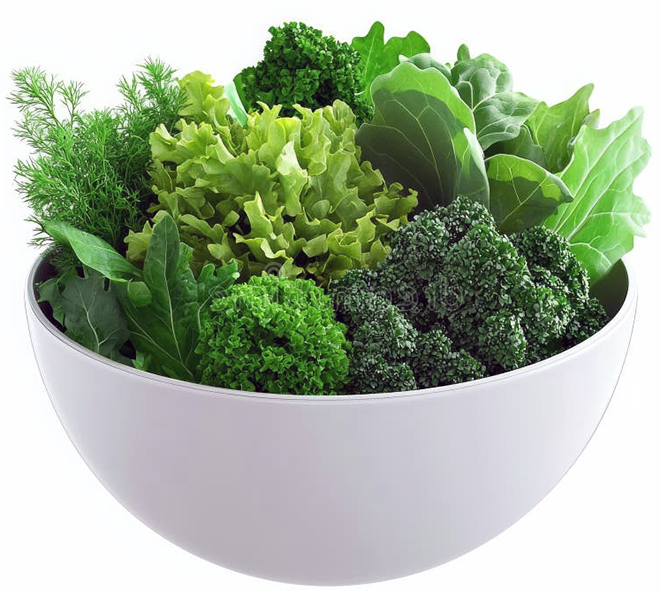 Mixed leafy greens in a bowl
Welcome to FabulousFusionFood's Leafy Greens-based Recipes Page —Leaf vegetables, also called leafy greens, vegetable greens, or simply greens, are plant leaves eaten as a vegetable. Those eaten raw in a salad can be called salad greens, whereas leaf vegetables eaten cooked can be called pot herbs.
Nearly 1,000 species of plants with edible leaves are known. Leaf vegetables most often come from short-lived herbaceous plants, such as lettuce and spinach, but also come from some woody plants. The leaves of many fodder crops (e.g. alfalfa, clover, and most grasses) are also edible by humans, but usually only as famine or processed food.
The leaves of many fodder crops are also edible by humans, but usually only as famine food. Examples include alfalfa, clover, and most grasses, including wheat and barley. Food processing, such as drying and grinding into powder or pulping and pressing for juice, may involve these crop leaves in a diet.
Leaf vegetables contain many typical plant nutrients, but being photosynthetic tissues, their vitamin K levels are particularly notable. Accordingly, users of vitamin K antagonist medications like warfarin must limit their consumption of leaf vegetables.
If leaves are cooked for food, they may be referred to in the United States as boiled greens. Leaf vegetables may be stir-fried, stewed, steamed, or consumed raw. Leaf vegetables stewed with pork is a traditional dish in soul food and Southern U.S. cuisine. They are also commonly eaten in South Asian dishes such as saag. Leafy greens can be used to wrap other ingredients into an edible package like a tortilla. Many green leafy vegetables, such as lettuce or spinach, can also be eaten raw, for example, in sandwiches or salads. A green smoothie enables large quantities of raw leafy greens to be consumed by blending the leaves with fruit and water.
The brassicaceae is a medium-sized and economically important family of flowering plants commonly known as the mustards, the crucifers, or the cabbage family. The family contains the cruciferous vegetables, including species such as Brassica oleracea (cultivated as cabbage, kale, cauliflower, broccoli and collards), Brassica rapa (turnip, Chinese cabbage, etc.), Brassica napus (rapeseed, etc.), Raphanus sativus (common radish), Armoracia rusticana (horseradish), the cut-flower Matthiola (stock) and the model organism Arabidopsis thaliana (thale cress).
This family includes important agricultural crops, particularly leafy greens, among which many vegetables such as cabbage, broccoli, cauliflower, kale, Brussels sprouts, collard greens, Savoy, kohlrabi, and gai lan (Brassica oleracea), turnip, napa cabbage, mizuna, bok choy and rapini (Brassica rapa), rocket salad/arugula (Eruca sativa), garden cress (Lepidium sativum), watercress (Nasturtium officinale) and radish (Raphanus) and a few spices like horseradish (Armoracia rusticana), wasabi (Eutrema japonicum), white, brown and black mustard (Sinapis alba, Brassica juncea and B. nigra respectively). Even if not specifically grown as leafy green vegetables, the leaves of the majority of these species can be and are consumed.
Outside the brassicaceae, the Amaranthaceae or Amaranth family are a major source of leafy greens worldwide, with the most common and well known species being Spinacia oleracea or spinach. Its leaves are a common vegetable consumed either fresh, cooked or after storage (using preservation techniques like canning, freezing, or dehydration). The taste differs considerably between cooked and raw: the high oxalate content may be reduced by blanching. So common is spinach as a leafy green that it's used as a common substitute for other local leafy greens.
Note that beetroot, a source of both an edible taproot and leafy greens. Beta vulgaris is also a member of the Amaranthaceae family, as is the closely related chard (Beta vulgaris subsp. vulgaris) which is grown for its edible stems and leafy greens.
In Africa, the leaves of cassava plants and sweet potato plants are widely consumed and leafy greens sourced from the wild are used to supplement the diet in countries across the globe.
The alphabetical list of all the leafy greens-based recipes on this site follows, (limited to 100 recipes per page). There are 3031 recipes in total:
Page 28 of 31
| Sweet Cicely Ice Cream Origin: American | Tandoori King Prawns Origin: Britain | Thai Red Curry Paste Origin: Thailand |
| Sweet Coconut Pumpkin with Pandan Leaves Origin: Kiribati | Tandoori Paste Origin: Fusion | Thai Red Curry Paste Origin: Thailand |
| Sweet Dock Pudding Origin: England | Tandoori Roast Chicken Origin: Fusion | Thai Red Jackfruit Curry Origin: Fusion |
| Sweet Maple Chicken Origin: Canada | Tandoori Roast Guinea Fowl Origin: Fusion | Thai Shrimp Soup Origin: Thailand |
| Sweet Potato and Peanut Curry Origin: Fusion | Tangy Pineapple Cabbage Origin: Jamaica | Thai-style Chicken Skewers Origin: Fusion |
| Sweet Woodruff and Marzipan Cake Origin: Britain | Tansy Cordial Origin: Britain | Thai-style Curry Powder Origin: Thailand |
| Sweet Woodruff Schnapps Origin: Denmark | Tapenade Monegasque (Monaco-style Tapenade) Origin: Monaco | Thai-style Nettle and Oyster Mushroom Curry Origin: Britain |
| Sweet-pickled Fiddleheads Origin: Canada | Tapioca Origin: Nigeria | Thai-style Red Curry of Beef, Bamboo and Apple Origin: Asian Fusion |
| Székely Gulyas (Székely Goulash) Origin: Hungary | Tapioca Flour Bread Origin: Britain | Thai-style Red Rock Salmon Curry Origin: Britain |
| Szalonnas Savanyu K'pszta (Sauerkraut with Bacon) Origin: Hungary | Tariwala Murgh (Home-style Chicken Curry) Origin: India | Thai-style Red Seafood Curry Origin: Fusion |
| Szechuan Pumpkin Soup Origin: China | Taro aux Fruits de Mer (Taro with Seafood) Origin: Cote dIvoire | Thai-style Turkey Leftovers Curry Origin: Fusion |
| Szeged Gulyasz (Pork Goulash with Sauerkraut) Origin: Czech | Taro Leaf Stew Origin: Pitcairn Islands | Thakkali Meen Kari (Fish Tomato Curry) Origin: India |
| Ta'amia (Egyptian Falafel) Origin: Egypt | Tarragon Turkey Origin: Britain | Tharoi Thongba (Water Snail Curry) Origin: India |
| Tabouleh (Parsley and Bulgur Wheat Salad) Origin: Middle East | Tartare d'algues fraîches (Tartare of Fresh Seaweed) Origin: France | The Ultimate Chilli Con Carne Origin: Fusion |
| Tacos de Carnitas (Pulled Pork Tacos) Origin: Mexico | Tavče Gravče Origin: North Macedonia | The Ultimate Sharing Nachos Origin: Fusion |
| Tacos de Carnitas (Pulled Pork Tacos) Origin: Mexico | Tawa Paneer Origin: India | Thengai Chammanthi (Kerala Coconut Chammanthi) Origin: India |
| Tacos de Comida Callejera (Mexican Street-food Tacos) Origin: Mexico | Terrine Mauritanienne (Mauritanian Terrine) Origin: Mauritania | Thepla Origin: India |
| Tadjine Zdef (Mutton and Cheese Tagine) Origin: Benin | Terrine Verte (Wild Greens Terrine) Origin: Switzerland | Thiébouyapp Origin: Senegal |
| Tagine de Daurade (Tagine of Sea Bream) Origin: Morocco | Tex-Mex Meatball Tacos Origin: America | Thiéré Bassi (Millet Couscous Stew) Origin: Senegal |
| Tagine of Yam, Carrots and Prunes Origin: Algeria | Texas Caviar Origin: American | Thiebou Kéthiakh (Rice with Dried Fish, Seafood and Vegetables) Origin: Senegal |
| Tagliatelle con gli Stridoli (Tagliatelle with Bladder Campion) Origin: Italy | Thai Chicken and Burdock Curry Origin: Fusion | Thieboudienne (Fish in the Manner of Dakar) Origin: Senegal |
| Tagliatelle con gli Stridoli (Tagliatelle with Bladder Campion) Origin: San Marino | Thai Chicken Soup with Ginger and Lime Origin: Thailand | Thiéré ak Mboum (Couscous with Moringa Sauce) Origin: Senegal |
| Tahitian Fish Origin: Norfolk Island | Thai Chilli Ice Cream Origin: Fusion | Thiou a la Viande (Senegalese Beef Stew) Origin: Senegal |
| Taitei cu Varza (Noodles with Shredded Cabbage) Origin: Romania | Thai Chilli Sorbet Origin: Fusion | Thiou Curry au Boeuf (Senegalese Beef Curry) Origin: Senegal |
| Taiwan Pickled Cabbage Origin: Taiwan | Thai Coconut and Rainbow-Pepper Chicken Soup Origin: Thailand | Thoran Origin: India |
| Taiwanese Beef Noodle Soup Origin: Taiwan | Thai Green Curried Cod Origin: Fusion | Thorion ex Oryza (Goats' Cheese with Rice in Vine Leaves) Origin: Roman |
| Tajin Sibnekh (Chicken and Egg Tagine) Origin: Tunisia | Thai Green Curried Dandelion Roots and Chicken Origin: Malaysia | Thorion Tarikhous (Mackerel-stuffed Vine Leaves) Origin: Roman |
| Tajine de Poulet au Miel et Abricots (Chicken Tagine with Honey and Apricots) Origin: Morocco | Thai Green Curry of Prawn and Fish Origin: Thailand | Three Cheese and Artichoke Pizza Origin: Italy |
| Tajine el Bey (Spinach and Rocotta Tagine) Origin: Algeria | Thai Green Curry Paste Origin: Thailand | Three Cheese Ranch Dressing Origin: American |
| Tam Som (Lao Green Papaya Salad) Origin: Laos | Thai Green Curry Paste II Origin: Thailand | Three-cornered Leek Giardiniera Origin: Britain |
| Tamarillo and Beef Curry Origin: Fusion | Thai Green Curry with Chicken of the Woods Origin: Britain | Three-cornered Leek Pesto Origin: Britain |
| Tamil Nadu Sambar Curry Origin: India | Thai Hake Bites Origin: South Africa | Three-cornered Leek Purée Origin: Britain |
| Tandoori Garlic Chilli Chicken Origin: Britain | Thai Mango Fish Curry Origin: Thailand | |
| Tandoori Gobi (Baked Tandoori-spiced Cauliflower) Origin: India | Thai Red Curry Duck Origin: Thailand |
Page 28 of 31