FabulousFusionFood's Leafy Greens-based Recipes 24th Page
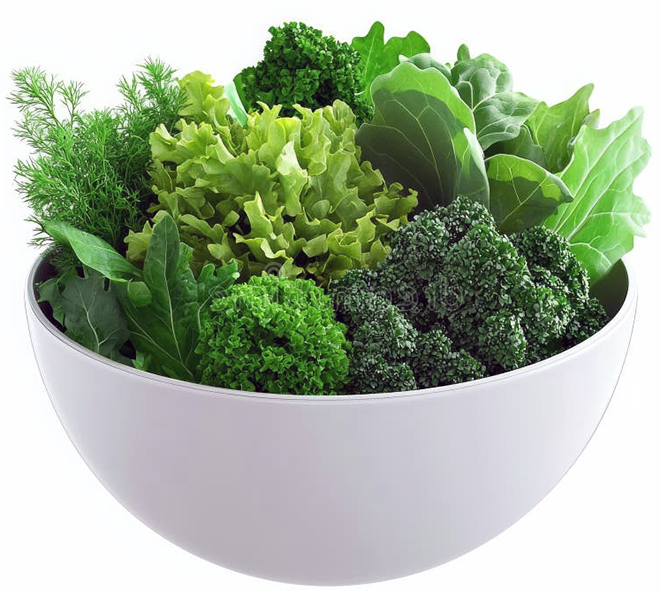 Mixed leafy greens in a bowl
Welcome to FabulousFusionFood's Leafy Greens-based Recipes Page —Leaf vegetables, also called leafy greens, vegetable greens, or simply greens, are plant leaves eaten as a vegetable. Those eaten raw in a salad can be called salad greens, whereas leaf vegetables eaten cooked can be called pot herbs.
Nearly 1,000 species of plants with edible leaves are known. Leaf vegetables most often come from short-lived herbaceous plants, such as lettuce and spinach, but also come from some woody plants. The leaves of many fodder crops (e.g. alfalfa, clover, and most grasses) are also edible by humans, but usually only as famine or processed food.
The leaves of many fodder crops are also edible by humans, but usually only as famine food. Examples include alfalfa, clover, and most grasses, including wheat and barley. Food processing, such as drying and grinding into powder or pulping and pressing for juice, may involve these crop leaves in a diet.
Leaf vegetables contain many typical plant nutrients, but being photosynthetic tissues, their vitamin K levels are particularly notable. Accordingly, users of vitamin K antagonist medications like warfarin must limit their consumption of leaf vegetables.
If leaves are cooked for food, they may be referred to in the United States as boiled greens. Leaf vegetables may be stir-fried, stewed, steamed, or consumed raw. Leaf vegetables stewed with pork is a traditional dish in soul food and Southern U.S. cuisine. They are also commonly eaten in South Asian dishes such as saag. Leafy greens can be used to wrap other ingredients into an edible package like a tortilla. Many green leafy vegetables, such as lettuce or spinach, can also be eaten raw, for example, in sandwiches or salads. A green smoothie enables large quantities of raw leafy greens to be consumed by blending the leaves with fruit and water.
The brassicaceae is a medium-sized and economically important family of flowering plants commonly known as the mustards, the crucifers, or the cabbage family. The family contains the cruciferous vegetables, including species such as Brassica oleracea (cultivated as cabbage, kale, cauliflower, broccoli and collards), Brassica rapa (turnip, Chinese cabbage, etc.), Brassica napus (rapeseed, etc.), Raphanus sativus (common radish), Armoracia rusticana (horseradish), the cut-flower Matthiola (stock) and the model organism Arabidopsis thaliana (thale cress).
This family includes important agricultural crops, particularly leafy greens, among which many vegetables such as cabbage, broccoli, cauliflower, kale, Brussels sprouts, collard greens, Savoy, kohlrabi, and gai lan (Brassica oleracea), turnip, napa cabbage, mizuna, bok choy and rapini (Brassica rapa), rocket salad/arugula (Eruca sativa), garden cress (Lepidium sativum), watercress (Nasturtium officinale) and radish (Raphanus) and a few spices like horseradish (Armoracia rusticana), wasabi (Eutrema japonicum), white, brown and black mustard (Sinapis alba, Brassica juncea and B. nigra respectively). Even if not specifically grown as leafy green vegetables, the leaves of the majority of these species can be and are consumed.
Outside the brassicaceae, the Amaranthaceae or Amaranth family are a major source of leafy greens worldwide, with the most common and well known species being Spinacia oleracea or spinach. Its leaves are a common vegetable consumed either fresh, cooked or after storage (using preservation techniques like canning, freezing, or dehydration). The taste differs considerably between cooked and raw: the high oxalate content may be reduced by blanching. So common is spinach as a leafy green that it's used as a common substitute for other local leafy greens.
Note that beetroot, a source of both an edible taproot and leafy greens. Beta vulgaris is also a member of the Amaranthaceae family, as is the closely related chard (Beta vulgaris subsp. vulgaris) which is grown for its edible stems and leafy greens.
In Africa, the leaves of cassava plants and sweet potato plants are widely consumed and leafy greens sourced from the wild are used to supplement the diet in countries across the globe.
The alphabetical list of all the leafy greens-based recipes on this site follows, (limited to 100 recipes per page). There are 3031 recipes in total:
Page 24 of 31
| Roasted Beef Fillet Origin: Britain | Sabse Borani (Fried Spinach with Yoghurt) Origin: Afghanistan | Salsa de Espinacosas (Spinach Salsa) Origin: Equatorial Guinea |
| Roasted fish with Eluit el Tuu Origin: Palau | Sabz Jaipuri (Vegetable Jaipuri Curry) Origin: India | Salsa de Frutas (Fruit Salsa) Origin: Mexico |
| Roasted Kalettes with Basa Fillets and Anchovies Origin: Britain | Sabzi Gutab (Green Gutab) Origin: Azerbaijan | Salsa de Mango (Mexican Mango Salsa) Origin: Mexico |
| Rock Samphire Salsa Verde Origin: Britain | Sabzi Polo (Herbed Rice) Origin: Iran | Salsa de Tomatillo (Tomatillo Salsa) Origin: Mexico |
| Rock-baked Savoury Bannocks Origin: Britain | Sabzi Polo ba Mahi (Fried Fish with Saffron and Herb Rice) Origin: Iran | Salsa Pebre Origin: Chile |
| Romazava Origin: Madagascar | Sach Ko Tirk Prahok (Beef in Fish Sauce) Origin: Cambodia | Salsa Verde de Tomatillo (Tomatillo Salsa Verde) Origin: Mexico |
| Roosterkoek with Filling II Origin: South Africa | Saffe (Mutton and Cassava Leaf Stew) Origin: Sierra Leone | Salsify and Apple Soup Origin: England |
| Rosatum Siue Rosa Sic Facies (Rose wine, made without roses) Origin: Roman | Saffron Chicken Korma with Wholemeal Paratha Origin: India | Salsify Fritters Origin: Britain |
| Rose Geranium Scented Sugar Origin: South Africa | Saffron Prawn Both Origin: Britain | Salt and Pepper Squid Rings Origin: South Africa |
| Rosebay Willowherb, Ramson and Spinach Soup Origin: Britain | Sahina Origin: Trinidad | Salted Mustard Greens Origin: China |
| Rosemary-scented Lamb Origin: Britain | Saint Lucia Curried Goat Origin: Saint Lucia | Saltfish Accra Origin: Barbados |
| Rosto Vodhinoo (Beef Pot Roast) Origin: Cyprus | Saint Lucia Paime Origin: Saint Lucia | Saltfish Buljolde Origin: Antigua |
| Rourou Balls Origin: Fiji | Saint Lucian Bouillon Origin: Saint Lucia | Saltfish Buljolde Origin: British Virgin Islands |
| Royal Beef Biryani Origin: India | Saint Vincent Curry Goat Origin: Saint Vincent | Saltimbocca alla Romana (Fried Veal Strips with Butter, Ham and Sage) Origin: Vatican City |
| Rukau Origin: Cook Islands | Saint Vincent Pig Feet Souse Origin: Saint Vincent | Sambal Kacang (Indonesian Peanut Sauce) Origin: Indonesia |
| Rukau Origin: Tuvalu | Saint-Martin Whelk Soup Origin: Saint-Martin | Sambar Podi (Sambar Powder) Origin: India |
| Rukau Origin: Tokelau | Saka saka (Congolese Cassava Leaves) Origin: Congo | Sambol Telur (Egg Sambol) Origin: Maldives |
| Rumbledethumps Origin: Scotland | Saka Saka du Mali (Malian Sweet Potato Leaf Sauce) Origin: Mali | Samlor Korko (Cambodian 'Mixing Soup') Origin: Cambodia |
| Rusks with Chickpea Leaven Origin: Cyprus | Saka-saka (Mutton and Cassava Leaf Stew) Origin: Guinea | Samphire with Girolles Origin: Scotland |
| Rwlâd Bara Lawr (Laverbread Roulade) Origin: Welsh | Saksak (Sago and Banana Dumpling) Origin: Papua New Guinea | Samrdhh Murgh Jaipuri (Jaipuri Chicken Curry) Origin: India |
| Saag Aloo (Stir-fried Potatoes with Spinach) Origin: India | Salad with Asparagus, Samphire and Sea-blite Origin: Britain | Sana Thongba (Manipuri Paneer Curry) Origin: India |
| Saag Aloo (Stir-fried Potatoes with Rapeseed Greens) Origin: India | Salade complète au chitoumou (Salad of Whole Chitoumou) Origin: Burkina Faso | Sancocho de siete carnes (Seven meat stew) Origin: Dominican Republic |
| Saag Bhaji (Spinach Curry) Origin: India | Salade de Pissenlit (Dandelion Salad) Origin: France | Sanger Yena (Offal Sausages) Origin: Aruba |
| Saag Dhal with Carrot Greens Origin: Fusion | Salade Kopto (Moringa Leaf Salad) Origin: Niger | Sapasui (Samoan Chop Suey) Origin: Samoa |
| Saag Dhal with Wild Carrot Greens Origin: Fusion | Salatǎ de Varzǎ (Romanian Cabbage Salad) Origin: Romania | Sapasui (Samoan Chop Suey) Origin: American Samoa |
| Saag Gosht (Lamb and Spinach Curry with Yoghurt) Origin: India | Salata Ducos (Green Coriander Salad) Origin: Saudi Arabia | Sapasui Pisupo (Corned Beef Chop Suey) Origin: Tokelau |
| Saag Khumb (Mushroom Saag) Origin: Britain | Salata Lachanon (Greek Cabbage Salad) Origin: Greece | Sareng Thongba (Manipuri Catfish Curry) Origin: India |
| Saagwala Murg (Chicken Saagwala) Origin: India | Salmagundi Origin: Britain | Sarma (Meat-stuffed Cabbage Leaves) Origin: Kosovo |
| Saak-er Ghanto Origin: Bangladesh | Salmis Sauce Origin: Britain | Sarma (Stuffed Cabbage Leaves) Origin: Serbia |
| Saba Breadfruit Curry Origin: Saba | Salmon à la Génévese Origin: British | Sarmale (Stuffed Cabbage Leaves) Origin: Romania |
| Saba Callaloo Origin: Saba | Salmon and Dulse Fishcakes Origin: Scotland | Sarson Aloo Origin: Fusion |
| Saban Pot Origin: Saba | Salmon Durban Curry Origin: Fusion | Sarson ka Saag (Mustard Greens and Spinach Curry) Origin: India |
| Sabanikhiay (Turnovers with Spinach Filling) Origin: Egypt | Salmon Tostadas Origin: Fusion | |
| Sabnekh (Spinach) Origin: Egypt | Salsa Bandera Origin: Mexico |
Page 24 of 31