FabulousFusionFood's Leafy Greens-based Recipes 17th Page
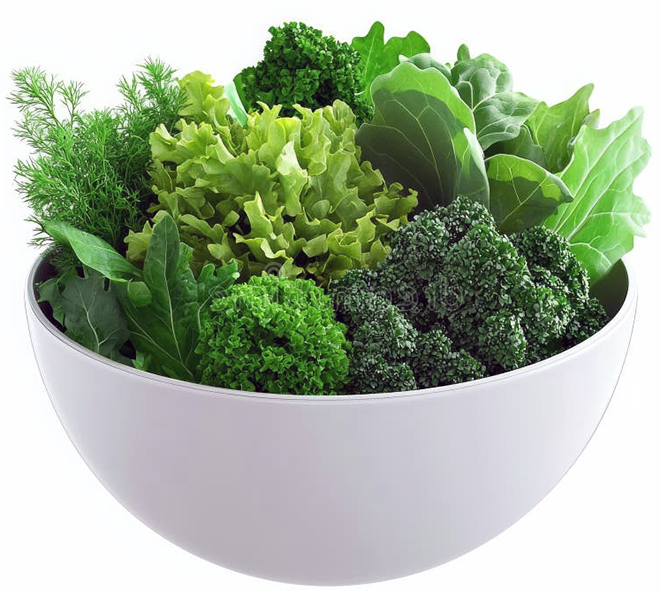 Mixed leafy greens in a bowl
Welcome to FabulousFusionFood's Leafy Greens-based Recipes Page —Leaf vegetables, also called leafy greens, vegetable greens, or simply greens, are plant leaves eaten as a vegetable. Those eaten raw in a salad can be called salad greens, whereas leaf vegetables eaten cooked can be called pot herbs.
Nearly 1,000 species of plants with edible leaves are known. Leaf vegetables most often come from short-lived herbaceous plants, such as lettuce and spinach, but also come from some woody plants. The leaves of many fodder crops (e.g. alfalfa, clover, and most grasses) are also edible by humans, but usually only as famine or processed food.
The leaves of many fodder crops are also edible by humans, but usually only as famine food. Examples include alfalfa, clover, and most grasses, including wheat and barley. Food processing, such as drying and grinding into powder or pulping and pressing for juice, may involve these crop leaves in a diet.
Leaf vegetables contain many typical plant nutrients, but being photosynthetic tissues, their vitamin K levels are particularly notable. Accordingly, users of vitamin K antagonist medications like warfarin must limit their consumption of leaf vegetables.
If leaves are cooked for food, they may be referred to in the United States as boiled greens. Leaf vegetables may be stir-fried, stewed, steamed, or consumed raw. Leaf vegetables stewed with pork is a traditional dish in soul food and Southern U.S. cuisine. They are also commonly eaten in South Asian dishes such as saag. Leafy greens can be used to wrap other ingredients into an edible package like a tortilla. Many green leafy vegetables, such as lettuce or spinach, can also be eaten raw, for example, in sandwiches or salads. A green smoothie enables large quantities of raw leafy greens to be consumed by blending the leaves with fruit and water.
The brassicaceae is a medium-sized and economically important family of flowering plants commonly known as the mustards, the crucifers, or the cabbage family. The family contains the cruciferous vegetables, including species such as Brassica oleracea (cultivated as cabbage, kale, cauliflower, broccoli and collards), Brassica rapa (turnip, Chinese cabbage, etc.), Brassica napus (rapeseed, etc.), Raphanus sativus (common radish), Armoracia rusticana (horseradish), the cut-flower Matthiola (stock) and the model organism Arabidopsis thaliana (thale cress).
This family includes important agricultural crops, particularly leafy greens, among which many vegetables such as cabbage, broccoli, cauliflower, kale, Brussels sprouts, collard greens, Savoy, kohlrabi, and gai lan (Brassica oleracea), turnip, napa cabbage, mizuna, bok choy and rapini (Brassica rapa), rocket salad/arugula (Eruca sativa), garden cress (Lepidium sativum), watercress (Nasturtium officinale) and radish (Raphanus) and a few spices like horseradish (Armoracia rusticana), wasabi (Eutrema japonicum), white, brown and black mustard (Sinapis alba, Brassica juncea and B. nigra respectively). Even if not specifically grown as leafy green vegetables, the leaves of the majority of these species can be and are consumed.
Outside the brassicaceae, the Amaranthaceae or Amaranth family are a major source of leafy greens worldwide, with the most common and well known species being Spinacia oleracea or spinach. Its leaves are a common vegetable consumed either fresh, cooked or after storage (using preservation techniques like canning, freezing, or dehydration). The taste differs considerably between cooked and raw: the high oxalate content may be reduced by blanching. So common is spinach as a leafy green that it's used as a common substitute for other local leafy greens.
Note that beetroot, a source of both an edible taproot and leafy greens. Beta vulgaris is also a member of the Amaranthaceae family, as is the closely related chard (Beta vulgaris subsp. vulgaris) which is grown for its edible stems and leafy greens.
In Africa, the leaves of cassava plants and sweet potato plants are widely consumed and leafy greens sourced from the wild are used to supplement the diet in countries across the globe.
The alphabetical list of all the leafy greens-based recipes on this site follows, (limited to 100 recipes per page). There are 3031 recipes in total:
Page 17 of 31
| Maru we-llham (Meat and Rice with Vegetables) Origin: Mauritania | Meat and Fish Tempering Origin: India | Middle Eastern style Curry Powder Origin: Middle East |
| Mas Riha (Maldives Tuna Curry) Origin: Maldives | Meatball Madras Curry Origin: South Africa | Middle Easters Falafel (Middle Eastern Falafel) Origin: Middle East |
| Masaaledaar Pudine wal Quimah (Minced Lamb with Mint and Spices) Origin: India | Mediterranean-style Farro Salad with Rocket and Walnuts Origin: America | Minestra di farro (Tuscan Farro Soup with White Beans and Vegetables) Origin: Italy |
| Masak Lemak (Cabbage in Coconut Milk Gravy) Origin: Malaysia | Meen Moilee (Keralan Fish Curry) Origin: India | Mint Chutney Origin: India |
| Masala Lamb Chops Origin: Pakistan | Meen Mulakittathu (Kerala Red Fish Curry) Origin: India | Mint Flower Ice Cream Origin: Britain |
| Masala Raita Origin: India | Meen Pollichathu (Fish Cooked in Banana Leaf) Origin: India | Minutal Dulce ex Citriis (Sweet Citron Ragout) Origin: Roman |
| Masala Snoek Origin: South Africa | Melcas (Cheese Sweetened with Honey) Origin: Roman | Miondo (Cassava Sticks) Origin: Cameroon |
| Masaledaar Bakre ki Kaleji Gurda Phepsa (Lamb Offal Curry) Origin: India | Melokhia Origin: Egypt | Mirkapaya Mamsam Koora Origin: India |
| Massalé de Dorade Origin: Reunion | Melon Mint Splash Smoothie Origin: American | Miso Soup with Tade Origin: Japan |
| Massaman Curry Paste Origin: Thailand | Menthe Vert (Green Mint Syrup) Origin: France | Missi Roti Origin: India |
| Massaman Nuea (Beef Masaman Curry) Origin: Thailand | Messe of African Greens Origin: African Fusion | Missi Roti Origin: India |
| Massaman Nuea (Beef Massaman Curry) Origin: Thailand | Methi Kalia (Spicy Fenugreek Meat) Origin: Bangladesh | Mitumba (Cassava Sticks) Origin: Cameroon |
| Mataba au Poisson (Mataba with Fish) Origin: Comoros | Methi Murgh (Methi Chicken) Origin: India | Mixed Vegetable Curry Origin: Britain |
| Matambre Arrollado (Argentinan Stuffed Rolled Beef) Origin: Argentina | Methi Mushroom Masala Origin: India | Mixed Vegetable Pickle Origin: India |
| Matapa Origin: Mozambique | Methi Paneer Origin: India | Mixed Wild Greens with Himalayan Balsam Seed Dressing Origin: British |
| Matapa de Abóbora (Pumpkin Matapa) Origin: Mozambique | Mexican Carne Asada Street Tacos Origin: Mexico | Mixtura cum amygdalinam et sesamae (Almond, Seame and Herb Purée) Origin: Roman |
| Matata (Clam and Peanut Stew) Origin: Mozambique | Mexican Chicken Sausage Origin: Fusion | Mixtura cum Caseo (Soft Cheese with a Herb Purée) Origin: Roman |
| Matata (Clam, Pumpkin and Peanut Stew) Origin: Sao Tome | Mexican-style Steaks with Avocado Salsa Origin: Britain | Mixtura cum Caseo (Soft Cheese and Herb Purée) Origin: Roman |
| Matata (Clams Cooked in Port Wine) Origin: Sao Tome | Meygoo Dopiyazeh (Persian Prawn, Pepper and Onion Curry) Origin: Iran | Mixtura cum Nucibus (Hazelnuts with Herb Purée) Origin: Roman |
| Matki Chi Rassa Bhaji (Maharashtrian Style Moth Beans) Origin: India | Mfumbwa (Gnetum and Fish Stew) Origin: Mali | Mixtura cum Nucleis Pineis (Pine Nut, Cheese and Herb Pâté) Origin: Roman |
| Matsavo (Pumpkin Leaf and Peanut Flour Stew) Origin: Mozambique | Mho Kazun Ywet Kyaw (Stir-fried Water Spinach with Straw Mushrooms) Origin: Myanmar | Miyan Kuka (Baobab Leaf Soup) Origin: Nigeria |
| Mattar Paneer (Green Peas and Curd Cheese Curry) Origin: Britain | Micronesia Taro and Coconut Bread Origin: Federated States Micronesia | Miyan Kuka II (Baobab Leaf Soup II) Origin: Nigeria |
| Mauritian Colombo Chicken Curry Origin: Mauritius | Microwave Akoori (Microwave Indian Scrambled Eggs) Origin: India | Miyan Kuuka Soup (Fish and Baobab Leaf Powder Soup) Origin: Ghana |
| Mauritian Curry Masala Origin: Mauritius | Microwave Chicken Thai Green Curry Origin: Britain | Mkhwani with Groundnut Flour Origin: Malawi |
| Mauritian Prawn Curry Origin: Mauritius | Microwave French Country Pâté Origin: Britain | Moambé Stew Origin: Congo |
| Mayotte Mataba Origin: Mayotte | Microwave Garam Masala Vegetable Curry Origin: Britain | Moana-Roa Mahimahi Origin: Cook Islands |
| Mbaqanga (Bean and Goat Meat Stew) Origin: South Africa | Microwave Honey Christmas Cake Ring Origin: British | Mofo Sakay (Spiced Fritters) Origin: Madagascar |
| Mbaxal Dieune Origin: Senegal | Microwave Jambalaya Origin: Britain | Mohinga Origin: Myanmar |
| Mbolo Origin: Equatorial Guinea | Microwave Loin of Lamb Florentine Origin: Britain | Mojo Verde (Canaries Green Sauce) Origin: Spain |
| Mboro Mboro (Sweet Potato Leaf and Palm Oil Stew) Origin: Senegal | Microwave Peanut Chicken with Noodles Origin: Britain | Mole Poblano Enmoladas Origin: Mexico |
| Mboto à l'oseille (Fish with Sorrel) Origin: Congo | Microwave Shakshuka Origin: Fusion | Mole Verde (Green Mole) Origin: Mexico |
| Mboto à la Feuilles de Manioc (Fish with Cassava Leaves) Origin: Gabon | Microwave Spinach and Cheese Soufflé Origin: Britain | Mologothannie Origin: Sri Lanka |
| MBoume au Néverdaye (Senegalese Fish, Peanut and Cassava Stew with Millet Couscous) Origin: Senegal | Microwave Three Fish Soup Origin: Britain | |
| Mchicha (Spinach, Coconut and Peanuts) Origin: Tanzania | Microwave Waldorf Chicken Salad Origin: Britain |
Page 17 of 31