FabulousFusionFood's Leafy Greens-based Recipes 16th Page
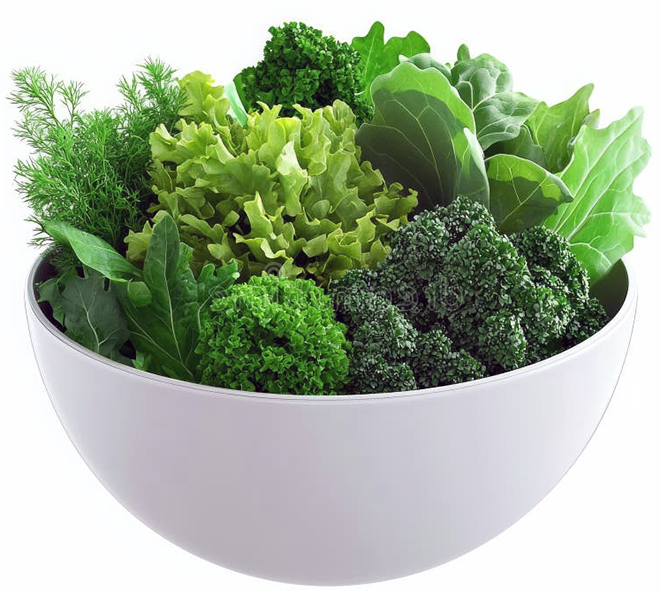 Mixed leafy greens in a bowl
Welcome to FabulousFusionFood's Leafy Greens-based Recipes Page —Leaf vegetables, also called leafy greens, vegetable greens, or simply greens, are plant leaves eaten as a vegetable. Those eaten raw in a salad can be called salad greens, whereas leaf vegetables eaten cooked can be called pot herbs.
Nearly 1,000 species of plants with edible leaves are known. Leaf vegetables most often come from short-lived herbaceous plants, such as lettuce and spinach, but also come from some woody plants. The leaves of many fodder crops (e.g. alfalfa, clover, and most grasses) are also edible by humans, but usually only as famine or processed food.
The leaves of many fodder crops are also edible by humans, but usually only as famine food. Examples include alfalfa, clover, and most grasses, including wheat and barley. Food processing, such as drying and grinding into powder or pulping and pressing for juice, may involve these crop leaves in a diet.
Leaf vegetables contain many typical plant nutrients, but being photosynthetic tissues, their vitamin K levels are particularly notable. Accordingly, users of vitamin K antagonist medications like warfarin must limit their consumption of leaf vegetables.
If leaves are cooked for food, they may be referred to in the United States as boiled greens. Leaf vegetables may be stir-fried, stewed, steamed, or consumed raw. Leaf vegetables stewed with pork is a traditional dish in soul food and Southern U.S. cuisine. They are also commonly eaten in South Asian dishes such as saag. Leafy greens can be used to wrap other ingredients into an edible package like a tortilla. Many green leafy vegetables, such as lettuce or spinach, can also be eaten raw, for example, in sandwiches or salads. A green smoothie enables large quantities of raw leafy greens to be consumed by blending the leaves with fruit and water.
The brassicaceae is a medium-sized and economically important family of flowering plants commonly known as the mustards, the crucifers, or the cabbage family. The family contains the cruciferous vegetables, including species such as Brassica oleracea (cultivated as cabbage, kale, cauliflower, broccoli and collards), Brassica rapa (turnip, Chinese cabbage, etc.), Brassica napus (rapeseed, etc.), Raphanus sativus (common radish), Armoracia rusticana (horseradish), the cut-flower Matthiola (stock) and the model organism Arabidopsis thaliana (thale cress).
This family includes important agricultural crops, particularly leafy greens, among which many vegetables such as cabbage, broccoli, cauliflower, kale, Brussels sprouts, collard greens, Savoy, kohlrabi, and gai lan (Brassica oleracea), turnip, napa cabbage, mizuna, bok choy and rapini (Brassica rapa), rocket salad/arugula (Eruca sativa), garden cress (Lepidium sativum), watercress (Nasturtium officinale) and radish (Raphanus) and a few spices like horseradish (Armoracia rusticana), wasabi (Eutrema japonicum), white, brown and black mustard (Sinapis alba, Brassica juncea and B. nigra respectively). Even if not specifically grown as leafy green vegetables, the leaves of the majority of these species can be and are consumed.
Outside the brassicaceae, the Amaranthaceae or Amaranth family are a major source of leafy greens worldwide, with the most common and well known species being Spinacia oleracea or spinach. Its leaves are a common vegetable consumed either fresh, cooked or after storage (using preservation techniques like canning, freezing, or dehydration). The taste differs considerably between cooked and raw: the high oxalate content may be reduced by blanching. So common is spinach as a leafy green that it's used as a common substitute for other local leafy greens.
Note that beetroot, a source of both an edible taproot and leafy greens. Beta vulgaris is also a member of the Amaranthaceae family, as is the closely related chard (Beta vulgaris subsp. vulgaris) which is grown for its edible stems and leafy greens.
In Africa, the leaves of cassava plants and sweet potato plants are widely consumed and leafy greens sourced from the wild are used to supplement the diet in countries across the globe.
The alphabetical list of all the leafy greens-based recipes on this site follows, (limited to 100 recipes per page). There are 3031 recipes in total:
Page 16 of 31
| Lettuce and Onion Soup Origin: Britain | Maafé Origin: Mali | Malaysian Laksa Origin: Malaysia |
| Libata (Duck with Carrots) Origin: DR-Congo | Maboké de Capitaine (Maboke of Nile Perch) Origin: Central African Republic | Mallorcan-style Easter Lamb Origin: Britain |
| Liboké de Poisson (Fish in Banana Leaf) Origin: Central Africa | Maboke (Steamed Nile Perch) Origin: Central African Republic | Mallow Cheese with Seaweed Paste Origin: Fusion |
| Libum (Sacral Bread) Origin: Roman | Macanese Choy Sum Origin: Macau | Mallow Leaf Gumbo Origin: Britain |
| Libum (Diced Cheese Bread) Origin: Roman | Macanese Minchi (Minced Meat Potato Hash) Origin: Macau | Mallow Leaf Peanut Sauce Origin: Fusion |
| Libyan Camel Meatballs Origin: Libya | Macedonian Souvlaki Origin: North Macedonia | Mallow Leaf Powder Origin: Britain |
| Liewerkniddelen (Liver Dumplings) Origin: Luxembourg | Machboos Laham Origin: Kuwait | Mallow Leaf Stew II Origin: African Fusion |
| Lightly-brined Turkey Origin: Britain | Macher Jhol (Keralan Fish Curry) Origin: India | Mallow Soup Origin: Britain |
| Lightly-stewed Sea Plantains Origin: Britain | Mackerel with currant sauce and radicchio Origin: Britain | Mallow Stew Origin: Britain |
| Limonana Origin: Israel | Madaba (Cassava Leaf and Coconut Stew) Origin: Britain | Mallow-leaf Stew Origin: African Fusion |
| Linden Leaf Flour Origin: France | Madeiran Carne Vinha d'Alhos (Pork Marinated in Garlic and Wine) Origin: Portugal | Malu Abulthiyal (Fish Curry with Fragrant Masala) Origin: Sri Lanka |
| Linden Leaf Flour Bread Origin: France | Mafé Malienne (Malian Mafé) Origin: Mali | Malvani Fish Curry Origin: India |
| Linden Leaf Flour Noodles Origin: Fusion | mafè tatou nènn (Naked Peanut Stew) Origin: Mali | Malvas (Mallow Leaves) Origin: Roman |
| Loaded Fish Burritos Origin: Britain | Maffé de Tabaski (Maffé for Tabaski) Origin: Cote dIvoire | Mambazha Pulissery Origin: India |
| Lobio Tkemali (Red Beans with Sour Plums and Balsamic Vinegar) Origin: Georgia | Maffi Hakko Origin: Guinea | Mangai Palakottai Kuzhambu (Raw Mango Jackfruit Seed Curry) Origin: India |
| Lobsgows Gorllewin Affrica (West African Lobscouse) Origin: Welsh | Maffi Hakko Bangtura (Sweet Potato Leaf Sauce) Origin: Guinea | Mangalorean Prawn Sukka Origin: India |
| Locro Argentino (Beef and Hominy Stew) Origin: Argentina | Magiritsa (Greek Easter Lamb Soup) Origin: Greece | Mangalorean Spinach and Black Eyed Beans Curry Origin: India |
| Lonumirus (Maldives Chilli Sambal) Origin: Maldives | Maharggwe (Vegetables and Beans) Origin: Burundi | Mango Sharbat Origin: India |
| Lopo (Fried Summer Squash and Greens) Origin: Lesotho | Mahi Shekam Por (Persian Stuffed Fish) Origin: Iran | Mangsher Brown Stew (Mutton Brown Stew) Origin: Anglo-Indian |
| Loubia B'dersa (Algerian Chili) Origin: Algeria | Mahjouba (Algerian Crêpes) Origin: Algeria | Mansaf Origin: Jordan |
| Lowumbo (Ugandan Steamed Fish) Origin: Uganda | Mahonia Flower and Mint Lemonade Origin: America | Manx Potted Herring Origin: Manx |
| Lū (Baked Taro Leaf Parcels) Origin: Tonga | Maitrank (May-drink) Origin: Luxembourg | Maraq Bilaash (Cherry Tomato Sauce) Origin: Somalia |
| Lū (Baked Taro Leaf Parcels) Origin: Wallis Futuna | Majboos al Laham (Lamb with Rice) Origin: Kuwait | Maraq Fahfah (Somali Soup) Origin: Somalia |
| Lu Pulu (Corned Beef and Onion in Taro Leaves) Origin: Tonga | Makher Taukari (Fish Curry) Origin: Bangladesh | Maraq Fahfah (Somali Soup) Origin: Somaliland |
| Lu Rou Fan (Taiwanese Braised Pork Rice Bowl) Origin: Taiwan | Makher Taukari II (Fish Curry II) Origin: Bangladesh | Marinade Verte (Green Seasoning) Origin: Saint Barthelemy |
| Lumbuli assi ita fiunt (Stuffed Kidneys or Testicles) Origin: Roman | Makhni Curry Sauce Origin: India | Marinade Verte (Green Seasoning) Origin: Saint-Martin |
| Lupis (Sticky Rice Rolls with Palm Sugar Syrup) Origin: Indonesia | Makki di Roti Origin: India | Marinade Verte (Green Seasoning) Origin: Sint Maarten |
| Lupulu (Coconut Cream and Onion in Taro Leaves) Origin: Tonga | Malabar Chicken Biryani Origin: India | Marinara Sauce Origin: Italy |
| Luss-Ny-Greg Saillt (Pickled Samphire) Origin: Manx | Malabar Peralan (Malabar Fish Roast) Origin: India | Marinated Mackerel Origin: Britain |
| Luwombo () Origin: Uganda | Malaysian Chicken Curry Origin: Malaysia | Markit Ommalah (Chickpea and Lentil Stew) Origin: Tunisia |
| M'Boa com Xima (Pumpkin Leaves in Peanut Sauce with Prawns) Origin: Mozambique | Malaysian Chicken Curry Origin: Malaysia | Marrakech Vegetable Curry Origin: Morocco |
| M'chicha (Spinach with Peanuts) Origin: Tanzania | Malaysian Chicken Curry Origin: Cocos Islands | Marsh Samphire with Red Chilli and Olive Oil Origin: Fusion |
| Mâche Sabayon with Parmesan Shavings Origin: France | Malaysian Chicken Curry Origin: Christmas Island | |
| M'borokhé (Peanut Sauce with Spinach) Origin: Mali | Malaysian Kapitan Chicken Origin: Malaysia |
Page 16 of 31