FabulousFusionFood's Leafy Greens-based Recipes 12th Page
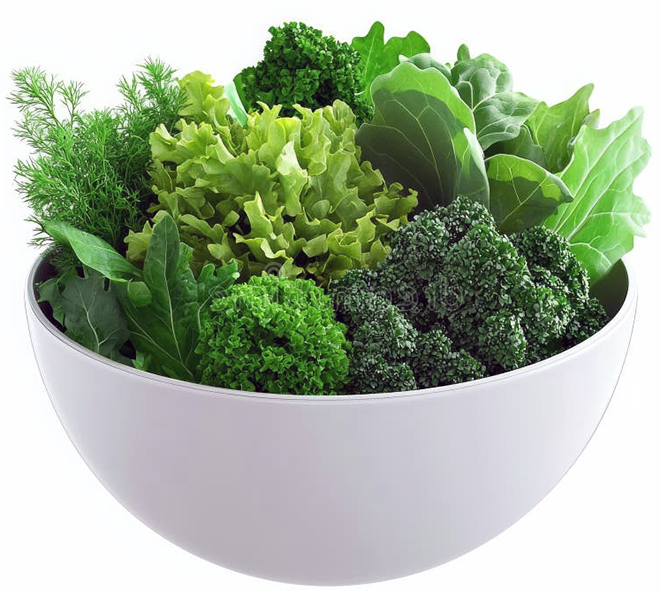 Mixed leafy greens in a bowl
Welcome to FabulousFusionFood's Leafy Greens-based Recipes Page —Leaf vegetables, also called leafy greens, vegetable greens, or simply greens, are plant leaves eaten as a vegetable. Those eaten raw in a salad can be called salad greens, whereas leaf vegetables eaten cooked can be called pot herbs.
Nearly 1,000 species of plants with edible leaves are known. Leaf vegetables most often come from short-lived herbaceous plants, such as lettuce and spinach, but also come from some woody plants. The leaves of many fodder crops (e.g. alfalfa, clover, and most grasses) are also edible by humans, but usually only as famine or processed food.
The leaves of many fodder crops are also edible by humans, but usually only as famine food. Examples include alfalfa, clover, and most grasses, including wheat and barley. Food processing, such as drying and grinding into powder or pulping and pressing for juice, may involve these crop leaves in a diet.
Leaf vegetables contain many typical plant nutrients, but being photosynthetic tissues, their vitamin K levels are particularly notable. Accordingly, users of vitamin K antagonist medications like warfarin must limit their consumption of leaf vegetables.
If leaves are cooked for food, they may be referred to in the United States as boiled greens. Leaf vegetables may be stir-fried, stewed, steamed, or consumed raw. Leaf vegetables stewed with pork is a traditional dish in soul food and Southern U.S. cuisine. They are also commonly eaten in South Asian dishes such as saag. Leafy greens can be used to wrap other ingredients into an edible package like a tortilla. Many green leafy vegetables, such as lettuce or spinach, can also be eaten raw, for example, in sandwiches or salads. A green smoothie enables large quantities of raw leafy greens to be consumed by blending the leaves with fruit and water.
The brassicaceae is a medium-sized and economically important family of flowering plants commonly known as the mustards, the crucifers, or the cabbage family. The family contains the cruciferous vegetables, including species such as Brassica oleracea (cultivated as cabbage, kale, cauliflower, broccoli and collards), Brassica rapa (turnip, Chinese cabbage, etc.), Brassica napus (rapeseed, etc.), Raphanus sativus (common radish), Armoracia rusticana (horseradish), the cut-flower Matthiola (stock) and the model organism Arabidopsis thaliana (thale cress).
This family includes important agricultural crops, particularly leafy greens, among which many vegetables such as cabbage, broccoli, cauliflower, kale, Brussels sprouts, collard greens, Savoy, kohlrabi, and gai lan (Brassica oleracea), turnip, napa cabbage, mizuna, bok choy and rapini (Brassica rapa), rocket salad/arugula (Eruca sativa), garden cress (Lepidium sativum), watercress (Nasturtium officinale) and radish (Raphanus) and a few spices like horseradish (Armoracia rusticana), wasabi (Eutrema japonicum), white, brown and black mustard (Sinapis alba, Brassica juncea and B. nigra respectively). Even if not specifically grown as leafy green vegetables, the leaves of the majority of these species can be and are consumed.
Outside the brassicaceae, the Amaranthaceae or Amaranth family are a major source of leafy greens worldwide, with the most common and well known species being Spinacia oleracea or spinach. Its leaves are a common vegetable consumed either fresh, cooked or after storage (using preservation techniques like canning, freezing, or dehydration). The taste differs considerably between cooked and raw: the high oxalate content may be reduced by blanching. So common is spinach as a leafy green that it's used as a common substitute for other local leafy greens.
Note that beetroot, a source of both an edible taproot and leafy greens. Beta vulgaris is also a member of the Amaranthaceae family, as is the closely related chard (Beta vulgaris subsp. vulgaris) which is grown for its edible stems and leafy greens.
In Africa, the leaves of cassava plants and sweet potato plants are widely consumed and leafy greens sourced from the wild are used to supplement the diet in countries across the globe.
The alphabetical list of all the leafy greens-based recipes on this site follows, (limited to 100 recipes per page). There are 3031 recipes in total:
Page 12 of 31
| Grain Mustard Based Fish Curry Origin: India | Guai Daun Singlong Tumbuk (Grilled Fish with Greens) Origin: Sumatra | Hazel Pollen Bread Origin: France |
| Grand Sallet (Great Salad) Origin: Britain | Guinea Fowl Pudding Origin: Scotland | Hazelnut and Wild Greens Pesto Origin: Britain |
| Granita mit Waldmeister und Beeren (Granita with Woodruff and Strawberries) Origin: Germany | Guinea Fowl with Coconut Cream Origin: Zimbabwe | Heat Wave Chili Origin: American |
| Gratin Tatws a Bara Lawr (Potato and Laverbread Gratin) Origin: Welsh | Guinean Spinach Sauce Origin: Equatorial Guinea | Hebolace Origin: England |
| Graubünden (Barley Soup) Origin: Switzerland | Guisado de Caranguejo (Crab Stew) Origin: Mozambique | Hedgehog Mushroom and Sorrel Frittata Origin: Britain |
| Gravadlax Smørrebrød (Danish Smoked Salmon Open Sandwich) Origin: Denmark | Guisado de carne de porco com Amêijoas (Pork Stew with Cockles) Origin: Angola | Hedgerow Salad Origin: Ancient |
| Green Apple Curry Origin: Sri Lanka | Gujarati Kadhi Origin: India | Heicht mat Kraïderzooss (Pike in Green Sauce) Origin: Luxembourg |
| Green Beans in Coconut Sauce Origin: Fusion | Gujarati-style Chicken Curry Origin: India | Henan Hu La Tang (Hot Pepper Soup) Origin: China |
| Green Coconut Chutney Origin: India | Gulai Ikan Karibia (Caribbean Fish Stew) Origin: Turks Caicos | Herb Dressing Origin: Middle East |
| Green Fish Curry Origin: Fusion | Gulai Kambing (Sumatran Goat Curry) Origin: Martinique | Herbae Rusticae (Country Herbs) Origin: Roman |
| Green Gooseberry Sauce Origin: Britain | Gulha (Fried Fish Balls) Origin: Maldives | Herbed Lemon Sorbet Origin: Britain |
| Green Lentils with Wild Garlic Mustard Pesto Origin: Britain | Gummadikaya Majjiga Pulusu (White Pumpkin Yogurt Stew) Origin: India | Herbes de Provence Origin: France |
| Green Mix with Indian Ocean Seafood Origin: Tanzania | Gundruk (Nepali Fermented Leafy Greens) Origin: Nepal | Herby Millet Rings Origin: African Fusion |
| Green Papaya Curry with Fresh Coconut Origin: Pitcairn Islands | Gurnard Fillets Steamed on a Bed of Wrack Origin: England | Hers ys aysel (Marinated Pilchards) Origin: England |
| Green Pea Soup Origin: British | Guru (Zimbabwean-style Tripe) Origin: Zimbabwe | Hibiscus and Redcurrant Tea Origin: Fusion |
| Green Yoghurt Chutney Origin: Pakistan | Gustum de praecoquiis (Starter with Apricots) Origin: Roman | Hifridzi (Beef and Greens) Origin: Zimbabwe |
| Grenada Callaloo Soup Origin: Grenada | Gustum Versatile (Turnover Antipasto) Origin: Roman | Highland Game Soup Origin: Scotland |
| Grenada Oil Down Origin: Grenada | Gutti Vankaya (Stuffed Brinjal Curry) Origin: India | Highveld Lamb Curry Origin: South Africa |
| Grilled Artichokes with Lemon-Mint Dipping Sauce Origin: Britain | Guyanese Chicken Curry Origin: Guyana | Hilib Ari (Somali Camel Meat Kebabs) Origin: Somalia |
| Grilled Courgettes with Sea Arrowgrass and Peas Origin: Britain | Guyanese Crab Callaloo Origin: Guyana | Hilib Ari (Djibouti Camel Meat Kebabs) Origin: Djibouti |
| Grilled Courgettes with Sea Plantain and Peas Origin: Britain | Hígado Aromático (Aromatic Liver) Origin: Colombia | Hilib Ari (Somaliland Camel Meat Kebabs) Origin: Somaliland |
| Grilled Kefta Origin: Morocco | Haam am Hée (Ham Steamed on Hay) Origin: Luxembourg | Himachali Chana Madra (Himachala Chickpea Yoghurt Curry) Origin: India |
| Grilled Mackerel Two Ways Origin: Fusion | Habichuelas Negras (Puerto Rican Stewed Black Beans) Origin: Puerto Rico | Hinbeh B'zeit (Dandelion Greens with Caramelized Onions) Origin: Lebanon |
| Grilled Sea Bass and Marsh Samphire Origin: Britain | Haddock Supper Origin: Ireland | Hindbeh b Zeit (Dandelion Leaves in Oil) Origin: Lebanon |
| Ground Elder and Potato Omelette Origin: British | Haggis Kheema with Tattie Rotis Origin: Fusion | Hoentay (Buckwheat Momos) Origin: Bhutan |
| Ground Elder Buns Origin: Norway | Hakka Salt-baked Chicken Origin: China | Hogweed Bubble and Squeak Origin: Britain |
| Ground Elder Layered Pancakes Origin: British | Halawa Yaqtin (Pumpkin Halwa) Origin: Middle East | Hogweed Pancakes Origin: British |
| Ground Elder Pie Origin: Britain | Halibut and Tomato Curry Origin: Britain | Holus Molle ex Foliis Lactucarum cum Cepis (Vegetable Purée with Lettuce Leaves and Onions) Origin: Roman |
| Ground Elder Quiche Origin: Britain | Halloumi Fajitas Origin: British | Home Cured Herring Origin: Britain |
| Ground Elder Rice Origin: Britain | Halloween Swamp Dip Origin: American | Home-made Chilli Oil Origin: China |
| Ground Elder Soup Origin: Britain | Halupki (Stuffed Cabbage Rolls) Origin: Slovakia | Home-made Sauerkraut Origin: Germany |
| Ground Elder with Creamy Sorrel Sauce Origin: British | Halupki Stuffed with Buckwheat Groats Origin: Slovakia | Home-style Machanka Origin: Belarus |
| Grouse Game Soup Origin: Britain | Hapai Hantue (Filled Buckwheat Dumplings) Origin: Bhutan | |
| Guacamole Origin: Mexico | Havgitov Spanach (Baked Spinach with Eggs) Origin: Armenia |
Page 12 of 31