FabulousFusionFood's Leafy Greens-based Recipes 10th Page
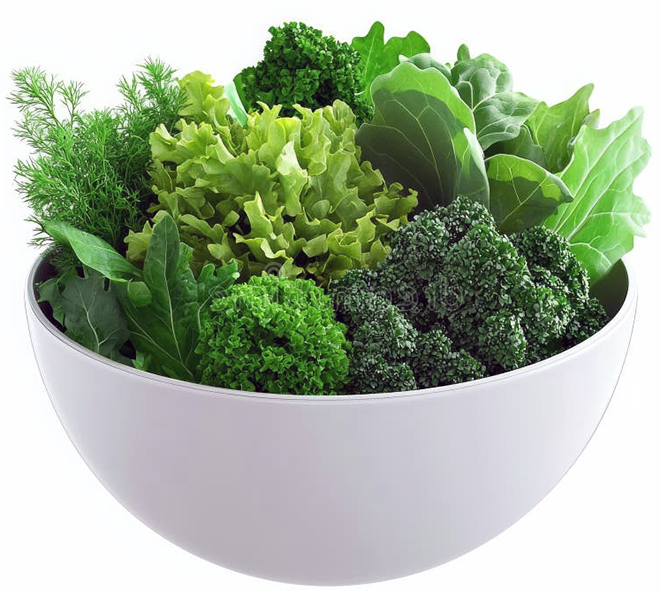 Mixed leafy greens in a bowl
Welcome to FabulousFusionFood's Leafy Greens-based Recipes Page —Leaf vegetables, also called leafy greens, vegetable greens, or simply greens, are plant leaves eaten as a vegetable. Those eaten raw in a salad can be called salad greens, whereas leaf vegetables eaten cooked can be called pot herbs.
Nearly 1,000 species of plants with edible leaves are known. Leaf vegetables most often come from short-lived herbaceous plants, such as lettuce and spinach, but also come from some woody plants. The leaves of many fodder crops (e.g. alfalfa, clover, and most grasses) are also edible by humans, but usually only as famine or processed food.
The leaves of many fodder crops are also edible by humans, but usually only as famine food. Examples include alfalfa, clover, and most grasses, including wheat and barley. Food processing, such as drying and grinding into powder or pulping and pressing for juice, may involve these crop leaves in a diet.
Leaf vegetables contain many typical plant nutrients, but being photosynthetic tissues, their vitamin K levels are particularly notable. Accordingly, users of vitamin K antagonist medications like warfarin must limit their consumption of leaf vegetables.
If leaves are cooked for food, they may be referred to in the United States as boiled greens. Leaf vegetables may be stir-fried, stewed, steamed, or consumed raw. Leaf vegetables stewed with pork is a traditional dish in soul food and Southern U.S. cuisine. They are also commonly eaten in South Asian dishes such as saag. Leafy greens can be used to wrap other ingredients into an edible package like a tortilla. Many green leafy vegetables, such as lettuce or spinach, can also be eaten raw, for example, in sandwiches or salads. A green smoothie enables large quantities of raw leafy greens to be consumed by blending the leaves with fruit and water.
The brassicaceae is a medium-sized and economically important family of flowering plants commonly known as the mustards, the crucifers, or the cabbage family. The family contains the cruciferous vegetables, including species such as Brassica oleracea (cultivated as cabbage, kale, cauliflower, broccoli and collards), Brassica rapa (turnip, Chinese cabbage, etc.), Brassica napus (rapeseed, etc.), Raphanus sativus (common radish), Armoracia rusticana (horseradish), the cut-flower Matthiola (stock) and the model organism Arabidopsis thaliana (thale cress).
This family includes important agricultural crops, particularly leafy greens, among which many vegetables such as cabbage, broccoli, cauliflower, kale, Brussels sprouts, collard greens, Savoy, kohlrabi, and gai lan (Brassica oleracea), turnip, napa cabbage, mizuna, bok choy and rapini (Brassica rapa), rocket salad/arugula (Eruca sativa), garden cress (Lepidium sativum), watercress (Nasturtium officinale) and radish (Raphanus) and a few spices like horseradish (Armoracia rusticana), wasabi (Eutrema japonicum), white, brown and black mustard (Sinapis alba, Brassica juncea and B. nigra respectively). Even if not specifically grown as leafy green vegetables, the leaves of the majority of these species can be and are consumed.
Outside the brassicaceae, the Amaranthaceae or Amaranth family are a major source of leafy greens worldwide, with the most common and well known species being Spinacia oleracea or spinach. Its leaves are a common vegetable consumed either fresh, cooked or after storage (using preservation techniques like canning, freezing, or dehydration). The taste differs considerably between cooked and raw: the high oxalate content may be reduced by blanching. So common is spinach as a leafy green that it's used as a common substitute for other local leafy greens.
Note that beetroot, a source of both an edible taproot and leafy greens. Beta vulgaris is also a member of the Amaranthaceae family, as is the closely related chard (Beta vulgaris subsp. vulgaris) which is grown for its edible stems and leafy greens.
In Africa, the leaves of cassava plants and sweet potato plants are widely consumed and leafy greens sourced from the wild are used to supplement the diet in countries across the globe.
The alphabetical list of all the leafy greens-based recipes on this site follows, (limited to 100 recipes per page). There are 3031 recipes in total:
Page 10 of 31
| Egg Pilau Rice Origin: Britain | Espetada (Madeiran Beef Kebabs) Origin: Portugal | Fiery Chicken Jalfrezi Origin: Britain |
| Eggless Quiche Origin: British | Espinazo en salsa verde con verdolagas (Pork Neck in Tomatillo Sauce with Purslane) Origin: Mexico | Fiery Chicken Legs Origin: British |
| Eggs Blackstone Origin: Britain | Esquites II (Mexican Street Corn) Origin: Mexico | Fig Leaf and Kefir Ice Cream Origin: Britain |
| Egusi Soup Origin: Nigeria | Ewedu Origin: Nigeria | Fijian Chicken and Potato Curry Origin: Fiji |
| Egusi with Efo Origin: Nigeria | Fúti (Mixed Fula Dish) Origin: Guinea-Bissau | Fijian Chicken Curry Origin: Fiji |
| Eight-day Spiced Beef Origin: Britain | Fabaciae Virides (Green Beans) Origin: Roman | Fijian Chicken Palau Origin: Fiji |
| Einbrennsuppe (Flour Soup) Origin: Germany | Faenum Graecum (Fenugreek) Origin: Roman | Fijian Crab Curry Origin: Fiji |
| Einbrennsuppe (Flour Soup) Origin: Austria | Fafa (Taro Leaves with Coconut Cream) Origin: Tahiti | Fijian Goat Curry Origin: Fiji |
| Eisbein mit Sauerkraut (Ham hock with Sauerkraut) Origin: Germany | Faggi Ksidhati (Lentil Soup with Vinegar) Origin: Cyprus | Fijian Goat Curry 2 Origin: Fiji |
| Ekoki Origin: Cameroon | Fah-Fah (Soupe Djiboutienne) Origin: Djibouti | Fijian Indian Tomato Chutney Origin: Fiji |
| Ekpang Nkukwo Origin: Nigeria | Fajitas de Pollo (Chicken Fajitas) Origin: Mexico | Fijian Khatar (Jackfruit Curry) Origin: Fiji |
| Ekpang Nkukwo (Cocoyam Pottage) Origin: Nigeria | Fakatokelau Origin: Tokelau | Fijian Suruwa (Fijian Fish Curry) Origin: Fiji |
| Ekwang Origin: Cameroon | Fakoye Achoutoob (Beef, Garden Egg and Jute Mallow Leaf Stew) Origin: Mali | Filé Gumbo Origin: Louisiana |
| El Cocido Origin: Spain | Falafel Origin: Bahrain | Filipino Beef Rendang Origin: Philippines |
| El Salvador Salsa Roja (Salvadorean Red Sauce) Origin: El Salvador | Farngo da Terra a Blanta com Baguitchi (Village Chicken with Hibiscus Leaves) Origin: Guinea-Bissau | Filipino Fish Curry Origin: Philippines |
| El Tuco Origin: Argentina | Fasolada (Greek Bean Soup) Origin: Greece | Fillet of Pork with Sea Lettuce Crust Origin: England |
| Elaichi Gosht (Lamb With Cardamom) Origin: India | Fat Hen and Potato Gratin Origin: Britain | Fillets of John Dory with Sage Origin: Britain |
| Elderflower Cordial Origin: Ancient | Fat Hen Cream Sauce with Potatoes Origin: British | Fish and Dried Mallow Leaf Stew Origin: African Fusion |
| Elote Origin: Mexico | Fat Hen Quiche Origin: Britain | Fish and Mula Red Curry (Fish and Mooli Red Curry) Origin: Bangladesh |
| Elumas Curry (Mutton Curry) Origin: Sri Lanka | Fava Pure e Cicorielle (Mashed Broad Beans with Potatoes and Chicory) Origin: Italy | Fish Bhuna (Bengali-Style Fried Fish in Onion and Tomato Curry) Origin: Bangladesh |
| Ema Datshi (Chillies with Cheese) Origin: Bhutan | Feijoada à Angolana (Angolan Feijoada) Origin: Angola | Fish Breyani Origin: South Africa |
| Embamma in Cervinam Assam (Marinade for Roast Venison) Origin: Roman | Feijoada de Moçambicana (Mozambican Bean Stew) Origin: Mozambique | Fish Dopeaja Origin: Bangladesh |
| Empress Chili Origin: American | Fekei Origin: Tuvalu | Fish in Vine Leaves Origin: Greece |
| Enchiladas de Espinaca (Spinach Enchiladas) Origin: Mexico | Fennel Sauce Origin: Britain | Fish Molee (Keralan Fish Stew) Origin: India |
| Endive and Asparagus Gratin Origin: Belgium | Fennel Vinaigrette Dressing Origin: Italy | Fish Padha (Sri Lankan Fish Pickle) Origin: Sri Lanka |
| Ensalada de Endibias al Cabrales (Salad of Chicory Leaves and Blue Cheese) Origin: Spain | Fermented Mixed Vegetables Origin: America | Fish Tacos Origin: Britain |
| Ensalada Verde (Dominican Green Salad) Origin: Dominican Republic | Féroce d'Avocat Origin: Martinique | Fish Tikka Masala Origin: India |
| Ensopado Amendoim Kizaka (Kizaka Peanut Stew) Origin: Angola | Féroce d'Avocat Origin: Guadeloupe | Flaming Eggs Origin: Thailand |
| Eowtes of Flessh (Herbs Like Flesh) Origin: England | Feuilles de Consoude Farcies (Stuffed Comfrey Leaves) Origin: France | Florentine Pizza Origin: Italy |
| Epityrum (Olives with Herbs) Origin: Roman | Feuilles de Manioc (Central African Cassava Leaves) Origin: Central Africa | Flowers and Greens Salad Origin: Britain |
| Equatorial Guinea Peanut Sauce Origin: Equatorial Guinea | Feuilles de Manioc Malienne (Malian Cassava Leaf Stew) Origin: Mali | Folon Origin: Cameroon |
| Eritrean Berbere Spice Origin: Eritrea | Ffagod Traddodiadol (traditional Faggots) Origin: Welsh | Forloren Hare (Danish Meatloaf) Origin: Denmark |
| Eru avec Garri (Eru with Garri) Origin: Cameroon | Fiddlehead and Morel Mushroom Risotto Origin: American | |
| Esparregados de Bacalhau (Cod Esparregados) Origin: Angola | Fiddlehead Pasta Primavera Origin: American |
Page 10 of 31