FabulousFusionFood's Leafy Greens-based Recipes 15th Page
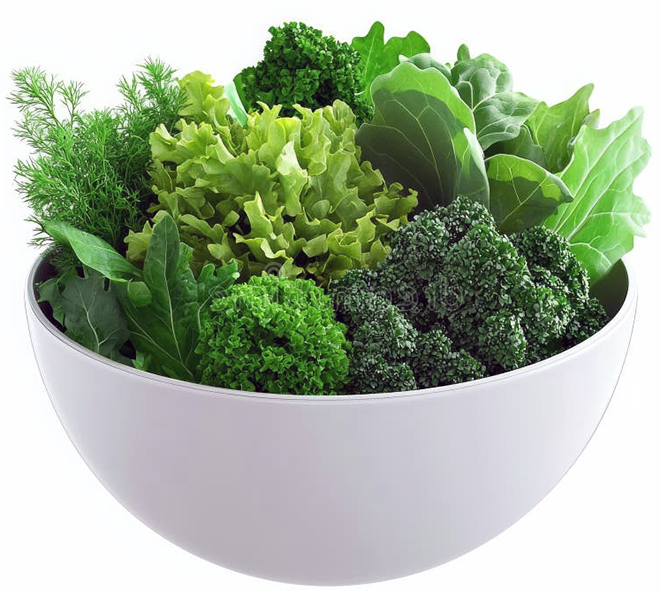 Mixed leafy greens in a bowl
Welcome to FabulousFusionFood's Leafy Greens-based Recipes Page —Leaf vegetables, also called leafy greens, vegetable greens, or simply greens, are plant leaves eaten as a vegetable. Those eaten raw in a salad can be called salad greens, whereas leaf vegetables eaten cooked can be called pot herbs.
Nearly 1,000 species of plants with edible leaves are known. Leaf vegetables most often come from short-lived herbaceous plants, such as lettuce and spinach, but also come from some woody plants. The leaves of many fodder crops (e.g. alfalfa, clover, and most grasses) are also edible by humans, but usually only as famine or processed food.
The leaves of many fodder crops are also edible by humans, but usually only as famine food. Examples include alfalfa, clover, and most grasses, including wheat and barley. Food processing, such as drying and grinding into powder or pulping and pressing for juice, may involve these crop leaves in a diet.
Leaf vegetables contain many typical plant nutrients, but being photosynthetic tissues, their vitamin K levels are particularly notable. Accordingly, users of vitamin K antagonist medications like warfarin must limit their consumption of leaf vegetables.
If leaves are cooked for food, they may be referred to in the United States as boiled greens. Leaf vegetables may be stir-fried, stewed, steamed, or consumed raw. Leaf vegetables stewed with pork is a traditional dish in soul food and Southern U.S. cuisine. They are also commonly eaten in South Asian dishes such as saag. Leafy greens can be used to wrap other ingredients into an edible package like a tortilla. Many green leafy vegetables, such as lettuce or spinach, can also be eaten raw, for example, in sandwiches or salads. A green smoothie enables large quantities of raw leafy greens to be consumed by blending the leaves with fruit and water.
The brassicaceae is a medium-sized and economically important family of flowering plants commonly known as the mustards, the crucifers, or the cabbage family. The family contains the cruciferous vegetables, including species such as Brassica oleracea (cultivated as cabbage, kale, cauliflower, broccoli and collards), Brassica rapa (turnip, Chinese cabbage, etc.), Brassica napus (rapeseed, etc.), Raphanus sativus (common radish), Armoracia rusticana (horseradish), the cut-flower Matthiola (stock) and the model organism Arabidopsis thaliana (thale cress).
This family includes important agricultural crops, particularly leafy greens, among which many vegetables such as cabbage, broccoli, cauliflower, kale, Brussels sprouts, collard greens, Savoy, kohlrabi, and gai lan (Brassica oleracea), turnip, napa cabbage, mizuna, bok choy and rapini (Brassica rapa), rocket salad/arugula (Eruca sativa), garden cress (Lepidium sativum), watercress (Nasturtium officinale) and radish (Raphanus) and a few spices like horseradish (Armoracia rusticana), wasabi (Eutrema japonicum), white, brown and black mustard (Sinapis alba, Brassica juncea and B. nigra respectively). Even if not specifically grown as leafy green vegetables, the leaves of the majority of these species can be and are consumed.
Outside the brassicaceae, the Amaranthaceae or Amaranth family are a major source of leafy greens worldwide, with the most common and well known species being Spinacia oleracea or spinach. Its leaves are a common vegetable consumed either fresh, cooked or after storage (using preservation techniques like canning, freezing, or dehydration). The taste differs considerably between cooked and raw: the high oxalate content may be reduced by blanching. So common is spinach as a leafy green that it's used as a common substitute for other local leafy greens.
Note that beetroot, a source of both an edible taproot and leafy greens. Beta vulgaris is also a member of the Amaranthaceae family, as is the closely related chard (Beta vulgaris subsp. vulgaris) which is grown for its edible stems and leafy greens.
In Africa, the leaves of cassava plants and sweet potato plants are widely consumed and leafy greens sourced from the wild are used to supplement the diet in countries across the globe.
The alphabetical list of all the leafy greens-based recipes on this site follows, (limited to 100 recipes per page). There are 3031 recipes in total:
Page 15 of 31
| Kopto à l'arachide (Kopto in Peanut Sauce) Origin: Niger | Lagman Origin: Kyrgyzstan | Lapin Cuit avec des Pruneaux (Stewed Rabbit with Prunes) Origin: Belgium |
| Korean-inspired Oxeye Daisy Greens Origin: Fusion | Lagman Origin: Turkmenistan | Lapin Sauvage avec Chou Rouge (Wild Rabbit with Red Cabbage) Origin: France |
| Korean-inspired Pollock Stew with Gochujang and Wild Greens Origin: Korea | Lagman Spice Blend Origin: Kyrgyzstan | Laplap Origin: Vanuatu |
| Koro Owu Soup (Cotton Seed Soup) Origin: Nigeria | Lagman Spice Blend Origin: Tajikistan | Lasagne Verdi Origin: San Marino |
| Korokke (Tuna and Water Spinach Fritters) Origin: Palau | Lagman Spice Blend Origin: Uzbekistan | Latvian Pickled Beetroot Origin: Latvia |
| Kotlet Schabowy (Polish Breaded Pork Cutlet) Origin: Poland | Lagman Spice Blend Origin: Afghanistan | Latvian Sauerkraut Soup Origin: Latvia |
| Koumrangan Origin: Chad | Lagman Spice Blend Origin: Turkmenistan | Latvian Sorrel Soup Origin: Latvia |
| Koumrangan avec Patte d'Arachide (Koumrangan with Peanut Paste) Origin: Chad | Lagos sto Fourno (Oven-baked Wild Rabbit) Origin: Cyprus | Layered Trifle Loaf Origin: Britain |
| Kouneli Stifado (Rabbit Stew) Origin: Greece | Lahpet Thoke (Burmese Tea Leaf Salad) Origin: Myanmar | Lazeez Lauki (Tasty Stuffed Bottle Gourd) Origin: India |
| Koupepia (Dolmades) Origin: Cyprus | Laj Ntses (Fish Larb) Origin: Laos | Le cassoulet de la mer à la bretonne (Breton seaside cassoulet) Origin: France |
| Koupepia (Stuffed Vine Leaves) Origin: Cyprus | Lamb and Cabbage Rolls Origin: Britain | Le Chou au Beurre (Buttered Cabbage) Origin: Mauritius |
| Kozi Ishtu (Keralan Chicken Ishtu) Origin: India | Lamb Bhuna Origin: Britain | Le Gaonré au poulet frit (Gaonré with fried chicken) Origin: Burkina Faso |
| Kpala (Jute Leaf Sauce) Origin: Cote dIvoire | Lamb Bhuna Origin: India | Le Goundja (Fish with Aubergines and Cassava Leaves) Origin: Central African Republic |
| Krækiberjasaft Chatni (Crowberry Chutney) Origin: Iceland | Lamb Biryani Origin: India | Le Ndolé Camerounais (Cameroonian Ndolé) Origin: Cameroon |
| Krain Krain (Jute Leaf Stew) Origin: Sierra Leone | Lamb Burgers with Mint and Pine Nuts Origin: Cyprus | Le Salade Côte Cap Vert (Cape Vert Coast Salad) Origin: Senegal |
| Krautstrudel (Cabbage Strudel) Origin: Liechtenstein | Lamb Curry with Winter Vegetables and Spinach Origin: Fusion | Lebanese Mlukhiyea (Jute Mallow and Meat Stew) Origin: Lebanon |
| Kriibsen (Crayfish, Luxembourg Style) Origin: Luxembourg | Lamb Cutlet Casserole Origin: Britain | Lechon Kawli (Oven-roasted Pork) Origin: Philippines |
| Krumpirova Corba Sa Kiselicom (Sorrel and Potato Soup) Origin: Serbia | Lamb Cutlets and Spinach Origin: Britain | Leftover Chicken Curry with Carlin Peas, Himalayan Balsam Seed Pods and Oak Moss Tempering Origin: Britain |
| Kuka Soup Origin: Nigeria | Lamb Dopiaza Origin: Britain | Leftover Ham Vindhalo Origin: Britain |
| Kuku Sabzi (Persian Herb Frittata) Origin: Iran | Lamb Karahi Origin: India | Leftover Turkey and Chickpea Curry Origin: Fusion |
| Kukulhu Kurandi Riha (Maldives Chicken Gizzard Curry) Origin: Maldives | Lamb Koftas Origin: North Africa | Leftovers Butter Turkey Origin: Britain |
| Kukulhu Riha (Maldives Chicken Curry) Origin: Maldives | Lamb Madras Origin: India | Leftovers Lamb Ragu Origin: Britain |
| Kukulu Musamma Origin: Sri Lanka | Lamb Noisettes with Tomato Salsa Origin: Britain | Leksour (Mauritanian-style Pancakes with Sauce) Origin: Mauritania |
| Kupus Salata (Croatian Cabbage Salad) Origin: Croatia | Lamb Rogan Josh Origin: India | Lemon Verbena Lemonade Origin: Britain |
| Kuru Börülce (Black-eyed Bean Salad) Origin: Northern Cyprus | Lamb Rogan Josh Origin: Britain | Lemongrass Curry Origin: Cambodia |
| Kwacoco with Banga Soup Origin: Cameroon | Lamb Saag Restaurant Style Origin: India | Lemongrass Pork with Rice Noodles Origin: Australia |
| Kypriaka Lazania (Cypriot Lasagne) Origin: Cyprus | Lamb Shank Madras Origin: India | Lenticula (Roman Spicy Lentils) Origin: Roman |
| La Salade à la Nigerienne (Niger-style Salad) Origin: Niger | Lamb Tarkari (Lamb Yoghurt Curry) Origin: Nepal | Lentil and Nettle Curry Origin: Britain |
| Laal Chicken Curry Origin: Britain | Lamb with New Potatoes and Coriander Origin: Ireland | Lentil Or Potato Tempering Origin: India |
| Laal Maas (Rajasthani Lamb Curry) Origin: India | Lamb with Spinach Origin: Mauritius | Les Sardines Farcies aux Blettes et aux Moules (Sardines Stuffed with Chard and Mussels) Origin: Monaco |
| Lacto-fermented Sea Sandwort Origin: Britain | Lamb's Lettuce Pesto Origin: Britain | Lesser Celandine Potato Salad Origin: British |
| Lactucas (Lettuce) Origin: Roman | Lampara Curry Origin: Sri Lanka | Lesser Celandine Straws Origin: Britain |
| Ladob Banan (Bananas in Coconut Milk) Origin: Seychelles | Lamprais Rice Origin: Sri Lanka | |
| Lafet Time (Honey-glazed Pork with Salad) Origin: Vanuatu | Lao Tam Som (Lao Green Papaya Salad) Origin: Laos |
Page 15 of 31