FabulousFusionFood's Leafy Greens-based Recipes 20th Page
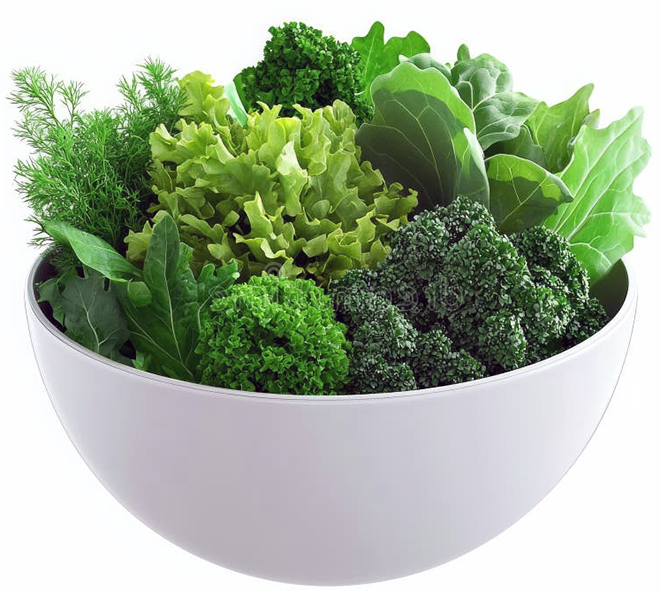 Mixed leafy greens in a bowl
Welcome to FabulousFusionFood's Leafy Greens-based Recipes Page —Leaf vegetables, also called leafy greens, vegetable greens, or simply greens, are plant leaves eaten as a vegetable. Those eaten raw in a salad can be called salad greens, whereas leaf vegetables eaten cooked can be called pot herbs.
Nearly 1,000 species of plants with edible leaves are known. Leaf vegetables most often come from short-lived herbaceous plants, such as lettuce and spinach, but also come from some woody plants. The leaves of many fodder crops (e.g. alfalfa, clover, and most grasses) are also edible by humans, but usually only as famine or processed food.
The leaves of many fodder crops are also edible by humans, but usually only as famine food. Examples include alfalfa, clover, and most grasses, including wheat and barley. Food processing, such as drying and grinding into powder or pulping and pressing for juice, may involve these crop leaves in a diet.
Leaf vegetables contain many typical plant nutrients, but being photosynthetic tissues, their vitamin K levels are particularly notable. Accordingly, users of vitamin K antagonist medications like warfarin must limit their consumption of leaf vegetables.
If leaves are cooked for food, they may be referred to in the United States as boiled greens. Leaf vegetables may be stir-fried, stewed, steamed, or consumed raw. Leaf vegetables stewed with pork is a traditional dish in soul food and Southern U.S. cuisine. They are also commonly eaten in South Asian dishes such as saag. Leafy greens can be used to wrap other ingredients into an edible package like a tortilla. Many green leafy vegetables, such as lettuce or spinach, can also be eaten raw, for example, in sandwiches or salads. A green smoothie enables large quantities of raw leafy greens to be consumed by blending the leaves with fruit and water.
The brassicaceae is a medium-sized and economically important family of flowering plants commonly known as the mustards, the crucifers, or the cabbage family. The family contains the cruciferous vegetables, including species such as Brassica oleracea (cultivated as cabbage, kale, cauliflower, broccoli and collards), Brassica rapa (turnip, Chinese cabbage, etc.), Brassica napus (rapeseed, etc.), Raphanus sativus (common radish), Armoracia rusticana (horseradish), the cut-flower Matthiola (stock) and the model organism Arabidopsis thaliana (thale cress).
This family includes important agricultural crops, particularly leafy greens, among which many vegetables such as cabbage, broccoli, cauliflower, kale, Brussels sprouts, collard greens, Savoy, kohlrabi, and gai lan (Brassica oleracea), turnip, napa cabbage, mizuna, bok choy and rapini (Brassica rapa), rocket salad/arugula (Eruca sativa), garden cress (Lepidium sativum), watercress (Nasturtium officinale) and radish (Raphanus) and a few spices like horseradish (Armoracia rusticana), wasabi (Eutrema japonicum), white, brown and black mustard (Sinapis alba, Brassica juncea and B. nigra respectively). Even if not specifically grown as leafy green vegetables, the leaves of the majority of these species can be and are consumed.
Outside the brassicaceae, the Amaranthaceae or Amaranth family are a major source of leafy greens worldwide, with the most common and well known species being Spinacia oleracea or spinach. Its leaves are a common vegetable consumed either fresh, cooked or after storage (using preservation techniques like canning, freezing, or dehydration). The taste differs considerably between cooked and raw: the high oxalate content may be reduced by blanching. So common is spinach as a leafy green that it's used as a common substitute for other local leafy greens.
Note that beetroot, a source of both an edible taproot and leafy greens. Beta vulgaris is also a member of the Amaranthaceae family, as is the closely related chard (Beta vulgaris subsp. vulgaris) which is grown for its edible stems and leafy greens.
In Africa, the leaves of cassava plants and sweet potato plants are widely consumed and leafy greens sourced from the wild are used to supplement the diet in countries across the globe.
The alphabetical list of all the leafy greens-based recipes on this site follows, (limited to 100 recipes per page). There are 3031 recipes in total:
Page 20 of 31
| Orange Wakame Salad Origin: American | Palak Paneer (Paneer with Spinach) Origin: India | Pansotti di Rapallo (Pansotti with Walnut Sauce) Origin: Italy |
| Otong Soup Origin: Nigeria | Palak Paneer IV (Paneer in a Mildly Spiced Spinach Sauce) Origin: India | Papeda Kuah Kuning (Papuan Sago with Turmeric Fish Soup) Origin: Papua |
| Oven-baked Jollof Rice Origin: Nigeria | Palakottai Curry (Jackfruit Seed Curry) Origin: India | Papeeta Kari (Green Papaya Curry) Origin: India |
| Oven-roasted Nettle Crisps Origin: Britain | Palandi Origin: Sri Lanka | Paradise Salsa Origin: Cayman Islands |
| Ox-heart Black Curry Origin: Sri Lanka | Palandy Origin: Sri Lanka | Parma Ham and Horseradish Greens Strata Origin: Britain |
| Oxeye Daisy Chopsuey Origin: Fusion | Palaver 'Sauce' Origin: West Africa | Parsley Pesto Origin: Saint Pierre |
| Oxeye Daisy Filo Rolls Origin: Fusion | Palaver Chicken Origin: Ghana | Parthade Origin: India |
| Oxeye Daisy Pesto Origin: Britain | Palusami (Corned Beef, Taro Greens and Coconut Milk) Origin: Solomon Islands | Party Jollof Rice Origin: Nigeria |
| Oxeye Daisy Spread Origin: Britain | Palusami Origin: Fiji | Party Poussins Origin: Britain |
| Oxeye Daisy Tabbolueh Origin: Fusion | Palusami (Coconut Cream and Tinned Meat in Taro Leaves) Origin: Nauru | Pašrūtum (Unwinding Mesopotamian Vegetable Stew) Origin: Mesopotamia |
| Oxtail Pot Pies Origin: South Africa | Palusami Origin: Samoa | Pasta with Wild Greens Origin: Britain |
| Oyster Mushroom Tom Yum (Thai Hot and Sour Soup with Oyster Mushrooms) Origin: Thailand | Palusami (Coconut Cream and Onion in Taro Leaves) Origin: Samoa | Pastai Briwgig Eidion a Nionod (Welsh Beef Mince and Onion Pies) Origin: Welsh |
| Oysters in Stout Batter with Carrageen Origin: Ireland | Palusami (Corned Beef, Taro Greens and Coconut Milk) Origin: Tuvalu | Pastai cig carw gyda chennin a chaead thatws rosti (Venison Pie with Leeks and Rosti Topping) Origin: Welsh |
| Oysters Rockerfeller Origin: American | Palusami (Coconut Cream and Onion in Taro Leaves) Origin: Tuvalu | Pastelitos de yuca con atún (Cassava and Tuna Pies) Origin: Colombia |
| Pâté Nadolig (Christmas Pâté) Origin: Welsh | Palusami (Corned Beef, Taro Greens and Coconut Milk) Origin: Kiribati | Pastelón (Sweet Plantain Lasagna) Origin: Puerto Rico |
| Pašticada II (Veal Stew with Tomatoes) Origin: Montenegro | Palusami Origin: American Samoa | Pašticada (Dalmatian Beef Stew with Prunes and Apples) Origin: Croatia |
| Paasto Forno (Somali Pasta al Forno) Origin: Somaliland | Palusami (Coconut Cream and Onion in Taro Leaves) Origin: Wallis Futuna | Pašticada (Croatian Beef Stew) Origin: Croatia |
| Pad Krapow Gai (Spicy Basil Chicken) Origin: Thailand | Palusami (Corned Beef, Taro Greens and Coconut Milk) Origin: Marshall Islands | Pasties Boiled in Beef Broth Origin: Cornwall |
| Pad See Ew (Stir-fried Pork with Noodles and Broccoli) Origin: Thailand | Palusami II Origin: Kiribati | Pâté breton (Breton Pâté) Origin: France |
| Padampuri Murgh (Padampuri Chicken Curry) Origin: India | Pan Kail Origin: British | Patiala Chicken Curry Origin: India |
| Padavalanga Parippu Curry (Snake Gourd Curry) Origin: India | Paneer 65 Origin: Britain | Patina Fusilis (A Dish of Wild Herbs) Origin: Roman |
| Padipe Saasmi (Utupi-style Red Amaranth Leaf Curry) Origin: India | Paneer Bhurji Origin: India | Patina Urticarum (A Dish of Stinging Nettles) Origin: Roman |
| Paia Katsarolas (Duck Casserole) Origin: Cyprus | Paneer Capsicum Curry Origin: India | Patinam ex Lacte (Milk Casserole) Origin: Roman |
| Pain de thon aux algues (Tuna and Seaweed Loaf) Origin: France | Paneer Jalfrezi Origin: Britain | Patka sa kiselim kupusom (Duck with Sauerkraut) Origin: Croatia |
| Pakistani Chicken Biryani Origin: Pakistan | Paneer Kofta Origin: India | Paupiettes De Porc (Stuffed Pork Fillet Parcels) Origin: France |
| Pakistani Chicken Curry Origin: Pakistan | Paneer Korma Origin: Britain | Pav Bhaji (Spicy Vegetables with Bread) Origin: India |
| Pakistani Chicken Karahi Origin: Pakistan | Paneer Lababdar Origin: India | Pe Htamin (Lentil Rice) Origin: Myanmar |
| Pakistani Curry Masala Powder Origin: Pakistan | Paneer Lababdar Origin: India | Pea Soup and Meat Origin: Guinea-Bissau |
| Pakistani Lamb Chops Origin: Britain | Paneer Makhanwala Origin: India | Pea, Lettuce and Lovage Soup Origin: Britain |
| Pakistani Seekh Kebab Origin: Pakistan | Paneer Pasanda Origin: India | Peanut and Greens Soup Origin: African Fusion |
| Pakora Thongba (Spicy Pakora Curry) Origin: India | Paneer Pasanda Origin: India | Peanut-crusted basa fillets Origin: Britain |
| Palak Dal (Spinach with Moong Dal) Origin: India | Paneer Roll Origin: India | Pebre (Chilean Chilli Salsa) Origin: Chile |
| Palak Moru Curry (Spinach-yoghurt Curry) Origin: India | Paneer Shabnam Origin: India | |
| Palak Paneer (Creamed Spinach with Fresh Curd Cheese) Origin: India | Paneer Tikka Masala Origin: India |
Page 20 of 31