FabulousFusionFood's Leafy Greens-based Recipes 21st Page
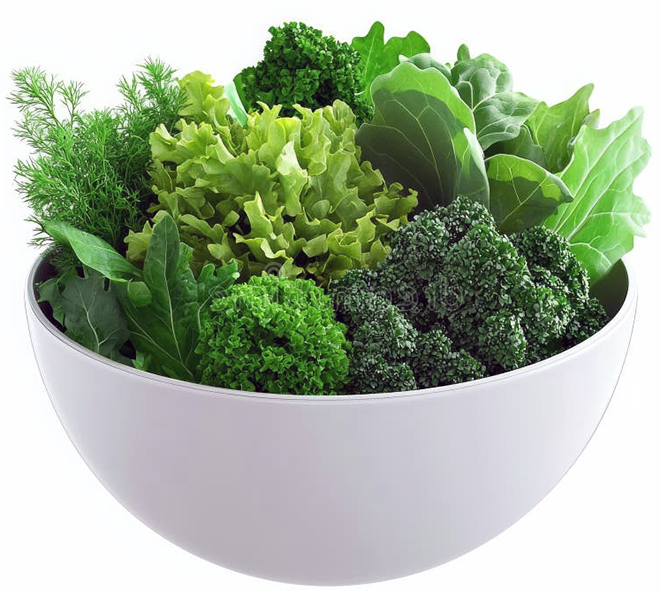 Mixed leafy greens in a bowl
Welcome to FabulousFusionFood's Leafy Greens-based Recipes Page —Leaf vegetables, also called leafy greens, vegetable greens, or simply greens, are plant leaves eaten as a vegetable. Those eaten raw in a salad can be called salad greens, whereas leaf vegetables eaten cooked can be called pot herbs.
Nearly 1,000 species of plants with edible leaves are known. Leaf vegetables most often come from short-lived herbaceous plants, such as lettuce and spinach, but also come from some woody plants. The leaves of many fodder crops (e.g. alfalfa, clover, and most grasses) are also edible by humans, but usually only as famine or processed food.
The leaves of many fodder crops are also edible by humans, but usually only as famine food. Examples include alfalfa, clover, and most grasses, including wheat and barley. Food processing, such as drying and grinding into powder or pulping and pressing for juice, may involve these crop leaves in a diet.
Leaf vegetables contain many typical plant nutrients, but being photosynthetic tissues, their vitamin K levels are particularly notable. Accordingly, users of vitamin K antagonist medications like warfarin must limit their consumption of leaf vegetables.
If leaves are cooked for food, they may be referred to in the United States as boiled greens. Leaf vegetables may be stir-fried, stewed, steamed, or consumed raw. Leaf vegetables stewed with pork is a traditional dish in soul food and Southern U.S. cuisine. They are also commonly eaten in South Asian dishes such as saag. Leafy greens can be used to wrap other ingredients into an edible package like a tortilla. Many green leafy vegetables, such as lettuce or spinach, can also be eaten raw, for example, in sandwiches or salads. A green smoothie enables large quantities of raw leafy greens to be consumed by blending the leaves with fruit and water.
The brassicaceae is a medium-sized and economically important family of flowering plants commonly known as the mustards, the crucifers, or the cabbage family. The family contains the cruciferous vegetables, including species such as Brassica oleracea (cultivated as cabbage, kale, cauliflower, broccoli and collards), Brassica rapa (turnip, Chinese cabbage, etc.), Brassica napus (rapeseed, etc.), Raphanus sativus (common radish), Armoracia rusticana (horseradish), the cut-flower Matthiola (stock) and the model organism Arabidopsis thaliana (thale cress).
This family includes important agricultural crops, particularly leafy greens, among which many vegetables such as cabbage, broccoli, cauliflower, kale, Brussels sprouts, collard greens, Savoy, kohlrabi, and gai lan (Brassica oleracea), turnip, napa cabbage, mizuna, bok choy and rapini (Brassica rapa), rocket salad/arugula (Eruca sativa), garden cress (Lepidium sativum), watercress (Nasturtium officinale) and radish (Raphanus) and a few spices like horseradish (Armoracia rusticana), wasabi (Eutrema japonicum), white, brown and black mustard (Sinapis alba, Brassica juncea and B. nigra respectively). Even if not specifically grown as leafy green vegetables, the leaves of the majority of these species can be and are consumed.
Outside the brassicaceae, the Amaranthaceae or Amaranth family are a major source of leafy greens worldwide, with the most common and well known species being Spinacia oleracea or spinach. Its leaves are a common vegetable consumed either fresh, cooked or after storage (using preservation techniques like canning, freezing, or dehydration). The taste differs considerably between cooked and raw: the high oxalate content may be reduced by blanching. So common is spinach as a leafy green that it's used as a common substitute for other local leafy greens.
Note that beetroot, a source of both an edible taproot and leafy greens. Beta vulgaris is also a member of the Amaranthaceae family, as is the closely related chard (Beta vulgaris subsp. vulgaris) which is grown for its edible stems and leafy greens.
In Africa, the leaves of cassava plants and sweet potato plants are widely consumed and leafy greens sourced from the wild are used to supplement the diet in countries across the globe.
The alphabetical list of all the leafy greens-based recipes on this site follows, (limited to 100 recipes per page). There are 3031 recipes in total:
Page 21 of 31
| Peking-style Vegetable Dumplings Origin: China | Pickled Purslane with Chilli Origin: American | Pit Pit in Coconut Cream Origin: Cook Islands |
| Pemahun Origin: Sierra Leone | Pickled Sea Aster Origin: England | Pit Pit in Coconut Cream Origin: New Caledonia |
| Penang Prawn Curry Origin: Thailand | Pickled Sea Purslane Origin: Britain | Pit Pit in Coconut Cream Origin: Wallis Futuna |
| Pèpè Soupe (Ivorian Pepper Soup) Origin: Cote dIvoire | Pickled Sea Purslane II Origin: Britain | Pit Pit in Coconut Cream Origin: Society Islands |
| Pepperpot Origin: Antigua | Pickled Spruce Tips Origin: Canada | Pit Pit in Coconut Cream Origin: Marshall Islands |
| Peri-peri Prawn Pasta Origin: South Africa | Pickled Spruce Tips Rémoulade Sauce Origin: Canada | Pit Pit in Coconut Cream Origin: Marquesas Islands |
| Perna Apruna ita Impletur Terentina (Filled Gammon of Wild Boar Terentine) Origin: Roman | Pickled Three-cornered Leek Bulbs Origin: British | Pit-oven Cooked Rabbit or Hare Origin: British |
| Pernae Cocturam (Preparation of a Ham) Origin: Roman | Pickled Wild Leek Bulbs Origin: British | Pit-roasted Pig Origin: Ancient |
| Pernam (Ham) Origin: Roman | Pickling Spice Origin: Britain | Pizza Quattro Stagioni (Four Seasons Pizza) Origin: Italy |
| Persian Jewelled Rice Origin: Iran | Pigeon Breasts Origin: Scotland | Pizza Rustica (Italian Easter Ham Pie) Origin: Ghana |
| Peruvian Ceviche Origin: Peru | Pigeon Curry Origin: India | Pizza Rustica (Italian Easter Ham Pie) Origin: Italy |
| Peruvian Goat Stew Origin: Peru | Pilau Rice Origin: India | Pizzoccheri with Miso Cabbage and Spiced Breadcrumbs Origin: Fusion |
| Pescado Frito (Fried Fish) Origin: Ecuador | Pilau Rice Origin: Britain | Placenta (Cato's Layered Cheesecake) Origin: Roman |
| Pesto Petiolata Origin: Italy | Pine Pollen Bread Origin: France | Plain Omelette with Sorrel Origin: France |
| Phaksha Pa Origin: Bhutan | Pineapple Pulissery Origin: India | Plain Pickled Fiddleheads Origin: Canada |
| Phaksha Paa (Bhutanese Pork with Chillies) Origin: Bhutan | Pineapple Sage Pound Cake Origin: American | Plantain and Coconut Beef Soup Origin: Gambia |
| Phali (Young Beet Greens in Walnut Sauce) Origin: Georgia | Pinon au Dindon (Pinon with Turkey) Origin: Togo | Plasas Origin: Sierra Leone |
| Pheasant Dopiaza Origin: Britain | Pintade à l'Afrique (African Guinea Fowl) Origin: Guinea | Plasas (Sierra Leonean Chicken Peanut Stew) Origin: Sierra Leone |
| Pheasant Game Soup Origin: Britain | Pipián (Chicken in Peanut Sauce) Origin: Philippines | Plat Songhay (Songhay Dish) Origin: Mali |
| Pheasant Stew with Whisky Origin: Scotland | Piri-piri Oil Origin: South Africa | Plat Tradicional Fula (Traditional Fulani Dish) Origin: Guinea-Bissau |
| Phool gobhi Achari Origin: India | Pisam Adulteram Versatilem (Peas or Beans à la Vitellus) Origin: Roman | Poached Bream in Mayonnaise Sauce Origin: Britain |
| Picado à Madeirense (Beef Tips, Madeiran Style) Origin: Portugal | Pisces Zomoteganon II (Fish Stewed in its Own Juice) Origin: Roman | Poached Chicken Origin: Britain |
| Picado de Rábano (Radish Salad) Origin: Guatemala | Pish-Pash Origin: India | Podhalański Barszcz na Serwatce (Tatra Whey Borscht) Origin: Poland |
| Pickled Ammassat Origin: Greenland | Pish-pash Origin: Anglo-Indian | Poha Chivda (Cabbage Chivda) Origin: India |
| Pickled Blackberries Origin: Britain | Pissenlit au Lard (Dandelion Salad with Bacon) Origin: France | Poisson au Fúmbwa (Fish with Fumbwa) Origin: Central African Republic |
| Pickled Crow Garlic Bulbs Origin: Britain | Pit Pit in Coconut Cream Origin: Papua New Guinea | Poisson Capitaine en Feuille de Bananaier (White Grouper in Banana Leaves) Origin: Burkina Faso |
| Pickled Kombu Origin: Japan | Pit Pit in Coconut Cream Origin: Fiji | Poisson Farci à la Saint-Louisienne (Stuffed Fish, in the Manner of St Louis) Origin: Senegal |
| Pickled Marsh Samphire Origin: Britain | Pit Pit in Coconut Cream Origin: Niue | Poisson Salé (Salt Fish) Origin: Mauritius |
| Pickled Muktuk Origin: Greenland | Pit Pit in Coconut Cream Origin: Papua | Poivrade Sauce Origin: Britain |
| Pickled Muktuk Origin: American | Pit Pit in Coconut Cream Origin: Samoa | Pokhlyobka (Mushroom and Barley Soup) Origin: Russia |
| Pickled Muktuk Origin: Canada | Pit Pit in Coconut Cream Origin: Tonga | Pokrzywa (Polish Spring Nettle Soup) Origin: Poland |
| Pickled Parsley Piert Origin: British | Pit Pit in Coconut Cream Origin: Vanuatu | Pollo al Curry con Pasas y Piñones (Chicken Curry with Raisins and Pine Nuts) Origin: Spain |
| Pickled Pork Hocks or Pork Belly Origin: Britain | Pit Pit in Coconut Cream Origin: Kiribati | |
| Pickled Purslane Origin: Britain | Pit Pit in Coconut Cream Origin: Federated States Micronesia |
Page 21 of 31