FabulousFusionFood's Leafy Greens-based Recipes 26th Page
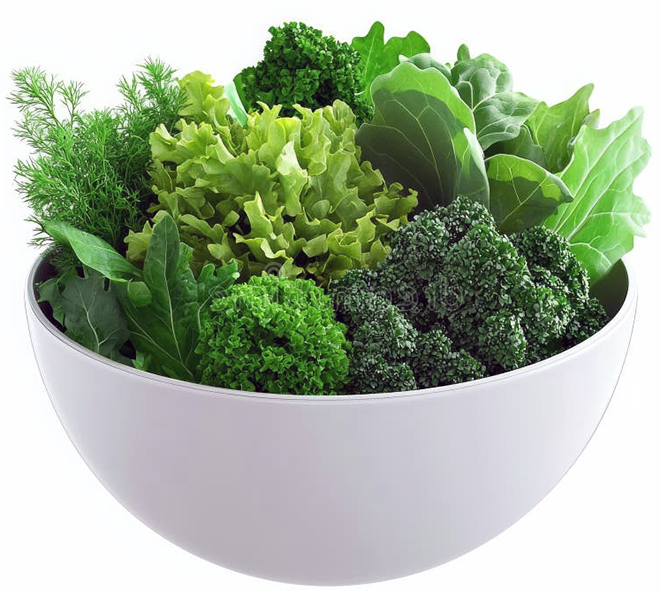 Mixed leafy greens in a bowl
Welcome to FabulousFusionFood's Leafy Greens-based Recipes Page —Leaf vegetables, also called leafy greens, vegetable greens, or simply greens, are plant leaves eaten as a vegetable. Those eaten raw in a salad can be called salad greens, whereas leaf vegetables eaten cooked can be called pot herbs.
Nearly 1,000 species of plants with edible leaves are known. Leaf vegetables most often come from short-lived herbaceous plants, such as lettuce and spinach, but also come from some woody plants. The leaves of many fodder crops (e.g. alfalfa, clover, and most grasses) are also edible by humans, but usually only as famine or processed food.
The leaves of many fodder crops are also edible by humans, but usually only as famine food. Examples include alfalfa, clover, and most grasses, including wheat and barley. Food processing, such as drying and grinding into powder or pulping and pressing for juice, may involve these crop leaves in a diet.
Leaf vegetables contain many typical plant nutrients, but being photosynthetic tissues, their vitamin K levels are particularly notable. Accordingly, users of vitamin K antagonist medications like warfarin must limit their consumption of leaf vegetables.
If leaves are cooked for food, they may be referred to in the United States as boiled greens. Leaf vegetables may be stir-fried, stewed, steamed, or consumed raw. Leaf vegetables stewed with pork is a traditional dish in soul food and Southern U.S. cuisine. They are also commonly eaten in South Asian dishes such as saag. Leafy greens can be used to wrap other ingredients into an edible package like a tortilla. Many green leafy vegetables, such as lettuce or spinach, can also be eaten raw, for example, in sandwiches or salads. A green smoothie enables large quantities of raw leafy greens to be consumed by blending the leaves with fruit and water.
The brassicaceae is a medium-sized and economically important family of flowering plants commonly known as the mustards, the crucifers, or the cabbage family. The family contains the cruciferous vegetables, including species such as Brassica oleracea (cultivated as cabbage, kale, cauliflower, broccoli and collards), Brassica rapa (turnip, Chinese cabbage, etc.), Brassica napus (rapeseed, etc.), Raphanus sativus (common radish), Armoracia rusticana (horseradish), the cut-flower Matthiola (stock) and the model organism Arabidopsis thaliana (thale cress).
This family includes important agricultural crops, particularly leafy greens, among which many vegetables such as cabbage, broccoli, cauliflower, kale, Brussels sprouts, collard greens, Savoy, kohlrabi, and gai lan (Brassica oleracea), turnip, napa cabbage, mizuna, bok choy and rapini (Brassica rapa), rocket salad/arugula (Eruca sativa), garden cress (Lepidium sativum), watercress (Nasturtium officinale) and radish (Raphanus) and a few spices like horseradish (Armoracia rusticana), wasabi (Eutrema japonicum), white, brown and black mustard (Sinapis alba, Brassica juncea and B. nigra respectively). Even if not specifically grown as leafy green vegetables, the leaves of the majority of these species can be and are consumed.
Outside the brassicaceae, the Amaranthaceae or Amaranth family are a major source of leafy greens worldwide, with the most common and well known species being Spinacia oleracea or spinach. Its leaves are a common vegetable consumed either fresh, cooked or after storage (using preservation techniques like canning, freezing, or dehydration). The taste differs considerably between cooked and raw: the high oxalate content may be reduced by blanching. So common is spinach as a leafy green that it's used as a common substitute for other local leafy greens.
Note that beetroot, a source of both an edible taproot and leafy greens. Beta vulgaris is also a member of the Amaranthaceae family, as is the closely related chard (Beta vulgaris subsp. vulgaris) which is grown for its edible stems and leafy greens.
In Africa, the leaves of cassava plants and sweet potato plants are widely consumed and leafy greens sourced from the wild are used to supplement the diet in countries across the globe.
The alphabetical list of all the leafy greens-based recipes on this site follows, (limited to 100 recipes per page). There are 3031 recipes in total:
Page 26 of 31
| Shourabit Silq bi Laban (Chard and Yoghurt Soup) Origin: Lebanon | Smoky Prawn Jollof Rice Origin: Nigeria | Sour and Spicy Pork with Noodles Origin: China |
| Si Byan (Burmese Fish Curry) Origin: Myanmar | Smoky Prawns with Tomato and Coriander Origin: Fusion | Sour Sauce Pasty Origin: England |
| Sibirskie Jeskimosy (Siberian Huskies) Origin: Siberia | Smoky Sweetcorn and Avocado Salsa Origin: South Africa | Sous Vide of Camel Ribs Origin: Fusion |
| Sichuan Hot Pot Soup Base Origin: China | Smoorsnoek with Cabbage Origin: South Africa | Soused Cornish Sardines Origin: England |
| Sidvudvu (Pumpkin Porridge) Origin: eSwatini | Sneezewort Arroz de Jambú Origin: Britain | Soused Herrings Origin: Scotland |
| Sierra Leonean Chicken and Sweet Potato Stew Origin: Sierra Leone | Snoek Bobotie Origin: South Africa | Sousi Pa (Fish with Coconut Cream) Origin: Laos |
| Sierra Leonian Egusi Soup Origin: Sierra Leone | Snoek Tacos Origin: South Africa | South African Curried Leg of Lamb Origin: India |
| Simboro (Meat with Taro Leaves and Coconut Milk) Origin: Vanuatu | Soba (Buckwheat Noodle Soup) Origin: Japan | South African Curried Peanut Soup Origin: South Africa |
| Simple Dashi Origin: Japan | Soba with Shiitake and Fucus Origin: Japan | South African Fig Jam Origin: South Africa |
| Simple Nettle Purée Origin: Britain | Solachi Kadhi (Kokam Sauce) Origin: India | South African Sorrel Soup Origin: South Africa |
| Sing Mapan Singju (Ginger Flower and Water Dropwort Singju) Origin: India | Som Tam (Thai Green Papaya Salad) Origin: Thailand | South African Tomato-hake Curry Origin: South Africa |
| Sint Eustatian Goat Water Origin: Sint Eustatius | Somali-style Liver Origin: Somaliland | Southern Style Pot of Greens Origin: American |
| Sint Maarten Roe Accras Origin: Sint Maarten | Somali-style Liver Origin: Somalia | Spaghetti alle vongole e Salicornia (Spaghetti with Clams and Samphire) Origin: Italy |
| Sint Maarten Whelk Soup Origin: Sint Maarten | Somlar Kari Saek Mouan (Chicken Red Curry) Origin: Cambodia | Spam Musubi Origin: Hawaii |
| Sisig Origin: Philippines | Somlar Mochu Sachko (Sour Beef Stew) Origin: Cambodia | Spam Musubi with Sweet Ginger Sauce Origin: Hawaii |
| Skerpikjøt (Faroese Air-dried Mutton) Origin: Denmark | Sopa de Hígado de Pollo (Chicken Liver Soup) Origin: Peru | Spanachorizo (Rice Pilaff with Spinach) Origin: Cyprus |
| Skillet Chicken Con Queso Origin: America | Sopa de Trigo Origin: Portugal | Spanagh Geragoor (Spinach and Rice Stew) Origin: Armenia |
| Slow Cooker Barbacoa Beef Origin: Mexico | Sorrel Gazpacho Origin: France | Spanagh-Banir Boerag (Cheese and Spinach Filo Bake) Origin: Armenia |
| Slow Cooker Chicken Korma Origin: Britain | Sorrel Greening Origin: Britain | Spanakopita (Spinach Pie) Origin: Greece |
| Slow Cooker Duck and Potato Massaman Curry Origin: Britain | Sorrel Pesto Origin: Italy | Spanakorizo (Spinach Rice) Origin: Greece |
| Slow Cooker Lamb Rogan Josh Origin: Britain | Sorrel Sarma Origin: North Macedonia | Spanokopita (Cheese and Spinach Pie) Origin: Greece |
| Slow Cooker Pork Adobo Burritos Origin: Mexico | Sorrel Tartlets Origin: Britain | Special Chicken Bengal Origin: Britain |
| Slow-cooked Duck Ragù for Valentine's Origin: Fusion | Soto Ayam Origin: Indonesia | Special Curry Powder Origin: South Africa |
| Slow-cooked Lamb Curry Origin: Britain | Soto Ayam Origin: Malaysia | Special Efo Riro Origin: Nigeria |
| Slow-cooked Lamb Madras Origin: Britain | Soto Ayam Origin: Singapore | Special Fried Rice with Oxeye Daisy Greens Origin: Fusion |
| Slow-cooked Octopus with Blanched Sea Blite or Marsh Samphire Salad Origin: Britain | Soup à la Julienne Origin: British | Special Jaipuri Masala Origin: India |
| Slow-cooked Ox Cheek Rendang Origin: Singapore | Soup Maigre Origin: British | Speckknoedel (Austrian Bacon Dumplings) Origin: Austria |
| Slow-roasted Lamb Shanks with Tomatoes and Olives Origin: Australia | Soupe aux pois et la viande (Pea Soup and Meat) Origin: Guinea-Bissau | Spee Chrout (Mustard Green Pickle) Origin: Cambodia |
| Slow-roasted Lamb with Advieh Origin: Fusion | Soupe Chanterelle d'Or (Golden Chanterelle Soup) Origin: France | Speedy Italian Pizzas Origin: Britain |
| Smoked Catfish with Seashore Greens Origin: Fusion | Soupe d'Illane (Ilan Soup) Origin: Morocco | Spice-infused Oli Origin: Britain |
| Smoked Haddock and Champ Cakes Origin: Northern Ireland | Soupe Djiboutienne (Djibouti Soup) Origin: Djibouti | Spiced Buttermilk Origin: India |
| Smoked Salmon and Avocado Nori Rolls Origin: Japan | Soupou Gertö (Chicken with Tomato Sauce and Sweet Potatoes) Origin: Guinea | Spiced Chestnut, Feta and Squash Filo Pie Origin: Britain |
| Smoked Salmon Mousse Origin: Scotland | Soupou Tehou (Beef Soup) Origin: Guinea | |
| Smoky Fish Skewers Origin: Britain | Soupoukanja (Goat Stew with Okra) Origin: Senegal |
Page 26 of 31