FabulousFusionFood's Leafy Greens-based Recipes 31st Page
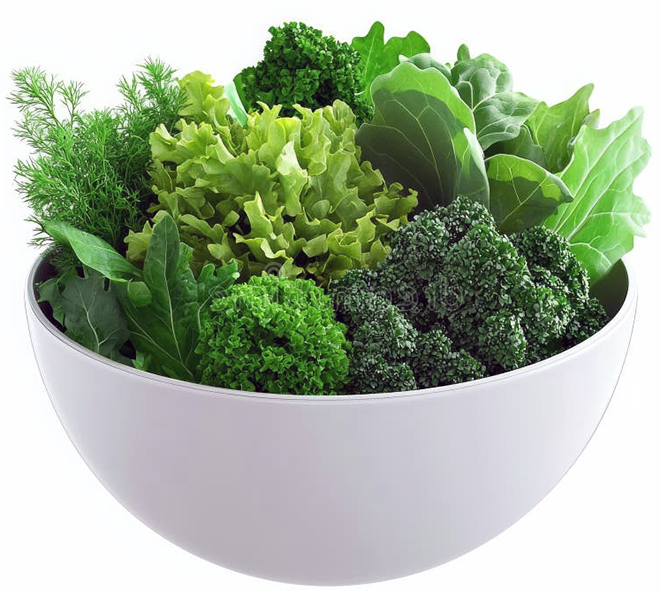 Mixed leafy greens in a bowl
Welcome to FabulousFusionFood's Leafy Greens-based Recipes Page —Leaf vegetables, also called leafy greens, vegetable greens, or simply greens, are plant leaves eaten as a vegetable. Those eaten raw in a salad can be called salad greens, whereas leaf vegetables eaten cooked can be called pot herbs.
Nearly 1,000 species of plants with edible leaves are known. Leaf vegetables most often come from short-lived herbaceous plants, such as lettuce and spinach, but also come from some woody plants. The leaves of many fodder crops (e.g. alfalfa, clover, and most grasses) are also edible by humans, but usually only as famine or processed food.
The leaves of many fodder crops are also edible by humans, but usually only as famine food. Examples include alfalfa, clover, and most grasses, including wheat and barley. Food processing, such as drying and grinding into powder or pulping and pressing for juice, may involve these crop leaves in a diet.
Leaf vegetables contain many typical plant nutrients, but being photosynthetic tissues, their vitamin K levels are particularly notable. Accordingly, users of vitamin K antagonist medications like warfarin must limit their consumption of leaf vegetables.
If leaves are cooked for food, they may be referred to in the United States as boiled greens. Leaf vegetables may be stir-fried, stewed, steamed, or consumed raw. Leaf vegetables stewed with pork is a traditional dish in soul food and Southern U.S. cuisine. They are also commonly eaten in South Asian dishes such as saag. Leafy greens can be used to wrap other ingredients into an edible package like a tortilla. Many green leafy vegetables, such as lettuce or spinach, can also be eaten raw, for example, in sandwiches or salads. A green smoothie enables large quantities of raw leafy greens to be consumed by blending the leaves with fruit and water.
The brassicaceae is a medium-sized and economically important family of flowering plants commonly known as the mustards, the crucifers, or the cabbage family. The family contains the cruciferous vegetables, including species such as Brassica oleracea (cultivated as cabbage, kale, cauliflower, broccoli and collards), Brassica rapa (turnip, Chinese cabbage, etc.), Brassica napus (rapeseed, etc.), Raphanus sativus (common radish), Armoracia rusticana (horseradish), the cut-flower Matthiola (stock) and the model organism Arabidopsis thaliana (thale cress).
This family includes important agricultural crops, particularly leafy greens, among which many vegetables such as cabbage, broccoli, cauliflower, kale, Brussels sprouts, collard greens, Savoy, kohlrabi, and gai lan (Brassica oleracea), turnip, napa cabbage, mizuna, bok choy and rapini (Brassica rapa), rocket salad/arugula (Eruca sativa), garden cress (Lepidium sativum), watercress (Nasturtium officinale) and radish (Raphanus) and a few spices like horseradish (Armoracia rusticana), wasabi (Eutrema japonicum), white, brown and black mustard (Sinapis alba, Brassica juncea and B. nigra respectively). Even if not specifically grown as leafy green vegetables, the leaves of the majority of these species can be and are consumed.
Outside the brassicaceae, the Amaranthaceae or Amaranth family are a major source of leafy greens worldwide, with the most common and well known species being Spinacia oleracea or spinach. Its leaves are a common vegetable consumed either fresh, cooked or after storage (using preservation techniques like canning, freezing, or dehydration). The taste differs considerably between cooked and raw: the high oxalate content may be reduced by blanching. So common is spinach as a leafy green that it's used as a common substitute for other local leafy greens.
Note that beetroot, a source of both an edible taproot and leafy greens. Beta vulgaris is also a member of the Amaranthaceae family, as is the closely related chard (Beta vulgaris subsp. vulgaris) which is grown for its edible stems and leafy greens.
In Africa, the leaves of cassava plants and sweet potato plants are widely consumed and leafy greens sourced from the wild are used to supplement the diet in countries across the globe.
The alphabetical list of all the leafy greens-based recipes on this site follows, (limited to 100 recipes per page). There are 3031 recipes in total:
Page 31 of 31
| Xiao Long Xia (Garlic-braised Crayfish) Origin: China | Yebeh (White Yam Porridge) Origin: Sierra Leone | Zanzibar Fish Curry Origin: Tanzania |
| Xicoies (Andorran Dandelion Salad) Origin: Andorra | Yellow Curry with Swiss Chard and Tofu Origin: Fusion | Zarzuela de Mariscos (Seafood Zarzuela) Origin: Spain |
| Yakisoba Origin: Japan | Yellow Split Pea Bhuna Kedgeree Origin: Anglo-Indian | Zavla (Dried Prawn Curry) Origin: India |
| Yalanchy Sarma (Armenian Stuffed Vine Leaves) Origin: Armenia | Yen Thongba (Manipuri Chicken Curry) Origin: India | Zelka Mandza (Macedonian Cabbage Stew) Origin: North Macedonia |
| Yalanci Dolma (Stuffed Vine Leaves) Origin: Northern Cyprus | Yoghurt Sharbat Origin: India | Zelnik (Macedoniqn Spinach Pie) Origin: North Macedonia |
| Yam with Greens, Onion, and Okra Origin: Nigeria | Ysgwydd Cig Oen Cymreig wedi ei bobi'n araf â chyri (Slow-cooked curried shoulder of Welsh Lamb) Origin: Welsh | Zhoug Origin: Yemen |
| Yaprak Sarmasi (Vine Leaf Rolls) Origin: Turkey | Ysgwydd Oen Mewn Dull Gwledig (Rustic Lamb Shoulder Roast) Origin: Welsh | Zom (Bitter Greens with Meat) Origin: Cameroon |
| Yaroa Dominicana Origin: Dominican Republic | Zürcher Eintopf (Zürich Style Hotpot) Origin: Switzerland | Zupa Szczaiona (Sorrel Soup with Sour Cream) Origin: Poland |
| Yarpakh Dolmasy (Vine Leaves Stuffed with Lamb and Rice) Origin: Azerbaijan | Z'habitants (Martinique Callaloo) Origin: Martinique | Zuppa di lenticchie di Capodann (Italian New Year Lentil Soup) Origin: Italy |
| Yarrow Tea Origin: Britain | Zafrani Murgh Origin: India | |
| Yassa Au Poulet de la Casamance (Chicken Yassa in the Manner of Casamarance) Origin: Senegal | Zambezi Fish Bobotie Origin: Zimbabwe |
Page 31 of 31