FabulousFusionFood's Leafy Greens-based Recipes 25th Page
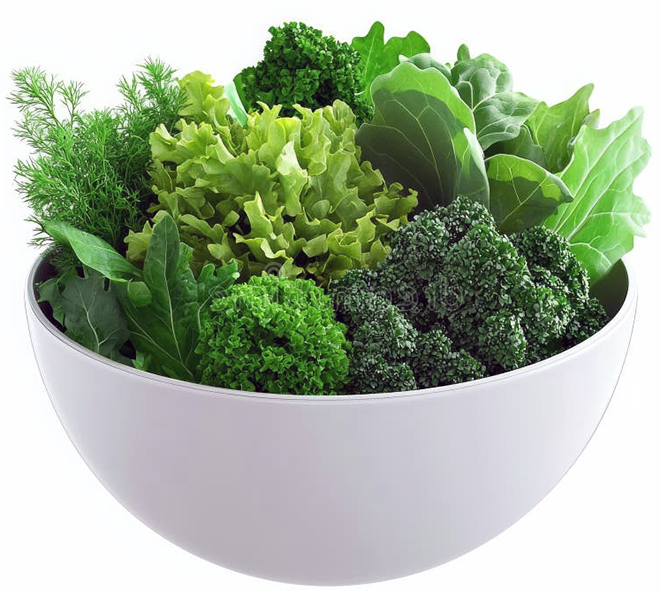 Mixed leafy greens in a bowl
Welcome to FabulousFusionFood's Leafy Greens-based Recipes Page —Leaf vegetables, also called leafy greens, vegetable greens, or simply greens, are plant leaves eaten as a vegetable. Those eaten raw in a salad can be called salad greens, whereas leaf vegetables eaten cooked can be called pot herbs.
Nearly 1,000 species of plants with edible leaves are known. Leaf vegetables most often come from short-lived herbaceous plants, such as lettuce and spinach, but also come from some woody plants. The leaves of many fodder crops (e.g. alfalfa, clover, and most grasses) are also edible by humans, but usually only as famine or processed food.
The leaves of many fodder crops are also edible by humans, but usually only as famine food. Examples include alfalfa, clover, and most grasses, including wheat and barley. Food processing, such as drying and grinding into powder or pulping and pressing for juice, may involve these crop leaves in a diet.
Leaf vegetables contain many typical plant nutrients, but being photosynthetic tissues, their vitamin K levels are particularly notable. Accordingly, users of vitamin K antagonist medications like warfarin must limit their consumption of leaf vegetables.
If leaves are cooked for food, they may be referred to in the United States as boiled greens. Leaf vegetables may be stir-fried, stewed, steamed, or consumed raw. Leaf vegetables stewed with pork is a traditional dish in soul food and Southern U.S. cuisine. They are also commonly eaten in South Asian dishes such as saag. Leafy greens can be used to wrap other ingredients into an edible package like a tortilla. Many green leafy vegetables, such as lettuce or spinach, can also be eaten raw, for example, in sandwiches or salads. A green smoothie enables large quantities of raw leafy greens to be consumed by blending the leaves with fruit and water.
The brassicaceae is a medium-sized and economically important family of flowering plants commonly known as the mustards, the crucifers, or the cabbage family. The family contains the cruciferous vegetables, including species such as Brassica oleracea (cultivated as cabbage, kale, cauliflower, broccoli and collards), Brassica rapa (turnip, Chinese cabbage, etc.), Brassica napus (rapeseed, etc.), Raphanus sativus (common radish), Armoracia rusticana (horseradish), the cut-flower Matthiola (stock) and the model organism Arabidopsis thaliana (thale cress).
This family includes important agricultural crops, particularly leafy greens, among which many vegetables such as cabbage, broccoli, cauliflower, kale, Brussels sprouts, collard greens, Savoy, kohlrabi, and gai lan (Brassica oleracea), turnip, napa cabbage, mizuna, bok choy and rapini (Brassica rapa), rocket salad/arugula (Eruca sativa), garden cress (Lepidium sativum), watercress (Nasturtium officinale) and radish (Raphanus) and a few spices like horseradish (Armoracia rusticana), wasabi (Eutrema japonicum), white, brown and black mustard (Sinapis alba, Brassica juncea and B. nigra respectively). Even if not specifically grown as leafy green vegetables, the leaves of the majority of these species can be and are consumed.
Outside the brassicaceae, the Amaranthaceae or Amaranth family are a major source of leafy greens worldwide, with the most common and well known species being Spinacia oleracea or spinach. Its leaves are a common vegetable consumed either fresh, cooked or after storage (using preservation techniques like canning, freezing, or dehydration). The taste differs considerably between cooked and raw: the high oxalate content may be reduced by blanching. So common is spinach as a leafy green that it's used as a common substitute for other local leafy greens.
Note that beetroot, a source of both an edible taproot and leafy greens. Beta vulgaris is also a member of the Amaranthaceae family, as is the closely related chard (Beta vulgaris subsp. vulgaris) which is grown for its edible stems and leafy greens.
In Africa, the leaves of cassava plants and sweet potato plants are widely consumed and leafy greens sourced from the wild are used to supplement the diet in countries across the globe.
The alphabetical list of all the leafy greens-based recipes on this site follows, (limited to 100 recipes per page). There are 3031 recipes in total:
Page 25 of 31
| Sarson Saag Gosht (Lamb and Rapeseed Greens Curry with Yoghurt) Origin: India | Scottish Pickled Eggs Origin: Scotland | Seaweed Soup II Origin: Scotland |
| Sashimi Origin: Japan | Scottish Pickled Herring Origin: Scotland | Seaweed Wolfberry Cupcakes Origin: Britain |
| Satay Origin: Indonesia | Scottish Potted Herring Origin: Scotland | Seaweed, Greens, and Feta Spring Omelette Origin: Britain |
| Satay Chicken Curry Origin: Malaysia | Scurvy Grass and Rice Origin: Britain | Seengre ke Satha Tori Kari (Courgette Curry with Radish Pods) Origin: India |
| Sathe Curry (Beef and Coconut Curry) Origin: Sri Lanka | Scurvy Grass Salt Origin: Britain | Seeni Sambol (Sri Lankan Beetroot Curry) Origin: Sri Lanka |
| Satsabeli Bazha (Poultry in Walnut Sauce) Origin: Georgia | Sea Aster Aloo Origin: Fusion | Seitan Origin: Britain |
| Sauce aux Arachides (Guinean Peanut Sauce) Origin: Guinea | Sea Aster and Cheese Strata Origin: Italy | Semizotu Yemegi (Turkish Purslane Stew) Origin: Turkey |
| Sauce Chivry Origin: France | Sea Aster and Parmesan Croquettes Origin: British | Senegalese Soup Origin: Jamaica |
| Sauce d'Adémé aux Fruits de Mer (Seafood with Adémé Sauce) Origin: Togo | Sea Aster Fritters Origin: British | Serrated Wrack Tea Origin: Canada |
| Sauce Feuilles de Manioc Camerounaise (Cameroonian Cassava Leaf Sauce) Origin: Cameroon | Sea Aster Pasta Origin: British | Serviceberry Mini Tarts Origin: Canada |
| Sauce Koumrangan (Hibiscus Leaf Sauce) Origin: Chad | Sea Aster Pesto Origin: Britain | Setsamandi (Lamb, Rice and Herb Gruel) Origin: Georgia |
| Sauce Légume Origin: Benin | Sea Aster Rice Origin: British | Sewin Gyda Saws Perlysiau (Sea Trout with Herb Sauce) Origin: Welsh |
| Sauce Moundourou (Moundourou Leaf Sauce) Origin: Chad | Sea Bass a la Grecque Origin: France | Seychelles Curry Paste Origin: Seychelles |
| Sauce Oseille (Sorrel Sauce) Origin: Burkina Faso | Sea Bass with Sea Beet and Marsh Samphire Origin: Britain | Shahi Chicken Korma Origin: India |
| Sauci Yohss (Gambian Mussel Meats in Tomato Sauce with Potatoes) Origin: Gambia | Sea Beet Greens Fritters Origin: Britain | Shahi Murgh Korma (Royal Chicken Korma) Origin: India |
| Sauerkraut Filling for Vareniki Origin: Ukraine | Sea Lettuce Seasoning Origin: Ireland | Shaiyah (Pan-fried Meat) Origin: South Sudan |
| Sautéed Spring Greens Origin: Britain | Sea Plantain Risotto Origin: Britain | Shami Kebab Origin: India |
| Sautéed Collard Greens Origin: American | Sea Purslane and Sea Rocket Purée Origin: Britain | Shatkora Beef Curry BIR Origin: Britain |
| Sautéed Daisy Greens with Roasted Baby Beetroot Origin: Britain | Sea Purslane Dhal Origin: Britain | Shav (Cold Polish Sorrel Soup) Origin: Poland |
| Sautéed Mushrooms and Rocket Origin: Britain | Sea Purslane, Potatoes and Peas Origin: Britain | Shchi (Russian Cabbage Soup) Origin: Russia |
| Sautéed Mustard Greens Origin: Britain | Sea Spaghetti alla Bolognese Origin: Fusion | Sheftalia Kebab Origin: Cyprus |
| Savoury Farro Breakfast Porridge Origin: Fusion | Sea Spaghetti and Carrot Salad Origin: Ireland | Shellfish and Leek Roly-poly Origin: Britain |
| Savoury Kale Colcannon Origin: Ireland | Sea Spaghetti with Garlic and Butter Origin: Ireland | Shellfish Seaweed Pudding Origin: Ancient |
| Saws Ffenigl (Fennel Sauce) Origin: Welsh | Sea Spaghetti with Summer Truffles Origin: Ireland | Sherried Chicken Liver Brochettes Origin: Britain |
| Sbeis Piclo Du (Black Pickling Spice) Origin: Welsh | Seafood Amok Origin: Cambodia | Shi San Xiang Fen (Thirteen Spice Powder) Origin: China |
| Scallop and Prawn Chu Chee Origin: Thailand | Seafood Chili Origin: American | Shigni (Somali Hot Sauce) Origin: Somalia |
| Scallop Pie Origin: Northern Ireland | Seafood Pastechi Origin: Sint Eustatius | Shiitake Dashi Origin: Japan |
| Schalada Origin: Morocco | Seafood Pastechi Origin: Saba | Shin Ngoa Lap (Spicy Beef Salad) Origin: Laos |
| Schwarzwurz Origin: Germany | Seafood Pastechi Origin: Aruba | Shinwari Karahi Origin: Pakistan |
| Scotch Kale Origin: Scotland | Seafood Pastechi Origin: Curacao | Shish Kebabs Origin: Britain |
| Scotch Stew Origin: Scotland | Seaweed Flour Biscuits Origin: Britain | Shish Tawuq (Chicken Kebab with Bharat Spices) Origin: Syria |
| Scots Colcannon Origin: Scotland | Seaweed Relish Origin: Britain | Shoko (Nigerian Beef and Spinach) Origin: Nigeria |
| Scots Pine Syrup Origin: Britain | Seaweed Ribollita Origin: Fusion | |
| Scottish Jugged Hare Origin: Scotland | Seaweed Seasoning Origin: Britain |
Page 25 of 31