FabulousFusionFood's Leafy Greens-based Recipes 13th Page
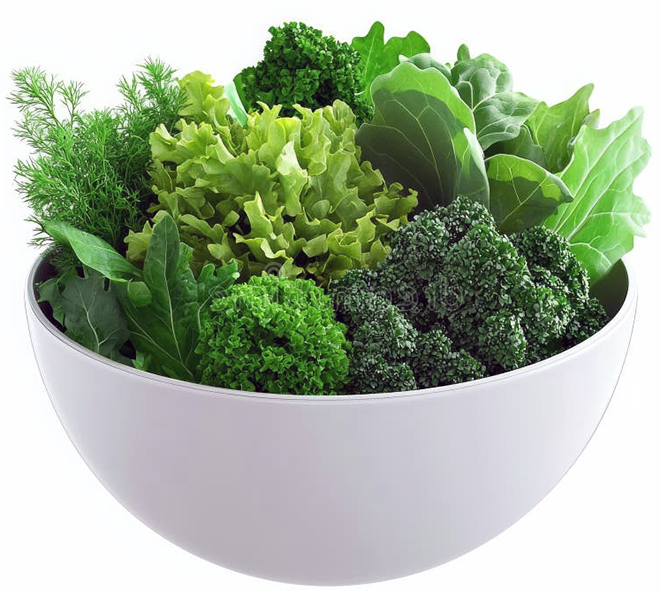 Mixed leafy greens in a bowl
Welcome to FabulousFusionFood's Leafy Greens-based Recipes Page —Leaf vegetables, also called leafy greens, vegetable greens, or simply greens, are plant leaves eaten as a vegetable. Those eaten raw in a salad can be called salad greens, whereas leaf vegetables eaten cooked can be called pot herbs.
Nearly 1,000 species of plants with edible leaves are known. Leaf vegetables most often come from short-lived herbaceous plants, such as lettuce and spinach, but also come from some woody plants. The leaves of many fodder crops (e.g. alfalfa, clover, and most grasses) are also edible by humans, but usually only as famine or processed food.
The leaves of many fodder crops are also edible by humans, but usually only as famine food. Examples include alfalfa, clover, and most grasses, including wheat and barley. Food processing, such as drying and grinding into powder or pulping and pressing for juice, may involve these crop leaves in a diet.
Leaf vegetables contain many typical plant nutrients, but being photosynthetic tissues, their vitamin K levels are particularly notable. Accordingly, users of vitamin K antagonist medications like warfarin must limit their consumption of leaf vegetables.
If leaves are cooked for food, they may be referred to in the United States as boiled greens. Leaf vegetables may be stir-fried, stewed, steamed, or consumed raw. Leaf vegetables stewed with pork is a traditional dish in soul food and Southern U.S. cuisine. They are also commonly eaten in South Asian dishes such as saag. Leafy greens can be used to wrap other ingredients into an edible package like a tortilla. Many green leafy vegetables, such as lettuce or spinach, can also be eaten raw, for example, in sandwiches or salads. A green smoothie enables large quantities of raw leafy greens to be consumed by blending the leaves with fruit and water.
The brassicaceae is a medium-sized and economically important family of flowering plants commonly known as the mustards, the crucifers, or the cabbage family. The family contains the cruciferous vegetables, including species such as Brassica oleracea (cultivated as cabbage, kale, cauliflower, broccoli and collards), Brassica rapa (turnip, Chinese cabbage, etc.), Brassica napus (rapeseed, etc.), Raphanus sativus (common radish), Armoracia rusticana (horseradish), the cut-flower Matthiola (stock) and the model organism Arabidopsis thaliana (thale cress).
This family includes important agricultural crops, particularly leafy greens, among which many vegetables such as cabbage, broccoli, cauliflower, kale, Brussels sprouts, collard greens, Savoy, kohlrabi, and gai lan (Brassica oleracea), turnip, napa cabbage, mizuna, bok choy and rapini (Brassica rapa), rocket salad/arugula (Eruca sativa), garden cress (Lepidium sativum), watercress (Nasturtium officinale) and radish (Raphanus) and a few spices like horseradish (Armoracia rusticana), wasabi (Eutrema japonicum), white, brown and black mustard (Sinapis alba, Brassica juncea and B. nigra respectively). Even if not specifically grown as leafy green vegetables, the leaves of the majority of these species can be and are consumed.
Outside the brassicaceae, the Amaranthaceae or Amaranth family are a major source of leafy greens worldwide, with the most common and well known species being Spinacia oleracea or spinach. Its leaves are a common vegetable consumed either fresh, cooked or after storage (using preservation techniques like canning, freezing, or dehydration). The taste differs considerably between cooked and raw: the high oxalate content may be reduced by blanching. So common is spinach as a leafy green that it's used as a common substitute for other local leafy greens.
Note that beetroot, a source of both an edible taproot and leafy greens. Beta vulgaris is also a member of the Amaranthaceae family, as is the closely related chard (Beta vulgaris subsp. vulgaris) which is grown for its edible stems and leafy greens.
In Africa, the leaves of cassava plants and sweet potato plants are widely consumed and leafy greens sourced from the wild are used to supplement the diet in countries across the globe.
The alphabetical list of all the leafy greens-based recipes on this site follows, (limited to 100 recipes per page). There are 3031 recipes in total:
Page 13 of 31
| Honey and Lemon Carragheen Pudding Origin: Ireland | Ikan Bungkus Papua (Papuan Fish Wrap) Origin: Papua | Istrian Jota Origin: Croatia |
| Honey Mushroom Stuffing Origin: American | Ikan Sabuko (Grilled Tamarind Fish) Origin: East Timor | Italianate Warm Dandelion Salad Origin: British |
| Hong Kong Curry Fish Balls Origin: Hong Kong | Ila Alasepo (Okra and Spinach Soup) Origin: Nigeria | Ius Album in Assum Leporem (Hare's Blood, Liver and Lung Ragout) Origin: Roman |
| Hong Kong Snake Soup Origin: Hong Kong | In Omne Genus Conchyliorum (For All Kinds of Shellfish) Origin: Roman | Ius in copadiis (Sauce for Choice Cuts) Origin: Roman |
| Hong Kong Style Braised Beef Brisket in Chu Hou Paste Origin: Hong Kong | Indian Curry Paste Origin: Fusion | Ius in Pelamyde Assa (Sauce for Baked Young Tuna) Origin: Roman |
| Hong Shao Rou (Red-braised pork belly) Origin: Britain | Indian Koftas Origin: Fusion | Ius in Perdices (Sauce for Partridges) Origin: Roman |
| Hoppin' John Origin: America | Indian Restaurant Curry Base Origin: Britain | Ius in Pisce Asso (Sauce for Baked Fish) Origin: Roman |
| Hor Mok Pla Chawnn Bai-Yaw (Steamed Serpent Head Fish Curry with Indian Mulberry Leaf) Origin: Thailand | Indian-spiced Leftover Christmas Roast Veg Origin: Britain | Ius in Thynno Elixo (Sauce for Poached Tuna) Origin: Roman |
| Hor Mok Pla Chawnn Bai-Yaw (Steamed Serpent Head Fish Curry with Indian Mulberry Leaf) Origin: Thailand | Indian-style Charred Chicken Origin: Fusion | Ius Viride in Avibus (Green Sauce for Birds) Origin: Roman |
| Horehound Candy Origin: Britain | Indian-style Spicy Baby Potatoes Origin: Britain | Iwuk Efere Origin: Nigeria |
| Horehound Candy II Origin: Britain | Indonesian Black Squid Curry Origin: Indonesia | Jabalí con Higos en Rioja (Wild Boar with Figs in Rioja) Origin: Spain |
| Horta Vounou Salata (Wild Greens Salad) Origin: Greece | Indonesian Soufflé Omelette Origin: Indonesia | Jackfruit Biryani Origin: Britain |
| Hortapita Origin: Greece | Ingelegde Vis II (Pickled Fish) Origin: South Africa | Jackfruit Kofta Curry Origin: India |
| Hot and Sour Sauce Origin: China | Inglad Sill (Swedish Pickled Herring) Origin: Sweden | Jalfrezi Masala Origin: India |
| Hot and Sour Venison Soup with Honey Fungus Origin: Britain | Insalata con Fiori di Malva e Salicornia (Mallow Flower and Marsh Samphire Summer Salad) Origin: Italy | Jamaican Mutton and Lime Leaf Origin: Jamaica |
| Hot Curry Powder Origin: Anglo-Indian | Insane Trini Hot Sauce Origin: Trinidad | Japanese Curry Powder II Origin: Japan |
| Hot Green Tamarind Chicken Origin: Indonesia | Intuba (Endive) Origin: Roman | Japanese Knotweed and Sorrel Tart Origin: Britain |
| Hot Jalfrezi Spices Origin: African Fusion | Iraqi Adana Kebab Origin: Iraq | Japanese Knotweed Salsa Verde Origin: America |
| Hot Sesame Beef Origin: China | Iraqi Dolma Origin: Iraq | Japanese-style Fish Finger Curry Origin: Britain |
| Hot Water Dough Dumplings Origin: China | Irio Origin: Kenya | Japraci (Collard Greens Dolmas) Origin: Montenegro |
| Hotch Potch Origin: Scotland | Irish Cabbage Parcels Origin: Ireland | Japrak (Mutton-stuffed Vine Leaves) Origin: Bosnia |
| Houses of Parliament Soup Origin: British | Irish Carbonnade Origin: Ireland | Javaanse Bami Origin: Suriname |
| Huachingngo Yucateco (Red Snapper, Yucatan Style) Origin: Mexico | Irish Lamb and Potato Curry Origin: Ireland | Jeera Rice (Cumin Rice) Origin: India |
| Huli Podi (Udupi Sambar Powder) Origin: India | Irish Lamb Stew Origin: Ireland | Jeerjeer Salata Origin: Sudan |
| Iced Curry Soup Origin: Britain | Irish Lamb Stew Origin: Ireland | Jerusalem Artichoke and Kale Gratin Origin: Britain |
| Iced Raspberry and Eggnog Trifle Cake Origin: Britain | Irish Moss Blancmange Origin: Ireland | Johl Momo Origin: Nepal |
| Ichiban Dashi (Basic Japanese Soup Stock) Origin: Japan | Irish Moss Ginger Mousse Origin: Ireland | Johonjö Origin: Equatorial Guinea |
| Idichakka Thoran (Raw Jackfruit Curry) Origin: India | Irish Moss Jelly Origin: Ireland | Judias Verdes con Salsa de Tomate (Green Beans in Tomato Sauce) Origin: Spain |
| Ifisashi (Bean Leaves with Peanuts) Origin: Zambia | Irish Sorrel Soup Origin: Ireland | Jungle Curry Prawns Origin: Thailand |
| Igisafuliya (Chicken Plantain and Vegetable Stew) Origin: Rwanda | Irn-Bru Pakoras Origin: Scotland | Kaapse Kerrievis (Cape Malay Pickled Fish) Origin: South Africa |
| Igitoke Origin: Rwanda | Isi Ewu (Spiced Goat Head) Origin: Nigeria | Kaapse Kerrievis (Cape Malay Pickled Fish) Origin: South Africa |
| Ijogó (Cabbage and Smoked Fish Stew) Origin: Sao Tome | Isombe Origin: Rwanda | Kabocha Squash and Kale Galette Origin: America |
| Ika Lolo (Fish in Taro Leaves) Origin: Tonga | Ispanaklı Kek (Spinach Cake) Origin: Turkey | |
| Ikan Assam Pedas (Hot-and-sour Fish Stew) Origin: Malaysia | Isso Vade Origin: Sri Lanka |
Page 13 of 31