FabulousFusionFood's Leafy Greens-based Recipes 6th Page
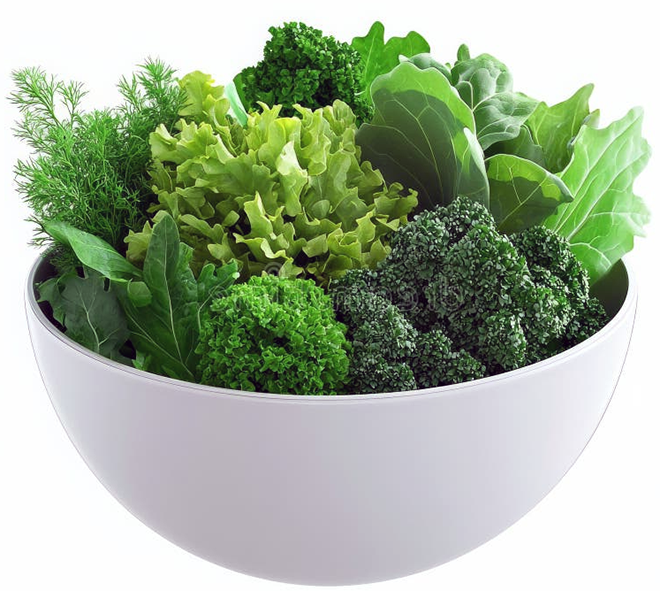 Mixed leafy greens in a bowl
Welcome to FabulousFusionFood's Leafy Greens-based Recipes Page —Leaf vegetables, also called leafy greens, vegetable greens, or simply greens, are plant leaves eaten as a vegetable. Those eaten raw in a salad can be called salad greens, whereas leaf vegetables eaten cooked can be called pot herbs.
Nearly 1,000 species of plants with edible leaves are known. Leaf vegetables most often come from short-lived herbaceous plants, such as lettuce and spinach, but also come from some woody plants. The leaves of many fodder crops (e.g. alfalfa, clover, and most grasses) are also edible by humans, but usually only as famine or processed food.
The leaves of many fodder crops are also edible by humans, but usually only as famine food. Examples include alfalfa, clover, and most grasses, including wheat and barley. Food processing, such as drying and grinding into powder or pulping and pressing for juice, may involve these crop leaves in a diet.
Leaf vegetables contain many typical plant nutrients, but being photosynthetic tissues, their vitamin K levels are particularly notable. Accordingly, users of vitamin K antagonist medications like warfarin must limit their consumption of leaf vegetables.
If leaves are cooked for food, they may be referred to in the United States as boiled greens. Leaf vegetables may be stir-fried, stewed, steamed, or consumed raw. Leaf vegetables stewed with pork is a traditional dish in soul food and Southern U.S. cuisine. They are also commonly eaten in South Asian dishes such as saag. Leafy greens can be used to wrap other ingredients into an edible package like a tortilla. Many green leafy vegetables, such as lettuce or spinach, can also be eaten raw, for example, in sandwiches or salads. A green smoothie enables large quantities of raw leafy greens to be consumed by blending the leaves with fruit and water.
The brassicaceae is a medium-sized and economically important family of flowering plants commonly known as the mustards, the crucifers, or the cabbage family. The family contains the cruciferous vegetables, including species such as Brassica oleracea (cultivated as cabbage, kale, cauliflower, broccoli and collards), Brassica rapa (turnip, Chinese cabbage, etc.), Brassica napus (rapeseed, etc.), Raphanus sativus (common radish), Armoracia rusticana (horseradish), the cut-flower Matthiola (stock) and the model organism Arabidopsis thaliana (thale cress).
This family includes important agricultural crops, particularly leafy greens, among which many vegetables such as cabbage, broccoli, cauliflower, kale, Brussels sprouts, collard greens, Savoy, kohlrabi, and gai lan (Brassica oleracea), turnip, napa cabbage, mizuna, bok choy and rapini (Brassica rapa), rocket salad/arugula (Eruca sativa), garden cress (Lepidium sativum), watercress (Nasturtium officinale) and radish (Raphanus) and a few spices like horseradish (Armoracia rusticana), wasabi (Eutrema japonicum), white, brown and black mustard (Sinapis alba, Brassica juncea and B. nigra respectively). Even if not specifically grown as leafy green vegetables, the leaves of the majority of these species can be and are consumed.
Outside the brassicaceae, the Amaranthaceae or Amaranth family are a major source of leafy greens worldwide, with the most common and well known species being Spinacia oleracea or spinach. Its leaves are a common vegetable consumed either fresh, cooked or after storage (using preservation techniques like canning, freezing, or dehydration). The taste differs considerably between cooked and raw: the high oxalate content may be reduced by blanching. So common is spinach as a leafy green that it's used as a common substitute for other local leafy greens.
Note that beetroot, a source of both an edible taproot and leafy greens. Beta vulgaris is also a member of the Amaranthaceae family, as is the closely related chard (Beta vulgaris subsp. vulgaris) which is grown for its edible stems and leafy greens.
In Africa, the leaves of cassava plants and sweet potato plants are widely consumed and leafy greens sourced from the wild are used to supplement the diet in countries across the globe.
The alphabetical list of all the leafy greens-based recipes on this site follows, (limited to 100 recipes per page). There are 3209 recipes in total:
Page 6 of 33
| Cari Mouton (Mutton Curry) Origin: Saint Pierre | Catalan Spinach Salad Origin: Andorra | Charquicán (Traditional Chilean Stew) Origin: Chile |
| Cari Ourite (Octopus Curry) Origin: Mauritius | Cauliflower Roti Origin: India | Charred Spicy Salsa Origin: America |
| Cari Poisson (Mauritian Fish Curry) Origin: Mauritius | Cauliflower, Mushroom and Carlin Peas Curry Origin: Britain | Chasni Sauce Origin: Britain |
| Cari Poisson (Fish Curry) Origin: Mauritius | Cavolo Agra (Cabbage with Bacon and Fennel Seeds) Origin: Italy | Chebeh Rubyan (Prawn Balls) Origin: UAE |
| Caribbean Pork Origin: Caribbean | Cawl Berw Dŵr â Thatws (Watercress and Potato Soup) Origin: Welsh | Chebeh Rubyan (Prawn Balls) Origin: Oman |
| Caribbean-style Chicken Curry Origin: Fusion | Cawl Daandl Poethion (Nettle Soup) Origin: Welsh | Chebeh Rubyan (Prawn Balls) Origin: Iraq |
| Caribische kruidenmix (Caribbean Spice Blend) Origin: Bonaire | Cawl Letysen (Lettuce Soup) Origin: Welsh | Chebeh Rubyan (Prawn Balls) Origin: Qatar |
| Caril de Camarão (Prawn Curry) Origin: Mozambique | Cawl Llysiau'r Gaeaf (Winter Vegetable Soup) Origin: Welsh | Chebeh Rubyan (Prawn Balls) Origin: Saudi Arabia |
| Caril de Camarão (Portuguese Prawn Curry) Origin: Portugal | Caws Gafr gyda Betys a Llysiau Gwyllt (Goat's Cheese with Beetroot and Wild Herbs) Origin: Welsh (Patagonia) | Chebeh Rubyan (Prawn Balls) Origin: Kuwait |
| Caril de Carne de Vaca com Mandioca (Beef and Cassava Curry) Origin: Mozambique | Cayman Callaloo Soup Origin: Cayman Islands | Chebeh Rubyan (Prawn Balls) Origin: Bahrain |
| Caril de Frango (Portuguese Chicken Curry) Origin: Portugal | Cayman Conch Chowder Origin: Saint Lucia | Cheesy Curried Butter Beans with Quick-pickled Onions Origin: Australia |
| Caril de Grão-de-bico (Chickpea Curry) Origin: Portugal | Cayman Curry Powder Origin: Cayman Islands | Chefy Umngqusho (Chefy Samp and Beans) Origin: South Africa |
| Carlin Pea and Glazed Halloumi Saag Origin: Britain | Cayman Fish Rundown Origin: Cayman Islands | Chelo Nachodo (Chicken and Chickpea Stew with Rice) Origin: Afghanistan |
| Carlin Pea Curry with Perpetual Spinach and Peanut Butter Origin: Britain | Cayman Islands Turtle Stew Origin: Cayman Islands | Chemmeen Achar (Kerala-style Pickled Prawns) Origin: Britain |
| Carlin Pea Masala Origin: Britain | Cazuela Fiestera (Festival Casserole) Origin: Ecuador | Chemmeen Manga Curry (Prawn and Mango Curry) Origin: India |
| Carlin pea, kale and chorizo one pot Origin: Britain | Cebollas Guisadas (Braised Baby Onions) Origin: Spain | Chemmeen Pacha Kurumilagittathu (Keralan Green Peppercorn Prawns) Origin: India |
| Carne Asada Origin: Mexico | Celery Sauce Origin: Scotland | Chemmen Roast (Kerala Prawn Roast) Origin: India |
| Carne de Porco à Alentejana (Pork in the style of Alentejo) Origin: Portugal | Celtic Pork and Apple Stew Origin: Ancient | Chertha kozhi kari (Chicken and Cashew Nut Curry) Origin: India |
| Carne de Porco em Vinho D'alhos (Pork in Vinegar) Origin: Portugal | Ceviche de Atum (Tuna Ceviche) Origin: Brazil | Cherupayar Curry (Whole Green Lentil Curry) Origin: India |
| Carne Mechada Origin: Venezuela | Ceviche de Atún (Tuna Ceviche) Origin: Easter Island | Chestnut Lasagne Origin: Britain |
| Carne Porco Vinho D'alhos (Pork in Garlic and Wine) Origin: Portugal | Chłodnik Botwina (Cold Summer Beet Leaf Soup) Origin: Poland | Chestnut Stuffing Origin: Britain |
| Carpaccio of Andorran Veal Origin: Andorra | Chłodnik Szczawiowy na Serwatce (Sorrel Borscht with Whey) Origin: Poland | Chew Dewtirr Kong (Smoked Catfish Stew) Origin: Gambia |
| Carpaccio of Springbok Origin: Botswana | Chabéu de Carne (Meat with Palm Oil) Origin: Guinea-Bissau | Chibwabwa (Greens, Vegetable and Peanut Butter Stew) Origin: Zambia |
| Carpaccio of St George's Mushroom Origin: Britain | Chacarero (Chilean Steak Sandwich) Origin: Chile | Chicken 65 Curry Origin: Britain |
| Carrageen Moss Pudding Origin: Ireland | Chadian Mouloukhiyé (Jute Mallow Soup) Origin: Chad | Chicken Adobo Origin: Philippines |
| Carri Masala Poule Mauricien (Mauritian Chicken Curry) Origin: Mauritius | Chadian Mouloukhiyé (Jute Mallow Leaf and Beef Stew) Origin: Chad | Chicken and Broccoli in a Curried Yoghurt Sauce Origin: India |
| Carri Tripes Gros Pois (Butter Bean and Tripe Curry) Origin: Mauritius | Chakhragina Origin: South Ossetia | Chicken and Ham Escalopes Origin: Scotland |
| Carrot Rice Origin: India | Chanterelle and Shiitake Black Bean Chili with Sour Cherries Origin: American | Chicken and Leek Soup with Prunes Origin: Britain |
| Cassava Leaf Soup Origin: Liberia | Chanterelle and Spinach Pie Origin: Britain | Chicken and Lentil Soup Origin: Britain |
| Cassava Leaf Stew Origin: Sierra Leone | Char-grilled Bream Origin: Britain | Chicken and Noodle Soup Origin: Fusion |
| Cassava Life Origin: Sierra Leone | Char-grilled Seaweed Ice Cream with Wasabi Origin: Britain | Chicken and Peanut Thai Curry Origin: Thailand |
| Cassava Pudding Origin: Solomon Islands | Char-grilled Turkey with Cheesy Pockets Origin: Britain | Chicken and Prawn Koftas Origin: Britain |
| Cassava Pudding Origin: Vanuatu | Char-grilled Venison Steaks Origin: Britain | |
| Cassoulet à Moda Brasileira (Brazilian-style Cassoulet) Origin: Brazil | Chargrilled Chicory with Prosciutto and Figs Origin: British |
Page 6 of 33