FabulousFusionFood's Leafy Greens-based Recipes 9th Page
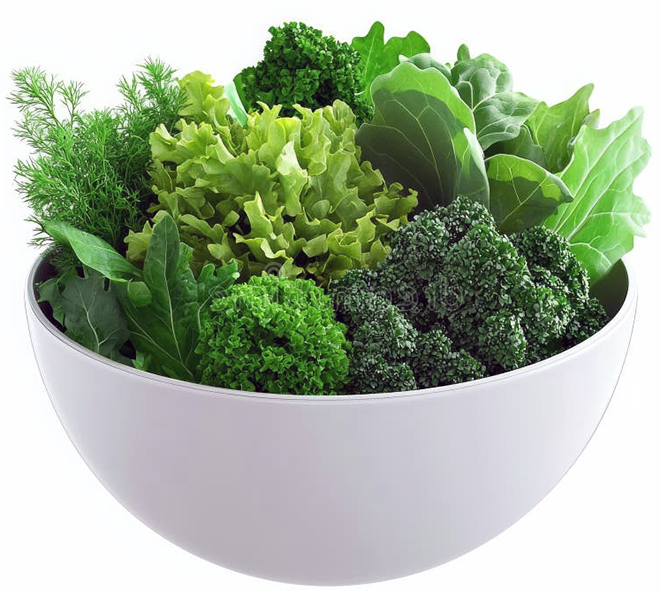 Mixed leafy greens in a bowl
Welcome to FabulousFusionFood's Leafy Greens-based Recipes Page —Leaf vegetables, also called leafy greens, vegetable greens, or simply greens, are plant leaves eaten as a vegetable. Those eaten raw in a salad can be called salad greens, whereas leaf vegetables eaten cooked can be called pot herbs.
Nearly 1,000 species of plants with edible leaves are known. Leaf vegetables most often come from short-lived herbaceous plants, such as lettuce and spinach, but also come from some woody plants. The leaves of many fodder crops (e.g. alfalfa, clover, and most grasses) are also edible by humans, but usually only as famine or processed food.
The leaves of many fodder crops are also edible by humans, but usually only as famine food. Examples include alfalfa, clover, and most grasses, including wheat and barley. Food processing, such as drying and grinding into powder or pulping and pressing for juice, may involve these crop leaves in a diet.
Leaf vegetables contain many typical plant nutrients, but being photosynthetic tissues, their vitamin K levels are particularly notable. Accordingly, users of vitamin K antagonist medications like warfarin must limit their consumption of leaf vegetables.
If leaves are cooked for food, they may be referred to in the United States as boiled greens. Leaf vegetables may be stir-fried, stewed, steamed, or consumed raw. Leaf vegetables stewed with pork is a traditional dish in soul food and Southern U.S. cuisine. They are also commonly eaten in South Asian dishes such as saag. Leafy greens can be used to wrap other ingredients into an edible package like a tortilla. Many green leafy vegetables, such as lettuce or spinach, can also be eaten raw, for example, in sandwiches or salads. A green smoothie enables large quantities of raw leafy greens to be consumed by blending the leaves with fruit and water.
The brassicaceae is a medium-sized and economically important family of flowering plants commonly known as the mustards, the crucifers, or the cabbage family. The family contains the cruciferous vegetables, including species such as Brassica oleracea (cultivated as cabbage, kale, cauliflower, broccoli and collards), Brassica rapa (turnip, Chinese cabbage, etc.), Brassica napus (rapeseed, etc.), Raphanus sativus (common radish), Armoracia rusticana (horseradish), the cut-flower Matthiola (stock) and the model organism Arabidopsis thaliana (thale cress).
This family includes important agricultural crops, particularly leafy greens, among which many vegetables such as cabbage, broccoli, cauliflower, kale, Brussels sprouts, collard greens, Savoy, kohlrabi, and gai lan (Brassica oleracea), turnip, napa cabbage, mizuna, bok choy and rapini (Brassica rapa), rocket salad/arugula (Eruca sativa), garden cress (Lepidium sativum), watercress (Nasturtium officinale) and radish (Raphanus) and a few spices like horseradish (Armoracia rusticana), wasabi (Eutrema japonicum), white, brown and black mustard (Sinapis alba, Brassica juncea and B. nigra respectively). Even if not specifically grown as leafy green vegetables, the leaves of the majority of these species can be and are consumed.
Outside the brassicaceae, the Amaranthaceae or Amaranth family are a major source of leafy greens worldwide, with the most common and well known species being Spinacia oleracea or spinach. Its leaves are a common vegetable consumed either fresh, cooked or after storage (using preservation techniques like canning, freezing, or dehydration). The taste differs considerably between cooked and raw: the high oxalate content may be reduced by blanching. So common is spinach as a leafy green that it's used as a common substitute for other local leafy greens.
Note that beetroot, a source of both an edible taproot and leafy greens. Beta vulgaris is also a member of the Amaranthaceae family, as is the closely related chard (Beta vulgaris subsp. vulgaris) which is grown for its edible stems and leafy greens.
In Africa, the leaves of cassava plants and sweet potato plants are widely consumed and leafy greens sourced from the wild are used to supplement the diet in countries across the globe.
The alphabetical list of all the leafy greens-based recipes on this site follows, (limited to 100 recipes per page). There are 3031 recipes in total:
Page 9 of 31
| Dakbungalow Chicken Curry Origin: Anglo-Indian | Dhal with Hogweed Shoots Origin: Britain | Dried Petalonia Origin: Britain |
| Dakbungalow Curry Powder Origin: Anglo-Indian | Dhallo Black Curry (Cuttlefish Black Curry) Origin: Sri Lanka | Dried Serrated Wrack Origin: Britain |
| Dakhine Origin: Senegal | Dhaltjies (Cape Malay Chilli Bites) Origin: South Africa | Du Pain Sus Eune Fielle de Chour (Jersey Cabbage Loaf) Origin: Jersey |
| Dal Makani (Black Dal Curry) Origin: India | Dhania Chicken (Coriander Chicken) Origin: India | Duck and Cabbage Soup Origin: China |
| Dal Tadka (Lentil Curry, Restaurant Style) Origin: India | Dhansak Masala Origin: India | Dulse and Beans Origin: Britain |
| Dal Takda (Lentil Curry, Restaurant Style) Origin: India | Dhiafora Parayiemista (Mixed Stuffed Vegetables) Origin: Cyprus | Dulse Muffins Origin: Britain |
| Damaa Origin: Sudan | Dholl Origin: Mauritius | Dulse Soda Bread Origin: Ireland |
| Dambou (Rice Couscous with Moringa) Origin: Niger | Diod Dail Poethion a Cedowrach (Nettle and Burdock Drink) Origin: Welsh | Durban Bunny Chow Origin: South Africa |
| Dan Dan Noodles Origin: America | Diod Sinsir Rhiwbob (Rhubarb Ginger Beer) Origin: Welsh | Durban Cornish Hen Curry Origin: South Africa |
| Dan Dan Noodles II Origin: Fusion | Diod Sinsir, Rhiwbob a Dail Gwyllt (Ginger, Rhubarb and Wild Greens Drink) Origin: Welsh | Durban Fish Curry Origin: South Africa |
| Dan Waké Origin: Niger | Djerba-style Grilled Prawns Origin: Tunisia | Durban Fish Masala Origin: South Africa |
| Dandelion and Orange Curry Origin: Britain | Djouka de Fonio (Fonio Couscous with Vegetables) Origin: Mali | Durban Leaf Masala Origin: South Africa |
| Dandelion Greens Origin: Britain | Dock Rissoles Origin: Ancient | Durban Vegetable Curry Origin: South Africa |
| Dandelion Pizza Origin: American | Dolma (Stuffed Grape Leaves) Origin: Azerbaijan | Durban-style Mutton Curry with Potatoes and Dumplings Origin: South Africa |
| Dandelion Potato Gratin Origin: Britain | Dombrés haricots rouges (Red Bean Dombrés) Origin: Guadeloupe | Durban-style Steak and Kidney Stew Origin: South Africa |
| Dandelion, Ham and Rice Soup Origin: Britain | Dombrés Poulet (Chicken Dombres) Origin: Martinique | Early Spring Salad Origin: Britain |
| Dantina Soppu Gashi (Red Amaranth Curry) Origin: India | Dominica Crab Callaloo Origin: Dominica | East African Vegetable Soup Origin: East Africa |
| Daraba Origin: Chad | Dominica Curried Goat Origin: Dominica | Easter Lamb Bobotie Origin: South Africa |
| Dau Khuon Xao Lan (Curried Tofu Stir-fry) Origin: Vietnam | Dominica Sancocho Origin: Dominica | Easter Ledge Pudding Origin: Britain |
| Daube de Banane Plantains (Daube de Banane) Origin: Seychelles | Dominica Spicy Guacamole Origin: Dominica | Easter Ledge Pudding Origin: Ancient |
| Daube de chevreuil (Venison Daube) Origin: France | Dominican Mountain Chicken Origin: Dominica | Easter Tansy Origin: Britain |
| Daube de Provençale (Provençal Daube) Origin: France | Domoda Dieune (Domoda with Fish) Origin: Senegal | Easterledge Origin: England |
| Daube de Thon (Tuna Daube) Origin: Mauritius | Dongo (Fish with Cassava Leaves) Origin: Congo | Easy Coconut Chicken Curry Origin: New Zealand |
| Davondjin (Ossetian Ramson and Cheese Filled Pie) Origin: South Ossetia | Dover Sole with Salt Marsh Greens Origin: Britain | EbunuEbunu Soup Origin: Ghana |
| Deadnettle and Chilli Soup Origin: African Fusion | Dovga (Pea and Sorrel Soup with Meatballs) Origin: Azerbaijan | Economical Aspic Jelly Origin: Britain |
| Deadnettle Greens Origin: Britain | Dovi (Peanut Butter Stew) Origin: Zimbabwe | Edikang Ikong Soup Origin: Nigeria |
| Deadnettle Purée Origin: Britain | Draenog y Môr Gyda Saws Dail Surion Bach (Sea Bass with Sorrel Sauce) Origin: Welsh | Editan Soup II Origin: Nigeria |
| Deep-fried Turkey Origin: Fusion | Dried Bladderwrack Origin: Britain | Efere Usung Udia Origin: Nigeria |
| Delicious Curry Soup Origin: Anglo-Indian | Dried Dabberlocks Origin: Britain | Efo Riro Origin: Nigeria |
| Demok (Taro Leaves in Coconut Milk) Origin: Palau | Dried Dulse Origin: Ireland | Efo-riro (Vegetable Stew) Origin: Nigeria |
| Dessert Dulse Oatcakes Origin: Ireland | Dried Kombu Origin: Japan | Egg Bhurji (Spicy Scrambled Egg) Origin: India |
| Devilled Eggs II Origin: Britain | Dried Laver Origin: Ireland | Egg Pilau Origin: India |
| Dhaba Mutton Curry Origin: India | Dried Morel Bisque Origin: Britain | |
| Dhal Dhokla Origin: India | Dried Pepper Dulse Origin: Scotland |
Page 9 of 31